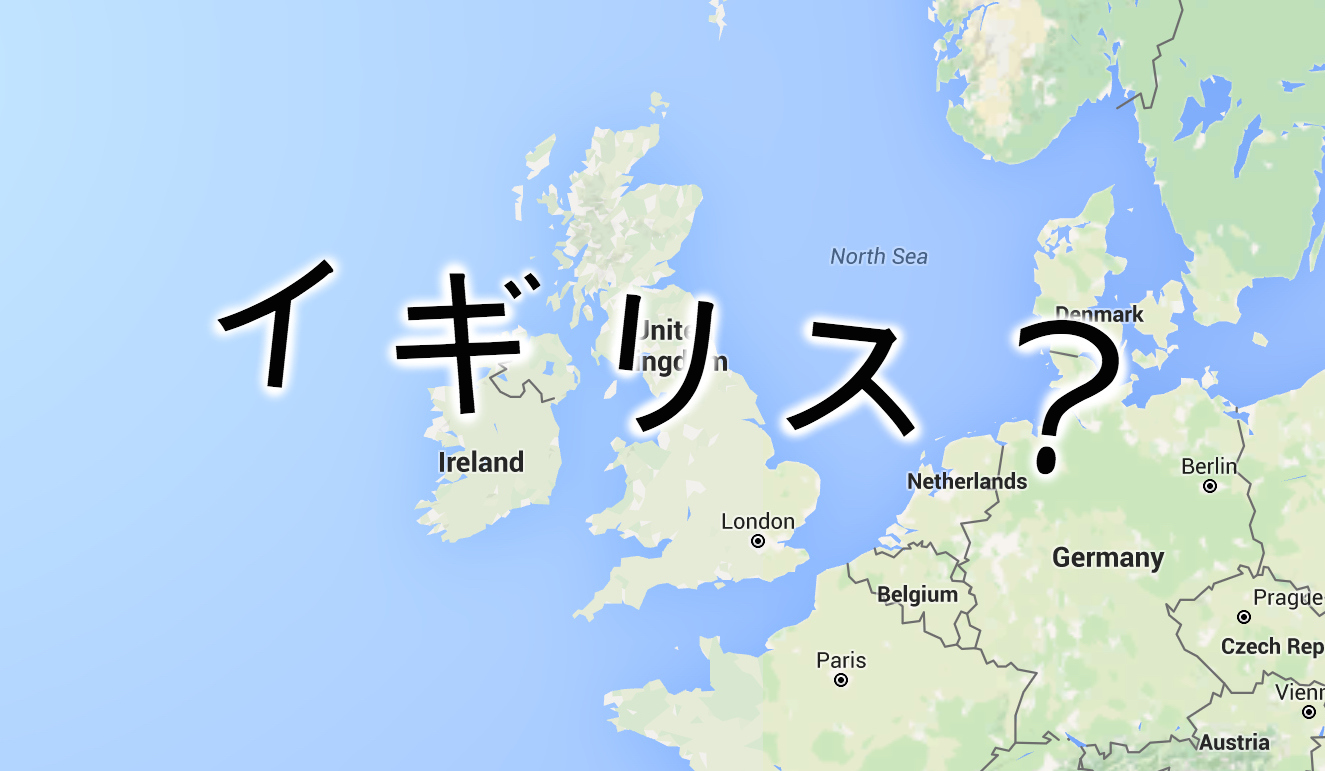
Amerika. Itaria. Kanada. The majority of countries are known in Japan by names that sound vaguely similar to their native monikers. So why on earth do the Japanese call the UK ‘Igirisu‘?
As anyone who has spent even a few hours studying Japanese will tell you, when adapted into the Japanese syllabary, foreign names can sound rather odd. Chris becomes Kurisu; my own name, Philip, becomes Firippu (yes, I get to have a random poo stuck on the end of my name 24/7); and if your name’s Deborah but you prefer to go by Deb you can forget about being taken seriously by kids because Debu, as your name will become, also means ‘fatty’ in Japanese.
But even with these many errant vowels and additional syllables, you have to admire Japan’s willingness to adapt foreign-sounding words into its own language. A great many countries’ names, too, are represented fairly faithfully in Japanese: the U.S. becomes Amerika; Germany, or rather Deutschland, becomes Doitsu; they even have a stab at pronouncing Australia (resulting in the admittedly rather cumbersome Oosutoraria, but still, full marks for effort, Japan!).
It’s understandable, then, that the question my friend Hiro asked on Facebook a few weeks ago should be one that a great many Japanese have asked me during my time in his homeland.
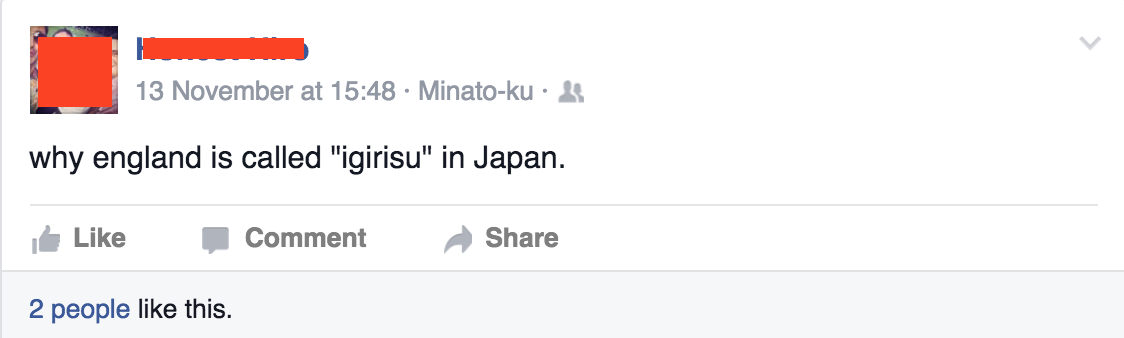
The short answer to this question is that it’s not, since England is called Ingurando in Japanese. Rather, what the Japanese are referring to—or at least ought to be referring to—when they say Igirisu is the United Kingdom as a whole.
It’s at this point that a number of the people reading this will shift uncomfortably in their seats as they, too, realise that they aren’t 100 percent sure of the difference between England, the UK and Great Britain. Fear not, gentle geographobe—a great many British nationals don’t know the difference either! For the unsure and those who’d like a recap, here’s the great and always informative YouTuber CGP Grey to explain everything you need to know about England, Britain and the UK.
Too long; didn’t watch? In brief, the UK is made up of four countries: England, Scotland, Wales and Northern Ireland. Britain, meanwhile, is the main island that the first three of those countries can be found on.
Now, with that out of the way we can get back to the question that stumps so many Japanese people and which has been put to me dozens of times over the years: Why is the UK called Igirisu in Japan?
In short, it’s all because of the Portuguese.
▼A Portuguese trading ship in Nagasaki
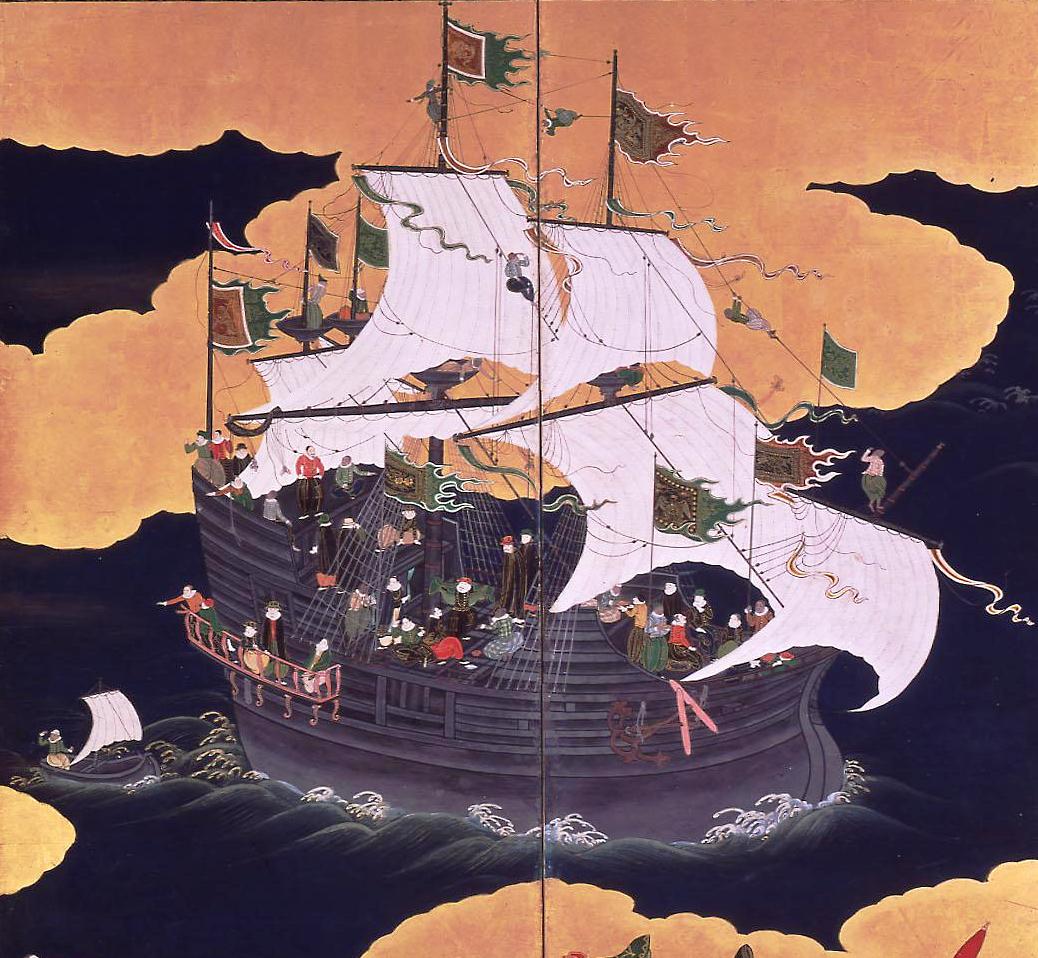 Kano Naizen (Kobe City Museum) [Public domain], via Wikimedia Commons
Hardcore Japanophiles will tell you that a great many words in the Japanese language—tempura, castella (a type of cake), pan (bread) to name but a few—come from the Portuguese. And they’d be right. Back in the days of long ocean voyages, tall ships and the trading of gunpowder for spices, the Portuguese were extremely busy boat-owning bees, sailing around the world getting things done. They first arrived in Japan in 1543, bringing with them a great many things that piqued Japanese curiosity—most notably the rather ironic combination of firearms and Christianity—and continued to trade and influence Japanese society for decades to come—they even turned Nagasaki into a thriving trading port.
Of course, the English (not to be confused with the British, thank you Mr Grey!) were also busy making a name for themselves around this time, sailing to foreign lands and loading their boats up with pretty much everything that wasn’t nailed to the floor, not to mention getting into sea scuffles with their various European neighbours. It stands to reason, then, that the English should come up in conversation between the Japanese and the Portuguese at some point during their bargaining and various cultural exchanges, with the latter telling of the Inglês (English), possibly while miming sipping tea with their pinky fingers outstretched or doing Basil Fawlty impressions (the Portuguese were were centuries ahead of their time).
With the English navy making a name for itself on the high seas and with England being the most populous country in Britain, it was only natural that the global community at that time should think of the English when they spoke of the island as a whole. On the international stage, Britain invariably meant the English, the Inglês, the people from 英吉利 Egeresu (later Igirisu)—a name which sticks to this day.
▼ A Japanese map of the UK and Ireland, the former marked in red and labelled イギリス Igirisu
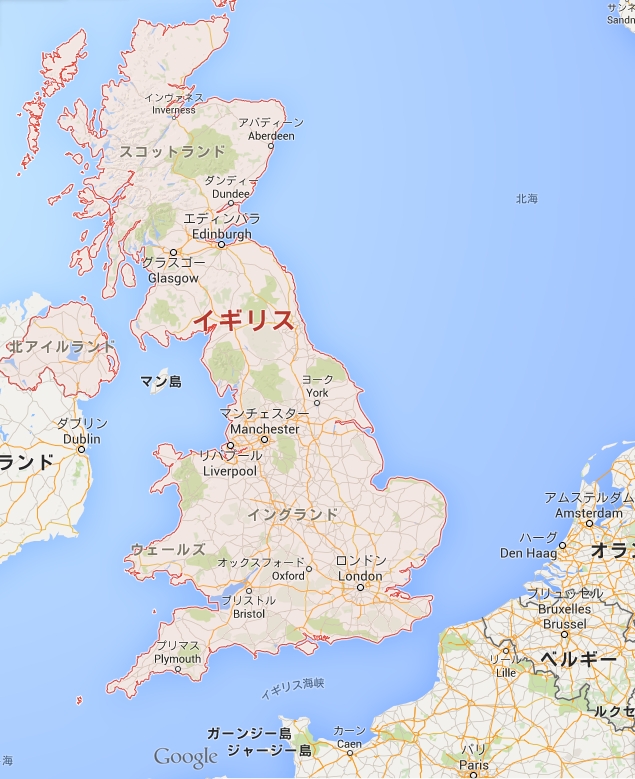
It’s worth noting that today’s Japanese are perfectly familiar with the names Ingurando (England), Sukottorando (Scotland), Ueeruzu (Wales) and Kita Airurando (Northern Ireland), but the similarity between Ingurando and Igirisu often leads many to think that England and the UK are one and the same thing, which, as I’m sure my Scottish, Welsh and Northern Irish friends would like me to impress one last time, they’re not. The term 英国 Eikoku is also used to refer to the UK, much like how other countries have their own kanji-fied names (the US is also known as 米国 Beikoku, for example), but for the average Japanese citizen, the UK has always been, and probably always will be, Igirisu.
Class dismissed!
Featured image: Google Maps