
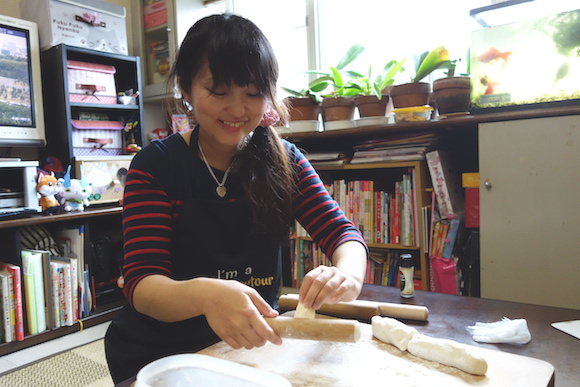
We visited Mariko’s home near Shinjuku for a variety of unique cultural experiences, including a lesson in making gyoza and a homemade feast complete with sake and shochu.
Thanks to the internet, tailor-made travel has never been easier: if you’ve dreamt of staying in a Super Mario-themed apartment, you can book one on Airbnb; if it’s a ride with a local you’re after, you can grab one on Uber. And when it comes to spending time with locals in their own homes, there’s now a new startup on the scene ready to help you out. Called BonAppetour, the company serves as a platform that connects tourists with locals, who come together around the “home dining” concept. Launched in 2014, the company has a large number of hosts in major cities around the world and now they’re spreading their wings in Tokyo, with experiences that allow visitors to get hands-on with a number of cultural activities, including Japanese tea ceremonies and preparing bento boxes (Japanese lunch boxes), all under the friendly guidance of a local.
We recently had the chance to try one of their experiences first-hand, spending a couple of hours with Mariko and her charming mother, a former restaurant manager, in their family home near Shinjuku. Here’s our account of the time we spent with them!
On the menu is handmade gyoza, along with some delicious side dishes and a lesson in the basic fundamentals of traditional Japanese flavours.
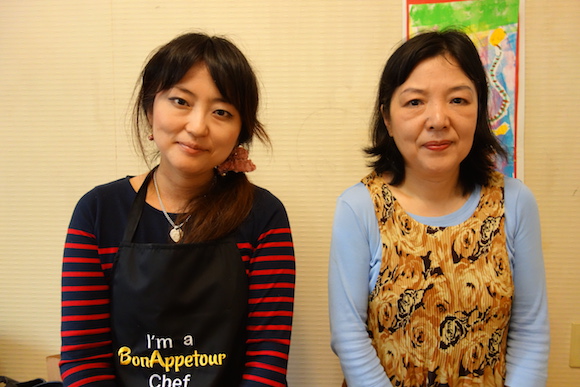
▼ Mariko (left) is fluent in English and seamlessly translates and explains the steps shown by her mother, a licensed cook, as she leads us through the cooking demonstration.
The experience starts with Mariko greeting us at a nearby station, welcome sign in hand, immediately making us feel welcome as we walk the short distance to her home. As we near her place, she explains that she lives at home together with her daughter, mother and grandmother all under one roof, in a traditional urban family setting that comprises four generations inside a narrow three-storey building. Taking off our shoes and entering the genkan, it feels as if we’re stepping into the warm, homely environment of a sweet Japanese anime.
Sitting at a low table with tatami matting on the floor, Mariko and her mother give us a brief overview of one of the most important fundamentals of Japanese cooking: traditional dashi broth. The stock is used as the basis for much of Japanese cooking, providing the distinct Japanese flavours we know and love.
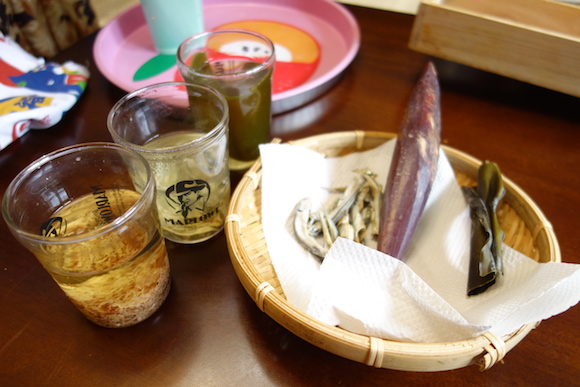
There are three main ingredients used for making dashi: dried sardines, dried bonito fish, and kombu (dried seaweed). Bringing out the traditional katsuo kezuri-ki wooden shaver, Mariko shows us how fresh bonito flakes are made by rubbing the dried fish on the plane.
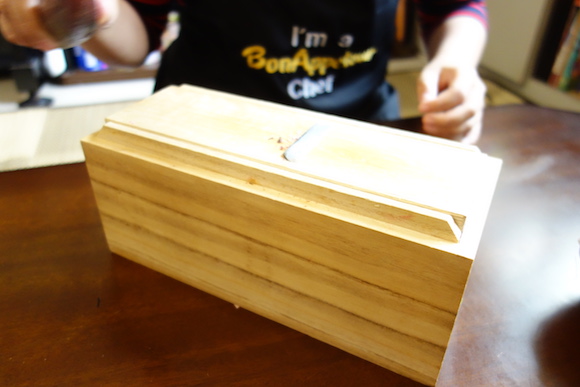
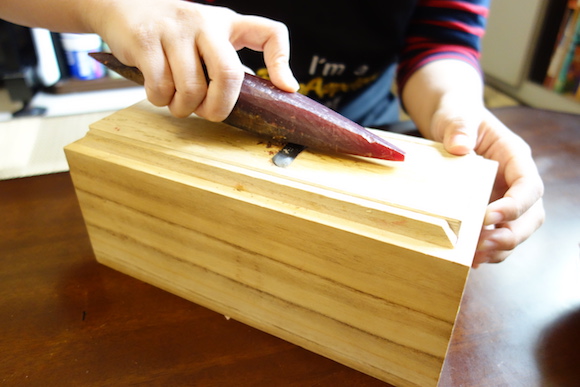
The katsuo dashi soup stock made from these bright red shavings is very mild, with a delicious, smoky, umami flavour.
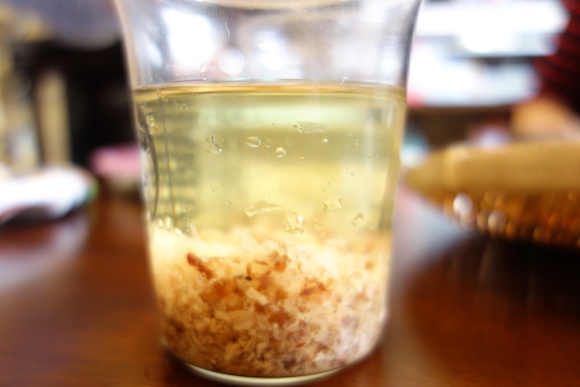
Sardine stock (niboshi dashi) is made once the heads and insides of the small fish have been removed.
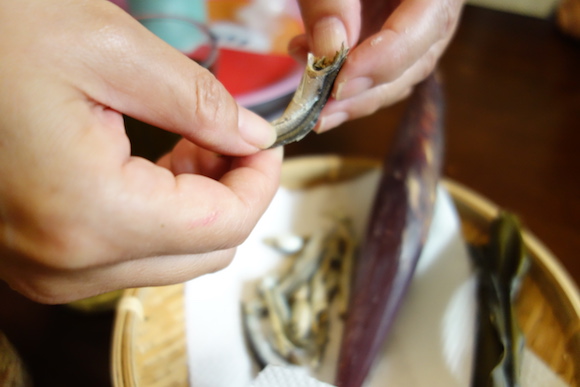
The resulting flavour is stronger than the bonito stock and deliciously fishy, with a slightly sweet, woody aroma that makes it a perfect base for miso soup, noodle dishes and hot pots (nabemono).
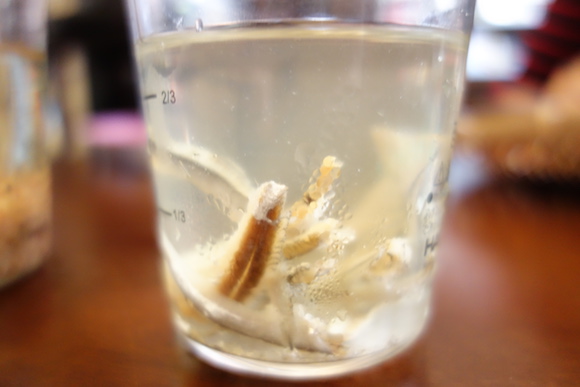
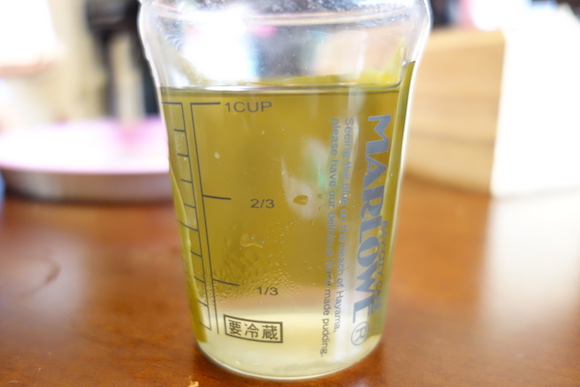
The konbu (kelp) dashi is a flavourful option for vegetarians, with a very strong taste of the sea. The most common type of stock used in Japanese cooking is a combination of bonito and kelp ingredients.
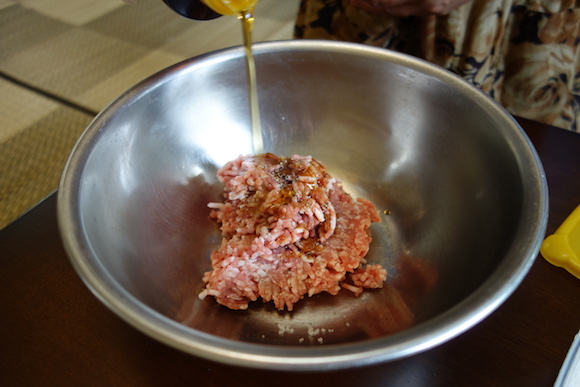
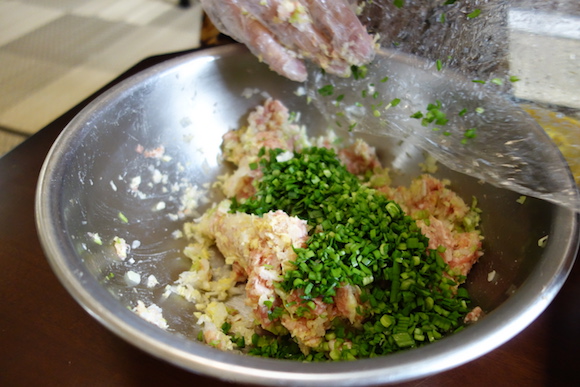
With a greater understanding of these major flavour bases, we move on to preparing the main dish of the day, gyoza (fried dumplings). Starting off with a good serving of minced pork, Mariko’s mother quickly adds soy sauce, salt, pepper, and sesame oil to the mix, blending everything together before adding the pre-prepared vegetables.
Despite having just met, sitting at the family table and watching our hosts cook gyoza with the smooth skill that comes from years of experience makes us feel like we’re family friends.
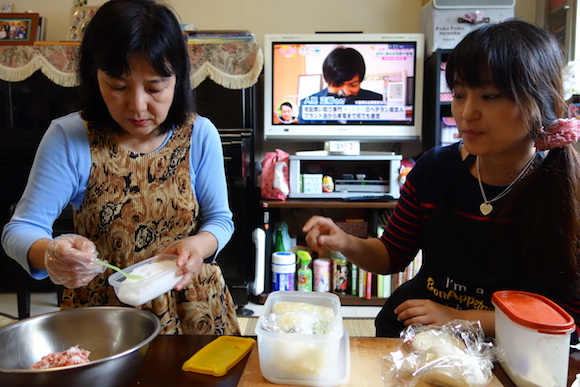
Once the cabbage, leeks, garlic, ginger, green onions and shiitake mushrooms have been added and hand-mixed, it’s time to get to the fun part of playing with dough.
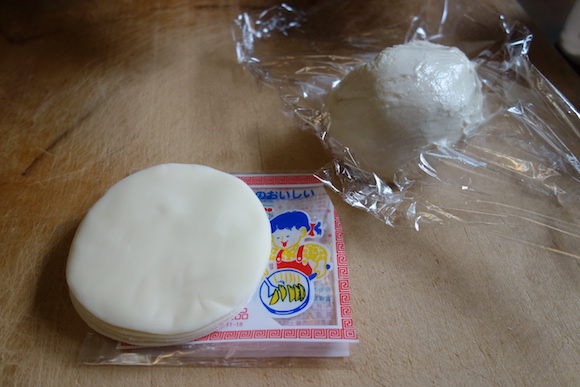
Today we’ll be trying out the difference between store-bought pastry (left) and the fresh homemade version (right) which has been refrigerated overnight.
Mariko’s mother cuts off a small piece of the dough and shows us what to do. After rolling it into a small ball, the dough is placed on the table and gently flattened out with the palm of her hand.

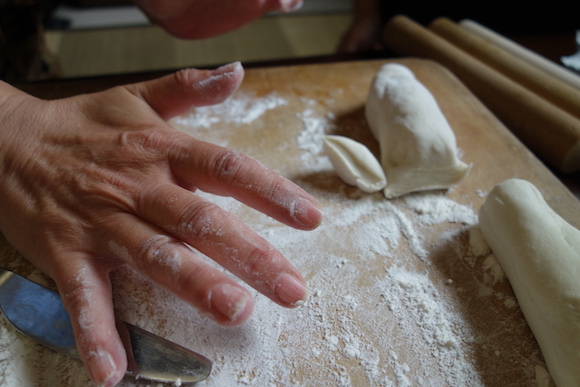
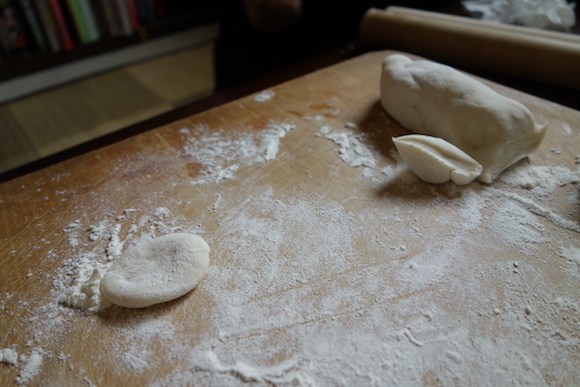
Using a short rolling pin, the piece is then flattened out further to create the traditional round pastry shape.
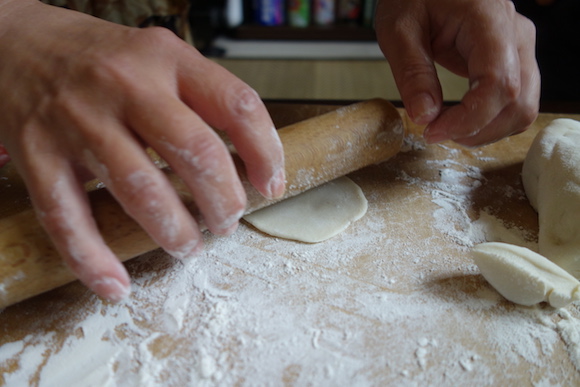
Then it’s just a matter of wetting the edge of half the pastry, popping the filling inside and folding it over in a pleated pattern.
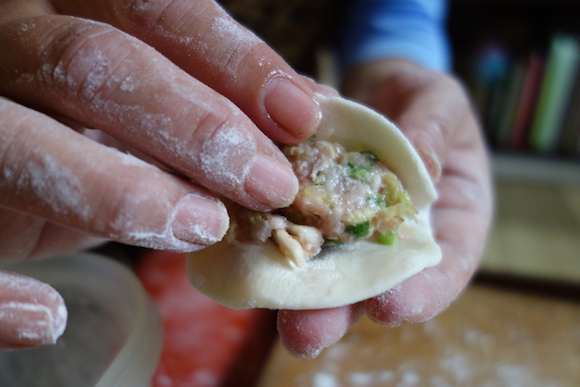
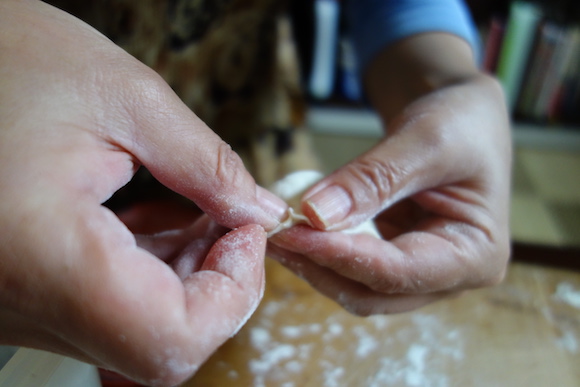
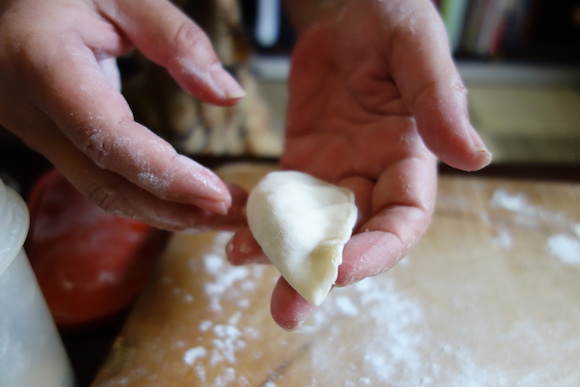
▼ Making it look incredibly easy, a beautiful piece of handmade gyoza is produced in just seconds.
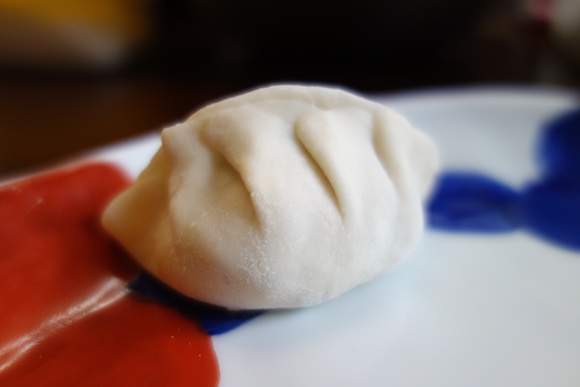
We get started on our own attempts to replicate the gyoza created by our Japanese host. The dough is delightfully spongy – Mariko says it’s meant to have the texture of an ear lobe – and moulding it into shape entails a lot of laughter and chit-chat. Families with children will particularly enjoy this hands-on part of the experience!

It doesn’t take too long before we’ve made a plate of gyoza, which goes straight into an oiled pan on the portable stove.
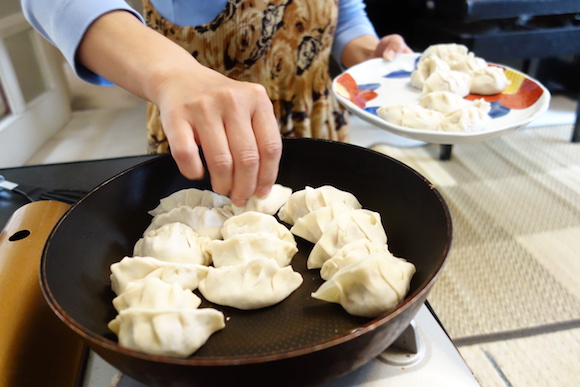
Once nestled in the shallow pan, they continue to fry on a medium heat while covered with a lid.


After a couple of minutes, once the bottoms have developed a golden brown colouring, a small amount of water is added and the heat reduced to a simmer.

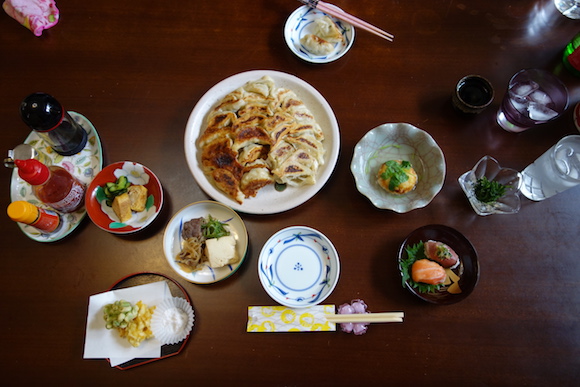
While we wait for the gyoza to finish, Mariko explains today’s meal and it looks set to be a real restaurant-style experience. Along with dumplings, there are a number of side dishes, explained in English with attention to detail that includes information on the types of dashi used.
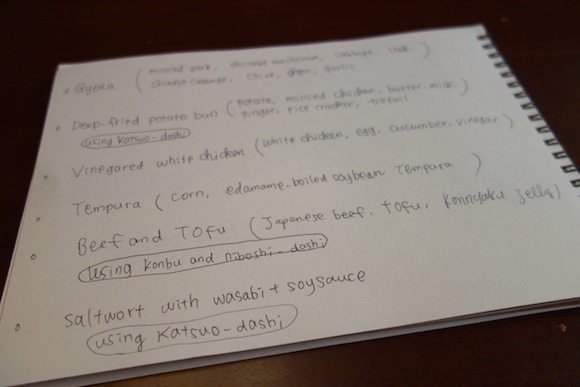
This is truly restaurant dining at home. The side dishes are filled with flavour and taste absolutely delicious; a true testament to our hosts’ years of cooking in the kitchen, using techniques passed down through many generations of Japanese women.
▼ Below, clockwise from top left: Saltwort with wasabi and soy sauce; vinegared white chicken; beef and tofu; salmon and bonito sushi.

While there’s not enough time in the 1.5-hour package to make all these fine dishes ourselves, Mariko is happy to provide recipes for any or all of the dishes to visitors by email so they can try making them at home.
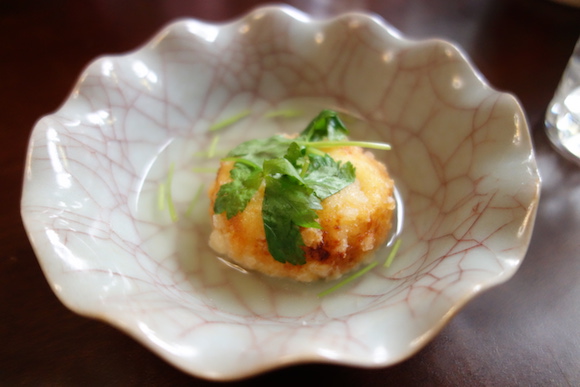
▼ Each morsel, including the deep fried potato bun, is carefully matched with a beautifully delicate plate.
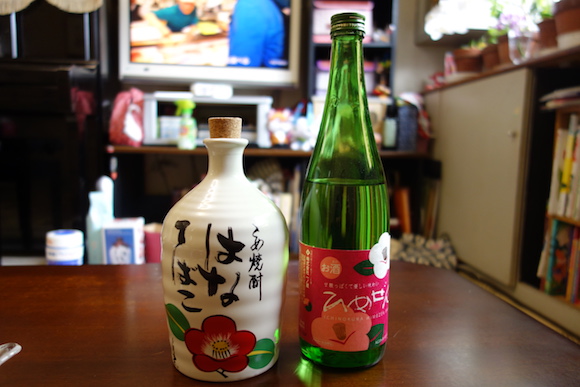
▼ Included in the meal is a tasting glass of shochu, a Japanese distilled liquor, (left) and sake rice wine (right), chosen from a top-quality brewery.
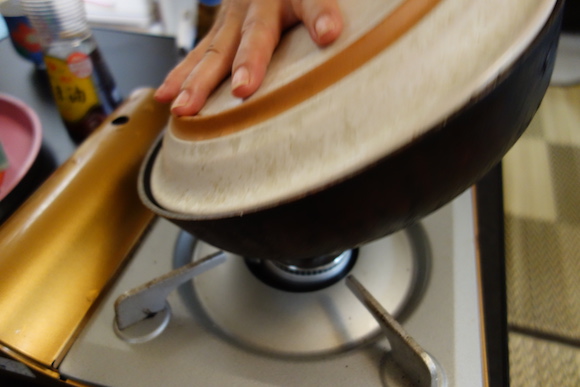
It doesn’t take long before the gyoza dumplings have become more translucent and are ready to take to the table. This is where we learn another trick from our skilled host.

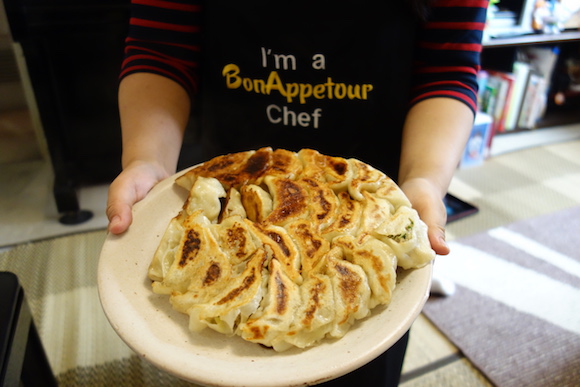
Simply pop a plate over the pan, turn it over, and instantly, a gorgeous collection of golden fried gyoza is ready for serving.
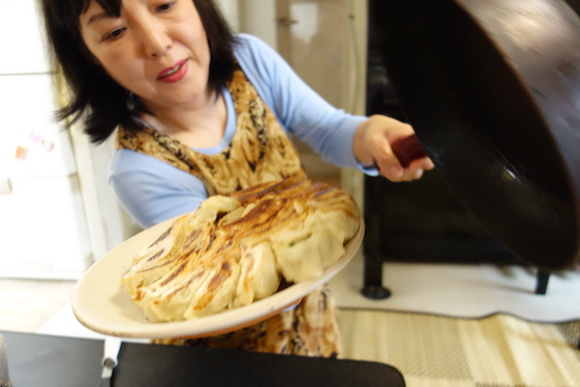
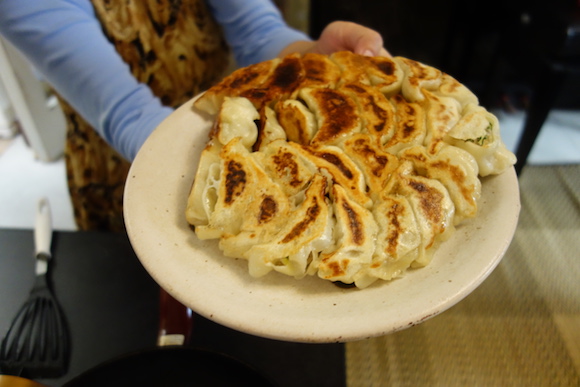
▼ The gyoza are crunchy and moist and utterly delicious, especially when topped with a number of sauces.
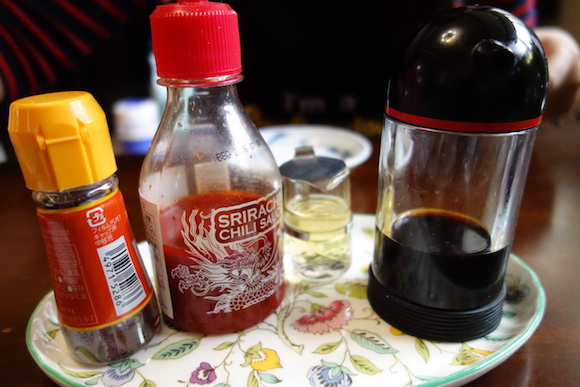
While the gyoza pieces wrapped in store-bought pastry have a thinner coating which breaks away easily in the mouth, leaving just the filling to be savoured, the hand-kneaded versions have a denser mouthfeel and chewier texture, which provides more balance and depth of flavour to each piece. For us, the handmade versions win hands-down!

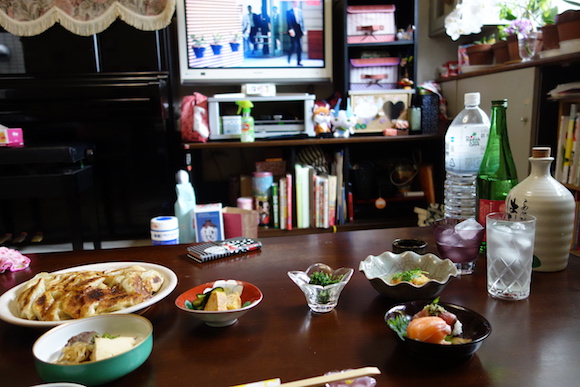
Our meal is absolutely wonderful. All the different flavours, textures and ingredients are as delicious as any you would find at a traditional restaurant or expensive ryokan lodging. Knowing what each dish is made from brings an exciting slant to the meal, as we’re able to identify the tastes and appreciate them more fully than if they were presented with no explanation.
To finish the feast, we enjoy a beautiful serving of fruit in a chilled glass. The sweet, mellow flavours are the perfect end to a perfect meal.

Tokyo hosts like Mariko in the BonAppetour lookbook are more than happy to accommodate requests from people with food allergies and dietary restrictions. Having hosted foreign tourists in their home for more than two years, Mariko and her mother offer other options for cooking, like okonomiyaki and sushi-making, and also provide a full experience that combines a traditional meal with activities like origami, calligraphy, and a matcha tea party with Japanese sweets. And they’re always happy to offer insider information on where to visit and what to do in Tokyo, including the nearby Nakano district, just a short walk from their house, which is considered by those in the know a much more compact and less-touristy version of Akihabara – a destination for real otaku geek aficionados.
▼ Whether you’re a short-term visitor or an expat living in Japan, a few hours spent in their lovely home really brings you closer to the local community and makes for a truly memorable experience, which is what the BonAppetour program is all about.
To find out more about hosts both in Tokyo and in other major cities around the world, be sure to stop by the BonAppetour website. While other similar platforms to connect locals and tourists do exist, BonAppetour staff visit as many hosts as possible in order to give them a special seal of verification to ensure a high standard is maintained. The concept is focused on providing guests with a memorable experience, but it turns out that it’s just as rewarding for hosts too. For Mariko, she simply loves meeting new people and being able to share her culture with them, but it turns out that her eight-year-old daughter is also benefitting from the service. Making friends with children who visit motivates her to use English and the bilingual letters they exchange help foreign children practice their Japanese too.
Thanks to BonAppetour and Mariko and her mother for providing us with the complimentary experience. If you’re inspired to try the same delicious gyoza we had, you can find Mariko’s BonAppetour page here.
Follow Oona on Twitter for more information on news and events in Tokyo.
Photos © RocketNews24
 Ramen restaurant in top Tokyo tourist neighborhood skips price gouging, but how does it taste?
 Japan now has a “for foreign tourists only” Mt. Fuji sightseeing train[Video]
 Can you make butter by running with a pouch filled with cream? Let’s find out[Taste test]
 Ghibli Museum building becomes a cuddly cushion
 Nine amazing off-the-beaten-path cherry blossom spots in Japan for yaezakura and shidarezakura
 Ramen restaurant in top Tokyo tourist neighborhood skips price gouging, but how does it taste?
 Japan now has a “for foreign tourists only” Mt. Fuji sightseeing train[Video]
 Can you make butter by running with a pouch filled with cream? Let’s find out[Taste test]
 Ghibli Museum building becomes a cuddly cushion
 Nine amazing off-the-beaten-path cherry blossom spots in Japan for yaezakura and shidarezakura
 Public restrooms in Osaka to get in-stall video screens with ads
 “Online streamer” tops dream job poll for young Japanese kids, older kids not so interested
 Rush hour trains in London are worse than Tokyo, according to our Japanese-language reporter
 Studio Ghibli releases the My Neighbour Totoro tea caddy, with a magical self-closing lid
 Fake police phone scam also highlights dumb stereotype about how foreigners speak Japanese[Video]
 Japanese onsen egg maker from 100-yen store Daiso needs to be on your shopping list
 Starbucks Japan releases new My Fruit³ Frappuccino at only 34 stores around the country
 Tokyo government organizes food truck event to clear out delinquent/homeless teen gathering area
 Cherry blossoms begin blooming in Japan with record-early starts for sakura season
 Stunning central Japan wisteria festival is like a purple fantasy straight out of a Ghibli movie
 Create a tiny Ghibli anime world on your bookshelf with new miniature papercraft art kits
 When will the cherry blossoms reach full bloom in Japan this year?[Forecast]
 Starbucks Japan unveils new sakura cherry blossom collection for hanami season 2026
 Train station platform ramen store closes its doors on half a century of history in Tokyo
 Studio Ghibli releases Catbus pullback keychain that runs like the anime character
 Nine great places to see spring flowers in Japan, as chosen by travelers (with almost no sakura)
 Starbucks Japan releases first-ever Hinamatsuri Girls’ Day Frappuccino
 Studio Ghibli adds new Mother’s Day gift sets to its anime collection in Japan
 Virtual idol Hatsune Miku redesigned with look that adds new elements and brings back old ones
 Survey asks foreign tourists what bothered them in Japan, more than half gave same answer
 Japan’s human washing machines will go on sale to general public, demos to be held in Tokyo
 Starbucks Japan releases new drinkware and goods for Valentine’s Day
 We deeply regret going into this tunnel on our walk in the mountains of Japan
 Studio Ghibli releases Kodama forest spirits from Princess Mononoke to light up your home
 Starbucks Japan releases new sakura goods and drinkware for cherry blossom season 2026
 Japan’s newest Shinkansen has no seats…or passengers [Video]
 Major Japanese hotel chain says reservations via overseas booking sites may not be valid
 Put sesame oil in your coffee? Japanese maker says it’s the best way to start your day【Taste test】
 No more using real katana for tourism activities, Japan’s National Police Agency says
 Public restrooms in Osaka to get in-stall video screens with ads
 “Online streamer” tops dream job poll for young Japanese kids, older kids not so interested
 Rush hour trains in London are worse than Tokyo, according to our Japanese-language reporter
 Studio Ghibli releases the My Neighbour Totoro tea caddy, with a magical self-closing lid
 Fake police phone scam also highlights dumb stereotype about how foreigners speak Japanese[Video]
 7-Eleven Japan releases a crazy new viral sandwich: Chocolate Sprinkles and Whipped Cream
 Nissin Donbei to sell Classic line of instant udon and soba noodles for its 50th anniversary
 Drinkable pixels: 7-Eleven Japan creates new convenience store juice with “pixels” inside
 Kagoshima conveyor belt sushi chain Mekkemon rises above the rest with its special secret weapon
 Space and time get all jumbled up in the Showa-style Cafe de Paris in Tokyo
 Starbucks Japan releases new My Fruit³ Frappuccino at only 34 stores around the country
 Senkoji: The Japanese temple that’s more like a theme park to heaven and hell
 Getting a driver’s license in Japan the hard way: The first driving test a few more times
 A cherry blossom menagerie of animals and designs is coming to Fukuoka’s TeamLab Forest museum