
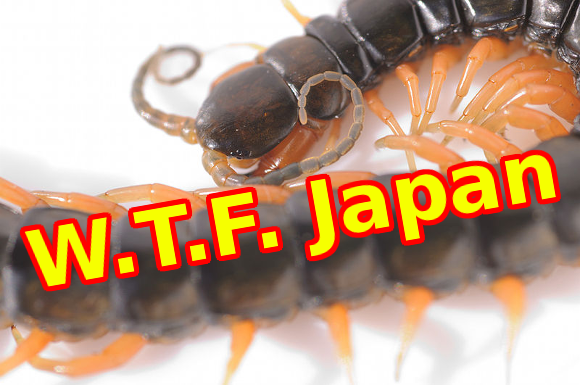
You’ll never let your feet touch the ground again.
Last month we looked at Japan’s creepiest animals, but that was only the beginning. Japan’s scariest creatures don’t live in the water or sky; they live in the cracks of the walls and floors inside your house.
That’s why today we’re counting down the top 5 creepiest Japanese insects. Some of the entries may not technically be “insects,” but we define insect as anything with more than four legs that would make you scream if you saw it in your kitchen.
So let’s get to it! Starting off with…
Honorable Mention: Japanese cockroaches
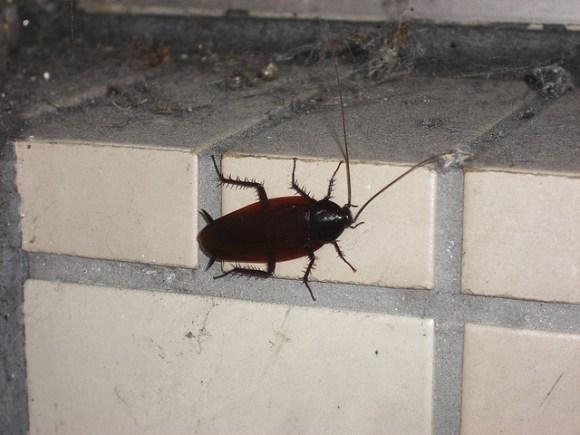
Cockroaches (gokiburi in Japanese) can be found all over the world – which is why it’s only an honorable mention – but as anyone who has experienced cockroaches in Japan can tell you, the ones here are on another level… literally. In Japan, the cockroaches fly.
▼ Watch this video to see a battle against a flying cockroach to the
(quite appropriate!) soundtrack of a Final Fantasy boss battle.
Also, did we mention these things are huge? Japanese cockroaches can grow up to two inches (50 millimeters), and when they’re flying at you full speed it’s like an exoskeleton bullet right to the face. Add in the fact that they’re just as notoriously impossible to kill as other cockroach species, surviving all sorts of extremely hot, cold, wet and dry environments, and you have basically the Terminator of the insect world.
Thankfully the gokiburi have one weakness: gokiburi hoi hoi – Japanese roach traps.
▼ I mean, could you resist going into a cozy-looking home like that?
Just look at the roach in the window, it’s so cute!
#5. Huntsman spiders
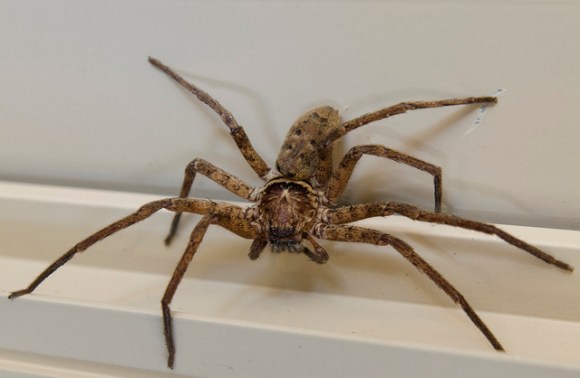
The huntsman spider is known in Japanese as ashidakagumo – literally “long-legged spider” – for good reason: these guys can grow to have a legspan of up to a foot (30 centimeters) long.
▼ A human hand for comparison, and to make you suddenly
have the urge to wipe your sweaty palms on your pants.
These spiders get their English name from the fact that they don’t spin webs; they hunt their prey the old-fashioned way, typically eating cockroaches and other insects, but also geckos and lizards as well.
The reason the huntsman spider is low on the list is because while it may be an eight-legged nightmare with poison fangs, that poison isn’t a big deal for humans. The spiders actually quite helpful at keeping away others pests in the home – much in the same way that burning your house down is an effective way at dealing with pests.
▼ Speaking of when burning down the house seems like a good idea….
#4. Denki mushi
Sometimes nature is just messed up. That’s the only way we can explain the existence of the denki mushi (literally “electric bug”), which get their name from the fact that just touching them feels like getting an extremely painful electric shock.
These guys are fat little barbed-wire bugs loaded with toxins. Touching them isn’t just a quick electric shock and it’s over, oh no, the pain from the thorns on these things lasts for an hour, leaving blisters, rashes, and a painful itch for up to a week.
▼ Watch a video of one here, strutting around like it owns the place…because it basically does. Predators won’t go anywhere near these things.
Denki mushi would be higher on the list if not for the fact that they’re not actually the real bug, they’re just the larvae form of the slug moth (iraga in Japanese). And there’s really nothing special about slug moths – they’re not poisonous or particularly intimidating in any way.
▼ Going through puberty is never easy, but geez,
way to really drop the ball denki mushi.
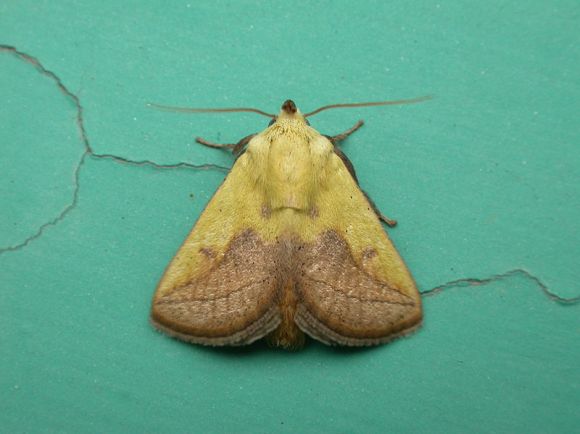 Wikimedia Commons/Donald Hobern
#3. Golden orb weaver spiders
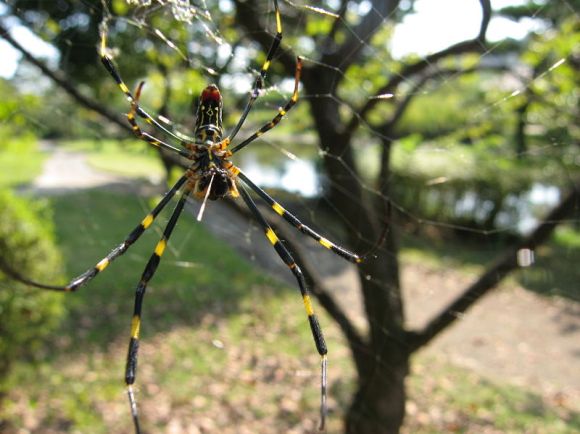
If you thought huntsman spiders were scary, then we’ve got some bad news. There’s something way worse crawling around Japan: golden orb weaver spiders.
There are a bunch of different species of golden orb weavers, but some of the most common ones are jorogumo (literally “whore spider”) and ojorogumo (“big whore spider”). Their English translations may sound funny, but these killing machines get their names from the Japanese folklore of a spider that could change into a woman and lure men to their deaths…and that’s not too far from the truth.
Golden orb weavers release a neurotoxin in their victims similar to a black widow, though less harmful to humans. But don’t start feeling safe yet. Golden orb weavers can grow up to a full body span of eight inches (20 centimeters), and build enormous webs over three feet (one meter) across capable of trapping bugs, birds, bats, and anything else unfortunate enough to fall into its trap.
Watch a giant golden orb weaver in action here, where you can see how it sucks the juice out of its prey, then leaves the dry corpse in its web like a trophy. You, uh, really don’t want to get on their bad side.
#2. Mukade
【定期】好きなムカデ、被ったらRT→ アオズムカデ、ノコバゼムカデ、ヨロイオオムカデ、 #RTした人全員フォローする #相互希望 pic.twitter.com/4V8n0fs7MM
— 生物全般BOT (@nature_yanBOT) August 13, 2016
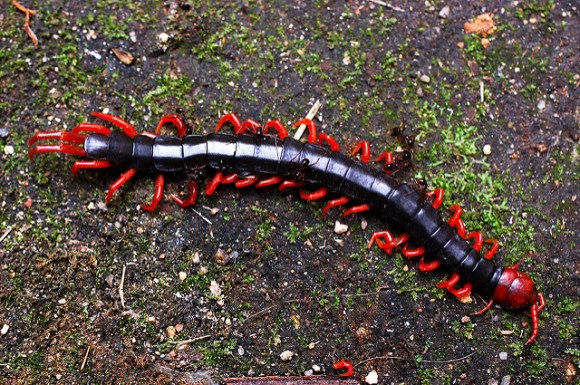
The infamous Japanese centipedes. On a scale of cute bunny to creepy crawly, these guys are somewhere around demon spawn. Not only do they like to invade homes and hang out in beds and shoes, but unlike other home-dwelling bugs, mukade are aggressive and can deliver a painful bite that can cause a whole bunch of allergic reactions such as swelling, burning, nausea and vomiting.
Mukade can grow up to eight inches (20 centimeters) and eat insects, spiders, small reptiles, and even mice. Despite their large size and multiple legs, they’re quite fast as well, but don’t worry – they’ll take their time and crawl nice and slowly over your face while you’re sleeping.
▼ And best of all, they comes in a rainbow of horrifying colors!
There’s gruesome green, baneful blue, obscene orange, revolting red…
▼ …and good old-fashioned blood-curdling black!
So now I know what you’re thinking: we’re doomed. We should just give up and let the mukade take over already. But wait! The mukade have one weakness:
▼ Cats. As if we needed any more reasons to love them.
And the #1 creepiest Japanese insect is…
.
.
.
.
.
.
.
.
.
.
1. Suzumebachi
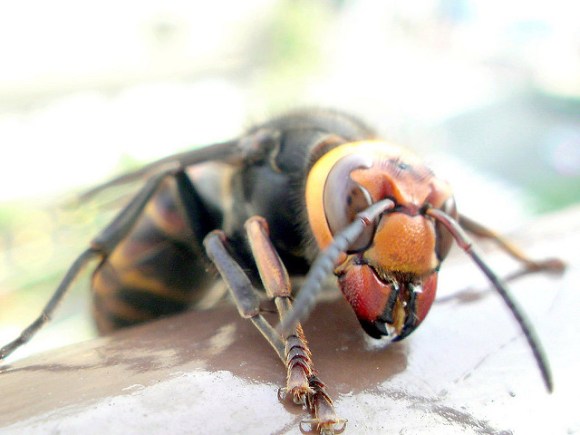
“Buzz buzz, motherf*cker.” That’s the last thing you hear before a burning hot nail of a stinger pierces right through your skin.
Asian giant hornets are far and away the scariest, meanest insect you can encounter in Japan. They’re known in Japanese as suzumebachi (“sparrow bees”) due to the fact that these killing machines are the size of small sparrows, dwarfing normal bees. They can have a body length up to 2 inches (5.5 centimeters), a wingspan of up to 3 inches (7.5 centimeters), and stingers that are a deadly 0.4 inches (1 centimeter) long.
Don’t worry though, it’s not like one sting will kill you…but getting a couple of them will. More than 10 stings means you need to get medical help immediately, and more than 30 means you’re probably already dead. There are around 30 to 40 incidents of people dying in Japan from suzumebachi each year.
But the scariest part of all is the hornet’s attitude. These guys (or gals, actually, since the females are the ones with stingers) are ruthless bee-killers. They survive by first scouting a happy beehive, then spraying it with pheromones to let their sisters know where to attack. It only takes 30 or so suzumebachi to take down a hive of 30,000 bees as they can kill up to 40 bees per minute by using their fangs to rip the bees’ heads from their bodies.
Once every bee in the hive is either dead or dying, the suzumebachi ignore the writhing mass of death they created and begin feasting on the bees’ honey and feeding the larvae to their own young.
▼ You can watch one such massacre here
and be happy you’re not a bee.
Thankfully there is one defense bees have against the suzumebachi, and it’s kind of a miracle of nature. When the initial scouting hornet enters the hive, the bees will gather together and smother it. But instead of crushing it or stinging it, they vibrate their wings at extreme speeds, raising the temperature and carbon dioxide level underneath their bee-mass to just enough to kill the hornet, but not the bees, preventing it from coming back with more for an invasion.
As humans, we don’t have any wings to vibrate to heat up the air, but we do have one other defense against the hornets:
▼ Eating them. Or drinking them, if you prefer.
https://twitter.com/griot_sakamoto/status/751172662890668032
So there you have it, the top five creepiest Japanese insects. Did we forget some bugs that have crawled their way into your nightmares before? Let us know in the comments, and remember, always check your shoes.
References: Wikipedia (1, 2, 3, 4, 5, 6)
Featured/top image: Wikimedia Commons/Yasunari Koide (Edited by RocketNews24)
In the meantime, give me a follow on Twitter and let me know if there’s any topics you’d like to see covered on W.T.F. Japan. See you next week!
 W.T.F. Japan: Top 5 creepiest Japanese animals 【Weird Top Five】
 W.T.F. Japan: Top 5 biggest Japanese food challenges【Weird Top Five】
 W.T.F. Japan: Top 5 kanji with ironic meanings【Weird Top Five】
 W.T.F. Japan: Top 5 Japanese pet kabutomushi beetles 【Weird Top Five】
 W.T.F. Japan: Top 5 best Tamagotchi releases 【Weird Top Five】
 Starbucks Japan closing only Shinkansen platform branch for popularity-triggered renovations
 Can a downtown Tokyo super sento bathhouse beat a hotel for a one-night stay?
 You can assemble a well-balanced team of Pokémon, them eat them, thanks to Japanese cake chain
 Pokémon and Ikea Japan cross over into each other’s worlds with collaboration events
 Sailor Moon’s Artemis is part of the Artemis II NASA mission control team[Video]
 Japan’s full-facemask Ninja Parka still lets you eat ice cream[Photos]
 Which Gundam is the favorite for fans in different countries? Gundam election announces results
 Huge life-size Eevee Eeveelution Pokémon plushies will steal hearts, conquer living rooms【Photos】
 Starbucks x Peanuts collaboration brings Joe Kind Snoopy to Japan with exclusive drinks and goods
 Tokyo turns its phone booths into free Wi-Fi hotspots, and here’s how to use them
 Tokyo’s best museum for foreign travelers finally reopens after being closed for four years
 Pokémon lacquerware series expands for Year of the Horse with new handcrafted design[Video]
 Two food hacks take Japan’s convenience store fried chicken to amazing new sandwich heights
 Tokyo subway and almost all Tokyo train lines now accepting credit card tap payments
 Totoro Fund line of beautiful artwork and apparel lets you help the real-world Totoro Forest
 Fading Tokyo – Searching for signs of the Showa era as local neighborhoods evolve[Photos]
 Famous Tokyo cherry blossom spot installs view-blocking screens to fight overcrowding[Video]
 Studio Ghibli adds new My Neighbour Totoro 2026 Corn Gift to its anime store for Mother’s Day
 Japan now has a special desk for people who work at home with a pet cat[Photos]
 Uniqlo announces new T-shirts for One Piece, Naruto and more for manga publisher’s 100th birthday
 Train station platform ramen store closes its doors on half a century of history in Tokyo
 Starbucks Japan releases new My Fruit³ Frappuccino at only 34 stores around the country
 Studio Ghibli releases Catbus pullback keychain that runs like the anime character
 Krispy Kreme releases Super Mario doughnuts in Japan for a limited time
 Japanese onsen egg maker from 100-yen store Daiso needs to be on your shopping list
 Nine great places to see spring flowers in Japan, as chosen by travelers (with almost no sakura)
 Survey asks foreign tourists what bothered them in Japan, more than half gave same answer
 Japan’s human washing machines will go on sale to general public, demos to be held in Tokyo
 Starbucks Japan releases new drinkware and goods for Valentine’s Day
 We deeply regret going into this tunnel on our walk in the mountains of Japan
 Studio Ghibli releases Kodama forest spirits from Princess Mononoke to light up your home
 Starbucks Japan releases new sakura goods and drinkware for cherry blossom season 2026
 Japan’s newest Shinkansen has no seats…or passengers [Video]
 Major Japanese hotel chain says reservations via overseas booking sites may not be valid
 Put sesame oil in your coffee? Japanese maker says it’s the best way to start your day【Taste test】
 No more using real katana for tourism activities, Japan’s National Police Agency says
 W.T.F. Japan: Top 5 most annoying sounds in Japan 【Weird Top Five】
 W.T.F. Japan: Top 5 nicest sounds in Japan【Weird Top Five】
 W.T.F. Japan: Top 5 hardest Japanese habits to break 【Weird Top Five】
 W.T.F. Japan: Top 5 confusing Japanese hand gestures【Weird Top Five】
 W.T.F. Japan: Top 5 kanji with the longest readings 【Weird Top Five】
 W.T.F. Japan: One year anniversary special! Top 5 W.T.F. Japan articles 【Weird Top Five】
 W.T.F. Japan: Top 5 most confusing Japanese counter words【Weird Top Five】
 W.T.F. Japan: The top five “sora” references of all time! 【Weird Top Five】
 W.T.F. Japan: Top 5 strangest Japanese home goods【Weird Top Five】
 W.T.F. Japan: Top 5 most hilarious Japanese euphemisms 【Weird Top Five】
 W.T.F. Japan: Top 5 craziest Japanese certification exams 【Weird Top Five】
 W.T.F. Japan: Top 5 offensive Japanese insults【Weird Top Five】
 W.T.F. Japan: Top 5 most famous pet dogs in Japan【Weird Top Five】
 W.T.F. Japan: Top 5 “shikata ga nai” (“it can’t be helped”) situations in Japan【Weird Top Five】
 W.T.F. Japan: Top 5 most ridiculous kanji handwriting shortcuts【Weird Top Five】
 W.T.F. Japan: Top 5 steps to immigrate to Japan 【Weird Top Five】
 W.T.F. Japan: Top 5 unique Japanese toilet functions【Weird Top Five】
