
TOKYO — Japan’s high-tech agricultural businesses are to gather at the Agri World trade fair held in Tokyo this week (Oct 12-14) to showcase the industries next generation of technologies such as plant factories, robotic automation and IT systems, claimed as advancing the “fourth industrial revolution” into the sector.
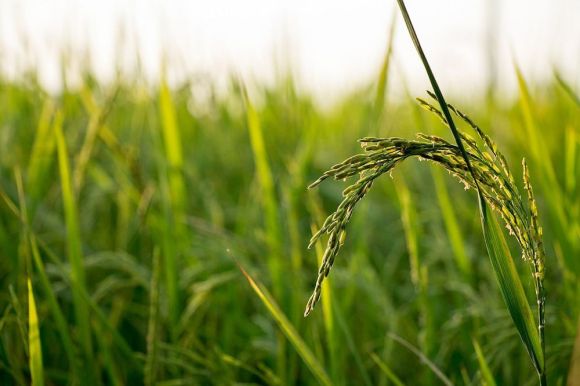 Image: Pixaby
Business analysts forecast the “agri-tech” market is primed for extensive growth internationally over the decades ahead. As global population is expected to reach 9 billion by 2050, food needs would require a doubling of agricultural production, state U.N. World Food Programme experts.
Offering technological solutions, “agri-tech” businesses are marketing a wide variety of products and services for meeting industry demands, to generally increase productivity, lower costs, use less resources such as energy, water and pesticides, and improve produce quality and availability.
There is also a strong demand for labor saving and assistive agricultural equipment driven by a different demographic trend, that of ageing agricultural farmers, whereby according to U.N. figures, in developed countries the average age is 60, and where in Japan it has risen to 67.
Overall Japan has a shrinking agricultural sector, demonstrated by government data showing the number of full-time farmers at 1.7 million in 2014, declining from 2.2 million a decade earlier. Workforce and skills shortages are compounded by the lack of young people becoming farmers. Also, due to the increasing rate of farmers retiring, the overall amount of uncultivated farmland within Japan has doubled over the past two decades, increasing to 420,000 hectares in 2015.
Japan’s reliance on food imports is a further factor of concern, currently estimated at 60%, prompting recent government targets for boosting domestic production to 55% by 2050. Agricultural production at present is valued at around 1 trillion yen of which the government aims to increase to 10 trillion yen by 2020, raising food self-sufficiency as a major agricultural policy.
Another government initiative is 4 billion yen budgeted over the year through March for promoting farming automation technology in order to raise crop yields and make-up for workforce deficits. Specifically, the financial subsidy supports the development of 20 robot types, such as devices which separate over-ripe fruits during harvesting, to enable large reductions in manual farm labor.
As physical activities bring more difficulties for a greater number of aging farmers, technological innovations to assist with and replace workers performing agricultural tasks is an urgent priority.
Japanese tech companies are heavily investing in agricultural technology as a big opportunity for profits in both domestic and global markets such as India and the APAC countries, attracting small scale start-ups to big corporations such as Mitsubishi, Fujitsu, and Panasonic, to name but a few.
There is also a trend for farmland in Japan to be cultivated by “business farmers” and “agribusiness,” at around 50% today, leading to 80% by 2025, according to government estimates.
As an indicator of growth potential in the “agri-tech” sector, the global market for agricultural robots is projected to reach $73.9 billion by 2024, up from $3 billion in 2015, predicted by Tractica, a market intelligence firm. Driverless tractors are trended to gain the highest revenue at $30.7 billion by 2024, with agricultural drones comprising the most amount of units shipped.
The applications of farming technologies are wide ranging and often interconnect. A typical farm scenario could involve a driverless tractor in a rice paddy field utilising a global positioning system, both synchronised to automate cultivation and fertilization after monitoring the soil conditions.
For work that is harder to be automated, wearable robotics put on like a backpack have been designed to assist harvesting and carrying produce, more so for elderly and female farmers.
As well as automating work, high-tech farming technologies provide accurate information which farmers can use to make decisions managing crops. For example, a combination of high resolution drone images, historical weather data from geo-satellites and sensors in the field would generate real-time alerts on mobile devices to inform farmers when to reduce a mandarin orchards water supply, so the trees absorb less water from the soil, therefore increasing sugar levels of the fruits.
The valuable experience and techniques of veteran farmers could also be more accessible to newer farmers via the web, such as learning resources about harvesting times with databases and photos.
Many news items about “agri-tech” businesses have featured in both the Japanese and international media, with reports of indoor “vertical farms” and automated greenhouses gaining the most coverage. There is often a focus on robotic automation, also the use of IT systems and sensors to measure and control growing processes, evidently enhancing work efficiencies, crop yields and produce quality.
For example, GRA Inc is a medium-size Japanese business with an automated indoor greenhouse facility producing strawberries, providing a reliable quality and increased supply all year round.
The company joins conventional farming expertise and technological innovation, employing local farmers as advisors and management, founded by a former IT administrator turned agriculturalist.
Based in Miyagi Prefecture, the business started a few months after the Tōhoku disaster. In an area famous for its strawberries, thousands of greenhouses were destroyed and damaged ensuing huge losses for farmers. The business has therefore helped to modernise and revitalise regional trade.
Such stories show the real potential for young tech-savvy farmers to work alongside older, more experienced farmers, toward overcoming the challenges confronting Japan’s agricultural industry.
Allan Croft is a freelance writer focusing on the latest science, tech and green news in Japan and Asia.
 World’s first robot-operated farm to start operations in Japan next year
 Japan’s new wave of farmers: the former bikers and gang members of Vegefru Farms
 Green Tokyo: 5 cool examples of urban agriculture
 Japanese toilets become even more high-tech with new floating panels
 Shizuoka Prefecture may lose title of Japan’s top tea producer to rising star Kagoshima
 Japan reportedly adding Japanese language skill requirement to most common foreigner work visa
 Pokémon and Ikea Japan cross over into each other’s worlds with collaboration events
 You can assemble a well-balanced team of Pokémon, them eat them, thanks to Japanese cake chain
 7-Eleven Japan’s new baked-in-store sweet treat is only available in three parts of the country
 Starbucks Japan closing only Shinkansen platform branch for popularity-triggered renovations
 Japan now has a special desk for people who work at home with a pet cat[Photos]
 Japan named most sleep-deprived country for fourth year in a row, according to survey
 Sailor Moon’s Artemis is part of the Artemis II NASA mission control team[Video]
 This overlooked neighborhood east of Tokyo is awesome in many ways, left us with just one regret
 Haunted hospital near Mt Fuji re-opens after renovation at Fuji-Q Highland, and it’s terrifying
 Pokémon lacquerware series expands for Year of the Horse with new handcrafted design[Video]
 Two food hacks take Japan’s convenience store fried chicken to amazing new sandwich heights
 Tokyo’s best museum for foreign travelers finally reopens after being closed for four years
 Totoro Fund line of beautiful artwork and apparel lets you help the real-world Totoro Forest
 Fading Tokyo – Searching for signs of the Showa era as local neighborhoods evolve[Photos]
 Tokyo turns its phone booths into free Wi-Fi hotspots, and here’s how to use them
 Famous Tokyo cherry blossom spot installs view-blocking screens to fight overcrowding[Video]
 Uniqlo announces new T-shirts for One Piece, Naruto and more for manga publisher’s 100th birthday
 Train station platform ramen store closes its doors on half a century of history in Tokyo
 Starbucks Japan releases new My Fruit³ Frappuccino at only 34 stores around the country
 Studio Ghibli releases Catbus pullback keychain that runs like the anime character
 Krispy Kreme releases Super Mario doughnuts in Japan for a limited time
 Japanese onsen egg maker from 100-yen store Daiso needs to be on your shopping list
 Nine great places to see spring flowers in Japan, as chosen by travelers (with almost no sakura)
 Survey asks foreign tourists what bothered them in Japan, more than half gave same answer
 Japan’s human washing machines will go on sale to general public, demos to be held in Tokyo
 Starbucks Japan releases new drinkware and goods for Valentine’s Day
 We deeply regret going into this tunnel on our walk in the mountains of Japan
 Studio Ghibli releases Kodama forest spirits from Princess Mononoke to light up your home
 Starbucks Japan releases new sakura goods and drinkware for cherry blossom season 2026
 Japan’s newest Shinkansen has no seats…or passengers [Video]
 Major Japanese hotel chain says reservations via overseas booking sites may not be valid
 Put sesame oil in your coffee? Japanese maker says it’s the best way to start your day【Taste test】
 No more using real katana for tourism activities, Japan’s National Police Agency says
 Original Tamagotchi goes on sale again in Japan in nostalgia trip two decades in the making
 Here are the 10 richest companies in Japan: Can you guess which is number one?
 Anti-insect laser gun turrets designed by Osaka University, expected to work on roaches too
 Subway Japan purchased by Japanese izakaya pub company with penchant for organic farming
 Quality-spaghetti making robot starts working in Tokyo at the end of the month【Video】
 Japan Railways wants to build a team of robots to help travelers, catch criminals in its stations
 Japan overwhelmingly favors CDs to digital music
 Japan now has a transforming giant robot/car that two full-sized adults can ride in【Video】
 AI security cameras coming to stores in Japan, reduce shoplifting by 40 percent
 Canon shows off video-game-like replay tech for real games of Rugby World Cup in Japan
 Job Buddhas and paper hand jobs: Thai government’s list of jobs foreigners may not do is amazing
 “Why Japan has so many vending machines” video makes some good points, but misses key factors
 7-Eleven Japan’s ramen-cooking robot whipped us up a bowl of noodles【Taste test】
 Japan Post, IBM, and Apple to develop senior-friendly tablets
 Why is Japan such an unpopular tourist destination?