

We’ve talked before about a few of the discriminatory measures against women in Japan, but there are still a few more. Let’s take a peek!
Last time, in our Women in Japan Series, we looked at jobs, rituals and accommodation options that impose bans and semi-bans on females. Today, we turn our attention towards laws, religious practices and an island down south, where we begin our journey into four more things women are banned from doing in Japan.
1. Visiting Okinoshima Island
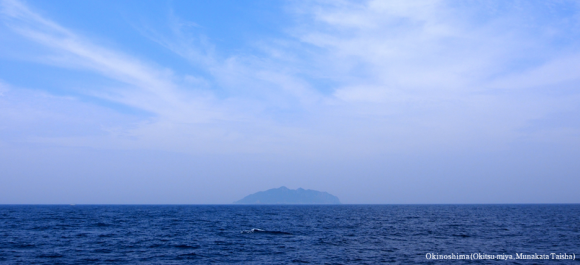 Screenshot: YouTube/munakatakao
Okinoshima, off Kyushu, is a tiny 0.7 square kilometer (70-hectare) island, a mere dollop of primary forest sandwiched between Korea and Japan in a 200-kilometer (124-mile) stretch of the Genkai Sea. The island was traditionally visited by seafarers trading goods between China, Korea and Japan and provided a place to beseech the gods for safe passage. Over 80,000 relics, now designated national treasures, have been unearthed on the island, including 23 ruins and their associated rituals, some of which date as far back as the late fourth century. The mysterious island is one of Japan’s sacred places, and is inhabited by a goddess, yet women are banned from visiting. Women may worship, but only from neighboring Oshima Island, where they can look out at Okinoshima Alcatraz-style from a building several kilometers away. No news as to whether rental binoculars are available or not.
So it’s a wonder Japan would invite attention, and likely international criticism, by nominating Okinoshima and the related sites in the Munakata region for 2017 UNESCO World Cultural Heritage status. I sense a storm brewing.
Interestingly, in a tourism video for Okinoshima, the authorities thought it would be best to use a female narrator to read verbatim, in monotone, from a carefully prepared script that describes the island she is prohibited from ever setting foot on.
▼The Munakata Grand Shrine includes Hetsu no Miya Shrine, Nakatsu no Miya Shrine (Oshima Island), and Okutsu no Miya Shrine (Okinoshima Island).
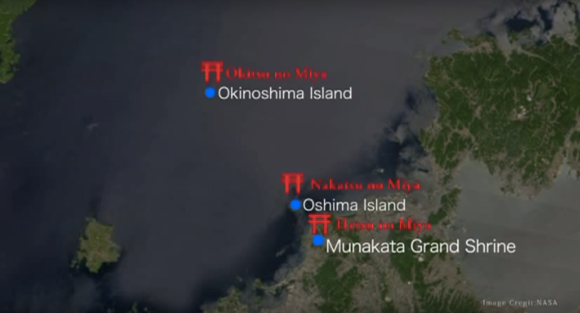 Screenshot: YouTube/munakatakao
▼This photo shows how the shrines line up in a fortuitous line connecting Kyushu with the rest of the Asian continent.
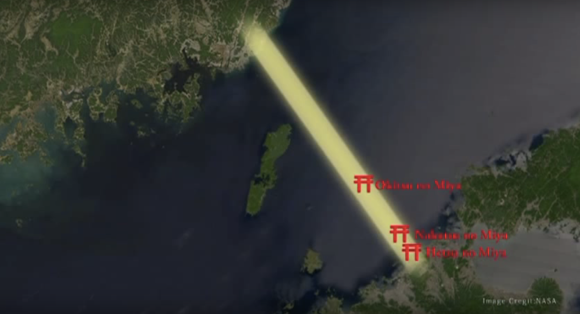
Screenshot: YouTube/munakatakao
The good news, if there is any, is that in the event that Okinoshima obtains UNESCO World Cultural Heritage status, all tourists, male and female, will likely be barred from visiting the island in order to preserve its original sanctity as a remote place of worship, removed from most of the world.
2. Ascending the Imperial Throne
 Wikimedia Commons/Philip Nilsson
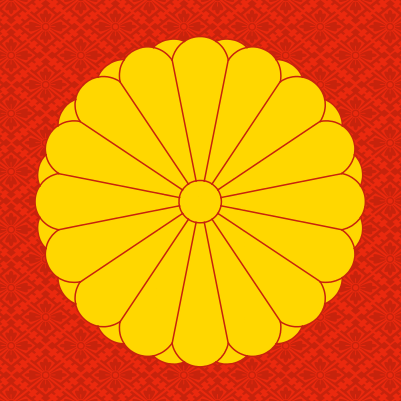
According to the Imperial House Act, females of the household cannot become emperors. For a while, since the current emperor had no grandsons, it seemed like Japan was destined to change and allow a woman to ascend the Chrysanthemum Throne in order to keep the Imperial Family extant. With no male heir in line to the throne, surveys of the Japanese public repeatedly showed that the majority were in favor of allowing a female emperor. But the glass ceiling of the Imperial Household remained intact due to the 2006 birth of Prince Hisahito, the emperor’s grandson, effectively ending any discussion of adopting a more epicine throne. Although there have been female emperors in the past (as recently as 1770), such monarchs were unique in that they had no children, which is where the discrepancy lies. Females in the Imperial family lose their royal status if they don’t marry another member of the Imperial family. Right now, with just 23 members in the Royal family, it is so small that the only choice for an Imperial heiress is to marry outside the clan. Since the world’s oldest monarchy depends on blood lines of male progenitors’ lineage, the Imperial House Act is unlikely to ever change unless threatened with extinction.
3. Retaining a surname different from her spouse’s
In Japan, the koseki 戸籍 family registry system records all legal family relationships (births, deaths, marriages, divorces, adoptions, etc). In the case of a marriage, one spouse must legally assume the other’s surname and be listed on that person’s registry. Thus, two married Japanese people cannot maintain separate surnames. When a woman marries, she must either take the name of her spouse, or her spouse must take hers. There are certainly cases when the man takes his wife’s name, but these instances are mostly limited to those women who have no male siblings in order to carry on the lineage of her own family’s name. As a result, in the majority of marriages, it is the woman who is expected to take the husband’s name. The koseki system is often cited as discriminatory towards women, who may want to retain their maiden names in the workplace for business or career reasons but are prevented from legally doing so.
When a woman took her case to the Supreme Court last year to protest this rule, the court upheld the provision, declaring the koseki law “constitutional.” In principle, however, many Japanese women continue to use their maiden names throughout their careers.
4. Participating in certain Shinto celebrations
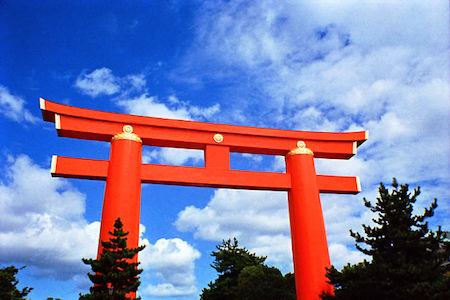
Women have been banned from certain Shinto, Buddhist or Shugendo religious practices in Japan over the centuries, including, until recently, being banned from participating in the famous Gion Matsuri in Kyoto. While time and gender equality have helped change most of these denunciations, there are still some Shinto and Shugendo rituals where nyonin kinsei, the banning of women, is still enforced. In addition to nyonin kinsei on Mount Omine and Okinoshima Island, there are still Shinto ceremonies in which women aren’t allowed to participate. Even in the small community where I live, the annual Myoken Shrine ceremony is closed to women. However, due to the current depopulation trend and the fact that women tend to live longer than men, there just aren’t enough men around to pull off the ceremony by themselves. So they are going to let women attend, mainly out of necessity.
Interestingly, nyonin kinsei hasn’t always been a traditional part of Japanese society. Japan’s native Shinto faith where death and blood are dirty–called kegare–gave rise to a long tradition of purification rituals. Women began to be associated with kegare because of menstruation but this only crept into the religious ethos near the end of the Heian Period (794-1185). According to Naoko Takemaru in her book “Women in the Language and Society of Japan: The Linguistic Roots of Bias”, during the Kamakura Period (1185-1333), the idea that women were kegare was extended further to mean men were superior to women (danson johi), a concept that took hold among the Edo samurai classes (1603-1867). But it wasn’t until the Meiji Period (1868-1912) that it was widespread, serving to complement the introduction of the new patriarchal family system that made the eldest son the head of the household. This family system was abandoned after WWII but danson johi still manifests itself in likely places such as religious dogma and places where people traditionally already struggle for power such as in business and politics.
One of the reasons, I feel, that nyonin kinsei still exists in Japan today is that modern Japanese women don’t really care if they can’t participate in certain religious rituals. Many tasks in Japan are antediluvian divisions of labor between males and females and women don’t necessarily feel these conflict with their desires. If anything, in smaller communities such as my own, which is so dependent upon everyone’s joint efforts, inclusion increases a woman’s responsibilities and obligations. As the country moves further away from religion as a part of every day life, it’s no wonder women are quite happy not having to participate in more religious activities. Ban women from entering cake shops, however, and you can expect a coup.
In these modern times, more than nyonin kinsei, danson johi is by far the greater evil.
©RocketNews24
Sources: The Japan Times, YouTube/munakatakao, Wikipedia, Christoph Brumann, “Tradition, Democracy and the Townscape of Kyoto: Claiming a Right to the Past.” Naoko Takemaru,”Women in the Language and Society of Japan: The Linguistic Roots of Bias.”
Top Image: Flickr/Big EUG
 Four things women are banned from doing in Japan【Women in Japan Series】
 10 things that make Japan female-friendly【Women in Japan Series】
 Is Japanese language becoming less discriminatory towards women?【Women in Japan Series】
 Why aren’t there more female entrepreneurs in Japan? Pull up a chair… 【Women in Japan Series】
 Ancient temple with National Treasures is a hidden gem on the Nara Yamato Four-Temple Pilgrimage
 Foreign man arrested for walking on Shinkansen tracks, claims he was on the run from yakuza
 Mt. Fuji decorated with a 500,000-flower pink carpet is Japan’s ultimate spring view
 New Travelling Bento pouches turn your luggage into a Japanese lunch box
 Schoolkids learn life skills through shopping field trips at street markets in Kochi Prefecture
 McDonald’s and Gundam team up for customized anime mecha and fried chicken sandwiches[Video]
 Which Gundam is the favorite for fans in different countries? Gundam election announces results
 Studio Ghibli unveils Mother’s Day gift set that captures the love in My Neighbour Totoro
 Disney young adult novels get new beautiful shojo anime-style covers for Japan
 All Japanese customers banned from restaurant…in Japan?!?
 The young girl starring in this cool retro-style McDonald’s Japan video is actually 62 years old!
 Japan reportedly adding Japanese language skill requirement to most common foreigner work visa
 Pokémon and Ikea Japan cross over into each other’s worlds with collaboration events
 Starbucks Japan closing only Shinkansen platform branch for popularity-triggered renovations
 Two food hacks take Japan’s convenience store fried chicken to amazing new sandwich heights
 You can assemble a well-balanced team of Pokémon, them eat them, thanks to Japanese cake chain
 Tokyo turns its phone booths into free Wi-Fi hotspots, and here’s how to use them
 Fading Tokyo – Searching for signs of the Showa era as local neighborhoods evolve[Photos]
 Tokyo teahouse serves up a sakura matcha dessert you won’t find anywhere else
 7-Eleven Japan’s new baked-in-store sweet treat is only available in three parts of the country
 Man bites woman at cherry blossom park in Japan, dies shortly after
 Japan now has a special desk for people who work at home with a pet cat[Photos]
 Famous Tokyo cherry blossom spot installs view-blocking screens to fight overcrowding[Video]
 Uniqlo announces new T-shirts for One Piece, Naruto and more for manga publisher’s 100th birthday
 Train station platform ramen store closes its doors on half a century of history in Tokyo
 Starbucks Japan releases new My Fruit³ Frappuccino at only 34 stores around the country
 Studio Ghibli releases Catbus pullback keychain that runs like the anime character
 Krispy Kreme releases Super Mario doughnuts in Japan for a limited time
 Japanese onsen egg maker from 100-yen store Daiso needs to be on your shopping list
 Survey asks foreign tourists what bothered them in Japan, more than half gave same answer
 Japan’s human washing machines will go on sale to general public, demos to be held in Tokyo
 Starbucks Japan releases new drinkware and goods for Valentine’s Day
 We deeply regret going into this tunnel on our walk in the mountains of Japan
 Starbucks Japan releases new sakura goods and drinkware for cherry blossom season 2026
 Studio Ghibli releases Kodama forest spirits from Princess Mononoke to light up your home
 Japan’s newest Shinkansen has no seats…or passengers [Video]
 Major Japanese hotel chain says reservations via overseas booking sites may not be valid
 Put sesame oil in your coffee? Japanese maker says it’s the best way to start your day【Taste test】
 No more using real katana for tourism activities, Japan’s National Police Agency says