Common sense might lead you to believe that “emoji” is simply a variation of “emoticon,” but Japanese common sense tells a whole different story.
We all know emoji as those convenient little pictures that punctuate our tweets and emails letting people know when we’re being sarcastic or facetious. They’re a slicker, modern version of those crude emoticons constructed from preexisting keyboard characters like ;) to express happiness or >8[ to symbolize a grumpy puppet… or something. I don’t know.
The similarities between emoticons and emoji would certainly suggest the names are simply variations of one another. As we all know “emoticon” is just a portmanteau of “emotion” and “icon.” So with emoji being an invention of Shigetaka Kurita working with NTT DoCoMo we could assume that “emoji” is a similar portmanteau of “emotion” and the Japanese word for written character “ji” (字).
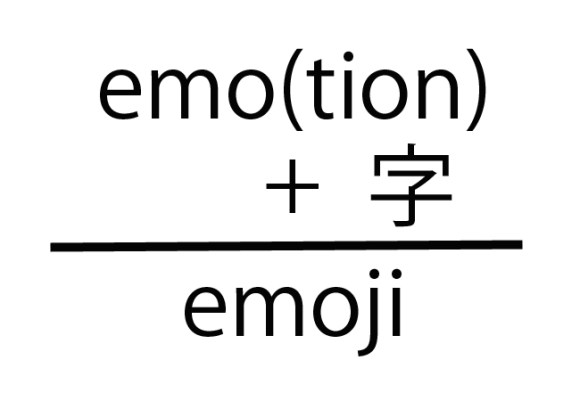
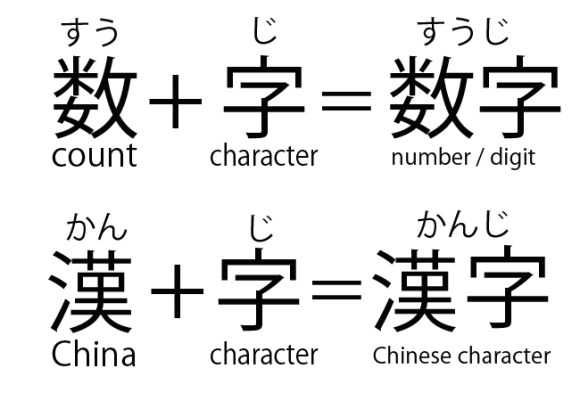
The way “ji” works is as a suffix with the opening part explaining what type of character it is. For example, “kan” which refers to China and “ji” make “kanji” or “Chinese characters” and “su” meaning “count” and “ji” make “suji” meaning “number.” So it’s not a stretch to assume “emoji” follows the same logic but with a slight English twist.
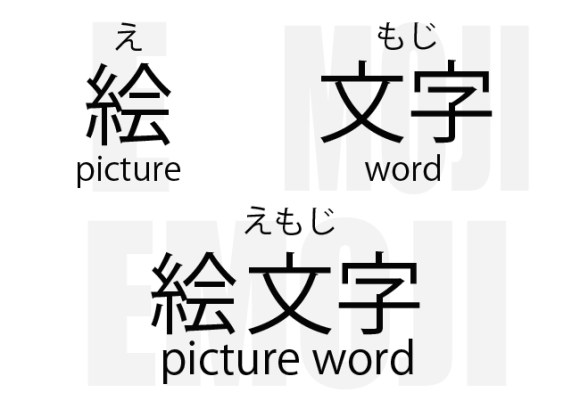
However, one more example would be “moji” which simply means “word.” Now, if we slap on the Japanese word for picture, “e” (pronounced “eh”), we get “emoji” or “picture word.”
▼ “E” (picture) + “moji” (word) = “emoji” (picture word)
Although common knowledge in Japan, this open secret caused a bit of a stir when posted on the Today I Learned page of Reddit leading to comments such as:
“If this is the case then everyone mispronounces it. It would be “eh” Moji, not “ee” Moji.”
“I thought it was emo(tion) + ji (letter)”
“And I did not know that! Thanks.”
“Etymology sure is an emojional rollercoaster!”
“Huh, an instance of ‘found in translation.'”
“Dafuq! I didn’t know!”
Some also figured that rather than a pure coincidence, there was an intentional effort to make the word similar to “emoticon.” It’s possible, but emoticons weren’t used in Japan very much. Instead, kaomoji (顔文字) — where “kao” means “face,” hence “face words” — were the preferred digital smileys.
▼ Kaomoji tend to be more detailed and less ambiguous than older emoticons such as this one that means “my eyeball just fell out and exploded.”

If you would like to learn more about the fun of kaomoji and beyond, check out our tutorial on some Japanese IME functions.
As for the true meaning of “emoji,” the lack of “emotion” being a part of it makes perfect sense, considering facial expressions only make up a fraction of the entire emoji catalog. Unless “post office” and “tractor” are simply feelings I haven’t gotten in touch with yet.
Source: Reddit
Images: ©SoraNews24


Emoji is the new black: Could emoji fashion be the next “kawaii” trend?
Keyboard app shares most common emoji by country, Japan’s are completely different from others
What’s that emoji? Let’s take a look at Japanese culture with these texting emoticons!【Part 1】
Newest Japanese Twitter craze has users guessing movies using only emoji as hints
Japanese survey finds top 10 emoji that “make you look like an old man”
Foreign tourists in Japan eat far more rice than previously thought, according to new data
Kyoto receives more foreign tourists than ever before, but fewer visitors say they’ll return
JR releases prediction of peak Shinkansen crowdedness for Japan’s Obon travel season
Starbucks Japan unveils new coffee drinks… for people who don’t drink coffee
Starbucks Japan unveils exclusive new Frappuccinos limited to three regional areas
Life-size Legendary Pokémon Mega Rayquaza digitally greeting travelers at Tokyo train station [Vid]
Maximum entry fee for sento public baths in Tokyo increases slightly for adults next month
Official Final Fantasy beers are going on sale in Tokyo this month, giant Aetheryte appearing too
Starbucks Japan releases new “Afterword” collection that gives coffee waste a second life
Japan has a maid hotel you can stay in, and it’s now taking reservation applications
Tokyo subway installing new ticket gates that don’t accept payment through Suica or other IC cards
Japanese Shinkansen becomes an overnight hotel for three nights this summer
New Shinkansen luggage drop-off system begins in Japan, making train travel even easier
99-year-old woman rescued while attempting to climb Mt. Fuji
Which country’s foreign tourists spend the most money per-person in Japan? Hint: Not the U..S. or China
Starbucks Japan releases a miniature display rack so you can create your very own store at home
Giant Evangelion Spear of Longinus to be installed at Japanese train station with Eva art trains
Face lettuce appears in Japan, with the face of Death Note’s Light Yagami, but why?
Kodama Shinkansen trains on popular Japan route get a whole new look this winter
Pokémon Card Stores requiring facial recognition scans for entry in Japan in latest anti-scalper move
Studio Ghibli has a new anime out, and there’s only one place in the world where you can see it
Salomon releases Japan-exclusive Mt. Fuji hiking gear that doubles as an amazing souvenir
Japan now has human refrigerators inspired by Japanese vending machines
Hatsune Miku collaborates with Hokusai’s art in new Vocaloid ukiyo-e illustration series [Pics]
Japan triples departure tax, foreign tourists and locals now must pay more to leave country
Studio Ghibli releases anime T-shirts that pay homage to one of Hayao Miyazaki’s most personal films
Family Mart opens new “Famima” flagship store in Tokyo that’s like a tourist attraction
Uniqlo looks back to the very start of Pokémon with new black-and-white pixel art T-shirts[Pics]
Japan announces sudden 400-percent increase in visa fees for foreigners entering the country
Japan’s human washing machines will go on sale to general public, demos to be held in Tokyo
Starbucks Japan releases new drinkware and goods for Valentine’s Day
Starbucks Japan releases new sakura goods and drinkware for cherry blossom season 2026
Japan’s newest Shinkansen has no seats…or passengers [Video]
Japanese ninja certification exam attracts 131 candidates from Japan and abroad
Put sesame oil in your coffee? Japanese maker says it’s the best way to start your day【Taste test】
World’s most popular emoji ranking shows something missing from Japan’s top picks
English conversation school in Japan has clever reminder that students don’t have to be perfect
Do you use these “Philippine English” words and phrases?
How do you say ‘Google it, you trash’ in British English? Answer surprises many in Japan
Adorable dog plushie from Japan looks 100-percent like actual dog, but nothing like you’d expect
Passing the JLPT N1 — Here’s how I did it, so you can too!
Avengers film’s Japan scenes look just like the real Japan…if you haven’t spent much time there