
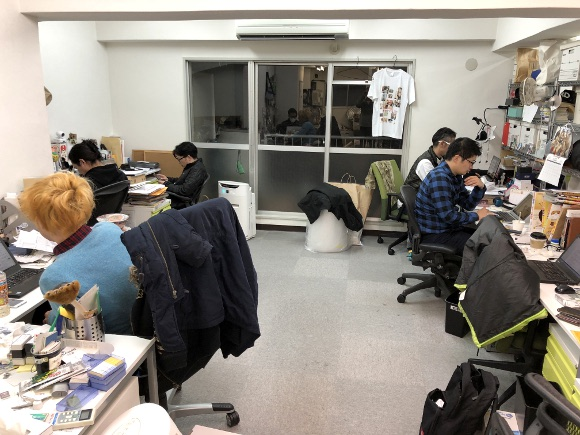
Our veteran salaryman-turned-reporter gives his idea for the one thing that has to change before Japan will stop working itself to death.
Japan is an incredibly hard-working society, so it might surprise people to know that the country is actually allotted a pretty decent amount of vacation days. In an annual study by online travel provider Expedia, the results showed that Japanese workers were given 20 vacation days a year, more than the average for the U.S., Hong Kong, Korea, and Singapore, and as many as India.
But the more important statistic is how many of those vacation days people actually use. Not only was Japan last in the 12-country survey in terms of how many days it took off, Japan had the lowest vacation-usage rate, with workers using only 50 percent of their allowed time off. Since 2009, Japan has ranked last in vacation-usage rate every year except 2014 and 2015, when it was still a dismal second to last.
Even though Japan sees industriousness and mental endurance as extremely laudable virtues, there’s a quietly growing sentiment in Japanese society that overwork is reaching dangerous levels. Government organizations and private enterprises have been trying all sorts of strategies (some stranger than others) to encourage people to take their rightful time off, but often the results are middling or worse.
So what should they be doing instead? Our Japanese-language columnist P.K. Sanjun has an idea, so let’s turn it over to him.

Looking back on my 15 years as a working adult, before landing at SoraNews24 I worked in business consulting, web design, and real estate. Until my current job, I was always what you’d call a salaryman, and I think I’ve figured out why it’s so hard for people to take vacation time in Japan.
Essentially, the thing that made taking time off was always the same, no matter which company. When asking for time off, the workers always had a feeling of vaguely defined guilt.
“Everyone else is going to be working hard that day, so is it OK for just me to take time off?”
“It’s not like I’m feeling sick or anything, so if I take time off, will everyone think I’m lazy?”
Just when I was going to ask for a day off, those kinds of thoughts would run through my mind, and I couldn’t bring myself to fill out the vacation request paperwork. So I wouldn’t take time off, the vacation days I’d accumulated would expire, and the cycle would start all over again.
So what has to happen before employees in Japan will start taking their days off? My proposal is simple.
The boss has to take a lot of time off.
This is the only way things will change. Starting with the company president, then the vice president, then senior managers, then middle managers…all of the higher-ups have to take the initiative and use their vacation time. I wish company presidents would get the ball rolling by taking a day off in January, to set the tone for the rest of the year.
No matter how much the boss may say “Feel free to take time off,” if he doesn’t take time off himself, his employees aren’t going to either. For so many Japanese people, they’ll only be able to think “Oh…then I guess I can take a day off too” if they see their boss taking time off first.
It doesn’t matter what sort of legal regulations they put in place. The only way Japan’s vacation-use rate is going to budge is if bosses take time off. So if you’re a manager in Japan, start taking that vacation time. Do not leave any of our allotted days unused. Either rest hard or play hard, then work hard! That sort of boss is exactly who workers in Japan are waiting for.
Reference: Expedia Japan
Images ©SoraNews24
[ Read in Japanese ]
 Survey shows Japanese workers least likely to take vacation time, most likely to hate their job
 Japan’s “workstyle reforms” are actually making managers’ jobs a lot harder【Survey】
 Top 11 tweets to make you feel glad you don’t work in Japan
 “I am actually a homosexual”: Memories of when a Japanese boss came out to his subordinate
 With Japan’s day care shortage, how hard is it to bring your baby to work with you? We experiment
 Pokémon and Ikea Japan cross over into each other’s worlds with collaboration events
 Two food hacks take Japan’s convenience store fried chicken to amazing new sandwich heights
 Can a downtown Tokyo super sento bathhouse beat a hotel for a one-night stay?
 Pokémon Centers across Japan cancel April events after stabbing in Tokyo
 10 things you should buy at 7-Eleven in Japan
 Does this video about an abandoned dog leave you wiping your eyes or shaking your fist?
 Ultimate bachelor chow recipe: Cheeseburger-style furikake toast【SoraKitchen】
 Hayao Miyazaki gifts autographed Ghibli anime cel to president of France[Photo]
 Senkoji: The Japanese temple that’s more like a theme park to heaven and hell
 Tokyo’s best museum for foreign travelers finally reopens after being closed for four years
 Famous Tokyo cherry blossom spot installs view-blocking screens to fight overcrowding[Video]
 Pokémon lacquerware series expands for Year of the Horse with new handcrafted design[Video]
 Japan now has a special desk for people who work at home with a pet cat[Photos]
 Uniqlo announces new T-shirts for One Piece, Naruto and more for manga publisher’s 100th birthday
 Picturesque Tokyo park plays host to millions of flowers and soap bubbles this spring
 Tokyo subway and almost all Tokyo train lines now accepting credit card tap payments
 Totoro and Calcifer become little light-up lanterns for Ghibli-style excursions or at-home decor
 Fading Tokyo – Searching for signs of the Showa era as local neighborhoods evolve[Photos]
 Train station platform ramen store closes its doors on half a century of history in Tokyo
 Starbucks Japan releases new My Fruit³ Frappuccino at only 34 stores around the country
 Studio Ghibli releases Catbus pullback keychain that runs like the anime character
 Krispy Kreme releases Super Mario doughnuts in Japan for a limited time
 Japanese onsen egg maker from 100-yen store Daiso needs to be on your shopping list
 Starbucks Japan unveils new sakura cherry blossom collection for hanami season 2026
 Survey asks foreign tourists what bothered them in Japan, more than half gave same answer
 Japan’s human washing machines will go on sale to general public, demos to be held in Tokyo
 Starbucks Japan releases new drinkware and goods for Valentine’s Day
 We deeply regret going into this tunnel on our walk in the mountains of Japan
 Studio Ghibli releases Kodama forest spirits from Princess Mononoke to light up your home
 Starbucks Japan releases new sakura goods and drinkware for cherry blossom season 2026
 Japan’s newest Shinkansen has no seats…or passengers [Video]
 Major Japanese hotel chain says reservations via overseas booking sites may not be valid
 Put sesame oil in your coffee? Japanese maker says it’s the best way to start your day【Taste test】
 No more using real katana for tourism activities, Japan’s National Police Agency says
 Japanese company allows workers to take vacation to grieve if favorite idol singer gets married
 Overworked Japanese employees mourn unused paid holidays at new Buddhist memorial service
 Meetings and more meetings: Foreigners list the pros and cons of working at a Japanese company
 Japanese company gives paid vacation to attend idol concerts, e-sport tournaments, other fan events
 On the day of the highest youth suicide rates in Japan, a letter to troubled teens
 Survey finds only six percent of Japanese workers motivated, seventh lowest in the world
 Can one man blow 10,000 yen at Tokyo’s cheapest Italian restaurant? The human otter finds out
 Is work more important to Japanese salarymen than their girlfriends? Survey investigates
 Our reporter goes on a one-night, three-day “Extreme New Zealand Trip” over the weekend
 Tokyo companies’ late-night overtime habits exposed in time-lapse YouTube video channel【Videos】
 Workers’ mental health more important than 2 million yen as ramen chain closes for New Year’s
 Bloomberg’s video makes Japanese business etiquette seem way more complicated than it really is
 What makes a good boss in Japan? Workers sound off in survey
 Japanese company that will quit your job for you sees rush of clients to start 2020
 Foreigner disappointed by Japan’s hazy concept of “work ending times,” so are Japanese people
 We attempt to buy Starbucks Japan’s 60,000 yen lucky beckoning cat