
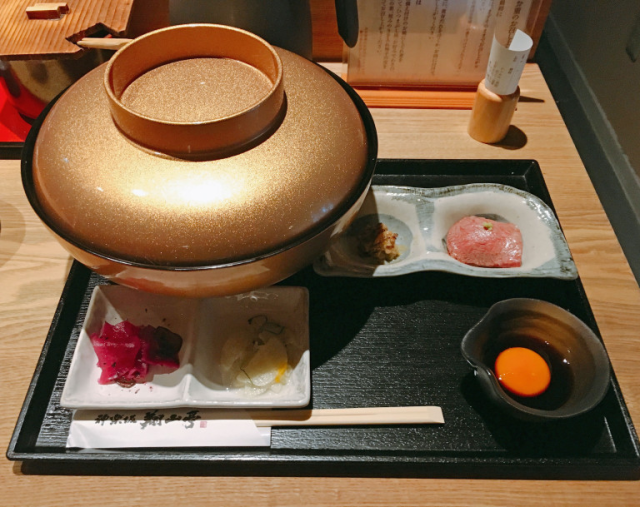
Guidebooks love to say it’s because Japanese people think tipping is rude, but that’s not even close to the whole story.
There are a lot of things to love about restaurant dining in Japan, and one of the nicest comes at the very end of the meal, since there’s no need to leave a tip.
With Japanese cuisine becoming more popular overseas, one American sushi specialist has incorporated the no-tip policy of Japan’s restaurant industry into its own operations, as this photo of the receipt from a restaurant in New York City (believed to be Sushi Yasuda) went viral after being originally shared through Imgur.
This Japanese restaurant in #New York York doesn't allow tipping. https://t.co/nSXQfskcxv pic.twitter.com/90NY76jksp
— bluenile (@bluenile) August 9, 2018
The bottom of the receipt reads:
“Following the custom in Japan, [this restaurant]’s service staff are fully compensated by their salary. Therefore gratuities are not accepted. Thank you.”
The photo above has been met with cheers of approval as it makes its way around the Internet, proving that’s a desire for no-tip restaurant dining in America. So let’s take a look at how Japanese restaurants amanage to function without earning a single yen in gratuities.
1. Tipping isn’t part of Japanese culture
A lot of cultural guidebooks claim that tipping is considered “rude” in Japan, but that’s not really the case. Actually, it’s just seen as weird.
For example, imagine you’re at the supermarket buying groceries. Your total comes to $18, but instead you give the clerk a twenty, and say “Keep the change.” The clerk isn’t necessarily going to be offended, but definitely will be confused, because why would you tip a supermarket cashier?
At some point in time, American society decided that certain service sector jobs, like restaurant wait staff and taxi drivers, deserve tips, and others don’t. Japan sort of did the same thing. It just decided that no service sector jobs require tipping, and so employers have to offer an hourly wage that’s high enough to attract people to work as waiters and waitresses.
2. But Japan does have a form of pseudo-tipping
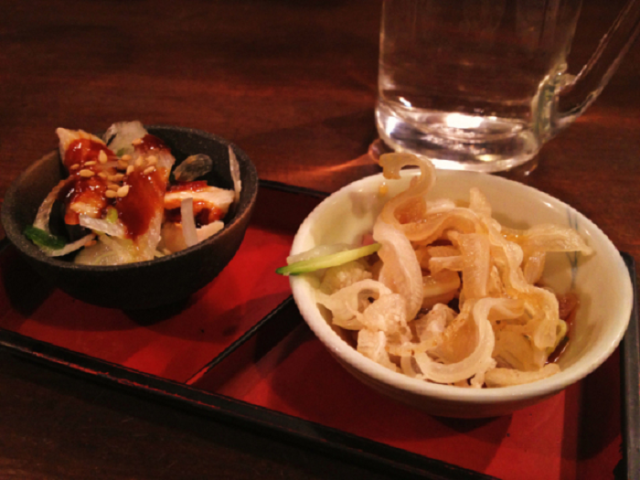
In Japan, there’s no need to pay anything more than the amount on your bill. However, that doesn’t mean that your total is equal to the cost of the food and drink you ordered. At many Japanese restaurants, after you’re seated you’ll automatically be brought a small-portioned appetizer. However, this isn’t a complimentary nicety like the hot or cold hand towels that are also brought to the table. The appetizer, called an otoshi, is something you’re required to pay for, regardless of whether you want it or not.
Otoshi usually cost somewhere in the neighborhood of 500 yen (US$4.50) per person in your party, though at more upscale establishments they rise towards 1,000 yen. While that might seem like an agreeable price for a regular-sized appetizer, the average otoshi is small enough to be consumed in two or three bites and is usually a simple salad-like vegetable dish made with inexpensive ingredients. Really, its purpose is to smooth over applying a service charge to the meal, and while 500 yen isn’t a huge amount, if you ran up a 2,000-yen tab, it works out to essentially being a hefty 25-percent tip.
Most casual eateries, like ramen joints, revolving sushi restaurants, and okonomiyaki paradises, don’t have an otoshi system, even if they do have table service. At izakaya taverns and gastropubs, though, otoshi are pretty much standard, often with no explicit mention of their cost until you get your bill.
3. Japanese restaurants often take long breaks in the afternoon

One rationale for paying wait staff low wages supplemented with tips is that it acts as an incentive/reward for working during the restaurant’s busiest hours. After all, if there’s hardly any customer traffic between 2 and 6 p.m., a no-tipping restaurant is pretty much paying its staff comparatively high wages just to stand around, right?
But take a look through our restaurant reviews, and you’ll notice it’s common for Japanese restaurants to shut down entirely during the late afternoon. While fast food branches are usually open continually from morning to night, independent restaurants, and even some casual chains, shut down completely after the lunch rush, going dark for a few hours before reopening around the time hungry office workers clock out, and wait staff shifts are often scheduled to end as the break starts.
Some izakaya and upscale restaurants aren’t even open for lunch at all, catering exclusively to the dinner crowd, once again cutting down on the total number of paid hours for waiters and waitresses (though they often stay open later than their American counterparts).
4. Makanai
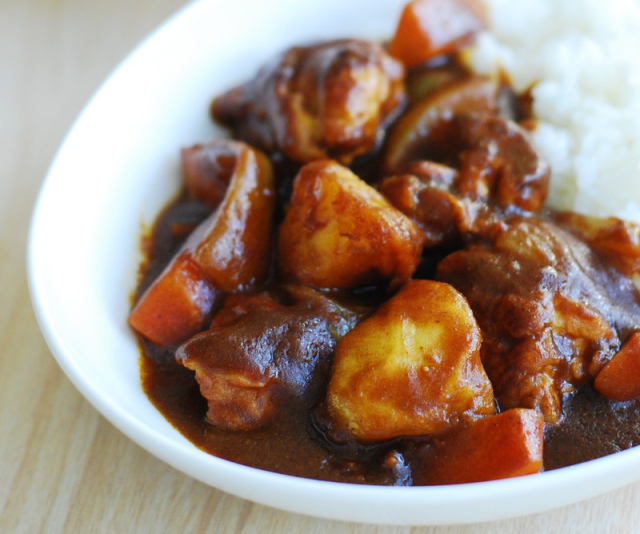
Obviously, one of the reasons restaurant workers need a paycheck is so that they can buy food for themselves, and all else equal, having no tips gives them less money with which to do that. But if you work at a Japanese restaurant, you’re likely to get at least one meal a day taken care of.
Makanai refers to meals made in the restaurant’s kitchen and supplied to the staff for free. Obviously these aren’t going to be high-ticket menu items (curry made with whatever is on hand in abundance is a common makanai), but makanai are still made with restaurant-quality ingredients. Some restaurants’ makanai are so tasty they eventually get promoted to regular menu items for paying customers.
5. Bad service isn’t part of Japanese culture, from either a business or a customer’s perspective

Perhaps the biggest reason for tipping in American restaurants is the belief that it keeps customer service from slipping. Heavy social pressure aside, you’re not legally required to tip in the U.S. Giving the customer the final say in exactly how much to pay ostensibly keeps servers on their toes, since any rudeness or laziness on their part will come back to bite them in the form of a reduced, or absent, tip when the meal ends.
Japan doesn’t feel the need for customers to dangle that sword of Damocles over the cost of each individual meal, though. Taking pride in your work, no matter how humble your profession, is deeply ingrained in Japanese culture. The (generally accurate) assumption is that workers will give a 100-percent effort, not some lesser amount that requires a potential financial bonus in order to boost it to maximum. That work ethic is such a part of Japanese society that if you don’t display it, odds are your boss can easily find someone else who does. Restaurants don’t worry about the possibility of their wait staff loafing on the job if they get paid the same either way, because doing that will get you axed and replaced in short order.
Likewise, Japanese customers have extremely high service standards, but if they’re not met, they don’t feel the need to need to hit a waiter in his wallet…they’ll just never come back to the restaurant again, even after just one bad experience. The potential threat of losing your job because your restaurant went out of business is, in many ways, a much bigger motivator than the prospect of getting a few extra bucks as a tip.
Now none of this is to say that no-tip restaurants aren’t a viable business plan for the United States. It’s also not to say that Japan is the only country where such a thing is possible, but simply that Japan’s version of no-tip restaurant dining isn’t just a case of cranking up the hourly wage, but a number of related social and cultural characteristics.
Top image ©SoraNews24
Insert images: Pakutaso, SoraNews24, Pakutaso (2, 3, 4)
There’s no need to leave a tip after following Casey on Twitter.
 More tip jars appear at Japanese restaurants, but there are important reasons why you shouldn’t tip
 Japanese restaurant chain installs tip boxes in response to foreign tourists leaving tips, sparks debate
 Restaurant payment app starts its second attempt to make tipping a thing in Japan
 Tipping in Japan: Yes, It Exists and It’s Confusing
 All you need to know about Japan’s unasked-for restaurant appetizers that you have to pay for
 30 Pikachus want to share a Tokyo hotel room with you that has separate Grass, Water, Fire spaces
 Mt. Fuji decorated with a 500,000-flower pink carpet is Japan’s ultimate spring view
 McDonald’s and Gundam team up for customized anime mecha and fried chicken sandwiches[Video]
 Howl’s Moving Castle’s scene-stealing dog is here to clean your home as a plushie mop
 New Travelling Bento pouches turn your luggage into a Japanese lunch box
 Studio Ghibli adds magic to your matcha with new tea ceremony whisk and bowl
 Pringles Chocolate, but with a Japanese twist, is the snack hack you should be trying right now
 The young girl starring in this cool retro-style McDonald’s Japan video is actually 62 years old!
 Kyoto’s “ikezu” culture of backhanded compliments explained in hilarious souvenir sticker series
 Japanese shrine may have created the most Kyoto-like “wear a mask” reminder ever
 Japan reportedly adding Japanese language skill requirement to most common foreigner work visa
 Pokémon and Ikea Japan cross over into each other’s worlds with collaboration events
 Starbucks Japan closing only Shinkansen platform branch for popularity-triggered renovations
 You can assemble a well-balanced team of Pokémon, them eat them, thanks to Japanese cake chain
 Two food hacks take Japan’s convenience store fried chicken to amazing new sandwich heights
 7-Eleven Japan’s new baked-in-store sweet treat is only available in three parts of the country
 Man bites woman at cherry blossom park in Japan, dies shortly after
 Peanuts and Coke becomes a viral hit in Japan, but is it a trend worth joining?
 Can a downtown Tokyo super sento bathhouse beat a hotel for a one-night stay?
 New Japanese KitKats come in sakura flavour, with poetic symbolism for success
 Japan now has a special desk for people who work at home with a pet cat[Photos]
 Famous Tokyo cherry blossom spot installs view-blocking screens to fight overcrowding[Video]
 Uniqlo announces new T-shirts for One Piece, Naruto and more for manga publisher’s 100th birthday
 Train station platform ramen store closes its doors on half a century of history in Tokyo
 Starbucks Japan releases new My Fruit³ Frappuccino at only 34 stores around the country
 Krispy Kreme releases Super Mario doughnuts in Japan for a limited time
 Studio Ghibli releases Catbus pullback keychain that runs like the anime character
 Japanese onsen egg maker from 100-yen store Daiso needs to be on your shopping list
 Survey asks foreign tourists what bothered them in Japan, more than half gave same answer
 Japan’s human washing machines will go on sale to general public, demos to be held in Tokyo
 Starbucks Japan releases new drinkware and goods for Valentine’s Day
 We deeply regret going into this tunnel on our walk in the mountains of Japan
 Starbucks Japan releases new sakura goods and drinkware for cherry blossom season 2026
 Studio Ghibli releases Kodama forest spirits from Princess Mononoke to light up your home
 Japan’s newest Shinkansen has no seats…or passengers [Video]
 Major Japanese hotel chain says reservations via overseas booking sites may not be valid
 Put sesame oil in your coffee? Japanese maker says it’s the best way to start your day【Taste test】
 No more using real katana for tourism activities, Japan’s National Police Agency says
 10 tips to remember for your first trip to izakaya, Japan’s awesome traditional pubs【Video】
 Stingy people rejoice as Japanese restaurants in New York introduce a ban on tipping
 Five important manners to remember when buying something at a Japanese convenience store
 W.T.F. Japan: Top 5 crazy awesome features of Japanese restaurants 【Weird Top Five】
 Time for Japan to start tipping taxi drivers? Cab company now gives passengers option in Tokyo
 Restaurant raises the bar for customer service in Japan, will help you name your baby
 Survey ranks Japan’s most and least welcoming restaurants of 2014
 What kind of restaurant attracts the politest customers in Japan? Twitter user has a theory
 Ramen restaurant etiquette reminder follows altercation with angry couple: One person, one bowl
 Two incredibly important phrases to remember when shopping in Japan
 7 odd and uniquely Japanese restaurant experiences
 Izakaya etiquette: Stacking your plates after eating doesn’t help waitstaff in Japan
 Pop quiz: Test yourself in 5 situations of Japanese manners and customs
 Why is Japanese customer service so amazing? Because in Japan it’s one strike and you’re out
 Should you turn your bowl upside down after eating at a Japanese restaurant?