

Stimulate your mind and your appetite with a four-course meal of Japanese linguistics, culture, and spicy curry.
In all languages, there are words that have multiple meanings. For example, in English “right” can mean a direction (“Turn right at the corner”), that something is correct (“That’s the right answer”), or that the freedom to perform an action (“You have the right to wear Pokémon underwear, even if it’s not what everyone would choose to do.”).
This doesn’t cause serious problems as long as the various meanings are different enough from one another that it’s easy to tell which is intended by context. But things get tricky with the Japanese word daijoubu, which can mean both “yes” and “no.”
▼ “You lied to me, Casey. You told me the Japanese language doesn’t hate me, but it does, doesn’t it?”

Located in Tokyo’s Suginami Ward, Salam Namaste serves authentic Nepalese and Indian cuisine. However, the restaurant’s Twitter account (@salamnamaste01) also occasionally dishes up linguistic debates, and a recent series of surveys shows that the meaning of daijoubu can be hard to pin down.
だいじょうぶ は ネパールじんにぜんぜんだいじょうぶじゃない
— サラムナマステ Salam Namaste Tokyo सलाम नमस्ते👂🥘🌕🍗🥃 (@salamnamaste01) July 25, 2020
しゃかいじんとおなじぜんぜんわからないにほんごになった...🙏 pic.twitter.com/2UlIY4mAv0
Each survey starts with a theoretical Nepalese person asking a question, in Japanese, to a Japanese person, with their response each time being “Daijoubu.” The Salam Namaste account then asked other Twitter users to vote on whether this daijoubu would translate to “Yes” or “No,” and got widely varying results.
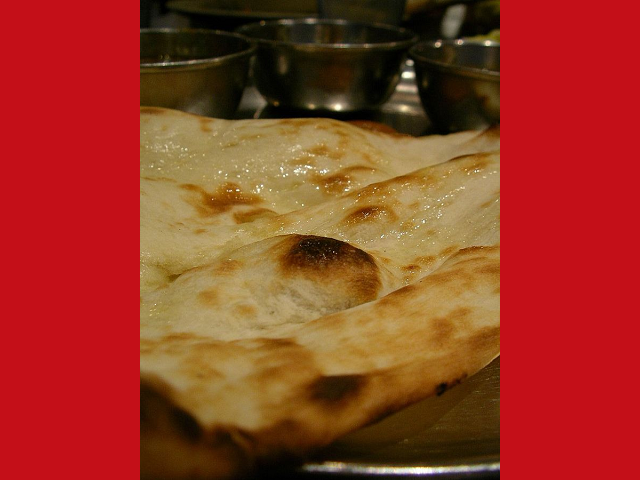
1. “Can you eat another piece of nan bread?”
“Daijoubu.”
This daijoubu means “Yes:” 19 percent of respondents
It means “No:”63 percent
Unsure: 18 percent2. “Can you eat spicy curry?”
“Daijoubu.”
Yes: 86 percent
No: 9 percent
Unsure: 5 percent3. “Can you eat a large piece of nan?”
“Daijoubu.”
Yes: 80 percent
No: 12 percen
Unsure: 8 percent4. “Salam Namaste’s nan is gigantic, but can you eat another piece?”
“Daijoubu.”
Yes: 57 percent
No: 31 percent
Unsure: 12 percent
▼ We will now pause as everyone goes out to pick up curry and nan.
Even though no interpretation was unanimous, the chance of daijoubu being taken to mean “yes” ranged all the way from 86 percent in question 2 down to just 19 percent in question 1. So what gives? Are small portions and subtle flavors such strong characteristics of traditional Japanese cuisine that the language simply isn’t equipped with the means to discuss portion sizes and spiciness levels?
Rest assured that those topics are possible, but there are some quirks of spoken Japanese that can make the intended meaning of the surveys’ daijoubu hard to hash out. First off, if you were going to translate daijoubu directly, it wouldn’t translate as “yes” or “no,” but as “OK.” Where the problem comes up is in determining who, or what, and in what way, is “OK.”
As we talked about in discussing this idol fan who was perhaps telling his favorite performer he looked forward to seeing her thighs again someday, in Japanese, especially spoken Japanese, it’s common to omit entire words if the speaker thinks they can be inferred from context. For example, if you say to your friend “I read an article on SoraNews24 on my phone while taking a poop,” they might respond with “Nani wo yonda no?”, literally “What did read?”, omitting the “you” since that information follows from the last sentence (they might also say “Dude, don’t tell me what you do on the toilet,” but that’s a topic for another time).
Since we now know the actual meaning of daijoubu is “OK,” let’s look at the questions again.
1. “Can you eat another piece of nan bread?”
“Daijoubu.”
(Yes: 19 percent, No: 63 percent, Unsure: 18 percent)
Most people (63 percent) took this daijoubu as “no,” with the ostensible logic that this daijoubu is a way of saying “I’m OK.” If you were hungry, that would be a problem, and you wouldn’t be daijoubu, so if you ARE daijoubu, it means that you’re full, and thus can’t eat another piece of nan.

But what about the 19 percent who think daijoubu here means yes? That would be the endpoint for the train of thought “I want to eat another piece of nan [maybe because it tastes so good], so if I were so stuffed I couldn’t eat another bite, that would be a problem. But I don’t have that problem – I’m daijoubu, so yes, I can eat another.”
So if they’ve both got a certain logic to them, why was “no” the more common interpretation? It’s likely got something to do with Japanese culture’s tendency for earnestness, since the “yes” interpretation requires a bit of facetiousness by treating being full as a bad thing.
2. “Can you eat spicy curry?”
“Daijoubu.”
(Yes: 86 percent, No:9 percent, Unsure: 5 percent)
This question had the least deviation in interpretations, and it’s pretty easy to see why. Being presented with food you can’t eat would be a problem, so whether you’re saying you’re daijoubu or spicy curry is daijoubu, it sounds like you can eat it.
▼ Mmmm….good curry.

So why the smattering of “no” interpretations? Probably a case of thinking an extra step ahead, and also Japanese society’s emphasis on hospitality. If someone is asking you if you can eat spicy curry, there’s a pretty good chance that they’re thinking of cooking some and serving it to you for your dining pleasure. But if you can’t eat spicy curry, you might gently turn down their offer by saying “I’m OK without any spicy curry,” implying that you can’t/won’t eat it.
3. “Can you eat a large piece of nan?”
“Daijoubu.”
(Yes: 80 percent, No: 12 percent, Unsure: 8 percent)
This is pretty much the same scenario as question 2, and once again, “yes” is the overwhelmingly most common interpretation. There’s a little bit more uncertainty here than when we were talking about spicy curry, though, probably because the ability to eat spicy foods is often thought of as a binary thing: if you can handle the amount of heat, it doesn’t matter how much of it you eat, and if it’s too hot for you, even a mouthful is too much. For question 3, though, we’re talking about nan, a buttery bread that pretty much everyone thinks is tasty and is no way intimidating.
▼ Someone probably just asked this kid if she wanted some nan.

But wait, doesn’t this sort of contradict the interpreting for question 1, where most people thought saying daijoubu to “Can you eat another piece of nan?” meant “No?” Kind of, but there’s a key difference here. The offer of a second piece, essentially a refill, is asking the customer if they’d like some sort of special treatment, so daijoubu is likely to come across as “I’m OK, I don’t need a second piece,” or “That’s OK, you don’t have to give me a second piece.”
In question 3, though, we’re presumably talking about the first piece of nan, so “Can you eat a large piece of nan?” implies that the chef has already prepared it, or perhaps that that’s how the restaurant always makes its nan. However, Japan doesn’t always follow the philosophy that bigger is better, and so a server saying that their restaurant’s nan is unusually large might almost be seen as an apology for its abnormality, and if so daijoubu is likely meant as “I’m OK with your unusually big nan” or “It’s OK, you don’t have to go to the trouble of making a smaller piece of nan just for me.”
4. “Salam Namaste’s nan is gigantic, but can you eat another piece?”
“Daijoubu.”
(Yes: 57 percent, No:31 percent, Unsure: 12 percent)
Finally, we come to the most divisive daijoubu, because it’s also the most complex set of circumstances. It’s basically combining question 1, offering another piece, and question 3, offering a larger-than-normal piece, with the added wrinkle that it’s being explicitly stated that that’s how this restaurant makes its nan.
In the end, “yes” won out as the most common interpretation, once again probably due to traditional Japanese values of humility and considerateness. The server is admitting that the restaurant’s food is different than what people probably expect/are used to, and reassuring them that “I’m OK with eating gigantic nan”/”Gigantic nan is OK” would be a considerate thing to do. At the same time, most people probably don’t need two gigantic pieces of nan, so wanting to let the server know “I’m OK without another piece”/”It’s OK, you don’t need to give me another” is also a definite possibility, resulting in the narrowest yes/no split out of the four questions.
If all this has you not only craving curry and nan but also apprehensive about trying to communicate in Japanese, you can take some comfort in knowing that while Salam Namaste’s Japanese-language questions are grammatically sound, they’re a little different from how native Japanese speakers would phrase things. Instead of “Can you eat a second serving?”, a native Japanese server would probably ask “Would you like a second serving?” In that case daijoubu would almost unanimously be taken to mean “no,” since “I’m OK, I don’t need another serving” makes sense, while “That’s OK, I want another serving” is an awkward way to try to get your point across. Likewise, you’re more likely to be asked “This dish is spicy, but is that OK?”, where pretty much everyone would interpret daijoubu as meaning you’re comfortble with spicy food, and not just “Can you eat spicy food?”
In closing, while yes, Japanese can be complicated, it’s not an impossible language to communicate in, and it’s not like daily life in Japan is a never-ending cycle of piles of unwanted nan and punishingly spicy curry.

So don’t worry, it’s gonna be daijoubu!
Related: Salam Namaste website (Tabelog)
Source: Twitter/@salamnamaste01 via Jin
Top image: Pakutaso (edited by SoraNews24)
Insert images: Pakutaso, Wikipedia/Leoboudv (edited by SoraNews24), Pakutaso (2, 3, 4, 5)
● Want to hear about SoraNews24’s latest articles as soon as they’re published? Follow us on Facebook and Twitter!
Follow Casey on Twitter, where he’s always happy to talk about Japanese linguistics and/or nan.
 Hachiji juppun mae – A Japanese phrase that even Japanese people can’t agree on the meaning of
 How should a guy say “I” in Japanese? Japanese women give their opinions【Survey】
 Why you shouldn’t call this food “Hiroshimayaki” if you’re talking to people from Hiroshima
 How should you respond when a Japanese person gives you a compliment?
 New wafu torori hanjuku tsukimi burgers from Lotteria are an edible Japanese vocabulary lesson
 New Pokémon anniversary song is 22 minutes long, features all 1,025 Pokémon species [Video]
 Kyoto temple bans visitors from wearing kimono
 Lego PlayStation recreates Sony’s original console, makes unusual choice for games to salute
 Studio Ghibli adds new finger puppets to its anime merchandise collection in Japan
 New Japanese convenience store rice balls taste like instant noodles [Taste test]
 7-Eleven Japan releases new Tsukimi Moon-Viewing range for autumn, with a must-try daifuku and teriyaki burger
 Kobe middle schools begin abolishing extracurricular activities, shift to community programs
 Starbucks Japan releases new coffee table book featuring 18 of the most unique stores around the country
 Japan’s Tsukimi One-hand Bento’s name is all wrong, but it still looks entirely delicious
 Japan’s revolving sushi restaurant king Sushiro coming to U.S. this fall with high prices, no tipping
 Solo travel in Japan: Hidden beer garden in Tokyo is a haven for single visitors
 A real-world Pokémon Poké Ball hotel is opening in Japan at a still-secret location [Video]
 Japan’s first fall color forecast for 2026 is here!
 Studio Ghibli unveils new anime calendars and diary planners for 2027
 One Piece Day 2026 brings new art, music, and new cast announcements
 Tamagotchi evolves into a ring for its 30th anniversary, preorders now open
 Starbucks Japan reveals new Tsukimi Moon-Viewing drinkware and gifts for autumn 2026
 Family Mart releases Famima convenience store products nationwide, but which ones are worth buying?
 12-year-old British girl who went missing in Tokyo found safe after visiting anime sites around Yokohama
 7-year-old boy left behind on Mt. Fuji by his own dad
 Japan’s final Penguin Suica train cards have already shipped, and when they’re gone, they’re gone
 Sushi Bus: Japan’s first conveyor-belt bus lets you eat sushi while sightseeing around Tokyo
 Japanese toilet aims to attract foreign tourists but not everybody is happy about it
 New Japanese vending machine at Shinkansen station sells cups of ice on platform
 Study finds hundreds of people in Indonesia legally named after Naruto, Inuyasha, other anime stars
 Japan approves foreign resident visa renewal fee increases of up to 967 percent, starts soon
 Japan tripled its departure tax to fund tourism but is using the money on cherry blossoms and bears
 Japan announces sudden 400-percent increase in visa fees for foreigners entering the country
 Japan’s human washing machines will go on sale to general public, demos to be held in Tokyo
 Studio Ghibli has a new anime out, and there’s only one place in the world where you can see it
 Starbucks Japan releases new drinkware and goods for Valentine’s Day
 Starbucks Japan releases new sakura goods and drinkware for cherry blossom season 2026
 Japan’s newest Shinkansen has no seats…or passengers [Video]
 Tokyo subway installing new ticket gates that don’t accept payment through Suica or other IC cards
 Japanese ninja certification exam attracts 131 candidates from Japan and abroad
 Salomon releases Japan-exclusive Mt. Fuji hiking gear that doubles as an amazing souvenir
 Put sesame oil in your coffee? Japanese maker says it’s the best way to start your day【Taste test】
 How to put together a senbero drinking/snack session at Japan’s 100-yen convenience store【Photos】
 Why do Japan’s noisy-gulp drink commercials exist, and are they gross?【SN24 reader survey】
 If this adorable Shiba dog can learn to speak a word in Japanese (and he has), so can you【Video】
 Japanese park’s English dog turd warning minces no words【Why does Engrish happen?】
 Japanese curry restaurant at Shinjuku Station is like stepping into a time machine
 Japanese curry rice appears at McDonald’s, but not in the country you’d expect
 You put WHAT in your curry? Japanese netizens reveal their favourite secret ingredients
 All you need to know about Japan’s unasked-for restaurant appetizers that you have to pay for
 Cup Noodle’s new versions are more expensive with higher-quality ingredients — are they worth it?
 What did Japanese curry taste like 150 years ago? This instant curry pack lets you find out
 Japan’s Tsukimi One-hand Bento’s name is all wrong, but it still looks entirely delicious
 How to turn leftover tempura into fried rice (or why to buy all the takeout tempura you can)
 The trials and tribulations of Japanese lefties
 W.T.F. Japan: Top 5 most confusing Japanese compound words【Weird Top Five】
 Is Japan’s custom of slurping noodles irritating, and why do they do it?【SN24 reader survey】
 Can we pick out the expensive Japanese watermelon in a blind taste test?
