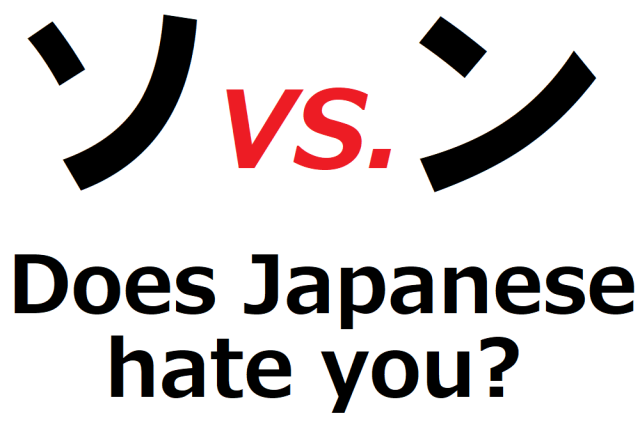
Katakana is supposed to be the easy set of Japanese characters to learn, but there’s a huge exception.
As we’ve talked about before, the Japanese language has three kinds of writing. There’s kanji, the characters originally imported from China in which each one stands for a concept, and also hiragana and katakana, which are both phonetic sets, in which each character stands for a sound.
For most native English-native students of Japanese and expats living in Japan, katakana is by far the easiest. In contrast to the literally thousands of kanji you need to learn to become fluent, there are only 46 hiragana and 46 katakana, and katakana’s more angular shape makes them closer in appearance to the Latin alphabet, and thus easier to remember.
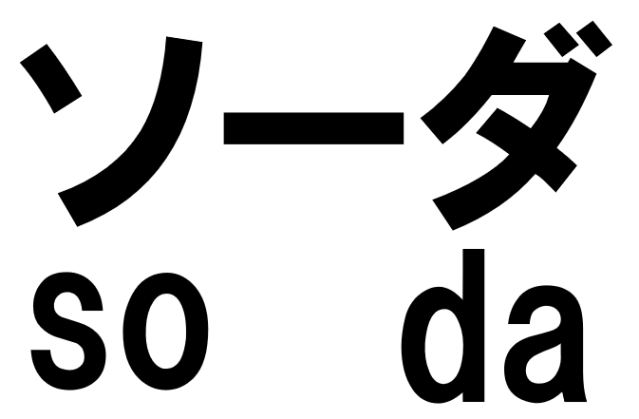
Then there’s the fact that since katakana are used to write foreign loanwords and names, they’re immediately useful, since they’re used to spell vocabulary a native English speaker might already know. For example, in katakana “soda,” as in the fizzy drink, looks like this:
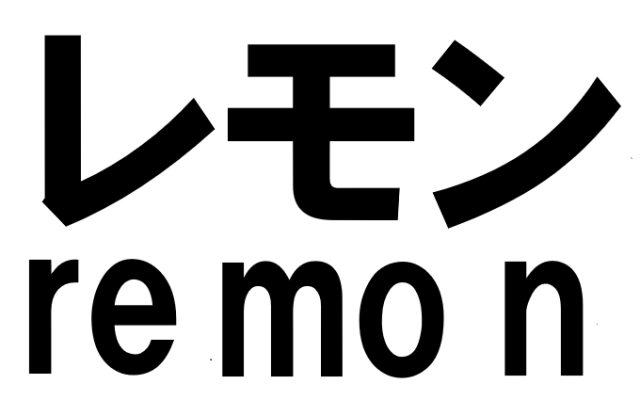
Same deal if you’re writing “lemon” in Japanese (though the L switches to an R, since Japanese doesn’t have Ls): you use katakana.
But…wait. Let’s take another look at the katakana versions of “soda” and “lemon.”
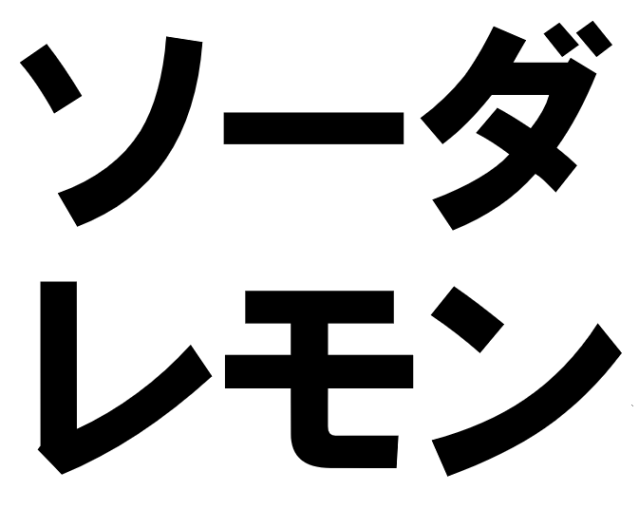
How come the same katakana is pronounced “so” in “soda,” but “n” in “lemon?”
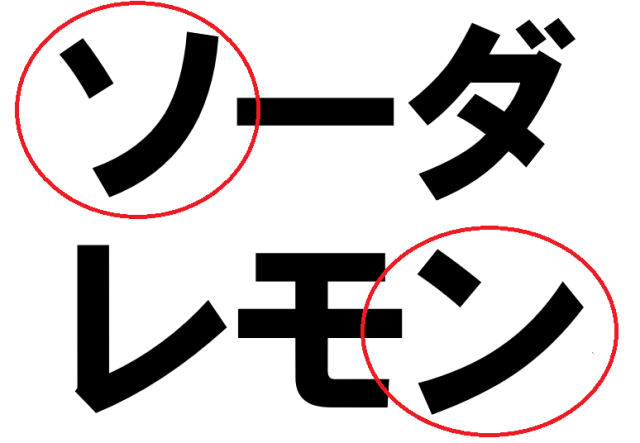
Because they’re actually not the same katakana. While they might look identical at first glance, to the trained eye those are two different characters, with two different pronunciations.
Okay, so how do you train your eye? While it might seem kind of counterintuitive, one way is to understand how the “so” and “n” katakana are written. In both causes, you start with the smaller stroke, but for “so,” that first stroke curves slightly downwards, while for “n” it curves up. The more significant difference, though, is in the direction you write the longer stroke in. For “so,” it’s a downward stroke, and for “n”it’s an upwards one.
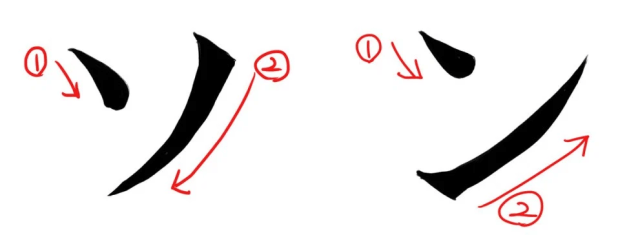
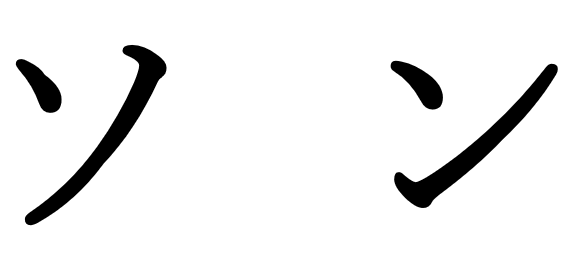
That might not seem so important, but if the katakana are written with a brush, or a font that imitates brushstrokes, the longer strokes for these characters will be thicker at their start, and narrower at their end. That makes “so’s” longer stroke thick at the top, and “n’s” thicker at the bottom.
▼ “so” (left) and “n” (right)
▼ Soda (top) and lemon (bottom)
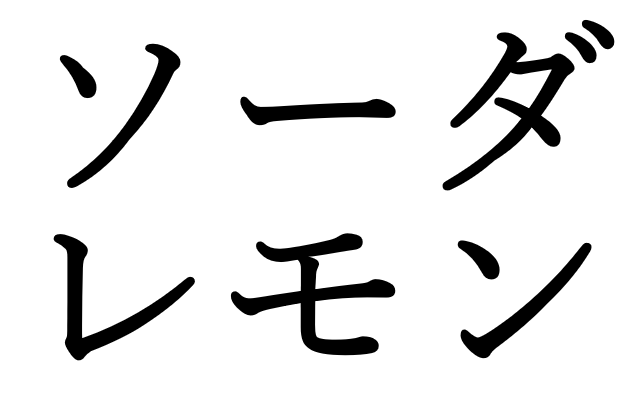
Unfortunately, those stroke order/thickness clues can often disappear with modern, blockier fonts.
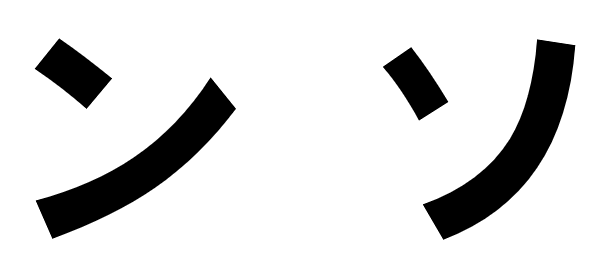
For example, you know how in the side-by-side examples so far, “so” had been on the left, and “n” on the right? Did you notice they’re switched directly above, and it’s “n” on the left?
▼ And now they’re flipped again, with “so” back on the left.
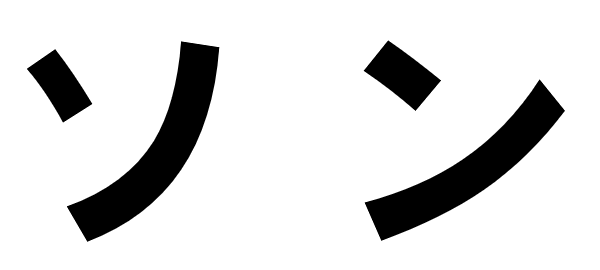
So what’re you supposed to do when confronted with a non-brushstroke font, other than deciding to study Spanish instead? Easy: you look for the angle of the short stroke.
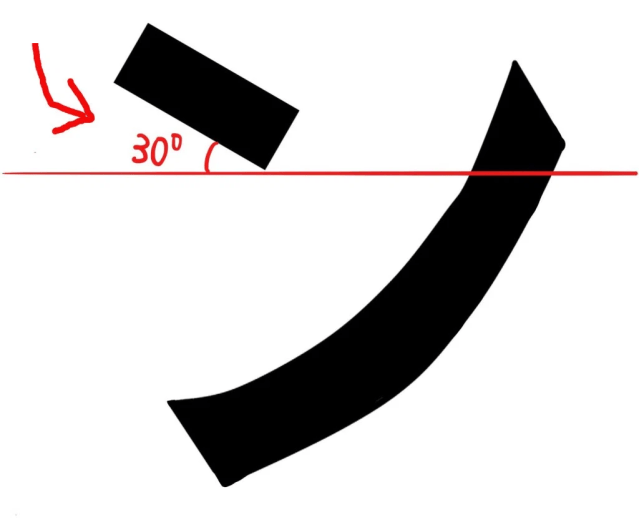
Or, well, sort of easy. See, while the short stroke won’t have any curvature to it in a blocky font, it should be closer to horizontal for “n,” and closer to vertical for “so.” However, the stroke isn’t supposed to be entirely flat or straight up and down. Penmanship pros say it should be at about a 30-degree angle for “n,” and a larger one for “so.”
That said, it’s not like people in Japan carry around protractors to use when reading and writing, and the exact point where the angle of the short stroke leaves the “n” zone and crosses over into the alternate “so” world is kind of a gray area. We decided to run a little test, slowly twisting the short stroke from 0 to 80 degrees, and ask our native-Japanese coworkers to tell us where they feel the cutoff is.
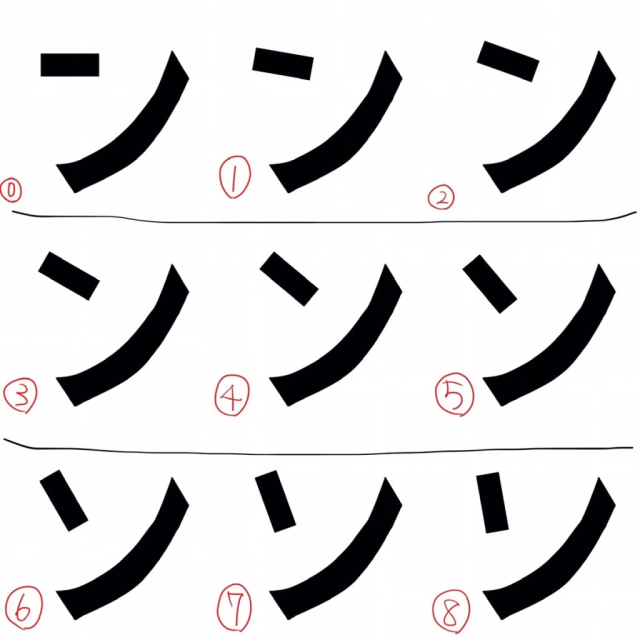
We collected 20 responses, and the results were:
● It’s “n” if it’s under 60 degrees, after that it’s “so” (9 votes)
● It’s “n” if it’s under 50 degrees (8 votes)
● It’s “n” if it’s under 40 degrees (3 votes)
If you’re still feeling a little lost, don’t beat yourself up too badly. As our survey shows, even Japanese people don’t have a complete consensus on the visual differences between “so” and “n,” but the more time you spend practicing reading Japanese, the easier it’ll get to sort them out. And if this has you feeling like Japanese is an impossible language to learn, cheer up, because in a lot of ways it’s really not that bad.
Images ©SoraNews24
● Want to hear about SoraNews24’s latest articles as soon as they’re published? Follow us on Facebook and Twitter!
[ Read in Japanese ]
Follow Casey on Twitter, where he first started remembering katakana from the spines of Bubblegum Crisis soundtrack CDs and the Street Fighter II instruction booklet.
[ Read in Japanese ]