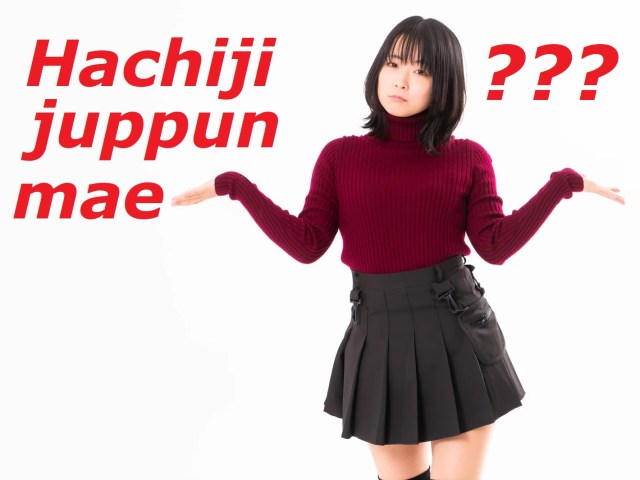
 Survey results show big gap in how younger and older respondents interpreted this seemingly simple phrase.
Japanese is often described as a “high-context” language, meaning that things are regularly left unsaid but still expected to be understood. Those unsaid things aren’t all veiled emotions or relying on some nebulous set of assumed shared cultural values, either. Especially in spoken conversation, subjects, verbs, and objects are frequently dropped from sentences if the speaker thinks the listener can tell what they are from context.
That might seem like madness if you spend your days speaking a low-context language like English, where if you want to tell someone that Brad Pitt likes ponzu, you have to say exactly that: “Brad Pitt likes ponzu.” In practice, though, Japanese speakers simply get used to having to make a steady stream of judgement calls when they’re talking with someone, and believe it or not, it rarely causes confusion between proficient speakers.
However, there are times when the context bar can get too high even for two native Japanese speakers to understand each other, as demonstrated by the phrase “hachiji juppun mae.”
▼ That’s right, it’s linguistics time, and today’s topic is time linguistics!
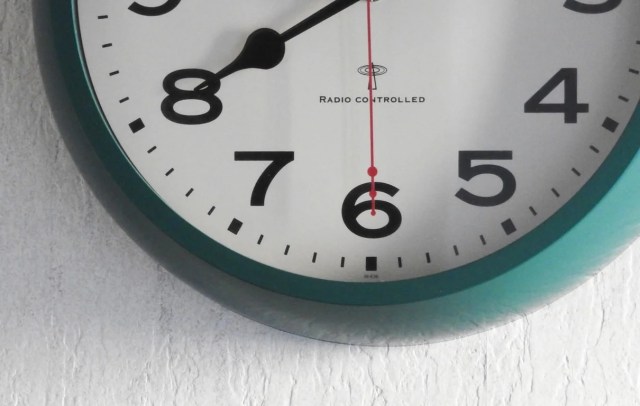
On a recent episode, broadcaster Fuji TV’s Mezamashi TV morning program conducted an on-the-street survey of 100 people in Tokyo, asking them what they think hachiji juppun mae means. None of those words are particular advanced vocabulary; they’re all vocabulary any Japanese kindergartener knows. And yet, while all of the respondents were certain that hachiji juppun mae is referring to some time on the clock, there wasn’t anything close to a consensus as to what time they thought it indicated, with some saying it means 7:50, and others arguing that it means some time between 8:00 and 8:09. What’s more, there was a pretty wide gap in opinions between older and younger people.
Hachiji juppun mae means 7:50
● Chosen by 36 percent of respondents age 10 to 25
● Chosen by 84 percent of respondents age 40 to 59Hachiji juppun mae means sometime between 8:00 and 8:09
● Chosen by 64 percent of respondents age 10 to 25
● Chosen by 16 percent of respondents age 40 to 59
So how did such a big split happen, and which answer is correct? To answer those questions, let’s take a look at what the components of the phrase mean individually.
Starting with hachiji, hachi is the Japanese word for “eight.” Ji on its own means “time,” but when it comes directly after a number, it refers to a time of the clock, making hachiji “8 o’clock.” Juppun is another number/time compound, with juu meaning “ten” and pun “minutes,” so after crunching their pronunciations together you get juppun, which by itself means “10 minutes.” That just leaves mae, which means “before” or “in front of,” and can be used for talking about both physical locations and temporal relations.
So what’s there to stumble over with such simple, mundane vocabulary? If hachiji means “eight o’clock,” juppun means “10 minutes,” and mae means “before,” hachiji juppun mae must mean “10 minutes before eight o’clock,” i.e. 7:50, right?
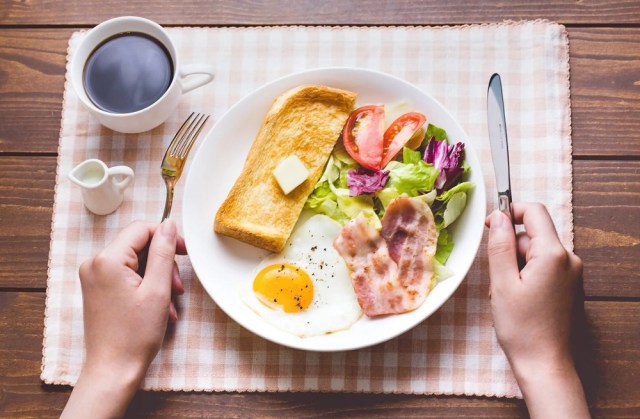
▼ It’s so simple that it seems like we could have had this all sorted out with 10 minutes to spare before breakfast.
But here’s the thing: in addition to meaning “10 minutes,” as in a 10-minute amount of time, juppun can also mean “10 minutes of the hour.” So if you want to indicate the time “8:10,” you say “hachiji juppun,” and that’s where the potential for confusion comes in for hachiji juppun mae. If you parse the phrase by linking juppun and mae, you get “8 o’clock + 10 minutes before,” which would be 7:50. If you mentally attach juppun to hachiji, though, you get “8:10 + before,” which feels like “before 8:10.”
So now that we’ve seen how the two groups arrived at their differing opinions about the meaning of hachiji juppun mae, which interpretation is correct?
Neither of them…and both of them.
Remember how we said Japanese is a high-context language? You’ll sometimes hear armchair sociologists attribute this to Japan’s strong sense of humility, emphasis on harmony, and penchant for avoiding overly assertive direct statements that could lead to conflict, and those do, in some ways, contribute to how language and communication has developed in Japan. But there’s another reason Japanese is a high-context language: it takes a long time to say everything in Japanese.
It may be a high-context language, but Japanese is also a sound-poor language, in that there’s a relatively small pool of available sounds for forming words. Most famously, Japanese lacks an L, but it also has very few consonant blends, and the resulting high volume of vowels cranks up the syllable count for Japanese vocabulary. Because of that, there’s a temptation to trim parts of a sentence as long as it’s still understandable. If a Japanese person says “I ate some really good ramen,” for example, their friend might then just ask “Where did eat?” trimming the “you” and “it” since those can be safely assumed from the flow of the conversation.
Hachiji juppun mae is trying to do something like that. If you wanted a precise, air-tight way of saying “10 minutes before 8 o’clock,” you could put the preposition no in front of juppun, and say “hachiji no juppun mae.” And if you wanted to leave no wiggle room for any meaning other than “before 8:10,” you could say “hachiji juppun no mae.” But in omitting the no in order to save a syllable, hachiji juppun mae can’t be definitively said to mean either 7:50 or 8:00-8:09, and it also can’t be said to not mean either of them.
▼ No no is not always a problem, but in this case, yes, it is.

This still leaves us, though, with the question of why younger people in the survey were so much more likely to take the stance that hachiji juppun mae means sometime between 8:00 and 8:09. Yohei Harada, a professor of design at Shibaura Institute of Technology, theorizes that smartphones are the reason. With today’s teens and younger 20-somethings having grown up using online maps and train navigation apps, Harada believes they’re grown accustomed to down-to-the-minute precision when it comes to setting schedules. Since they’re so accustomed to using directly numeric expressions of time, they’re quick to mentally connect hachiji juppun as “8:10” when they hear hachiji juppun mae, and the possibility of phrasing such as “10 minutes before 8” instead of “7:50” doesn’t come to mind.
However, it’s hard to reconcile Harada’s explanation that smartphone use has made young people more accustomed to precise expressions of time with the younger respondents’ interpretation of hachiji juppun mae as being a vague nine-minute span from 8:00 to 8:09. In fact, one could argue that it’s the exact opposite psychology that’s at play here, and that the older respondents, by nature of having more adult life experience, are more attuned to the value of precision and punctuality. In terms of scheduling personal or professional meetings between busy grown-ups, there’s far more use for a phrase that indicates a specific time, 7:50, and being so loosey goosey as to use hachiji juppun mae to mean sometime between 8:00 and 8:09 likely feels inconsiderate and irresponsible.
It should also be pointed out that hachiji juppun mae cannot be used to mean “by 8:10.” That has to be hachiji juppun made or hachiji juppun made ni. So if one were to say hachiji juppun mae to mean “before 8:10,” it wouldn’t just mean sometime between 8:00 and 8:09, but any time prior to 8:10, including 7:59, 7:58, and so on, presumably all the way back to at least the start of the day.
Taking all this into account, you could build a pretty solid case that hachiji juppun mae should mean “10 minutes before 8 o’clock”/7:50, since the alternate interpretation would have it mean something very vague and not particularly useful. But while we’re on the subject of time, no one who was late to a meeting or missed their train managed to turn back the clock and have a do-over by winning a linguistic design debate. And on the subject of survey design, with Mezamashi TV’s street survey having a sample size of only 100 people, the takeaway probably shouldn’t be “younger people think one way and older people think another” so much as that there are definitely two schools of thought on the matter. So if someone says hachiji juppun mae to you, you might want to double-check exactly what time they mean.
Reference: Mezamashi TV via Hachima Kiko
Top image: Pakutaso (edited by SoraNews24)
Insert images: Pakutaso (1, 2, 3)
● Want to hear about SoraNews24’s latest articles as soon as they’re published? Follow us on Facebook and Twitter!
Follow Casey on Twitter, where he just might be into this linguistics things.