
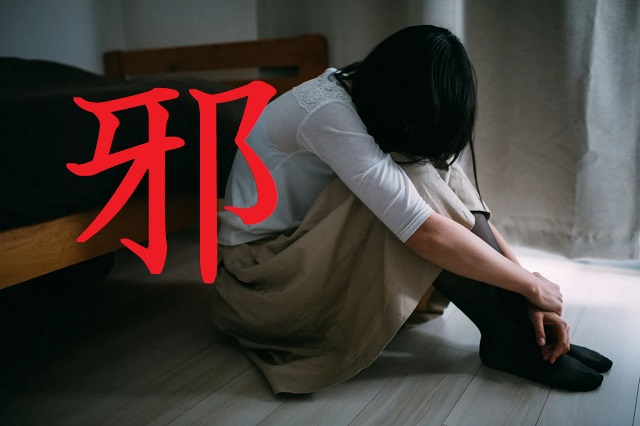
Innocent idea doesn’t go anywhere close to how she expected.
When choosing a design for a tattoo, most people want something that’s not just cool or beautiful, but meaningful as well. And since you’re going to have the thing forever, an aesthetic that’s already stood the test of time is preferable to some trendy symbol that might feel played out in a few months’ time.
Put all those criteria together, and there’s definitely a certain logic to people choosing Japanese kanji characters for their tattoos, even if they themselves don’t speak the language. However, there’s a danger to having people put words on your body without a sufficient background in the language, since what they actually mean might not match up with the message you’re trying to send.
For example, Japanese Twitter user @ToraiKun spent part of his student days studying at a university in the U.S. One day a Caucasian classmate was showing him her kanji tattoo, and @ToraiKun was startled to see that the character she’d chosen was this.
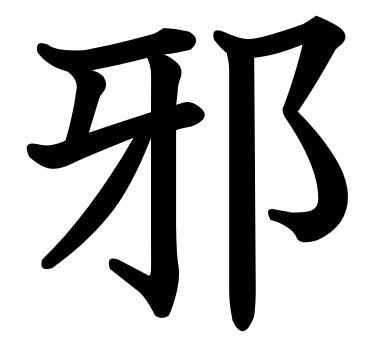
Apparently she wanted to double-check that it meant what she thought it did, so she asked @ToraiKun if he could translate it for her, and he easily could, because it’s a pretty simple translation. It means “evil.”
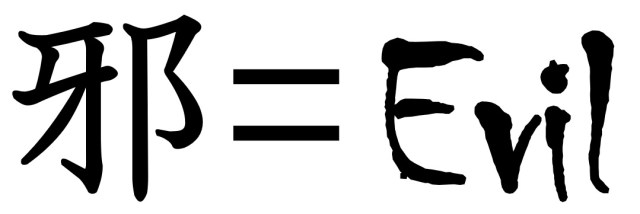
Now, that tattoo might make sense if @ToraiKun’s classmate had been going through a goth phase or experimenting with other forms of edgy self-impression. Unfortunately, that wasn’t the case, and she’d had innocent intentions…literally. “They told me it meant ‘innocent!’” the crestfallen woman said.
前にもツイートしたけど、大学生の時にクラスの白人女性から「邪」と書かれたタトゥを見せられた。意味を聞かれ「"Evil"だ」と答えたら彼女の顔が険しくなり「"Innocent"って言われたのよ!3つあって一番Coolな字を選んだの!」と返された。察した僕は「無邪気」の3文字を教えた。タトゥは危険だね。
— とらい (@ToraiKun) October 9, 2021
Evil, being the active form of malice, is pretty much on the opposite end of the spectrum from innocence, so how did the woman’s tattoo end up being so far off the mark? “There were three characters, and I picked the coolest-looking one,” she explained, and that’s when it clicked that what she’d really wanted was this.
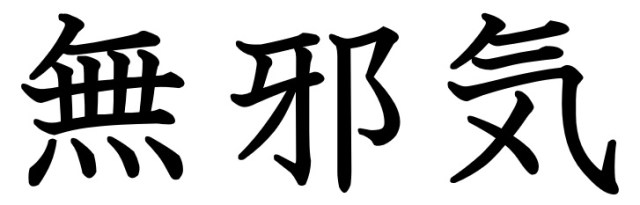
Pronounced mujaki, those three characters do mean “innocent” or “innocence” (the borderline between adjectives and nouns is sometimes a little hazy in Japanese). It sounds like the woman came across them in a booklet of sample tattoo designs, or maybe ran an English-to-Japanese Google search for “innocent,” and saw them explained like this.
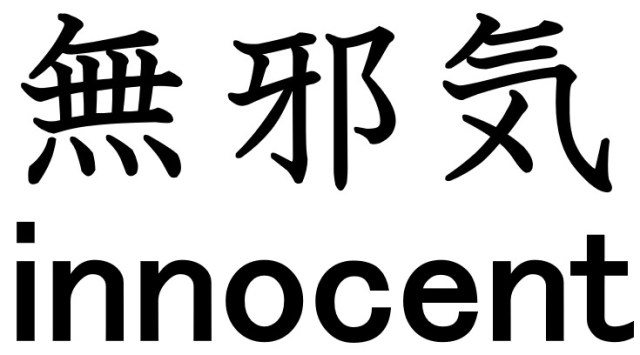
Apparently the woman thought all three of those kanji meant “innocent” and picked out the one she liked the best. Here’s the problem, though: “Innocent” is what those three characters mean collectively, not by themselves. When you break them down into their individual meanings, they become very different. 無/mu means “no,” 邪/ja means “evil,” and 気/ki means “spirit.” Put them all together, and you get “absent of evil emotion,” i.e. “innocent,” but isolate the middle one, and you’ve just got “evil.”
Ironically, though this is a clear case of a cross-cultural mix-up, the etymology of the Japanese “mujaki” and English “innocent” are actually pretty similar. “Innocent” comes from attaching the “in-“ prefix, which means “not” (like in “incomplete”) to “nocere,” the Latin verb for “to hurt/harm,” making the root meaning of “innocent” essentially “not [intending to] cause harm.”
While it’s possible someone played a trick on the tattooed girl, it’s also possible that the whole thing was a, well, innocent mistake, since apparently at one point she really did have the correct full set of all three kanji in front of her. As for why the tattoo artist didn’t warn her, tattoo artists are artists, not linguists, and hers may not have had any greater understanding of the Japanese language than the woman herself did, especially if she’d found/picked out the kanji before coming into the studio and came with a picture of it and said, “Give me that.”
The whole situation is yet another reminder that if you’re thinking of getting a kanji tattoo, discussing what you really want, including the context, with a Japanese-language expert you can trust is a very good idea. The silver lining is that if the woman wants to, she can still get the missing 無 and 気 kanji tattooed on either side of 邪, provided it’s on a part of her body where there’s enough space. That still leaves the issue that many Japanese people are more likely to associate the word mujaki with child-like straightforwardness than elegant purity, but that’s still better than a straight-up mark of evil.
Source: Twitter/@ToraiKun via Jin
Top image: SoraNews24/Pakutaso
Insert images: SoraNews24
● Want to hear about SoraNews24’s latest articles as soon as they’re published? Follow us on Facebook and Twitter!
Follow Casey on Twitter, where he wonders if this whole mess could have been avoided if more people outside Japan had played Naxat Soft’s Jaki Crush video pinball game during the 16-bit era.
 Ariana Grande stops learning Japanese following backlash over her “7 Rings” BBQ grill tattoo
 Ariana Grande’s kanji tattoo fail: new ink reads “Japanese BBQ grill” instead of “7 Rings”
 Ariana Grande “fixes” her 7 Rings Japanese kanji tattoo, but it still says tiny charcoal grill
 Kanji T-shirt seen on U.S. TV show makes Japanese viewers giggle
 Kanji fail — Japanese parents shocked to learn their baby girl’s name has inappropriate meaning
 Mt. Fuji decorated with a 500,000-flower pink carpet is Japan’s ultimate spring view
 New Travelling Bento pouches turn your luggage into a Japanese lunch box
 Family Mart unveils new Japanese bread that elevates convenience store food to mocchiri levels
 Man bites woman at cherry blossom park in Japan, dies shortly after
 Does a long line mean a sweeter deal? We compare two sweets from a Hokkaido food fair【Taste test】
 We tried out three types of men’s boxer briefs from Daiso, and one of them left us speechless
 This balding middle-aged fairy is one of Japan’s most unique mascot characters
 What’s in a Japan Disney Store Lucky Box? Our non-Disney fanatic finds out!
 Anime Spirited Away finds a new way to be beautiful with gorgeous traditional hanafuda card set
 11 things Japanese women want men to know about their breasts
 Japan reportedly adding Japanese language skill requirement to most common foreigner work visa
 Pokémon and Ikea Japan cross over into each other’s worlds with collaboration events
 Starbucks Japan closing only Shinkansen platform branch for popularity-triggered renovations
 Two food hacks take Japan’s convenience store fried chicken to amazing new sandwich heights
 You can assemble a well-balanced team of Pokémon, them eat them, thanks to Japanese cake chain
 Tokyo turns its phone booths into free Wi-Fi hotspots, and here’s how to use them
 Fading Tokyo – Searching for signs of the Showa era as local neighborhoods evolve[Photos]
 Tokyo teahouse serves up a sakura matcha dessert you won’t find anywhere else
 7-Eleven Japan’s new baked-in-store sweet treat is only available in three parts of the country
 Japan now has a special desk for people who work at home with a pet cat[Photos]
 Famous Tokyo cherry blossom spot installs view-blocking screens to fight overcrowding[Video]
 Uniqlo announces new T-shirts for One Piece, Naruto and more for manga publisher’s 100th birthday
 Train station platform ramen store closes its doors on half a century of history in Tokyo
 Starbucks Japan releases new My Fruit³ Frappuccino at only 34 stores around the country
 Studio Ghibli releases Catbus pullback keychain that runs like the anime character
 Krispy Kreme releases Super Mario doughnuts in Japan for a limited time
 Japanese onsen egg maker from 100-yen store Daiso needs to be on your shopping list
 Survey asks foreign tourists what bothered them in Japan, more than half gave same answer
 Japan’s human washing machines will go on sale to general public, demos to be held in Tokyo
 Starbucks Japan releases new drinkware and goods for Valentine’s Day
 We deeply regret going into this tunnel on our walk in the mountains of Japan
 Starbucks Japan releases new sakura goods and drinkware for cherry blossom season 2026
 Studio Ghibli releases Kodama forest spirits from Princess Mononoke to light up your home
 Japan’s newest Shinkansen has no seats…or passengers [Video]
 Major Japanese hotel chain says reservations via overseas booking sites may not be valid
 Put sesame oil in your coffee? Japanese maker says it’s the best way to start your day【Taste test】
 No more using real katana for tourism activities, Japan’s National Police Agency says
 The hidden meaning of the U.S. Air Force’s “shake and fries” patch in Japan
 How to write “sakura” in Japanese (and why it’s written that way)
 Bukkake udon gets a new name in the U.S.A. from Marugame Udon
 Russia’s gold medal-winning skater gets a dog from Japan, picks an unusual Japanese name for it
 New Japanese restaurant named はな毛 (nose hair), sighted in Germany, actually has a Japanese owner!