
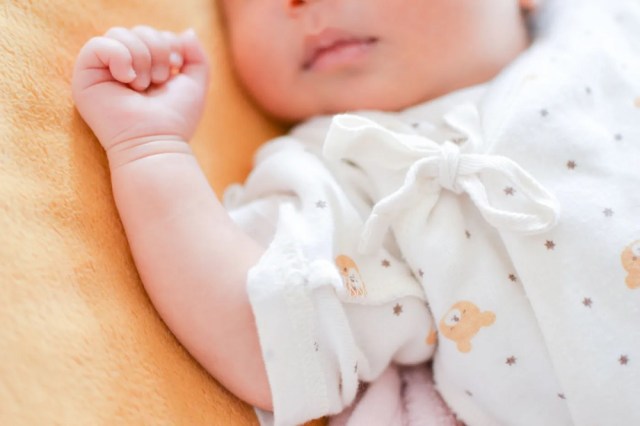
A whole lot of cultural values clash when neighborhood seniors don’t keep their hands to themselves around baby.
In Japan, you can often spot women with a “key holder” (or, more accurately, a small plastic placard strap) attached to their bag, showing an illustration of a baby. This is an indicator that the woman is pregnant, even if she’s not visibly showing yet, and by extension a silent request for use of priority seats on trains or other forms of consideration and understanding.
However, a woman in Saitama Prefecture has a baby-illustration key holder that she only started using after the birth of her child, as a way of telling people not to touch her boy.
In Japan, it’s customary for parents to keep their newborn babies in the house for the first several weeks after coming home from the hospital. After “Ai,” as the mother goes by in the video interview above, started taking her son for walks in the neighborhood though, when he was around three months old, she experienced a problem. “Elderly people would come up to us and say ‘He’s so cute!’ and then, without asking if it was OK, they’d touch his feet.”
After reading on Twitter about other mothers who were dealing with the same sort of situation, Ai decided to make a placard that says “Don’t touch” and has a drawing of a hand reaching towards a distressed looking infant, who has his forearms crossed into an X, the Japanese gesture for “no/don’t.” Ai now clips the placard to her stroller when she’s out with her son, as an in-advance request to strangers to refrain from pats, pinches, and the like.
The idea has proven pretty divisive among online commenters, in part because it touches on (no pun intended) a number of Japanese cultural values. First off, Japan, for the most part, isn’t very big on physical displays of affection, even of the platonic sort like a hug between friends or a pat on the back from a coworker. Most Japanese people would agree that it’s poor manners to touch someone you don’t know, including a baby, so many commenters can sympathize with Ai’s desire to take preventive action.
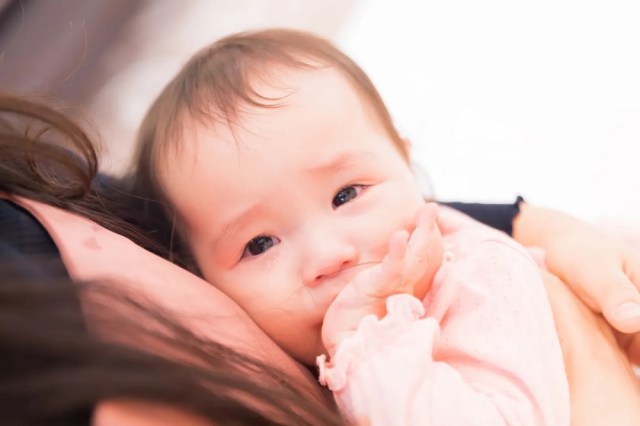
On the other hand, Japanese culture also has a lot of respect for the elderly, and a general attitude that kids can learn a lot from interacting with people from their grandparents’ generation. A strong sense of community is also a Japanese cultural ideal, as is the idea that early childhood is one of the few times in life when it’s absolutely OK to be showered with affection, before the pressures of school and work make diligent effort a daily requirement.
With all of those concepts floating around in the cultural background, plus hygiene concerns during the ongoing pandemic, reactions to Ai’s “Don’t touch” placard have been all over the board, with comments on Twitter and YouTube including:
“We’ve gone from worrying about our kids being shy around people they don’t know to worrying if they aren’t shying away.”
“Sign of the times. Seems like we’ve lost something important. I understand the mother’s feelings, but still, this makes me sad.”
“The world is weird these days.”
“I can understand where the mom is coming from, and also how the elderly people feel. But thinking logically, no matter how cute you might think a baby is [you shouldn’t touch it without permission].”
“It’s got to be rough having a bunch of people you don’t know touch you.”
“It’d be OK if they’d just ask ‘Can I touch your baby?’”
“Can’t help wondering if the hands of the people touching the baby are clean.”
“Consent is always required for touching!”
Adding another wrinkle to the situation is a recent raised awareness in Japan that some mothers who are out and about with children might need a hand lifting a stroller onto or off the train or getting a shopping bag up onto the parcel shelf. When asked by the interviewer if a “don’t touch my baby” sign will make people less likely to offer assistance in such situations, Ai replies “I think there will be times when I want someone’s help, and when that happens, I’ll ask them for it. [Otherwise] I’d like people to take a step back and [limit themselves to] watch[ing] over us.”
Further complicating the debate is the fact that touching a stranger’s baby is already something that most people in Japan refrain from doing, causing some to see the placard as needlessly standoffish and/or ineffective; most people wouldn’t be trying to touch the baby anyway, and those who do aren’t likely to notice or pay attention to the sign, they say. A few people even expressed skepticism that the soft, pastel colors of the sign will be noticeable to the elderly people Ai wants to be aware of it.
Still, the placard seems to be having the desired effect, since Ai is continuing to use it, so anyone who sees it, or the kid shown in the video, should keep their hands to themselves.
Source: Asatele News via Yahoo! Japan News, ANNnewsCH, Twitter
Top image: Pakutaso
Insert image: Pakutaso
● Want to hear about SoraNews24’s latest articles as soon as they’re published? Follow us on Facebook and Twitter!
 Surprising amount of Japanese people find going to see their friend’s new baby annoying
 Hyogo Police on the lookout for man complimenting babies
 Distressed moms and dads on Japanese trains getting help from child assistance volunteer badges
 Train company asks parents with baby strollers to be polite to other passengers, sparks backlash
 Four things our new-mother reporter felt riding the Tokyo subway with her baby
 Mt. Fuji decorated with a 500,000-flower pink carpet is Japan’s ultimate spring view
 Drink vending machines disappearing in Japan as number drops to lowest in 30 years
 Japan super budget dining – What’s the best way to spend 1,000 yen at McDonald’s?
 Foreign tourists in Japan will get free Shinkansen tickets to promote regional tourism
 Chinese man holds in vomit, esophagus explodes
 Oi! Attack on Titan-inspired anime jewelry is an attack on our wallets!
 Some of the best Japanese fried chicken in Japan comes from this shack in the middle of nowhere
 We test drive a Nissan GT-R Premium Edition T-spec in Japan
 Instant-ramen coated fried chicken appears in Tokyo, instantly makes us hungry, happy【Taste test】
 Foreign man arrested for walking on Shinkansen tracks, claims he was on the run from yakuza
 Japan reportedly adding Japanese language skill requirement to most common foreigner work visa
 Pokémon and Ikea Japan cross over into each other’s worlds with collaboration events
 Starbucks Japan closing only Shinkansen platform branch for popularity-triggered renovations
 You can assemble a well-balanced team of Pokémon, them eat them, thanks to Japanese cake chain
 Two food hacks take Japan’s convenience store fried chicken to amazing new sandwich heights
 30 Pikachus want to share a Tokyo hotel room with you that has separate Grass, Water, Fire spaces
 7-Eleven Japan’s new baked-in-store sweet treat is only available in three parts of the country
 Man bites woman at cherry blossom park in Japan, dies shortly after
 Peanuts and Coke becomes a viral hit in Japan, but is it a trend worth joining?
 Japan now has a special desk for people who work at home with a pet cat[Photos]
 Famous Tokyo cherry blossom spot installs view-blocking screens to fight overcrowding[Video]
 Uniqlo announces new T-shirts for One Piece, Naruto and more for manga publisher’s 100th birthday
 Train station platform ramen store closes its doors on half a century of history in Tokyo
 Starbucks Japan releases new My Fruit³ Frappuccino at only 34 stores around the country
 Krispy Kreme releases Super Mario doughnuts in Japan for a limited time
 Japanese onsen egg maker from 100-yen store Daiso needs to be on your shopping list
 Studio Ghibli releases Catbus pullback keychain that runs like the anime character
 Survey asks foreign tourists what bothered them in Japan, more than half gave same answer
 Japan’s human washing machines will go on sale to general public, demos to be held in Tokyo
 Starbucks Japan releases new drinkware and goods for Valentine’s Day
 We deeply regret going into this tunnel on our walk in the mountains of Japan
 Starbucks Japan releases new sakura goods and drinkware for cherry blossom season 2026
 Studio Ghibli releases Kodama forest spirits from Princess Mononoke to light up your home
 Japan’s newest Shinkansen has no seats…or passengers [Video]
 Major Japanese hotel chain says reservations via overseas booking sites may not be valid
 Put sesame oil in your coffee? Japanese maker says it’s the best way to start your day【Taste test】
 No more using real katana for tourism activities, Japan’s National Police Agency says
 Japanese blog titled “God’s Defective Goods” sparks debate over Down syndrome babies
 Japanese baby flashes peace sign from the womb, lets mom know everything is going to be all right
 Tokyo’s latest plan to boost birth rate: Pay people 100,000 yen per baby they give birth to
 Japanese politician’s birthrate plan: Have parents nag their kids to have “at least three babies”
 Japanese mom’s plan to stop daughter from becoming an anime otaku draws criticism online
 “Don’t touch my moustache!” Japanese that sounds like English but isn’t, and vice versa!
 Japanese city councilwoman stirs controversy by bringing baby with her to assembly hall【Video】
 Young Japanese adults in survey don’t even want to live to Japan’s average life expectancy
 Japanese Mom’s son makes Mario Maker course just for her, easy to clear, impossible to forget【Vid】
 Omiyamairi: How Japan welcomes babies into the world
 Soup Stock Tokyo now offering free food for babies, sparks debate online
 Don’t turn your back. Don’t look away. And don’t blink.
 Japanese invention lets you share your baby’s bowel movements online with the push of a button
 Non-Japanese babies make up more than 3 percent of births in Japan, a record high
 Video of foreign diplomat riding in Tokyo subway priority seat sparks manners debate【Video】
 Japanese ad showing Mom doing all the housework and childcare has people steamed at Dad【Video】