
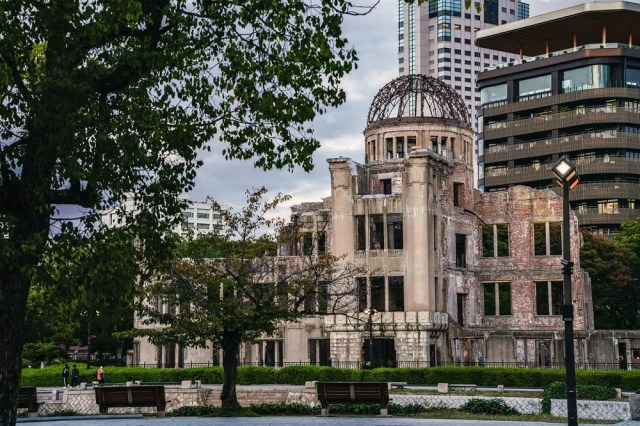
Elementary school students’ Peace Education lessons have included excerpts from manga by atomic bombing survivor since 2013.
The atomic bombing of Hiroshima during World War II is a subject that gets a lot of attention from the city’s board of education. Students in public elementary, middle, and high schools study the event as part of their Peace Education curriculum, a subset of their literature and ethics lessons.
Since 2013, the Peace Education materials for third-year elementary school students has included panels from the manga Barefoot Gen. The series was written and illustrated by Hiroshima native Keiji Nakazawa, who was six years old when the bomb was dropped in August of 1945. Nakazawa was able to survive the blast and its aftermath, but many of his family members did not.
▼ Barefoot Gen
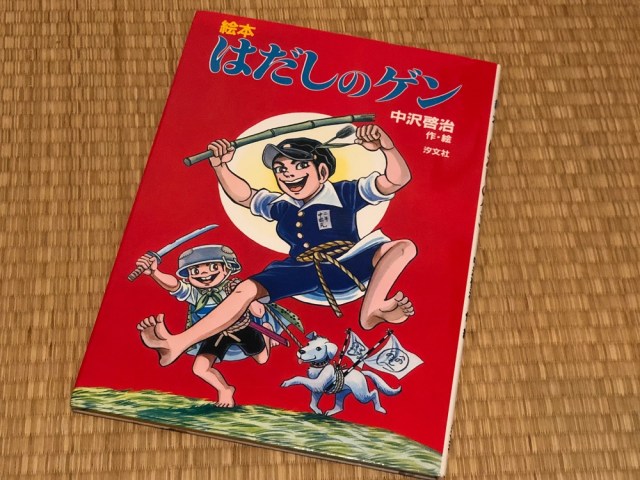
Barefoot Gen’s titular protagonist is also a Hiroshima boy who’s six years old at the time of the bombing, and the series draws from Nakazawa’s personal experiences, although it’s not a direct biography of his life. The series is frequently pointed to as an example of a socially significant comic book series, both in Japan and abroad. However, following a review of the Peace Education program, the Hiroshima City Board of Education says it will be removing the Barefoot Gen excerpts from its teaching materials.
▼ Some of the excerpts previously included in the curriculum can be seen in the video here.
Among the scenes previously included in the curriculum was one in which Gen and his younger brother set up a street stall for rokyoku performances to earn money following the bombing. In another scene, the brothers poach carp from a pond, bringing the fish home for their mother to eat.
Within the full context of the manga, or a preexisting knowledge of the historical conditions, the scenes aren’t particularly confusing. Taken as individual excerpts, though, the board feels that it may be difficult for young students to easily process, making it hard to fully convey the hardships people were plunged into because of the war. Rokyoku are narrative songs that had their heyday in the first half of the 20th century, but they’ve faded from public consciousness in modern Japan. A board member expressed concern that teachers then have to take time out of the lesson to answer questions and explain about the musical genre itself, when the goal is to convey that the economy was in such shambles that families had to scrape for every coin they could. The board also felt that the brief collection of panels showing Gen and his brother excitedly catching the carp, then presenting it to their thankful mother, didn’t sufficiently establish that the family was so desperate for food that they’d, in essence, stolen the fish.
▼ The rokyoku and carp sequences
“There is a chance that children could come away with the wrong impression,” and “The scenes [by themselves] don’t match the actual living conditions of children [at the time]” were among the rationales given by the board regarding their decision to remove Barefoot Gen from the curriculum. Instead, the materials for third graders will include a picture book based directly on the experiences of Chizuko Wataoka, a Hiroshima atomic bombing survivor who was 16 years old when both her parents and her three younger sisters perished as a result of the blast.
Many online commenters are startled at the decision to remove Nakazawa’s widely respected manga, which ran in its entirety from 1973 to 1987, from the program, but the logic behind it makes sense to many as well.
“The reader’s takeaway can get skewed if they’re just looking at one part of a scene snipped out from the longer story.”
“Just make kids read the entire series.”
“I’ve got no problem with them replacing it with a book by a bomb survivor.”
“I think Barefoot Gen is a better fit to have in the library than teaching materials.”
“Maybe they should have them read the whole thing as part of their summer vacation homework?”
The decision to remove Barefoot Gen from the curriculum came about as part of an overall periodic review of the Peace Education program, not a specific targeting of the manga. “We have no criticisms against Barefoot Gen itself,” the education board spokesperson asserted.
The change to the new materials will take place in April, at the start of the new school year.
Source: Chugoku Shimbun Digital via Yahoo! Japan News via Hachima Kiko, YouTube/ANNnewsCH
Top image: Pakutaso
Insert image: ©SoraNews24
● Want to hear about SoraNews24’s latest articles as soon as they’re published? Follow us on Facebook and Twitter!
 Reading Barefoot Gen, manga about the Hiroshima atomic bombing, for the first time as an adult
 Do Japanese people hate Americans? Hiroshima teen has touching answer on atomic bomb anniversary
 Chilling footage shows Hiroshima eight months after the atomic bombing【Video】
 Hiroshima requests removal of Pokémon GO facilities from Peace Memorial Park
 Why doesn’t Japan hate America for dropping the A-bombs?
 Japan now has a “for foreign tourists only” Mt. Fuji sightseeing train[Video]
 7-Eleven Japan releases a crazy new viral sandwich: Chocolate Sprinkles and Whipped Cream
 Public restrooms in Osaka to get in-stall video screens with ads
 Studio Ghibli releases the My Neighbour Totoro tea caddy, with a magical self-closing lid
 Starbucks Japan releases new My Fruit³ Frappuccino at only 34 stores around the country
 A secluded British mansion in Chiba is a hidden holy land for afternoon tea lovers
 Nine amazing off-the-beaten-path cherry blossom spots in Japan for yaezakura and shidarezakura
 Busty Digimon anime figure not child-friendly enough for the West, now barred from sale overseas
 Create a tiny Ghibli anime world on your bookshelf with new miniature papercraft art kits
 How to travel from Tokyo to Kyoto on the overnight bus and not lose your sanity
 Japanese onsen egg maker from 100-yen store Daiso needs to be on your shopping list
 Cherry blossoms begin blooming in Japan with record-early starts for sakura season
 Tokyo government organizes food truck event to clear out delinquent/homeless teen gathering area
 Stunning central Japan wisteria festival is like a purple fantasy straight out of a Ghibli movie
 When will the cherry blossoms reach full bloom in Japan this year?[Forecast]
 Studio Ghibli unveils new Rollbahn notebook in honour of Howl’s Moving Castle
 Studio Ghibli adds new anime tumblers to its cool streetwear brand in Japan
 Universal Studios’ Sailor Moon theme park attraction is finally coming to America
 Starbucks Japan unveils new sakura cherry blossom collection for hanami season 2026
 Train station platform ramen store closes its doors on half a century of history in Tokyo
 Studio Ghibli releases Catbus pullback keychain that runs like the anime character
 Nine great places to see spring flowers in Japan, as chosen by travelers (with almost no sakura)
 Starbucks Japan releases first-ever Hinamatsuri Girls’ Day Frappuccino
 Studio Ghibli adds new Mother’s Day gift sets to its anime collection in Japan
 Virtual idol Hatsune Miku redesigned with look that adds new elements and brings back old ones
 Survey asks foreign tourists what bothered them in Japan, more than half gave same answer
 Japan’s human washing machines will go on sale to general public, demos to be held in Tokyo
 Starbucks Japan releases new drinkware and goods for Valentine’s Day
 We deeply regret going into this tunnel on our walk in the mountains of Japan
 Studio Ghibli releases Kodama forest spirits from Princess Mononoke to light up your home
 Starbucks Japan releases new sakura goods and drinkware for cherry blossom season 2026
 Japan’s newest Shinkansen has no seats…or passengers [Video]
 Major Japanese hotel chain says reservations via overseas booking sites may not be valid
 Put sesame oil in your coffee? Japanese maker says it’s the best way to start your day【Taste test】
 No more using real katana for tourism activities, Japan’s National Police Agency says
 Korean pop star wears T-shirt commemorating Hiroshima atomic bombing, draws criticism in Japan
 Proposed sakura name for new middle school in Japan draws complaints for kamikaze overlap
 Korean boy band bumped from Japan’s most popular music program over A-bomb T-shirt