Apparently, it’s a popular regional ingredient in New Year’s food.
Our Japanese-language reporter Haruka Takagi was visiting Aichi Prefecture recently–home to Nagoya, Japan’s fourth largest city–when she came across a shocking food product at a souvenir shop. It was a tub of what looked like red caterpillars, and it gave Haruka such a shock that she practically stopped in her tracks.
The label on the tub, thankfully, did not say anything about the snack actually being caterpillars and instead had a picture of some kind of plant on it. It was labeled as “chorogi” (長老喜), which, after some research, Haruka learned was a root vegetable known in English as “Chinese artichoke.” The illustration on the packaging is of the whole plant, with the artichoke part drawn as the little caterpillar-like bits at the ends of the roots.
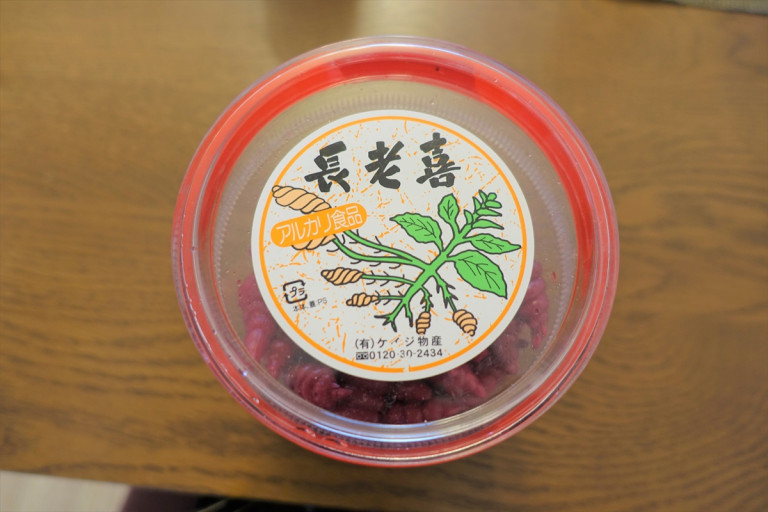
It turns out it’s a relatively common regional ingredient in osechi ryori, food cooked for New Year’s, often served atop black soybeans. Obviously, Haruka, who is from Hiroshima, had never heard of it, but was interested in giving it a try. She also asked two acquaintances to taste them with her, one of whom was from Nagano, and the other from Nara. Both declined to have their names or pictures posted, so we’ll be referring to them as Nagano and Nara.
The tub contained a whopping 450 grams (almost one pound) of Chinese artichokes and cost 1,250 yen (US$9.52). Since only one or two are used in osechi ryori, this one tub would likely last about five years.
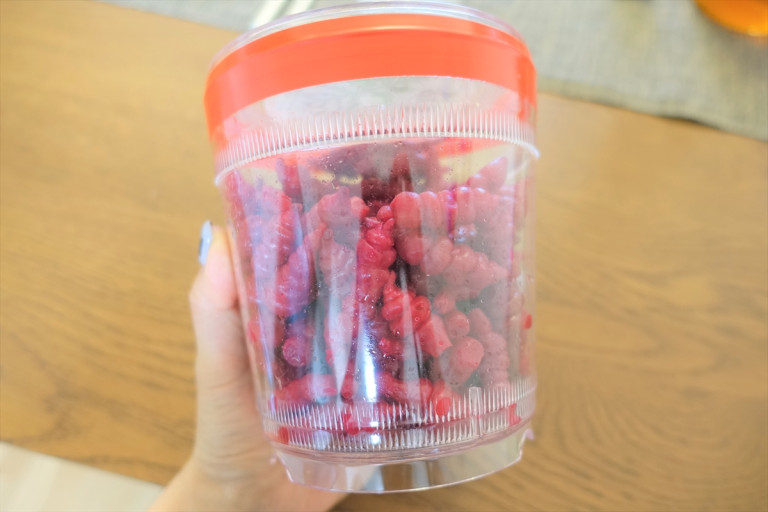
Nara: “I didn’t know you would read those characters as ‘chorogi’. They look like they’d bring good luck [which is the purpose of a lot of ingredients in osechi ryori]. Based on the illustration on the packaging, it looks kind of like…something is twisted onto the ends of the roots?”
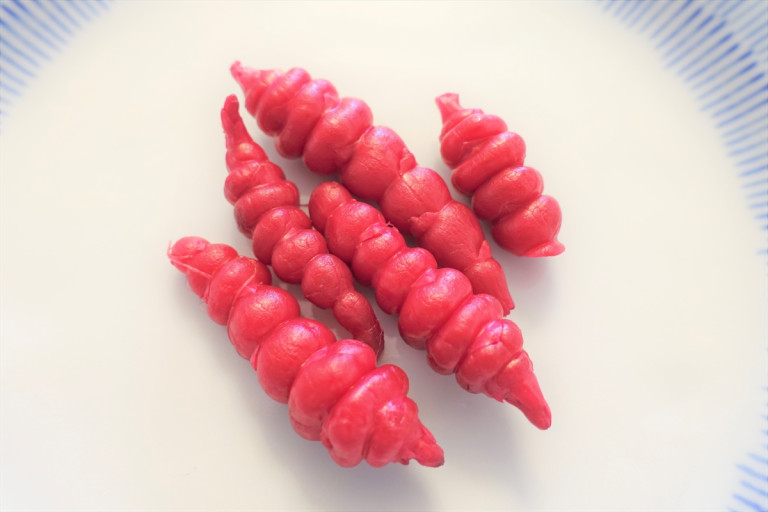
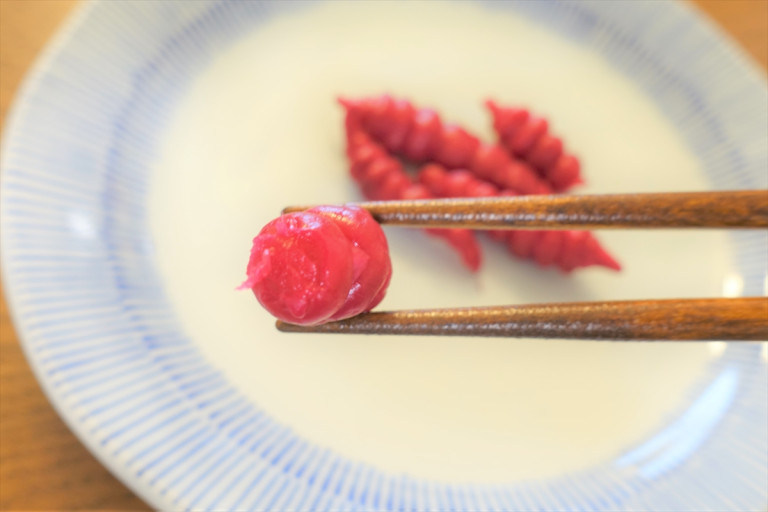
Haruka could see lots of the same twisted-on “somethings” packed inside the transparent tub. “So these are Chinese artichokes…” she mused. They were bright red and almost appeared to be moist, so she had to say they didn’t look very appetizing.
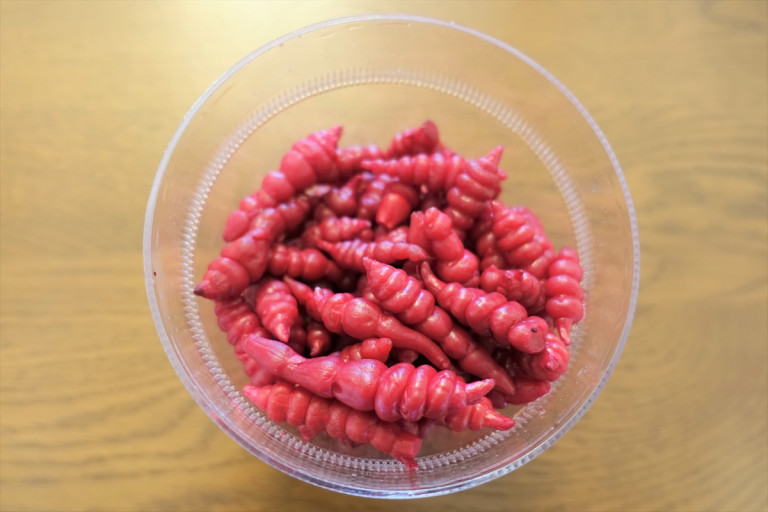
Nagano: “It feels kind of bumpy, like a bouncy ball, but it’s pretty hard.”
Nara: “Ew, it looks kind of gross from the side! Like some kind of bug!”
Nagano: “If you look closely it even has tiny little hairs. Is it really a root vegetable?”
Haruka had to agree. If anyone had shown her these and told her they were a vegetable, she wouldn’t have believed them. They were pretty creepy looking.
After some more investigation, Haruka learned that this section of the Chinese artichoke is a tuber, which is a part of a plant used for various functions, including reproduction and nutrient stores.
Haruka: “Supposedly the shape is meant to increase surface area. But surely there’s a more effective form it can take?”
Nagano: “It smells kind of sour. Actually, it smells kind of familiar…”
After much analysis of the other four senses, it was time to test it on the tongue.
▼ Chomp
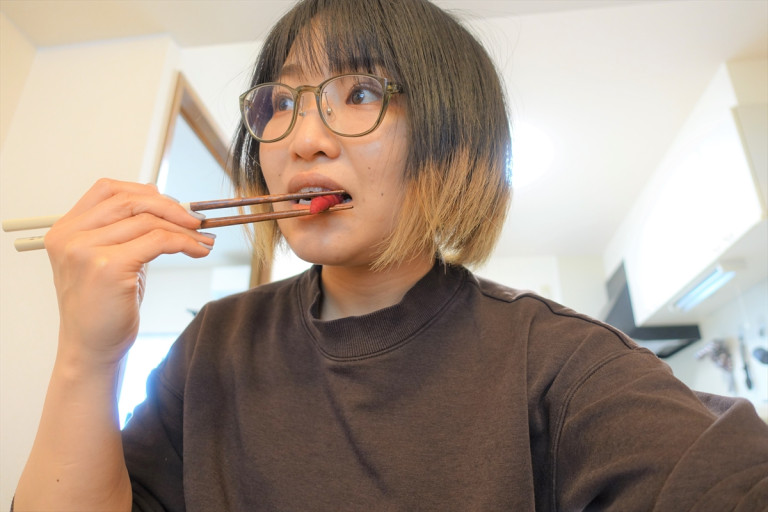
Nara: “Hold on. I’ve definitely eaten this before!”
Nagano: “It’s…It’s like a crunchy pickled plum!”
Haruka: “You’re right, it is. It can’t be anything else!”
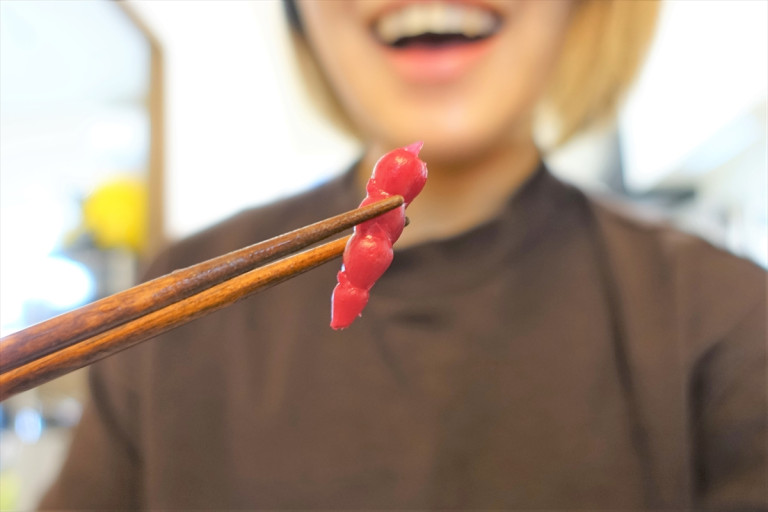
The three friends, who were all raised differently in different prefectures, all came to the same conclusion at the same time. The Chinese artichokes had the same sour taste and firmly crunchy texture as a pickled plum.
Nara: “But pickled plums have a seed. These don’t have seeds.”
Nagano: “It’s an upgrade from pickled plums!”
The Chinese artichoke didn’t have any seeds or tough fibers at all, which made it much easier to eat than a pickled plum. I was like a stress-free pickled plum! You can enjoy the pleasantly crunchy texture without worrying about your teeth.
Unfortunately, the version Haruka bought was pretty salty, so it wasn’t very good for mindless snacking. It would have been perfect if it was a little less intense!
Haruka was curious, though, as to how many people actually know about Chinese artichokes, so when she returned to the office, she used her fellow reporters as a survey pool. Out of 10 people, only four had ever heard of them before, and they were all from different prefectures.
・Those who’d heard of it: Go Hatori (Tokyo), Seiji Nakazawa (Osaka), Mr. Sato (Shimane), Mariko Ohanabatake (Nagasaki)
・Those who hadn’t heard of it: Ahiru Neko (Hokkaido), Yoshio (Tokyo), Masanuki Sunakoma (Saitama), P.K. Sanjun (Chiba), Yuichiro Wasai (Kyoto), Takashi Harada (Fukuoka)
Go Hatori even said that he and his family have always eaten it in their osechi ryori. But Yoshio, who similarly hails from Tokyo, and Masanuki and P.K. Sanjun, who both grew up in prefectures that are suburbs of Tokyo, had never heard of it. It seems like it’s an ingredient that varies not only by region but also by household!
Well, osechi ryori has a lot of regional and household differences, so that isn’t really surprising. Nevertheless, eating sweet black soybeans together with salty-sour Chinese artichokes actually sounds really delicious. Maybe Haruka will try it next New Year’s!
Images © SoraNews24
● Want to hear about SoraNews24’s latest articles as soon as they’re published? Follow us on Facebook and Twitter!
[ Read in Japanese ]