
Late to bed, early to rise.
A lot of kids in Japan are fascinated with trains, and a lot of them to think that when they grow up, they’d like to do some kind of work related to them. So in a way, it’s pretty nice of Kintetsu Railway Co., which operates in Japan’s central Kansai region, to offer a special summer program that lets elementary school-age kids experience what it’s like to work in a train station.
But before signing up, kids, and their parents, are going to want to read the schedule very carefully, because it’s an overnight program with only four hours designated for sleep.
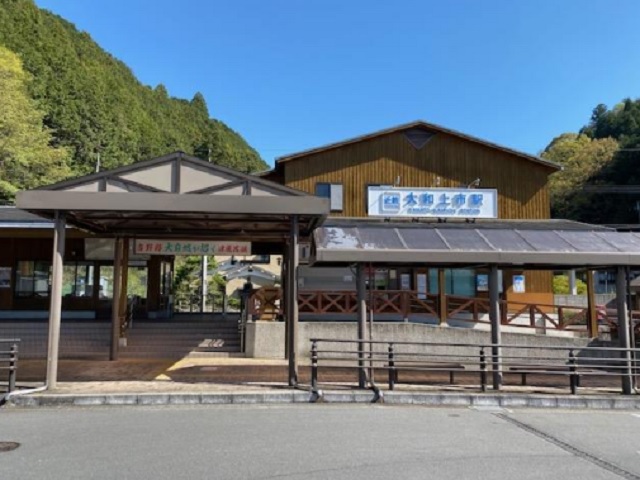
The first part of the schedule seems pretty sensible. On Day 1, the participants gather at 3:30 in the afternoon at Shimoichiguchi Station on Kintetsu’s Yoshino Line, located in the town of Yoshino, Nara Prefecture. After a ceremony naming them honorary stationmasters for a day, they’ll get started on a variety of station worker experience activities, including ticket gate monitoring, train inspections, cleaning duties, signal operation, and setup/storage of workplace equipment. The activities will take place at three stations along the line, Shimoichiguchi, Yoshino, and Yamato-Kamiichi (the last of which is pictured at the top of this article), and it seems like the aim really is to have kids experience everything a station worker does during the day, including how busy the job can be.
After the start of work activities at 3:30 p.m., the next thing listed on the schedule is sleeping inside Yamato-Kamiichi Station, all the way at “around midnight.” Any tuckered-out kids hoping to sleep in the next day, though, are in for a rude, or at least early, awakening, as the program on Day 2 starts at 4:30 a.m. And to clarify, the “sleep around midnight” part of the schedule isn’t a lights-out time after participants spend the evening relaxing, as the schedule provided by Kintetsu explicitly states “The amount of time for napping is approximately four hours only.”
▼ They get full marks for honesty by calling four hours of shut-eye “napping” instead of “sleeping.”

The written schedule is a little vague on Day 2, saying simply “At Yoshino Station” and “end of program certificate award ceremony.” It does designate “program scheduled to end around noon,” though, so unless they’re planning a seven-hour award ceremony, it sounds like the kids will be spending most of the morning doing more work experience activities.
Sleeping pads and bedding are provided, but food is not, so families will have to bring their dinner and breakfast for the next morning with them (though arguably it’ll still be early enough to go get something to eat after the certificate ceremony and still call it “breakfast”). There aren’t any shower facilities either.
▼ Why just be sleepy when you can be sleepy and unbathed?

Online commenters have expressed shock at the grueling-sounding schedule, with some saying that rather than deepening kids’ interest in working for a rail company, it’s likely to mercilessly shatter their young dreams and have them resolving to work anywhere but a train station when they grow up.
It’s unclear, though, whether “work until midnight, get up at 4:30 a.m.” is a typical schedule for a Kintetsu station worker. Officially, the program is called the “Station Work Experience and (Overnight) Nap in the Station Building Experience” event, which could imply that sleeping in the station isn’t something that’s a frequent part of station work, and is instead something that’s been added to the program as a unique experience for rail fans to enjoy. With trains in Japan generally running from around 5 in the morning until midnight, the event’s timetable seems designed to give participants a taste of the middle, end, and beginning (in that order) of a rail facility’s work day, but it may or may not be the case that any single worker’s shift would actually be that long, or that they’d be scheduled with just a four-hour turnaround between their actual workdays.
None of that changes the fact, though, that the Station Work Experience and (Overnight) Nap in the Station Building Experience event sounds like a busy, and then sleepy-plus-busy, time. Perhaps because of that, only two slots are being offered, each for a group of up to four people, which includes accompanying parents or guardians. Participation costs 30,000 yen (US$220) for kids who’ll be participating in the work activities (who must be in elementary school, corresponding to 6 to 12 years old), 10,000 yen for adults, with those prices including round-trip train fare to the stations and some sort of commemorative souvenir. The event will be held twice this summer, July 29/30 and August 19/20, and interested parties can request a reservation online here.
Source: Kintetsu Railway Co. via Hachima Kiko
Top image: Kintetsu Railway Co.
Insert images: Pakutaso (1, 2)
● Want to hear about SoraNews24’s latest articles as soon as they’re published? Follow us on Facebook and Twitter!
 Tired of teleworking from home? Get a change of atmosphere by working in an express train!
 Japan’s Moonlight Nagara train service ends, leaving a hole in overnight rail travel
 With Japan’s day care shortage, how hard is it to bring your baby to work with you? We experiment
 Japan reportedly adding Japanese language skill requirement to most common foreigner work visa
 Japanese manhole lid raises eyebrows with fertility god symbol that looks like… well, you know
 New Japanese KitKats come in sakura flavour, with poetic symbolism for success
 New 7-Eleven sandwich goes viral in Japan, but is it everything it’s cracked up to be?
 Ultra-realistic cat latte art blows us away, puts us off our coffee
 Haku is…Chihiro’s dead brother? Studio Ghibli fans blown away by Spirited Away theory
 Tokyo Station staff share their top 10 favorite ekiben
 How to put together a senbero drinking/snack session at Japan’s 100-yen convenience store【Photos】
 Foreign man arrested for walking on Shinkansen tracks, claims he was on the run from yakuza
 Schoolkids learn life skills through shopping field trips at street markets in Kochi Prefecture
 Pokémon and Ikea Japan cross over into each other’s worlds with collaboration events
 Starbucks Japan closing only Shinkansen platform branch for popularity-triggered renovations
 Two food hacks take Japan’s convenience store fried chicken to amazing new sandwich heights
 You can assemble a well-balanced team of Pokémon, them eat them, thanks to Japanese cake chain
 Fading Tokyo – Searching for signs of the Showa era as local neighborhoods evolve[Photos]
 Pokémon lacquerware series expands for Year of the Horse with new handcrafted design[Video]
 Tokyo turns its phone booths into free Wi-Fi hotspots, and here’s how to use them
 Tokyo teahouse serves up a sakura matcha dessert you won’t find anywhere else
 Totoro Fund line of beautiful artwork and apparel lets you help the real-world Totoro Forest
 Japan now has a special desk for people who work at home with a pet cat[Photos]
 Famous Tokyo cherry blossom spot installs view-blocking screens to fight overcrowding[Video]
 Uniqlo announces new T-shirts for One Piece, Naruto and more for manga publisher’s 100th birthday
 Train station platform ramen store closes its doors on half a century of history in Tokyo
 Starbucks Japan releases new My Fruit³ Frappuccino at only 34 stores around the country
 Studio Ghibli releases Catbus pullback keychain that runs like the anime character
 Krispy Kreme releases Super Mario doughnuts in Japan for a limited time
 Japanese onsen egg maker from 100-yen store Daiso needs to be on your shopping list
 Survey asks foreign tourists what bothered them in Japan, more than half gave same answer
 Japan’s human washing machines will go on sale to general public, demos to be held in Tokyo
 Starbucks Japan releases new drinkware and goods for Valentine’s Day
 We deeply regret going into this tunnel on our walk in the mountains of Japan
 Studio Ghibli releases Kodama forest spirits from Princess Mononoke to light up your home
 Starbucks Japan releases new sakura goods and drinkware for cherry blossom season 2026
 Japan’s newest Shinkansen has no seats…or passengers [Video]
 Major Japanese hotel chain says reservations via overseas booking sites may not be valid
 Put sesame oil in your coffee? Japanese maker says it’s the best way to start your day【Taste test】
 No more using real katana for tourism activities, Japan’s National Police Agency says