
This Okinawan singer has a last name so rare, only 1 every 90,000 people in Japan have it!
Yohena (饒平名). Nakandakari (仲村渠). Daijuku (大工廻).
Do you know what these Japanese words are?
They’re names! They’re all family names said to originate in Okinawa, and they all have different ways to read them, including the ones listed above. Though people who live in Okinawa will know of them, they’re very rare on mainland Japan, so you may have never even heard of them.
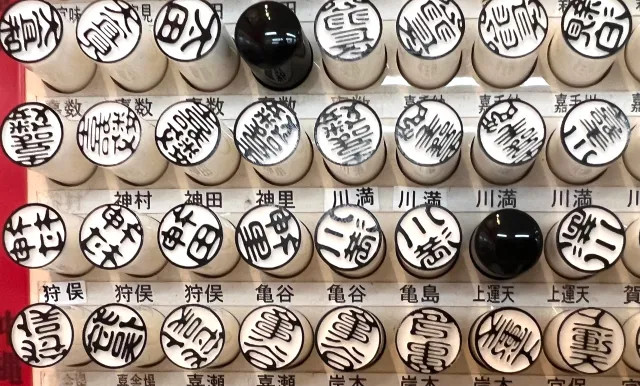
Our Japanese-language reporter Kouhey learned about rare Okinawan family names after an Internet deep dive. His interest stemmed from a recent visit to Ishigaki Island, a remote island in the prefecture of Okinawa, where he came face to face with the unusual names of Okinawans in a bookshop called Townpal Yamada, which was in the popular shopping street Euglena Mall.

Inside the bookshop was a section displaying personal seals. Called hanko in Japanese, these red-ink stamps are carved with a person’s last name and used in lieu of a signature to sign important documents. Of course, such a display of names led Kouhey to notice something interesting.
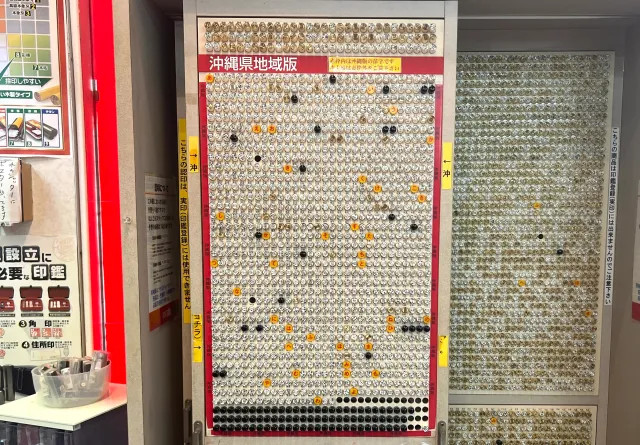
There was a whole section labeled “Regional Name Versions from Okinawa Prefecture.” The selection was outlined in bright red to indicate that these were names found in Okinawa, and that mainland-style names are in the other sections.
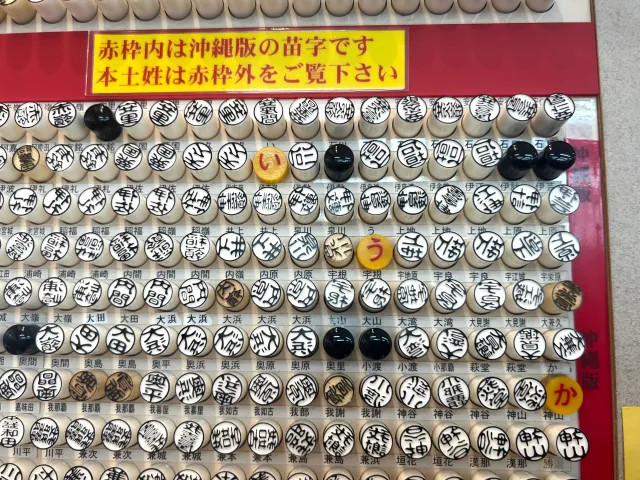
It was full of names you’d never find on the average hanko display on the mainland–you’d have to special order them!
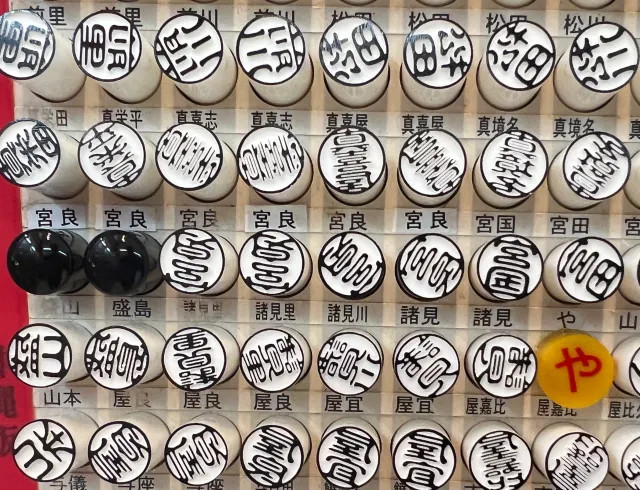
But there were also names that were pretty common on the mainland, like Nishimura, Arata, and Hamada.
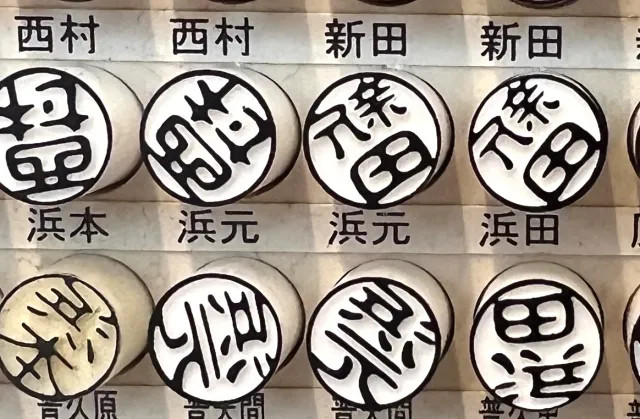
While browsing the interesting selection, Kouhey had to wonder, “If a person with a name like one of these moved to the mainland, how would it affect their everyday life?”
This question hovered in the corners of his mind for months, occasionally rising to the surface to niggle at him, until finally he decided to interview someone with a family name he’d never heard of in his life: Takahiro Heianzan (平安山 高宏), a musician from Ishigaki.
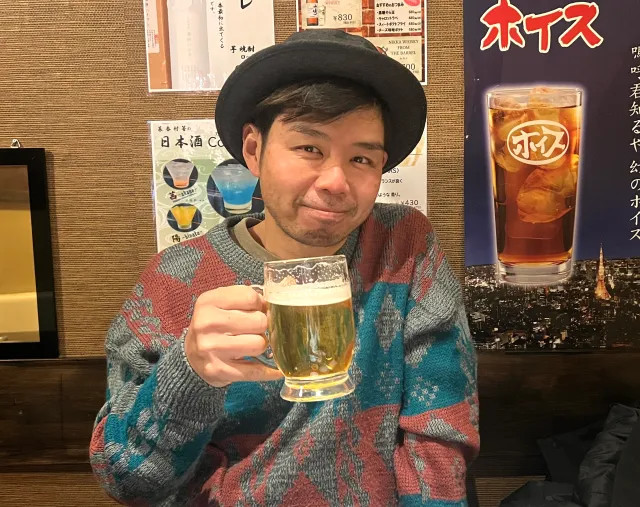
Operating under the stage name Henzan, Heianzan is the bassist and vocalist of the musical group Nose Waters, who, though originally from Okinawa, are active all over Japan.

He’s also done some solo work under the name Henzan☆Takahiro and as part of the group Cosodates, whose music is themed after their struggles with parenthood. He’s a very active musician in a wide range of genres.
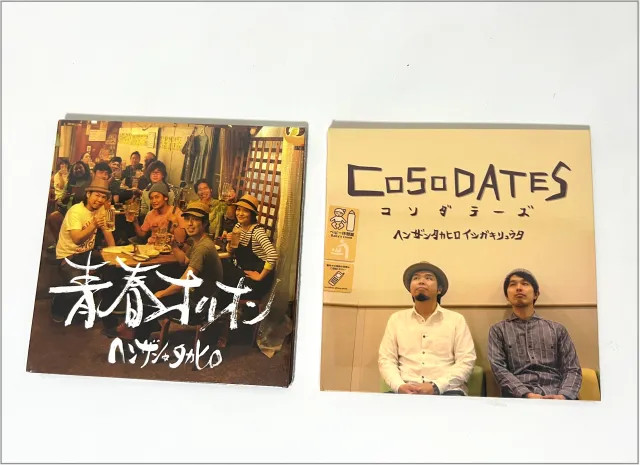
Nose Waters, by the way, just held a successful 30th Anniversary show on Ishigaki Island in November, which attracted a crowd of 1,000 people, and just the other day they played to a full house at Izakaya Kodama in Tokyo, the Kanto area’s biggest Okinawa music bar.

Kouhey himself was there at Izakaya Kodama, and after the show, he went home and did some research online. That’s when he learned that Henzan’s real last name is Heianzan, which is a name that only 1,400 people in the whole country have. With Japan’s population currently at around 120 million, that means that only one of every 90,000 people in Japan have that name!
What’s more, roughly 1,300 of them live in Okinawa. That makes the name Heianzan super rare on the mainland, since only about one in 1.2 million people outside of Okinawa use it.
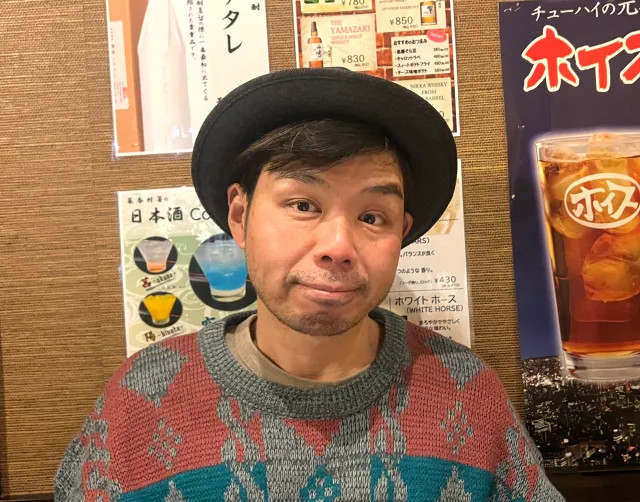
So how does that affect daily life on the mainland? Kouhey, pictured below, sought to find out by asking Henzan.

Kouhey: “Thank you for meeting with me! First of all, when I looked it up on the Internet, I learned that there are only 1,400 people in all of Japan who have the last name Heianzan.”
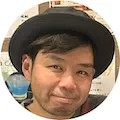
Henzan: “Really? When I lived on Ishigaki Island, there was another person named Heianzan, so I didn’t think it was especially rare. I only realized how rare it was when I came to Tokyo.”
Kouhey: “It’s a name I’ve never heard before. Apparently, there are quite a few in Chatan in Okinawa.”
Henzan: “In that area, though, a lot of people read it as ‘Henzan,’ like my stage name, even though they use the same characters. The reading ‘Heianzan’ itself is pretty rare. It’s been about 30 years since I moved to Tokyo, but I have never once seen a nameplate outside someone’s house here with my name, and I’ve never met anyone else with my name either.”
──Based on this part of the conversation, Kouhey could already tell that the name Heianzan was, indeed, fairly unusual. Next, he asked about any difficulties or benefits Henzan experienced on the mainland because of his last name.
Kouhey: “Have you gained anything from having such a rare name?”
Henzan: “I think the biggest one is that it’s really memorable. Any time I’ve met a band I really admire, like The Boom, the members always remember my name. That’s how The Boom ended up inviting me to play on their radio show.”
Kouhey: “That’s true. I also remembered your name immediately, which was what made me decide to interview you.”
Henzan: “Also, during the talk portion of shows with Nose Water, when the MC is doing the band member introduction, they often get the crowd laughing by poking fun of my name, like, ‘Your last name is so unusual, but your first name, Takahiro, is so weirdly normal!’ They also joked that even if they wanted to make a cool nickname for me, like Takuya Kimura‘s ‘KimuTaku’, it’d be hard because the name Henzan is already a nickname, but it only uses my last name.”
Kouhey: “So, tell me if there are times your name makes it hard for you, or if there are any cons to having it.”
Henzan: “There are quite a few annoying things. For one, ‘Heianzan’ doesn’t exactly roll off the tongue. For example, if I’m at a place where I have put my name on a waiting list, like a karaoke place or a restaurant, I always have someone I’m with put theirs instead.”
Kouhey: “I see. That’s true, the staff might have a moment of pause before calling it out, and it might cause a stir among the people around you. So what do you do when you have no choice but to write your name?”
Henzan: “Any place that needs my actual identity, I’ll of course write my real name, but if not, then I usually use a false name that contains just two of the kanji, like “Hirayasu (平安)” or “Hirayama (平山).”
Kouhey: “That does sound pretty annoying. But the fact that it leaves an impact is definitely a benefit. Thank you for talking with me today!”
──So there you have it: the challenges and benefits of having a rare Okinawan last name on the mainland. They’re familiar challenges for expats with non-Japanese names in Japan, but for Kouhey, who has a perfectly ordinary mainland Japanese name, it was quite an educational interview. The mainland has its fair share of unusual names too, so there are bound to be quite a few people who experience similar difficulties!
Related: Henzan☆Takahiro’s Instagram, Nose Waters’ Instagram
Images © SoraNews24
● Want to hear about SoraNews24’s latest articles as soon as they’re published? Follow us on Facebook and Twitter!
[ Read in Japanese ]
 We visit Japan’s southernmost revolving sushi restaurant and sample some delicious island seafood
 We visited the southernmost and westernmost convenience stores in all of Japan…or so we thought
 Princesses, fruits, and blacksmiths: Study reveals the 30 most unusual family names in Japan
 Wisteria season starts early with blooming of Japan’s Great Wisteria in its beautiful garden
 Japan’s best conveyor belt sushi restaurant of seven years ago has now, finally, come to Tokyo
 Japanese bento shop sells croquettes for 13 cents, but are they any good?
 Japanese trains in Sapporo might be better than those in Tokyo, thanks to one special feature
 Japanese government wants overseas anime market to roughly triple in 10 years, but are they crazy?
 Starbucks Japan releases FIVE new Frappuccinos in a day, and we try them all in 90 minutes
 No, that’s not French bread, it’s Japan’s crazy-big gobo!
 Japanese sandals dyed with real Uji matcha are here to whisk you off your feet
 Sakura season arrives at McDonald’s Japan with new range of exclusive menu items
 Beautiful idol singer leaves show business, opens delicious ramen restaurant in Tokyo
 Japan reportedly adding Japanese language skill requirement to most common foreigner work visa
 Mt. Fuji decorated with a 500,000-flower pink carpet is Japan’s ultimate spring view
 Lawson convenience store at popular tourist site is one of the most unusual in Japan
 30 Pikachus want to share a Tokyo hotel room with you that has separate Grass, Water, Fire spaces
 Man bites woman at cherry blossom park in Japan, dies shortly after
 Howl’s Moving Castle’s scene-stealing dog is here to clean your home as a plushie mop
 Pokémon and Ikea Japan cross over into each other’s worlds with collaboration events
 Japan now has a special desk for people who work at home with a pet cat[Photos]
 Famous Tokyo cherry blossom spot installs view-blocking screens to fight overcrowding[Video]
 Uniqlo announces new T-shirts for One Piece, Naruto and more for manga publisher’s 100th birthday
 Train station platform ramen store closes its doors on half a century of history in Tokyo
 Starbucks Japan releases new My Fruit³ Frappuccino at only 34 stores around the country
 Krispy Kreme releases Super Mario doughnuts in Japan for a limited time
 Survey asks foreign tourists what bothered them in Japan, more than half gave same answer
 Japan’s human washing machines will go on sale to general public, demos to be held in Tokyo
 Starbucks Japan releases new drinkware and goods for Valentine’s Day
 We deeply regret going into this tunnel on our walk in the mountains of Japan
 Starbucks Japan releases new sakura goods and drinkware for cherry blossom season 2026
 Studio Ghibli releases Kodama forest spirits from Princess Mononoke to light up your home
 Japan’s newest Shinkansen has no seats…or passengers [Video]
 Major Japanese hotel chain says reservations via overseas booking sites may not be valid
 Put sesame oil in your coffee? Japanese maker says it’s the best way to start your day【Taste test】
 No more using real katana for tourism activities, Japan’s National Police Agency says