
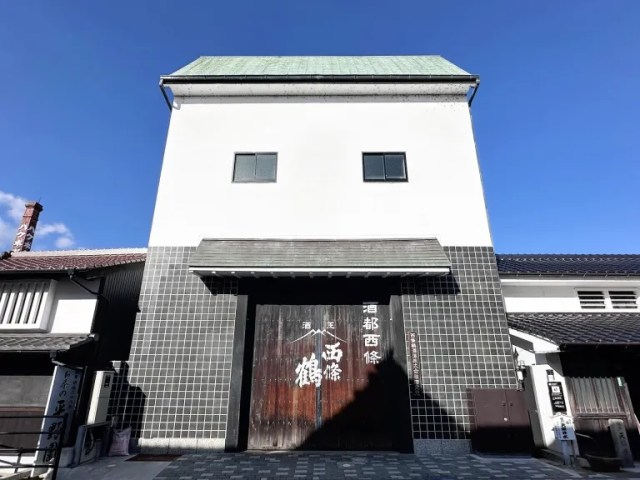
Stepping into sake history in Saijo.
It’s said that the three great sake-producing towns in Japan are Hyogo Prefeture’s Nada, Kyoto’s Fushimi, and Hiroshima Prefecture’s Saijo. Our Japanese-language reporter Mari Morimoto, who grew up in Osaka, near Kyoto, had heard of Fushimi, but being a relative sake neophyte she didn’t know anything about Saijo. Even though she’d visited Hiroshima in the past, she’d been unaware of its sake-making heritage.
So to fill in this gap she headed to Saijo sake brewery Saijo Tsuru to take part in their special “Tales of the Sake Brewery Experience Tour.” In doing so she learned just how deep the world of sake is, and how the final product is affected by the traditions, ingredients, weather conditions and production process, plus the passion of the people who make it. And though Mari took the tour in Japanese, they offer tours in English too.
Saijo, or Saijo-cho, to use its official name, is part of Higashi Hiroshima City, which is two towns to the east of Hiroshima City. The area’s sake-brewing roots go back to the Meiji era (1868-1912), and currently there are seven sake breweries operating in Saijo. Saijo Tsuru itself was founded in the Meiji era, and the brewery and main company building have been standing ever since. They’re now designated as tangible cultural properties by the Japanese government in recognition of their historical significance.
Mari’s visit coincided with the production of Saijo Tsuru’s top-grade junmai daiginjo Shinzui, made with no additives and rice that has been milled to at least 50 percent, using the most flavorful part of the grain at its core. If you tour the brewery during this time, they’ll even send you a bottle of Shinzui once the batch is ready!
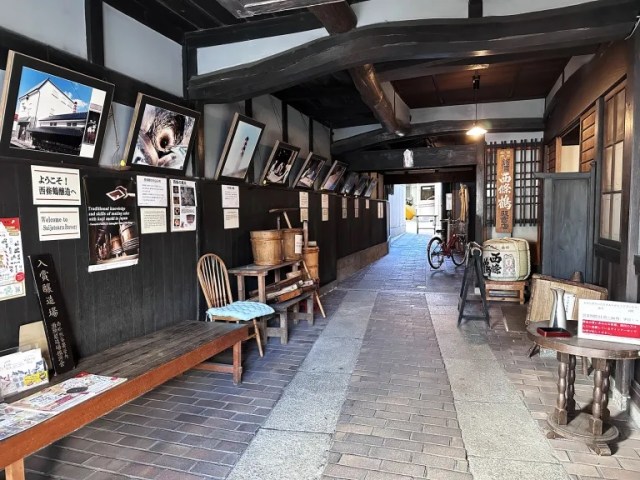
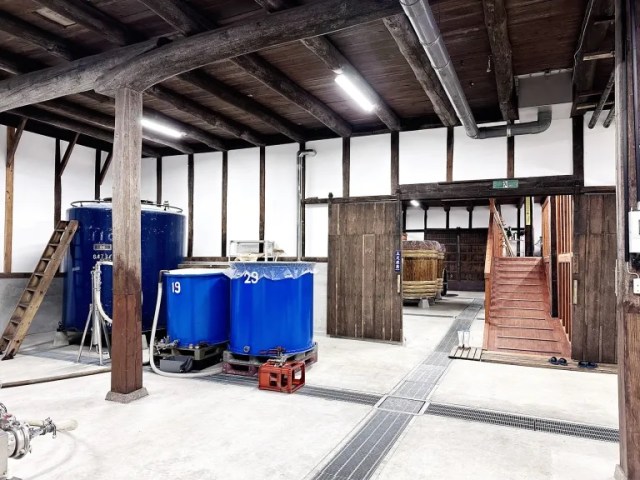
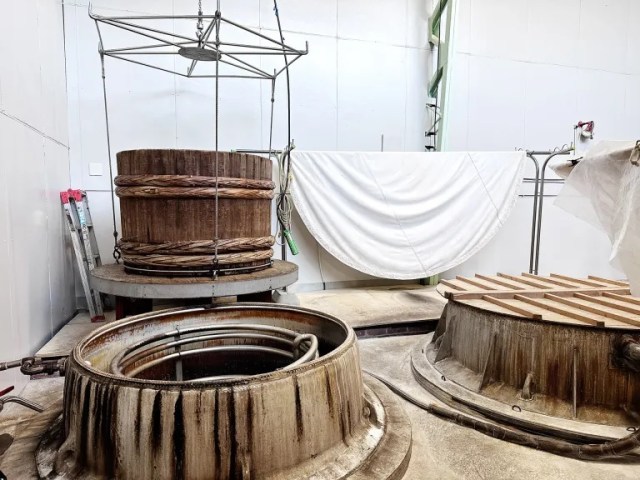
Just walking along the hall from the main entrance to the brewing area, there’s a palpable atmosphere of history, with classical architectural styles on display and an earthenware floor. The tour starts with an explanation of the history of the town and brewery. Saijo Tsuru’s setup is a mix of modern machinery and traditional wooden equipment, showing their desire to continue doing some things the old-fashioned way even while making adopting modern methods to boost quality-control and efficiency.
The koji muro left an especially deep impression on Mari. This is where the koji is cultivated. Koji is a special kind of bacteria that forms on rice, and it’s an essential part of the fermentation process used in making sake.
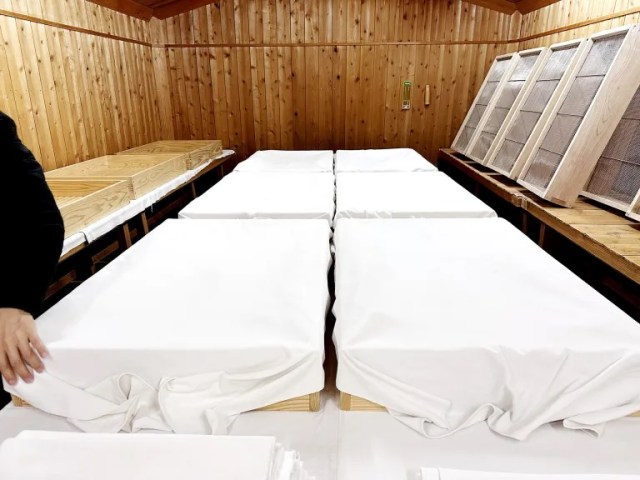
In the koji muro, koji spores are sprinkled on steamed rice, and a constant temperature and humidity are maintained so that more koji will grow. Double-doors lead into the room in order to help maintain the interior conditions, but the brewers still perform regular checks to make sure the koji is developing as needed, even feeling it with their hands to derive a sense of its readiness from the texture.
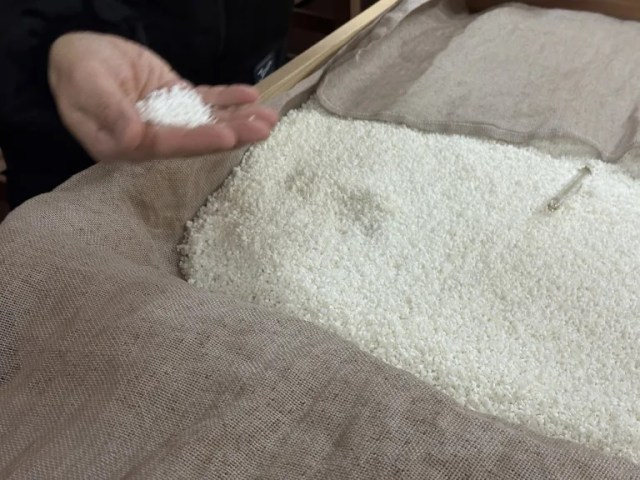
By the way, Saijo Tsuru strictly forbids anyone from bringing natto (fermented soybeans) into the brewery! They even ask that visitors refrain from eating natto in the morning before their tour, despite natto being a common breakfast food in Japan. That’s because the bacteria present in natto and required for its fermentation are especially hearty, even after you’ve finished eating it and washed your hands. If someone enters the brewery with trace amounts of natto bacteria, it could spread to the koji, making it unusable for sake brewing.
Once the koji is ready, it’s combined with water to form a mixture called the shubo, or “sake mother.” Then rice, additional water, and more koji are added to create the moromi, or mash, which will develop into the genshu, sake in a non-diluted form.
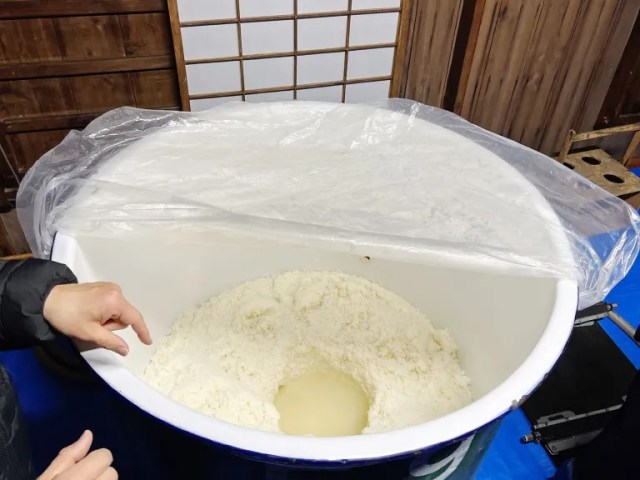
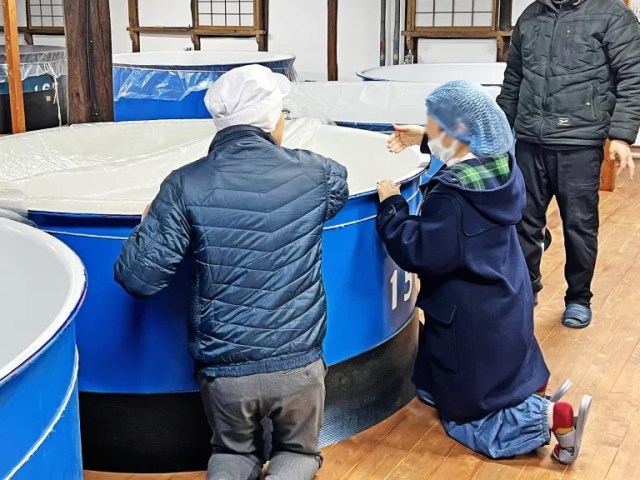
Like we mentioned earlier, during Mari’s visit Saijo Tsuru was brewing the new batch of Shinzui and so she got to see its mash. As she approached the tank, a strong sake aroma wafted towards her, and when she got closer, she could hear fizzing and lightly popping sounds.
Of course, if you’re interested enough in sake to tour a brewery, you’d probably also like to drink some sake while you’re there, so at the end of the tour, there’s a tasting session! Mari was presented with three different kinds of Saijo Tsuru sake to sample, and the staff is happy to provide even more varieties at their on-site bottle shop, which Mari was glad to take them up on.

With its coastal location, Hiroshima is famous for oysters and other kinds of seafood, and its regional cooking sometimes exhibits some strong flavors. Mari feels like Saijo Tsuru’s sake is brewed to pair well with the local cuisine, and she’d especially like to have a cup while dining on nice, thick cuts of sashimi or a moist grilled fish fillet.
Two of her personal favorites, out of the varieties she tried, were the Tojinyukonmuroka, which is a karakuchi (dry) sake, but still retains a mellow sweetness from the rice, and the lighter, more refreshing Daichi no Kaze, which she feels would pair well with just about any kind of food. Both of them are junmai sake, made with no artificially added alcohol or other additives.
▼ Tojinyukonmuroka on the left, Daichi no Kaze in the middle
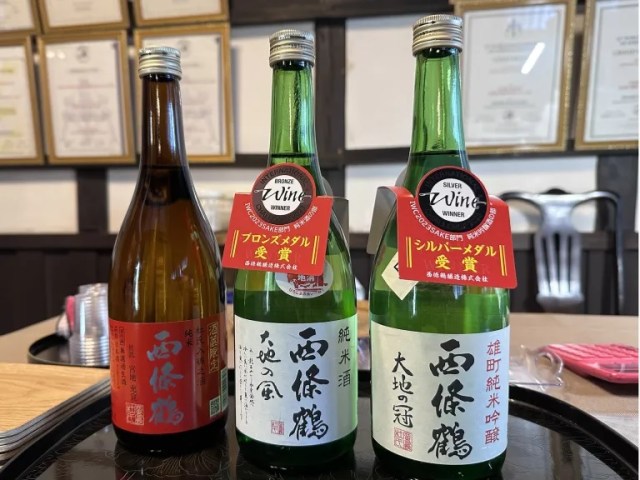
Seeing the many steps in the process, Mari had a sense that sake-brewing really is a crystallization of the carefully cultivated skills and experience of the brewer, combined with the blessings of the earth, water, and even air. And now that she knows how good Saijo’s sake is, she’ll be sure to have some whenever she’s in Hiroshima or spots it on the men or store shelf elsewhere in Japan.
Brewery information
Saijo Tsuru / 西條鶴
Address: Hiroshima-ken, Higashi Hiroshima-shi, Saijo Honmachi 9-17
広島県東広島市西条本町9-17
Website
English tour information
Related: Tales of the Sake Brewery Experience Tour (includes schedules and pricing)
Photos ©SoraNews24
[ Read in Japanese ]
 Sake on ice! Akita sake brewery has special brewing process that is spinning up tons of interest
 348-year-old sake brewery’s newest creation: A special sake just to drink with ramen!
 We followed Tokyo’s mystery walking map and ended up creating our own bar-hopping adventure
 Japan now has a special desk for people who work at home with a pet cat[Photos]
 Famous Tokyo cherry blossom spot installs view-blocking screens to fight overcrowding[Video]
 Rumors say this is Japan’s very best McDonald’s branch, but what makes it special?[Taste test]
 Picturesque Tokyo park plays host to millions of flowers and soap bubbles this spring
 Starbucks Japan has a secret coffee press service that not many people know about
 Final Fantasy invites you to adventure in Fukushima with Fukushima Fantasy Chocobo fun[Video]
 Totoro and Calcifer become little light-up lanterns for Ghibli-style excursions or at-home decor
 Fried sandwiches arrive in Tokyo, become hot topic on social media
 Peko-chan Milky Time Cafe opens in Chiba and we go to check out all of the pastries and merch
 Giant Clodsire Pokémon plushie comes with up to 32 Woopers in super size, super cute set【Pics】
 Uniqlo announces new T-shirts for One Piece, Naruto and more for manga publisher’s 100th birthday
 Krispy Kreme releases Super Mario doughnuts in Japan for a limited time
 7-Eleven Japan releases a crazy new viral sandwich: Chocolate Sprinkles and Whipped Cream
 Japan now has a “for foreign tourists only” Mt. Fuji sightseeing train[Video]
 Studio Ghibli releases the My Neighbour Totoro tea caddy, with a magical self-closing lid
 Create a tiny Ghibli anime world on your bookshelf with new miniature papercraft art kits
 Starbucks Japan releases new My Fruit³ Frappuccino at only 34 stores around the country
 Starbucks Japan unveils new sakura cherry blossom collection for hanami season 2026
 Train station platform ramen store closes its doors on half a century of history in Tokyo
 Studio Ghibli releases Catbus pullback keychain that runs like the anime character
 Japanese onsen egg maker from 100-yen store Daiso needs to be on your shopping list
 Nine great places to see spring flowers in Japan, as chosen by travelers (with almost no sakura)
 Survey asks foreign tourists what bothered them in Japan, more than half gave same answer
 Japan’s human washing machines will go on sale to general public, demos to be held in Tokyo
 Starbucks Japan releases new drinkware and goods for Valentine’s Day
 We deeply regret going into this tunnel on our walk in the mountains of Japan
 Studio Ghibli releases Kodama forest spirits from Princess Mononoke to light up your home
 Starbucks Japan releases new sakura goods and drinkware for cherry blossom season 2026
 Japan’s newest Shinkansen has no seats…or passengers [Video]
 Major Japanese hotel chain says reservations via overseas booking sites may not be valid
 Put sesame oil in your coffee? Japanese maker says it’s the best way to start your day【Taste test】
 No more using real katana for tourism activities, Japan’s National Police Agency says