
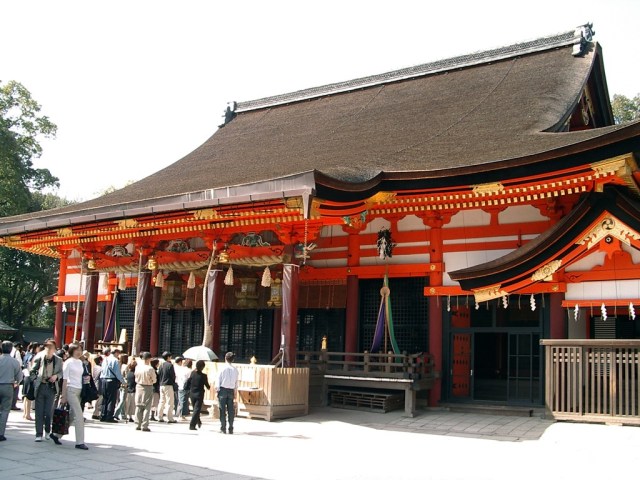
Shinto shrine tradition no longer possible for nighttime visitors.
Construction for Kyoto’s Yasaka Shrine was founded in the seventh century, and it sits right in the middle of Gion, the city’s geisha quarter. That combination of cultural significance and easy-to-access location has made Yasaka Shrine one of Kyoto’s most popular sightseeing attractions, but following a recent incident involving some nighttime foreign visitors, the shrine has made a change to its operating policies, removing a traditional part of the Shinto shrine experience after sundown.
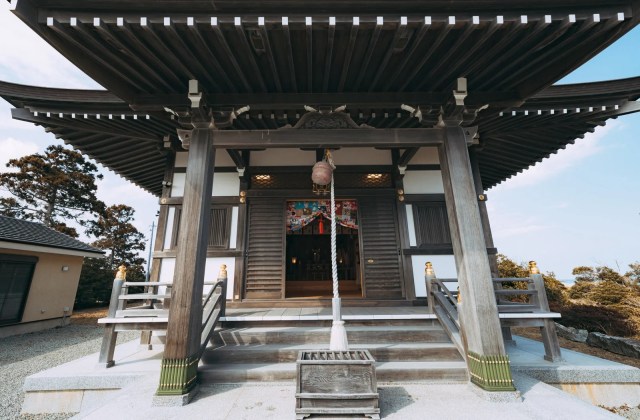
Shinto shrines typically have a collection box for donations that can be found in front of the building that houses the main alter. Visitors toss their coins into the box, then ring a bell mounted above the box by shaking a cord before offering prayers or making a wish. These bells aren’t the large, cast-iron ones whose notes echo throughout the surrounding neighborhoods. They’re about the size of a basketball and have a ringer inside, so there’s no need to use all that much strength in shaking the cord.
▼ Though not Yasaka, the setup at the shrine shown in this photo is pretty much the standard.
Yasaka Shrine has three such bells, and they could be rung at night, even after the shrine staff has left for the day. However, last week a video was posted online in which a Japanese woman confronts what appears to be a group of foreign tourists who had been ringing the bells with excessive force.
Unfortunately, there doesn’t seem to be any video of the ringing itself, but in the conversation that followed, one side was clearly much more heated than the other.
#拡散希望 鈴緒を柵に叩きつけて遊びながら参拝していた外国人を注意したところ、多人数から罵られ続けました。これが夜の八坂神社の実態。#オーバーツーリズム #観光公害 #京都 #八坂神社
— 藤野 (@fujino_ojo) May 23, 2024
もう手に負えません…みなさん助けてください。 pic.twitter.com/iCWrlXTX0b
“Enough. Enough. Enough. Enough. Get out of my sight,” one of the foreign men can be seen telling the woman, before another, who eventually states that he’s been a resident of Japan for eight years, steps forward and presents himself as the group’s spokesperson. After rapidly asking the woman three times in English, if she speaks English, he switches to grammatically sound if accented Japanese to ask her again if she can speak English, then bounces back to English before telling her to leave them alone. A foreign woman then comes forward to say “I misunderstood and I made it too loud. It’s not his fault,” after which the second man jumps back in and declares “You’re being very rude. Leave us alone.” Any pretext of polite conversation then breaks down, with the woman and second man both declaring each other rude in less-than-courteous choices of vocabulary.
The video was uploaded to Twitter on May 23, and two days later Yasaka Shrine posted the following announcement on its official website:
“Out of concern for the safety of all visitors, we will be putting away the main hall’s bell cords from 5 p.m. to 6 a.m. During that time, you may visit and worship as usual, but please be aware that you will not be able to ring the bells.”
▼ The bell cords being raised, following the change in policy
外人狼藉者のせいで、夜間は鈴の緖が上げられることになった八坂さん御本殿 pic.twitter.com/Tzz8xaJFRJ
— 釜玉うどん(おそらく非公式) (@fBJZQlO8fLn5EsT) May 26, 2024
The policy change doesn’t seem to have been triggered only by the May 23 video, as the shrine said, in a follow-up statement, that “There have been multiple cases of visitors shaking the cords strongly, and of the cords tearing, which led us to consider this change.” However, the timing of the policy shift indicates that at the very least the incident shown in the May 23 video was seen as the last straw regarding rough handling of the bells and their cords.
▼ The bells can still be rung during the day, when the shrine staff is present and the cords are in their down position, as shown in the video here.
Yasaka Shrine raising its cords isn’t completely unprecedented, but it’s a measure that’s usually only taken at New Year’s and during major festivals when the large number of visitors would mean significant wear and tear on the cords, and also during the height of the coronavirus pandemic when hand hygiene was a public health issue. In normal times, though, the bells have been available for visitors to ring day or night. The shrine does say, though, that from a religious standpoint not ringing the bell does not hamper the ability of worshippers’ prayers reaching the gods, just like how you don’t have to use a five-yen coin as your offering.
The pandemic years excepted, inbound foreign travel to Japan has been on a steady rise for much of the past 10 years. During the current post-pandemic, weak-yen boom, though, high-profile breaches of etiquette by foreign tourists seem to be occurring with increasing frequency, which risks souring Japan’s feeling towards visitors from overseas. As of now, Yasaka Shrine’s policy of raising the bell cords at night will remain in place indefinitely, but hopefully more respectful behavior from visitors in the coming weeks and months will keep it from becoming permanent.
Source: Yasaka Shrine official website, Nikkan Sports via Yahoo! Japan News via Jin, Kyoto Shimbun
Top image: Wikipedia/Moja~commonswiki
Insert image: Pakutaso
● Want to hear about SoraNews24’s latest articles as soon as they’re published? Follow us on Facebook and Twitter!
 Real-life Ghost of Tsushima shrine announces ban of all “tourists,” but there’s some fine print
 The etiquette rules for visiting Shinto shrines in Japan
 Coronavirus changes how Tokyo shrine handles centuries’ old purification process for visitors
 Feel what it’s like to be a Shinto shrine maiden with shrine’s experience package for foreigners
 Japanese shrine bans foreign visitors following disrespectful behaviour by tourists
 Tokyo’s best museum for foreign travelers finally reopens after being closed for four years
 Japanese masturbatory aid and insect repellent companies collab on a new product
 Tokyo subway and almost all Tokyo train lines now accepting credit card tap payments
 Pokémon lacquerware series expands for Year of the Horse with new handcrafted design[Video]
 Secret staff cafeteria in Tokyo Metropolitan Government Building serves up an exclusive ramen
 Silicone testicle covers banned from Japanese sauna following cups being left behind and on shelves
 Studio Ghibli adds new My Neighbour Totoro 2026 Corn Gift to its anime store for Mother’s Day
 Bonsai-tree-flavored gin on sale now
 A look back on 40 years of Japanese schools banning stuff
 Photos of Complete Strangers: Japan’s new strange, and strangely compelling, capsule toys【Pics】
 Japan now has a special desk for people who work at home with a pet cat[Photos]
 Famous Tokyo cherry blossom spot installs view-blocking screens to fight overcrowding[Video]
 Uniqlo announces new T-shirts for One Piece, Naruto and more for manga publisher’s 100th birthday
 Krispy Kreme releases Super Mario doughnuts in Japan for a limited time
 7-Eleven Japan releases a crazy new viral sandwich: Chocolate Sprinkles and Whipped Cream
 Totoro and Calcifer become little light-up lanterns for Ghibli-style excursions or at-home decor
 Japan now has a “for foreign tourists only” Mt. Fuji sightseeing train[Video]
 Picturesque Tokyo park plays host to millions of flowers and soap bubbles this spring
 Ramen restaurant in top Tokyo tourist neighborhood skips price gouging, but how does it taste?
 Fatal stabbing at Pokémon Center in Tokyo reignites concern over rising stalking cases in Japan
 Starbucks Japan unveils new sakura cherry blossom collection for hanami season 2026
 Train station platform ramen store closes its doors on half a century of history in Tokyo
 Starbucks Japan releases new My Fruit³ Frappuccino at only 34 stores around the country
 Studio Ghibli releases Catbus pullback keychain that runs like the anime character
 Japanese onsen egg maker from 100-yen store Daiso needs to be on your shopping list
 Nine great places to see spring flowers in Japan, as chosen by travelers (with almost no sakura)
 Survey asks foreign tourists what bothered them in Japan, more than half gave same answer
 Japan’s human washing machines will go on sale to general public, demos to be held in Tokyo
 Starbucks Japan releases new drinkware and goods for Valentine’s Day
 We deeply regret going into this tunnel on our walk in the mountains of Japan
 Studio Ghibli releases Kodama forest spirits from Princess Mononoke to light up your home
 Starbucks Japan releases new sakura goods and drinkware for cherry blossom season 2026
 Japan’s newest Shinkansen has no seats…or passengers [Video]
 Major Japanese hotel chain says reservations via overseas booking sites may not be valid
 Put sesame oil in your coffee? Japanese maker says it’s the best way to start your day【Taste test】
 No more using real katana for tourism activities, Japan’s National Police Agency says
 What are the top 10 most popular shrines among international tourists? Study reveals…
 “Ghost photo” shows Kyoto’s breathtaking Fushimi Inari Shrine can be bone-chilling at night
 Can’t spend a whole month at Kyoto’s Gion Festival? This beautiful video gives the highlights
 Why buy your cat a cat house when you can buy a cat shrine from Japan instead?
 Mr. Sato visits the “shrine of money” in Kyoto
 Draw-your-own fox charms are one of the highlights of Kyoto’s famous Fushimi Inari Shrine
 Bamboo trees vandalized near Kyoto’s Fushimi Inari shrine, foreign graffiti prevalent
 Step into a magical spirit world at the Motomiya Festival at Fushimi Inari Shrine in Kyoto
 The only path to this Nagasaki Shinto shrine gets swallowed by the sea every day【Video】
 Foreign tourist angers locals for doing pull-ups on torii gate at shrine in Japan
 Shinto shrine naked festival ritual asks men to cover up for first time in three-century history
 How Kyoto’s shrine of severing ties helped our reporter escape from a “black company”
 Charges dropped against elderly Japanese man for nailing Putin voodoo doll to sacred shrine tree
 Foreign tourist in Japan arrested for having sex on shrine grounds in broad daylight
