Ministry wants food in stomachs, not in the trash.
I once was eating lunch in a small cafe in Tokyo with a friend from overseas, who was full but had about half of the portion of roast pork he’d been served left over. When he asked the staff for a doggie bag to take the leftovers home in, he was informed that the restaurant couldn’t accommodate him, out of concern over the food potentially spoiling on his way home and causing him to get food poisoning if he then ate it. This isn’t an unusual stance for restaurants in Japan to take, either. Though the country has a rich dining culture, characterized by attention to thoughtful hospitality, restaurants in Japan generally don’t provide doggie bags.
In the end, my friend surreptitiously slipped his leftover hunk of meat into a plastic bag he happened to have on him, which he then stuffed inside of his shoulder bag and smuggled out of the restaurant. Such duplicity might soon become unnecessary, though, thanks to a new initiative from Japan’s Ministry of Health, Labor and Welfare.
A recently concluded study found that in 2022, Japan had roughly 4,720,000 metric tons of food waste, roughly half of which came from restaurants and food shops. In order to reduce those numbers, the government is looking to promote the use of doggie bags, so that instead of going into the trash, diners’ food that they don’t finish at the restaurant will go into their refrigerators, and later their stomachs.
Last week, the Ministry of Health, Labor and Welfare held its first meeting of a newly formed investigative committee on the subject, with members of the ministry convening with university researchers and consumer advocacy groups. Their goal is to put together a set of guidelines which can then be presented to restaurants, izakaya (Japanese-style pubs), hotels, and other dining establishments covering topics about which foods are and aren’t safe to allow customers to take home leftovers of, who should package the leftovers and in what ways, and a notification framework in the event of someone contracting food poisoning after consuming the contents of a doggie bag. Another key point of the discussions so far is communicating that even for foods that are doggie bag-permissible under the eventual guidelines, the final responsibility for determining whether the leftovers are safe to eat or not lies with the customer, not the restaurant.
In theory, establishing safety guidelines doesn’t seem like it should be terribly difficult. It’s not like food poisoning is rampant in countries where taking home restaurant leftovers is common. Even within Japan, there are plenty of restaurants that offer to-go orders, not to mention tons of bakeries, bento shops, and food stands selling everything from grilled chicken to roasted sweet potatoes on a to-go-only basis. It’s hard to believe that the 30 minutes or so that restaurant leftovers might have been on a customer’s plate mean that the food has crossed a threshold beyond which it’ll be unfit for human consumption by the time it gets home. And if the customer doesn’t go straight home? That’s the same risk as with any other buy-it-here, eat-it-somewhere-else scenarios, and it’s not like there’s an epidemic of people in Japan collapsing at home after eating fried chicken they picked up at the convenience store.
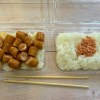
▼ If Japanese supermarkets can let us take home prepared food like this, restaurant doggie bags aren’t an impossibility.

It’s possible that the bigger challenge to getting restaurants in Japan to proactively provide doggie bags won’t be health/hygiene-based, but instead one of image and operations management. It seems pretty clear that if they’d wanted to, restaurants in Japan could have started providing doggie bags long ago, seeing as how takeout and grab-and-go restaurants have flourished in Japan. So it’s at least a little likely that “We can’t provide doggie bags for health reasons” actually has more to do with not wanting to make a sit-down restaurant look like a cheap takeout joint, or not wanting to pull workers off of preparing and serving new orders to have them package up something that’s no longer bringing in any additional revenue for the restaurant.
The Ministry of Health, Labor and Welfare hopes to have its doggie bag guidelines finalized and available to restaurants sometime this year.
Source: NHK News Web
Photos ©SoraNews24
● Want to hear about SoraNews24’s latest articles as soon as they’re published? Follow us on Facebook and Twitter!