

Gainax goes out in a very Gainax-like way.
Anime studio Gainax is a great example of how you don’t necessarily have to be prolific in order to be prodigious. Best known for the original Evangelion TV anime and its earlier associated theatrical features, Gainax would sometimes go years between high-profile projects, but with works such as Eva, Royal Space Force/The Wings of Honneamise, Gunbuster, and Gurren Lagann, it’s ratio of landmark hits is enviably high.
And yet, all has not been well with Gainax, and now it’s all over, as revealed in a statement by one of the studio’s original founders, Evangelion creator Hideaki Anno.
Anno posted about the development on December 11 on the official website of Khara, the studio he established in 2006 after leaving Gainax. According to the statement, as of December 10 Gainax no longer exists as a corporation, having been completely dissolved and liquidated.
It’s a sad, but not shocking, end to Gainax, which was formally founded in Christmas Eve in 1984, meaning it just barely missed making it to its 41st birthday. Over the years, instability was one of the few near-constants for Gainax. Established by college-age amateur artists who produced the fabled Daicon festival opening animation student films, most of the Gainax staff was always clearly more interested in the artistry of making anime than managing the economic realities and responsibilities of operating on a professional scale. Shady accounting and tax evasion, whether to prop up the company’s perennially shaky financial foundation or simply for personal greed, got Gainax’s then-president Yasuhiro Takeda and the company’s tax accountant arrested in 1999, at a time when Evangelion was a huge hit and had revenue pouring into the company.
▼ Gainax’s 1990 TV series, Nadia: The Secret of Blue Water, was inspired by the works of Jules Verne and has a top-notch opening theme from singer Miho Morikawa.
In 2016, 10 years after Anno had formed Khara, his company sued Gainax over unpaid royalties from Gainax properties Anno had been involved in, resulting in a messy courtroom dispute that ended in Khara’s favor. Three years later, in 2019, Gainax’s then-president Tomohiro Maki, who was 50 years old at the time, was arrested on charges of taking nude photographs of a teenage girl who had entered into a contract with Gainax in hopes of becoming an anime voice actress. This sunk Gainax’s reputation to an even lower level, with a subsequent restructuring including the creation of a new board of directors with the goal of rebuilding the company. Anno, who was a Gainax shareholder, and Khara also lent support, but even these combined efforts have proven to be not enough to save Gainax.
“I am genuinely saddened, but quietly accepting of the situation,” said Anno in his statement regarding Gainax’s final fate. “I wish to express our gratitude and respect to all of the individuals and organizations who have been working without compensation for nearly six years, since the arrest of former representative director and president Tomohiro Maki in 2019.”
With Gainax filing for bankruptcy in 2024, it appears that most of the company’s final months were devoted to figuring out where its assets, including intellectual property rights, would go. Without offering specifics, Anno says that “Thanks to the cooperation of all parties, the transfer of rights, deliverables, and production materials has been successfully carried out, following proper procedures, to their respective rights holders and creators.” The “following proper procedures” part is especially important, seeing as how Gainax, having been formed in a time of far less organized operations within the anime industry, wasn’t always the best at understanding/recognizing exactly who owned what.
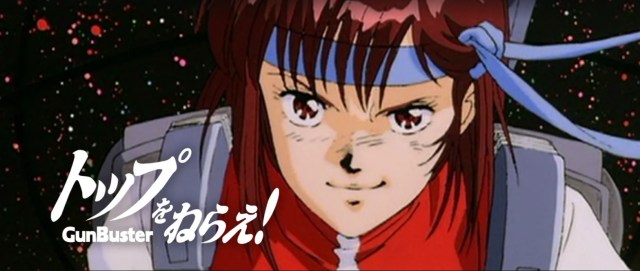
▼ The production of 1988’s Gunbuster/Aim for the Top (which streams on Hulu in Japan) has been described by former Gainax employees as especially chaotic, though that did result in its unique blend of both comedic and dramatic sports, mecha, and space opera elements.
In his statement, Anno says “Regarding the Gainax of the past, I have already made public almost all of the stories that I can share, but there is something that once again feels regrettable, and I will take this opportunity to speak on it.” He then goes on to mention a civil lawsuit filed by Khara against Gainax regarding improper handling of rights and deliverables transfers by Gainax’s previous managers, saying that the matter was only finally settled in January of 2023, with an acknowledgement by the defendants of Khara’s claims and an apology made.
Anno asserts that during the lawsuit, which involved an examination of Gainax emails and internal documents, it became clear that Gainax had behaved dishonestly regarding its ability or intent to repay Khara for emergency funding it had provided to Gainax in a time of need, and that communications between Gainax managers showed a lack of respect for the Gainax’s staff and the importance of preserving production materials. Anno then calls out, by name, Yoshinobu Asao, Hiroyuki Yamaga, and Yasuhiro for false statements and dishonesty, all three of whom were, along with Anno, co-founders of Gainax. “I had considered them friends since our university days,” Anno wistfully says, later adding that “when I learned about what they had done, my feelings went beyond anger and into sadness. Realizing once again that I would never be able to return to the relationship I previously had with them is profoundly sorrowful.”
Anno’s final thoughts on Gainax aren’t all about bitterly lost friendships, however. “Finally, I would like to express my appreciation to Yasuhiro Kamimura, a friend since my university days and the last president and representative director of Gainax. While the former management team of Gainax abandoned the studio’s legacy and failed to take responsibility for its actions or fulfill its obligations towards its creditors, Kamimura devoted himself to earning the cooperation and understanding of all involved parties to preserve the studio’s intellectual rights and materials while dealing honestly with creditors, watching over Gainax until its demise. For all of your hard work, thank you, Kamimura.”
Sifting through all that Anno had to say, and taking it at face value, it would seem that Gainax’s end probably won’t have much of an effect on the anime landscape going forward. As Gainax struggled financially over the years, Khara acquired an increasing ownership stake in the Evangelion franchise. Starting with the first Rebuild of Evangelion theatrical anime in 2007, it’s Khara, not Gainax, who’s produced the anime. Khara has also been handling distribution and international licensing of Eva for more than a decade at this point, and following Gainax’s bankruptcy filing last year, Khara acquired complete control of the Evangelion franchise copyright.
One can also make the argument that Gainax had already become one of the anime industry’s Ships of Theseus, with its brightest creative stars having moved on some time ago. Aside from Anno leaving to form Khara in 2006, in 2011 more Gainax employees broke away to create Studio Trigger, whose growing list of hits include Kill la Kjill, Little Witch Academia, Delicious in Dungeon, and New Panty & Stocking with Garterbelt. The last of those, incidentally, is a sequel series to a Gainax TV series that aired in 2010, showing that even if Gainax is no longer around, that doesn’t mean that all of the franchises that began there have to come to a halt too, especially if, as Anno says, all of its intellectual property rights have been sent off to appropriate new homes.
▼ New Panty & Stocking with Garterbelt
So in the end, it’s hard to say whether Gainax closing down for good is something that should be met with fond remembrance of its glory days, sadness for how it all fell apart, bitterness at the friendships lost along the way, pride at the careers it launched, or just a shrug of the shoulders at how, maybe, the company coming to an end doesn’t really matter. Given the number of Gainax anime series that finished on a complex, emotionally messy, inconclusive note where just about the only clearly discernable message seemed to be that you’ll have to figure out how you feel about it for yourself, this is probably the most Gainax-like way Gainax itself could have ended.
Source: Studio Khara, Famitsu
Top image ©SoraNews24
Insert image: Hulu
● Want to hear about SoraNews24’s latest articles as soon as they’re published? Follow us on Facebook and Twitter!
Follow Casey on Twitter, where he recommends Miho Morikawa’s Ranma 1/2 ending theme too.
 Evangelion creator Hideaki Anno’s production company is suing Gainax, the studio he co-founded
 Hayao Miyazaki and Evangelion creator get together for a photo and a talk about beards
 Evangelion creator Hideaki Anno returning to anime with new project for 50-year-old franchise
 Evangelion creator Hideaki Anno is writing for the new Gundam anime TV series【Vido】
 Evangelion creator says there might be more Eva anime to come
 Fatal stabbing at Pokémon Center in Tokyo reignites concern over rising stalking cases in Japan
 Uniqlo announces new T-shirts for One Piece, Naruto and more for manga publisher’s 100th birthday
 Krispy Kreme releases Super Mario doughnuts in Japan for a limited time
 Final Fantasy invites you to adventure in Fukushima with Fukushima Fantasy Chocobo fun[Video]
 Japanese kindness restores our faith in humanity after a highway bus accident in Tokyo
 Japanese politicians working to promote plastic model culture as a cultural asset
 How many doughnuts can you pack in a Mister Donut all-you-can-pack deal?
 Political commentator says Donald Trump supporters whack off to anime 【Video】
 We asked our Japanese team of writers how they deal with seasonal allergies in Japan
 Create a tiny Ghibli anime world on your bookshelf with new miniature papercraft art kits
 7-Eleven Japan releases a crazy new viral sandwich: Chocolate Sprinkles and Whipped Cream
 Starbucks Japan releases new My Fruit³ Frappuccino at only 34 stores around the country
 Japan now has a “for foreign tourists only” Mt. Fuji sightseeing train[Video]
 Nine amazing off-the-beaten-path cherry blossom spots in Japan for yaezakura and shidarezakura
 Stunning central Japan wisteria festival is like a purple fantasy straight out of a Ghibli movie
 Studio Ghibli releases the My Neighbour Totoro tea caddy, with a magical self-closing lid
 Studio Ghibli unveils new Rollbahn notebook in honour of Howl’s Moving Castle
 Starbucks Japan unveils new sakura cherry blossom collection for hanami season 2026
 Train station platform ramen store closes its doors on half a century of history in Tokyo
 Studio Ghibli releases Catbus pullback keychain that runs like the anime character
 Japanese onsen egg maker from 100-yen store Daiso needs to be on your shopping list
 Nine great places to see spring flowers in Japan, as chosen by travelers (with almost no sakura)
 Starbucks Japan releases first-ever Hinamatsuri Girls’ Day Frappuccino
 Cherry blossoms begin blooming in Japan with record-early starts for sakura season
 Survey asks foreign tourists what bothered them in Japan, more than half gave same answer
 Japan’s human washing machines will go on sale to general public, demos to be held in Tokyo
 Starbucks Japan releases new drinkware and goods for Valentine’s Day
 We deeply regret going into this tunnel on our walk in the mountains of Japan
 Studio Ghibli releases Kodama forest spirits from Princess Mononoke to light up your home
 Starbucks Japan releases new sakura goods and drinkware for cherry blossom season 2026
 Japan’s newest Shinkansen has no seats…or passengers [Video]
 Major Japanese hotel chain says reservations via overseas booking sites may not be valid
 Put sesame oil in your coffee? Japanese maker says it’s the best way to start your day【Taste test】
 No more using real katana for tourism activities, Japan’s National Police Agency says
 Studio Ghibli helped create final Evangelion movie, since no one else had the right machine【Vid】
 Evangelion creator Hideaki Anno opens up about his latest bout with depression, movie delays
 Evangelion creator says even Hayao Miyazaki anime don’t have enough Miyazaki
 Please refrain from making Evangelion fan porn, anime studio officially asks
 Evangelion’s Gainax studio establishes new business… cultivating tomatoes
 Evangelion fans brace for another release delay as creator is rumored to be making Ultraman movie
 All Rebuild of Evangelion movies now free to watch on online as creator sends message of hope
 Studio Gainax confirms plans for anime production studio and museum in Fukushima
 New Evangelion short film now streaming on animation studio’s website
 New Evangelion anime movie teaser trailer appears after six years of waiting【Video】
 New Evangelion anime movie’s voice recording officially starts, fans remain patiently ecstatic
 Evangelion studio receiving threatening fan comments, will report offenders even outside Japan
 Studio Ghibli director Hayao Miyazaki is still drawing…and walking in his Vans
 Final Evangelion movie is finally finished, because Hideaki Anno says it is
 The secret method for making Evangelion plugsuit anime noises has been revealed (and preserved)
 Evangelion can (not) get released – Final Rebuild film gets delayed again