
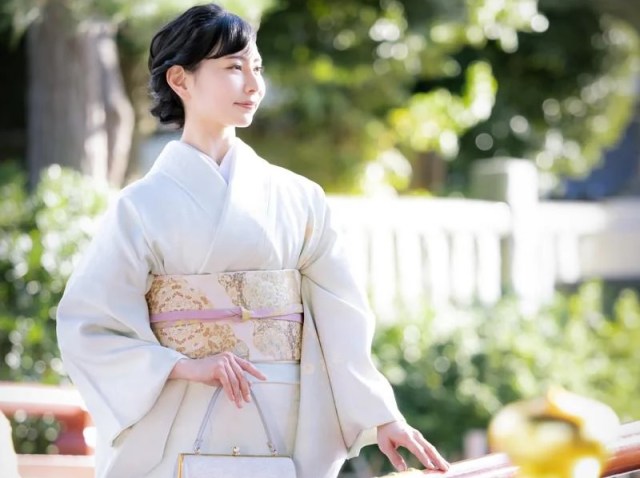
Allowing for female succession would require changes to law and over a thousand years of cultural tradition.
So here’s an odd statistical anomaly. Right now, in all of Japan, there are only three people who are closer in line to inheriting the imperial throne than you are.
That’s because there are currently only three people in the entire world who could become Japan’s next emperor. And no, this isn’t a situation where those three share first dibs on the position, but if something were to happen to them then the title of emperor would pass on to another rung of candidates. Under the present system, if none of those three men become Japan’s next emperor, then the imperial line will end when the current monarch, Emperor Naruhito, abdicates the throne or passes away.
Japan’s rules of imperial succession are pretty strict: the emperor has to be male, and he has to be connected through his father’s lineage to the emperor. Naruhito has no son, and with him being 65 years old and his wife Empress Masako 62, they’re not going to be producing a male heir.
Naruhito does have a younger brother, Crown Prince Fumihito. At 60 years old himself, though, Fumihito isn’t likely to carry Japan’s imperial line much farther into the future than Naruhito will. There’s also Prince Masahito, but he’s the 90-year-old younger brother of Naruhito and Fumihito’s father, the former Emperor Akihito, so also not really a symbol of long-term stability for the imperial family.
That leaves 19-year-old Prince Hisahito, Prince Fumihito’s son and Emperor Naruhito’s nephew, as not just the most viable successor, but really the only viable successor. That, though, raises worries about what would happen if Hisahito, for whatever reason, was unable to serve as emperor. Even if Hisahito does take the throne, unless he fathers multiple sons, it’ll just be a case of delaying the same problem to be repeated again later.
However, Emperor Naruhito does have a daughter, the 24-year-old Princess Aiko. Because Masako gave birth to her relatively late in life, at the age of 38, there was always a sense that Aiko would likely be the couple’s only child, and discussions about whether the rules of succession should be changed now as she’s grown into young adulthood, with her and her cousin Hisahito the only possible heirs for the next generation of Japan’s imperial family.
▼ “How many potential heirs is enough?” is a complex question, but “Not enough to form a basketball team” is probably too few.

Altering the system of succession isn’t something that can be done lightly, though. In addition to going against over a thousand years of tradition, it would require the Diet (Japan’s parliament) to make revisions to the Imperial Household Law, the official legislation that determines the next emperor of Japan. To gauge public opinion of the idea, Japanese newspaper Yomiuri Shimbun conducted a survey asking about two points of the debate.
The first possible revision would simply be to allow a woman to directly become the empress of Japan (i.e. to become monarch not through marriage, but through inheritance of the title). This would then put Aiko herself, as the daughter of the current emperor, in line for the throne. Out of the 2,004 survey responses that were received, 69 percent are in favor of letting a woman inherit the title of empress, with 24 percent undecided and only 7 percent distinctly opposed.
The other potential revision that’s been tossed about is allowing for succession rights to the imperial throne to be determined through the mother’s lineage as well as the father’s. This revision wouldn’t initially change much without also allowing direct succession to a female emperor, but even by itself, allowing for succession based on mother’s lineage would mean that Aiko’s sons, should she have any, would then be in line for the throne, based on their mother being the daughter of the emperor. Allowing for female lineage in succession also had broad support from the survey respondents, with 64 percent in favor of the idea, 22 percent undecided, and 13 percent unopposed.

As in many countries, though, older people in Japan are often more likely to feel strongly, and conservatively, about the monarchy, so are the progressive attitudes the survey showed a result of gathering replies only from younger Japanese people? Yomiuri Shimbun hasn’t released age-demographic data for its study, but it has said that the survey was done as a mail-in questionnaire, not an online or phone poll, and considering how far physical written correspondence has fallen out of fashion with younger generations, odds are the survey respondents weren’t primarily free-spirited 20-somethings. With 68 percent of the participants also saying that they’re worried about a possible succession crisis, it’s not like the responses were coming from a group that only said they’re OK with changes to the Imperial Household Law because they’re apathetic about the situation.
At the same time, the numbers being largely in favor of the changes don’t necessarily mean that Japan is racing towards a consensus on the matter. In 2022, Yomiuri Shimbun also conducted a survey asking participants if they were OK with the idea of a woman inheriting the title of Empress, and the results were almost exactly the same, with 70 percent in favor, 24 percent undecided, and 6 percent opposed. It’ll be up to Japan’s lawmakers to decide whether the lack of a surge in support means that it’s still too soon to make changes to the system, or if the largely steady support is a sign there’ll never be complete agreement, and so now is as good a time to make changes as there’ll ever be.
Source: Yomiuri Shimbun via Jin
Top image: Pakutaso
Insert images: Pakutaso (1, 2)
● Want to hear about SoraNews24’s latest articles as soon as they’re published? Follow us on Facebook and Twitter!