
One taste and lighter varieties may never be enough for you again.
If your idea of miso is a light-colored soup, gentle and mild in flavor, then Nagoya would very much like to have a word with you. Miso in Japan’s central Tokai region, consisting of Aichi, Gifu, and Mie Prefectures, is much bolder and far more intense than its more frequently seen counterparts in the rest of the country. Red miso, or “akamiso”, as it’s called in Japanese, can certainly be found nationwide, but it’s a specific type of soybean akamiso that is beloved by so many in Nagoya, Aichi, and the wider Tokai area.
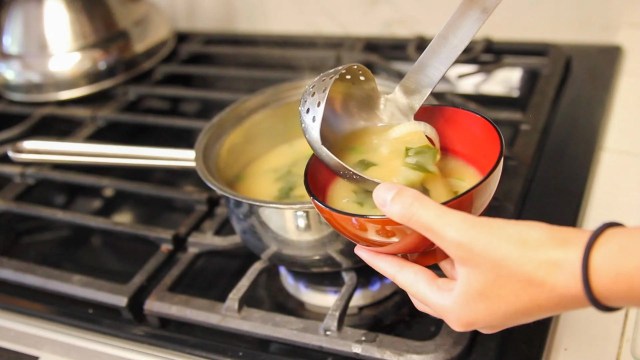
▼ For many Nagoyans, this miso soup is too pale.
“Red miso” is a broad label for miso that is darker in color as a result of a longer fermentation process and a moderate-to-high salt content, when compared to the lower-salt and short-fermented rice misos. Most miso in Japan is made by mixing soybeans and salt with malted rice, or malted barley if you’re on the islands of Shikoku and Kyushu, and both types can come in white and red colorations. Red rice miso has made quite the name for itself in places like Sendai and Hokkaido, and is delicious in its own right, but the umami of the pure soybean miso, called mamemiso, is on another level.
▼ But it’s this dark soybean miso, made from just soybeans and salt, that’s at the heart of Nagoyan cuisine.


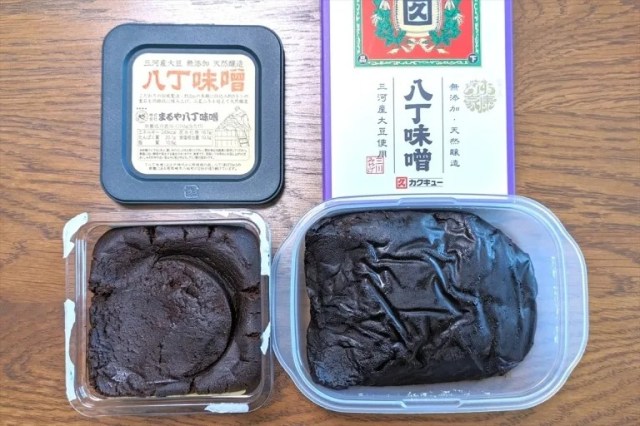
The most famous example of soybean miso is Hatcho miso, which has been produced since the early 1600s in what is now Okazaki City, just a short train ride from Nagoya.
▼ Like this Hatcho Miso made by Ichibiki, a company based in Aichi

Despite having a simple recipe of just soybeans and salt, the production process for Hatcho miso can take one-to-three years, and sometimes more. Soybeans are packed tight into giant wooden vats, weighed down by heavy stones, and are left to ferment. The result is the dense, dark paste that is so beloved by Nagoya, low in sweetness, high in umami, and slightly bitter.
So, how is it that Nagoya steered clear of the rice miso that is prevalent elsewhere in Japan? Well, part of it is due to geography. Even compared to the rest of Japan, Nagoya has especially hot, humid summers and dry winters, a climate that is well-suited to long fermentation, which normally poses quite a challenge for food preservation, including rice miso. Back when preserving food was more difficult, rice miso was quick to spoil in the region, which meant soybean miso, due to its longer fermentation process that makes it less likely to spoil, was more heavily favored.
Another part is the area’s history, with local samurai warlord and eventual unifier of Japan Tokugawa Ieyasu valuing miso as a long-lasting, protein-rich food, which was perfect for feeding armies. As the years passed, this soybean miso became a staple of the region, shaping local tastes and dishes to become the Nagoya of today.
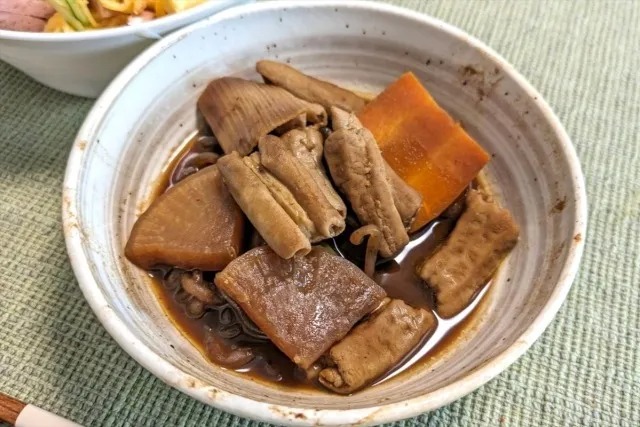
Unlike other regional dishes, which may be famous but eaten only on special occasions, this soybean miso has ingrained itself into daily life, often finding its place on the daily dinner table in the form of miso soup, the slow-cooked dote-ni, consisting of beef tendon or offal slowly simmered in miso, or countless other variations of household cooking.
▼ Dote-ni
▼ Miso dengaku: cooked vegetables and tofu topped with a sweet and salty miso glaze

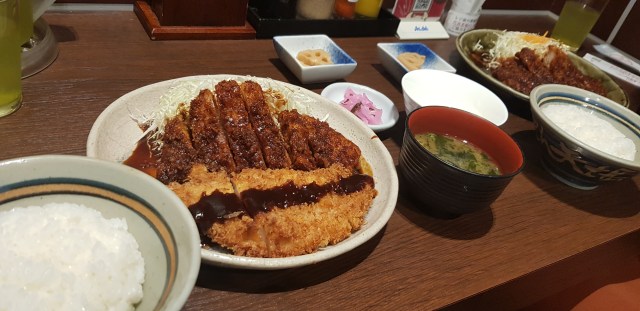
For tourists to the area, by far the easiest way to encounter it is by ordering miso katsu, a dish of crispy tonkatsu (pork cutlet) topped with a rich, soybean miso-based sauce, at a local restaurant, like the famous chain Yabaton.
▼ Waraji Tonkatsu Teishoku is a taster dish at Yabaton, consisting of two different types of miso katsu: one in the style of miso-ni where the miso is mixed with a broth for a delicious seasoning of the entire katsu, and the other closer to a miso sauce spread on top for a more impactful flavor, like in miso dengaku.
Or perhaps in miso nikomi udon, where firm udon noodles are simmered until piping hot in a Hatcho miso-based broth.
Japan has many misos to love, but the soybean-based akamiso is something special. For many people in Nagoya and central Tokai, it’s long been a mainstay in their diet. To them, miso is not a light and sweet flavor, but instead a bold and rich food that captures both the stomach and the heart.
Related: Yabaton
Photos ©SoraNews24
Top and insert images: PR Times
● Want to hear about SoraNews24’s latest articles as soon as they’re published? Follow us on Facebook and Twitter!