

Despite Seiji’s copyrighted music playing on TV for the first time, why didn’t he get a big, fat check?!
Our resident pro musician Japanese-language writer, Seiji Nakazawa, has made decent progress the past couple of years in terms of his musical talent finally gaining some recognition. From hearing idols sing a song that he composed live to receiving his first-ever royalties from JASRAC (Japanese Society for Rights of Authors, Composers, and Publishers), Japan’s largest copyright collective, it seems that Seiji may be on the verge of a major breakthrough.
Actually, that breakthrough may have already happened back in July when Seiji was a featured guest on the July 1 episode of popular talk show Matsuko no Shiranai Sekai. While introducing himself during a segment on stand-and-eat soba restaurants (for which he’s something of an expert), a song that he had composed the lyrics for played in the background. It was the first time that his copyrighted music had been featured on TV–and on a major station (TBS) and during prime time to boot. Even though he considers himself a member of a band and is happiest when people come to see him perform live, this was a new experience for him and he was super happy…scratch that, he was over the moon!
▼ A preview for the relevant episode in which Seiji can be briefly spotted at the 0:10 mark
Now, TV stations and JASRAC have a comprehensive contract that dictates that when a JASRAC-registered song is used on TV, JASRAC pays usage fees to its copyright holders. These royalties are paid in a lump sum during fixed intervals and are divided among the copyright holders of the song. The payout varies depending on a variety of factors, including which TV station it was on and how many seconds of the song was used, so it’s hard to predict an exact amount in advance. This time, however, Seiji’s song was used on a major station, so he dared to get his hopes up a bit.
Finally, the statement that should contain his July TV song royalties arrived in the mail from JASRAC.

The statement as a whole summarized his earned royalties for the period between July and September. He was giddy as he carefully opened the envelope, daydreaming about what he might buy with this incredible windfall of bonus cash…

…a fortune that turned out to be to the tune of 3,639 yen (US$23.18). HUH?!

On one hand, Seiji wasn’t incredibly disappointed with the lower-than-expected amount, but on the other, he was puzzled as to why the amount was even lower than the amount he had received in the first quarter. A TV song appearance on a major network program should definitely count for something more, right? It just didn’t make any sense.
He checked the itemized payments on the statement and didn’t see anything that indicated his song was used on TV. The categories that were listed on the lefthand side were “performance” (演奏)–related to his music’s usage at underground idol concerts–and a few versions of “interactive” (インタラクティブ)–related to his music’s online usage.

Where was the category for TV? Fess up, JASRAC–what’s going on?!

Seiji continued mulling over all of the possibilities in his mind. For all he knew, maybe there had been an error on the side of the TV station and not JASRAC. He understood that it was probably an honest mistake, given the amount of work on JASRAC employees’ plates, but either way, he didn’t want to let his guard down in case there was something more sinister brewing under the surface. He decided to pay JASRAC a call, the contents of which are summarized below.
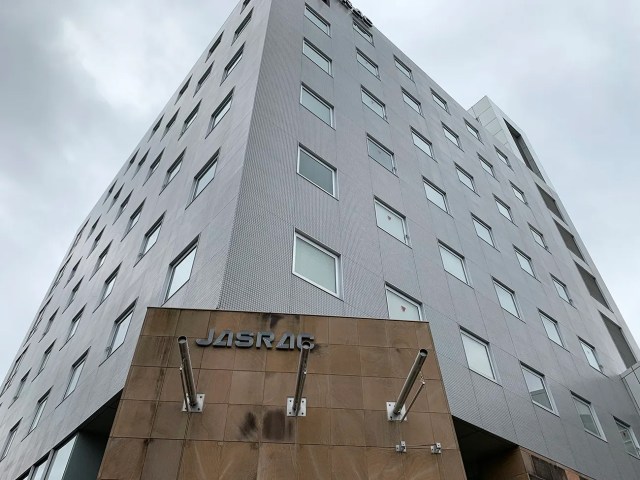
JASRAC: Thank you for your JASRAC membership.
Seiji: My song was broadcast on TV, but it looks like that wasn’t included on my December statement. Just to double check, could you please tell me what the statement category for TV song appearances should be?
JASRAC: The statement category is “broadcasts” (放送).
Seiji: How is the code at the beginning of the category name notated?
JASRAC: It’s different depending on the broadcasting station, but for the most part it should be in a ‘KBXXX’ format. For instance, if a song were used on NHK, it would be KB110.
Seiji: In that case, it unfortunately looks like I wasn’t paid. My song was aired on a major station in July but that’s not reflected on the statement.
JASRAC: Is it correct to say that the July 2025 broadcast was not included on the December 2025 payment statement that we sent this time?
Seiji: Yes, that’s correct.
JASRAC: In the case of song usage on TV, the distributed amount is determined six months later. Therefore, for TV broadcasts for the interval of July through September of this year, the amount should be included in the payment statement we send in March of next year.
Seiji: Ah, OK. Thank you very much for explaining.

OK–so evil JASRAC executives weren’t out to get Seiji. As a musician with modest success who had previously only received royalties from Internet streaming and live concerts, he just hadn’t realized that the payment distribution timelines were different for TV, being three months later than the other ones.
He then did a little further digging and found a helpful guide on JASRAC’s site which summarized the payment distribution system for each major form of copyrighted content usage. There was even an equation detailing how the amount is calculated based on a points system. Essentially, “number of uses” x “duration of uses” x “method of use” x “broadcast scale” = “a certain number of points,” which then translates into the final payment amount.
That formula was still a little confusing without knowing any particulars, so he read on to learn that generally speaking 1 point equals 1 second of song usage time. Furthermore, different points are allocated depending on the “method of use”–whether a song is used as main music, theme music, or background music–and on the “broadcast scale”– which is determined based on an individual broadcasting station’s income each year. Seiji was a little disappointed to learn that the broadcasting time of a TV program doesn’t factor in to the equation, meaning that it ultimately doesn’t matter that his song was aired during prime time.

So the bottom line is that while it’s still really hard to predict exactly how much Seiji is going to make in royalties based on the above equation, the silver lining is that he just has to be patient for a few more months. He’ll keep writing more music–and channeling the spirit of trailblazing Swedish guitarists–to pass the time until then.
Reference: JASRAC
All images © SoraNews24
● Want to hear about SoraNews24’s latest articles as soon as they’re published? Follow us on Facebook and Twitter!
[ Read in Japanese ]
 Seiji gets his first royalty payment for his music from JASRAC
 JASRAC called “evil” for wanting to collect royalty fees for music recorded during weddings
 Our reporter Seiji gets a weird package from overseas, meets a friend he didn’t know he had
 That time when we made a theme song for Kura Sushi out of our sheer love for it【Video】
 SoraNews24’s Seiji goes to England to find fame with the spirit of Yngwie Malmsteen
 Japan reportedly adding Japanese language skill requirement to most common foreigner work visa
 Pokémon and Ikea Japan cross over into each other’s worlds with collaboration events
 Starbucks Japan closing only Shinkansen platform branch for popularity-triggered renovations
 You can assemble a well-balanced team of Pokémon, them eat them, thanks to Japanese cake chain
 Sailor Moon’s Artemis is part of the Artemis II NASA mission control team[Video]
 Tokyo teahouse serves up a sakura matcha dessert you won’t find anywhere else
 Japan named most sleep-deprived country for fourth year in a row, according to survey
 Draw like a Studio Ghibli anime artist with exclusive watercolour set approved by Hayao Miyazaki
 Are Japanese convenience store sandwiches scamming us with their fillings?
 Super easy rice cooker recipe: KFC rice!
 Tokyo’s best museum for foreign travelers finally reopens after being closed for four years
 Pokémon lacquerware series expands for Year of the Horse with new handcrafted design[Video]
 Two food hacks take Japan’s convenience store fried chicken to amazing new sandwich heights
 Tokyo subway and almost all Tokyo train lines now accepting credit card tap payments
 Totoro Fund line of beautiful artwork and apparel lets you help the real-world Totoro Forest
 Fading Tokyo – Searching for signs of the Showa era as local neighborhoods evolve[Photos]
 Famous Tokyo cherry blossom spot installs view-blocking screens to fight overcrowding[Video]
 Tokyo turns its phone booths into free Wi-Fi hotspots, and here’s how to use them
 Studio Ghibli adds new My Neighbour Totoro 2026 Corn Gift to its anime store for Mother’s Day
 Japan now has a special desk for people who work at home with a pet cat[Photos]
 Uniqlo announces new T-shirts for One Piece, Naruto and more for manga publisher’s 100th birthday
 Train station platform ramen store closes its doors on half a century of history in Tokyo
 Starbucks Japan releases new My Fruit³ Frappuccino at only 34 stores around the country
 Studio Ghibli releases Catbus pullback keychain that runs like the anime character
 Krispy Kreme releases Super Mario doughnuts in Japan for a limited time
 Japanese onsen egg maker from 100-yen store Daiso needs to be on your shopping list
 Nine great places to see spring flowers in Japan, as chosen by travelers (with almost no sakura)
 Survey asks foreign tourists what bothered them in Japan, more than half gave same answer
 Japan’s human washing machines will go on sale to general public, demos to be held in Tokyo
 Starbucks Japan releases new drinkware and goods for Valentine’s Day
 We deeply regret going into this tunnel on our walk in the mountains of Japan
 Studio Ghibli releases Kodama forest spirits from Princess Mononoke to light up your home
 Starbucks Japan releases new sakura goods and drinkware for cherry blossom season 2026
 Japan’s newest Shinkansen has no seats…or passengers [Video]
 Major Japanese hotel chain says reservations via overseas booking sites may not be valid
 Put sesame oil in your coffee? Japanese maker says it’s the best way to start your day【Taste test】
 No more using real katana for tourism activities, Japan’s National Police Agency says
 Seiji and the spirit of Yngwie Malmsteen barely interview Andrew W.K.【Video】
 Seiji interviews his teenage crush Yumi Adachi with the spirit of Yngwie Malmsteen
 Seiji gets into the Olympic spirit on the cheap at 100-yen store Daiso
 What it’s like to attend an idol concert where they’re singing lyrics that you wrote【Pt. II】
 Is Japan’s crazy silent karaoke gadget the solution for stay-home singing? 【Video experiment】
 Japanese underground idol group GE’LMINATii react to meeting our reporter, their secret songwriter