
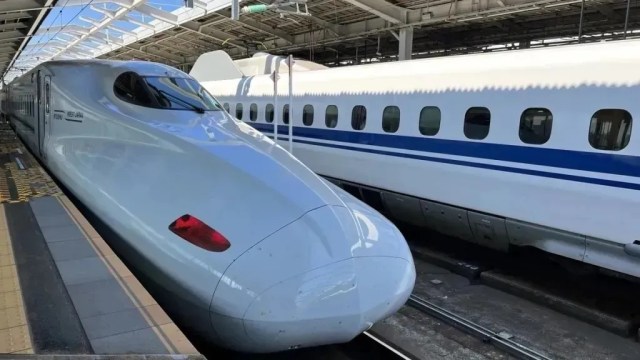
It’s a gray area in terms of travel etiquette, but JR has a clear stance on the topic.
Japan is very committed to the idea that it’s important to be considerate to others, even if that means being a little inconvenienced yourself. This is especially true is shared spaces like public transportation, but there’s debate that pops up periodically regarding riding the Shinkansen/bullet train.
Certain Shinkansen cars have reserved seats, like an airliner, and just like with air travel, sometimes there are people traveling as a group who weren’t able to get tickets where they’re all seated next to each other, or couldn’t book the specific seats they wanted. Maybe it’s an excited couple who want to sit by side, a parent with a child who wants a window seat so they can see the scenery the train is whizzing by, or a group with a senior citizen for whom an aisle seat is easier to use. So if they ask you if you’d be willing to give up your seat, do you have an obligation to oblige them?
There are two contrasting schools of thought. One is that the whole point of a reserved seat is that you paid for it, so it’s yours, and you shouldn’t have to give it up to anyone, especially since reserved Shinkansen seats cost more than non-reserved ones. The counterargument to this, though, is that unlike on an airliner, where seats can vary wildly in price even if they’re close to each other, on the Shinkansen all seats within the same car are the same price. Assuming the other person also has a reserved seat, swapping spaces with them doesn’t mean that you’re giving up yours for something of lesser economic value by accommodating the person who’s asking.
But how does Japan Railways Group, the group of companies that operate the Shinkansen network, feel about all this? When asked, JR Central, which operates the Tokaido Shinkansen that connects Tokyo, Kyoto, and Osaka, said:
“Answering in accordance with the terms and conditions shared by all six JR passenger companies, as stipulated in the Passenger Business Regulations, reserved Shinkansen seats are held for the bearer of the corresponding ticket, and cannot be used by any passenger other than that ticketholder.”
That might sound strict, but it’s not an arbitrary stance. Unlike with an airplane, where all the passengers will board and exit the vehicle at the same time, the Shinkansen makes multiple stops along its route, with any number of people getting on or off at the stations along the way. For example, if you’ve reserved seat 5A for a ride from Tokyo to Nagoya, someone else may have booked that same seat between Nagoya and Kyoto, farther down the line. So if, shortly after the train pulls out of Tokyo Station, you give up your seat to someone who’s riding all the way from Tokyo to Kyoto, when the person who booked 5A after your stint gets on the train in Nagoya, there’s going to already be someone else sitting in their seat. They’re then going to have to ask them to move, but that person is probably going to ask them to give up their seat too, meaning that the from-Nagoya passenger essentially has to negotiate for the seat they paid for after boarding. That extra annoyance could trigger arguments between the two parties, and also extra shuffling around of people, luggage, and personal items at a time when JR would really like everyone to settle in as the train gets underway again.
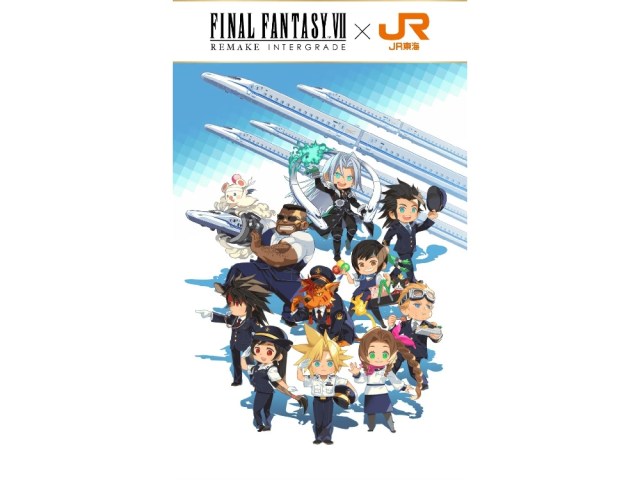
▼ As for why you were going to Nagoya, it was for the Shinkansen/Final Fantasy VII collaboration, naturally.
In its statement, JR Central also explained that giving up your reserved seat to swap with someone with a non-reserved seat is not allowed. The logic here is pretty easy to see, since reserved-seat tickets cost more. There’s an argument to be made that if a passenger wants to trade their more expensive seat for a cheaper one, then they should be able to do so, but this creates an operational complication. On-board JR staff members periodically come by to check tickets, and if someone in a reserved seat has a non-reserved ticket, it’s going to look like they’re stealing someone’s seat, and since reserved and non-reserved seats are in different cars, it’s not like the staff can quickly confirm with the reserved ticketholder that they’ve agreed to waive their right to the reserved seat.
All that said, provided you and the person asking you to switch seats are traveling on identical sections of the route, and have both booked reserved tickets, you can probably get away with swapping since it ends up as a no-harm, no-foul kind of deal. Still, you’re not under any obligation to do so, and JR has your back if you decide to say “Sumimasen, sore wa dekimasen,” (“I’m sorry, I can’t do that for you”) and the company says that if anyone does try to pressure you or otherwise is making you feel uncomfortable about not giving up your rightful seat, please inform a staff member so that they can deal with them and you can get back to enjoying your trip.
Source: Maido na News via Livedoor News via Hachima Kiko
Top image ©SoraNews24
Insert image: JR Central
● Want to hear about SoraNews24’s latest articles as soon as they’re published? Follow us on Facebook and Twitter!
 Private booths are coming to Japan’s Shinkansen bullet trains even sooner than we’d thought【Video】
 Shinkansen bullet trains adding semi-private booths on most popular travel route【Pics】
 Nozomi Shinkansen bullet train abolishes low-priced unreserved tickets during peak travel seasons
 Tokaido Shinkansen ending in-train food/drink sales for all non-first-class-passenger cars
 Japan travel alert: Cheapest seats on fastest Shinkansen will not be offered for Golden Week
 Wisteria season starts early with blooming of Japan’s Great Wisteria in its beautiful garden
 Japan’s best conveyor belt sushi restaurant of seven years ago has now, finally, come to Tokyo
 Japanese trains in Sapporo might be better than those in Tokyo, thanks to one special feature
 Starbucks Japan releases FIVE new Frappuccinos in a day, and we try them all in 90 minutes
 Lawson convenience store at popular tourist site is one of the most unusual in Japan
 Japanese government wants overseas anime market to roughly triple in 10 years, but are they crazy?
 McDonald’s and Gundam team up for customized anime mecha and fried chicken sandwiches[Video]
 Fading Tokyo – Horikiri Station, the Arakawa River, and Kinpachi-sensei[Walking course]
 New Travelling Bento pouches turn your luggage into a Japanese lunch box
 Yoshina invites you to give the gift of beef bowls this Mother’s Day
 Japan reportedly adding Japanese language skill requirement to most common foreigner work visa
 Mt. Fuji decorated with a 500,000-flower pink carpet is Japan’s ultimate spring view
 30 Pikachus want to share a Tokyo hotel room with you that has separate Grass, Water, Fire spaces
 You can assemble a well-balanced team of Pokémon, them eat them, thanks to Japanese cake chain
 Man bites woman at cherry blossom park in Japan, dies shortly after
 7-Eleven Japan’s new baked-in-store sweet treat is only available in three parts of the country
 Starbucks Japan closing only Shinkansen platform branch for popularity-triggered renovations
 Pokémon and Ikea Japan cross over into each other’s worlds with collaboration events
 Japan now has a special desk for people who work at home with a pet cat[Photos]
 Famous Tokyo cherry blossom spot installs view-blocking screens to fight overcrowding[Video]
 Uniqlo announces new T-shirts for One Piece, Naruto and more for manga publisher’s 100th birthday
 Train station platform ramen store closes its doors on half a century of history in Tokyo
 Starbucks Japan releases new My Fruit³ Frappuccino at only 34 stores around the country
 Krispy Kreme releases Super Mario doughnuts in Japan for a limited time
 Japanese onsen egg maker from 100-yen store Daiso needs to be on your shopping list
 Survey asks foreign tourists what bothered them in Japan, more than half gave same answer
 Japan’s human washing machines will go on sale to general public, demos to be held in Tokyo
 Starbucks Japan releases new drinkware and goods for Valentine’s Day
 We deeply regret going into this tunnel on our walk in the mountains of Japan
 Starbucks Japan releases new sakura goods and drinkware for cherry blossom season 2026
 Studio Ghibli releases Kodama forest spirits from Princess Mononoke to light up your home
 Japan’s newest Shinkansen has no seats…or passengers [Video]
 Major Japanese hotel chain says reservations via overseas booking sites may not be valid
 Put sesame oil in your coffee? Japanese maker says it’s the best way to start your day【Taste test】
 No more using real katana for tourism activities, Japan’s National Police Agency says
 Foreign tourists on Shinkansen bullet train break suitcase etiquette, angering local passengers
 What’s the rule for where to put strollers on Japan’s Shinkansen bullet trains?
 A close encounter with a dangerous criminal on a Shinkansen bullet train in Japan
 Japan’s newest Shinkansen has no seats…or passengers [Video]
 Not so fast! Japan’s super-high-speed maglev Shinkansen line opening has been officially delayed
 Shinkansen to permanently reduce number of inexpensive non-reserved seats on Nozomi trains
 Final Fantasy and Shinkansen announce collaboration with in-train audio play, SD art and merch
 New Shinkansen design unveiled, bullet train exterior includes cherry blossom Easter egg
 Shinkansen zombie outbreak occurring for first-ever haunted bullet train event
 Japanese celebrity (sort of) apologizes for swapping seats with foreign traveler on Shinkansen
 New way to buy Shinkansen tickets, through messaging app, coming this fall
 What to do if you forget your camera or other belongings on the Shinkansen
 Japan’s Shinkansen bullet trains to remove all onboard payphones
 Shinkansen will require reservations for large suitcases, charge penalty fees for those without
 New Shinkansen luggage rules start today, set to make travel more expensive and less convenient