Toss another shrimp on the rotating irori forged in an ancient kiln town!
Cooking with an open fire is a rapidly growing trend among high-end restaurants in Japan, and that gives way to all kinds of experiential dining concepts and new flavors. It’s also great news for traditional craftspeople in Japan who suddenly have new opportunities to sell their finely forged wares.
One such business in the field of traditional Japanese hearths called “irori” is Osaka-based Chirori. In the spirit of creating a truly memorable Japanese hearth for use in restaurants, they’ve developed the Samurai Fire rotating irori.
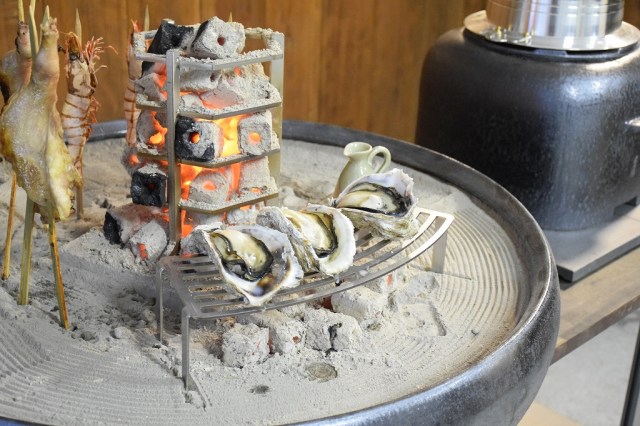
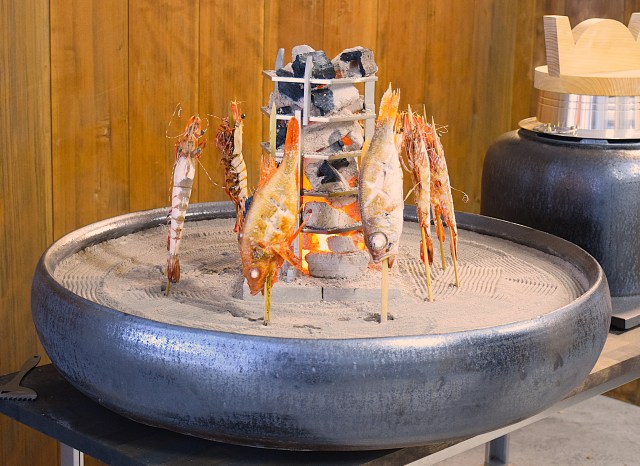
Taking one look at this hearth, the most eye-catching aspect is that it cooks horizontally in the style called genshiyaki. Aside from the visual novelty of cooking with a column of charcoal stacked in the center of the hearth, this style of grilling has several benefits that some chefs swear by.
In conventional grilling, where the fire is below the food, cooking is achieved by convection, in which heat is transferred through the rising hot air to the food. In genshiyaki, however, the heat that hits the food is mostly infrared rays radiated sideways. This heat penetrates the food more easily to achieve more even cooking and a delectable texture that’s crispy on the outside and juicy on the inside.
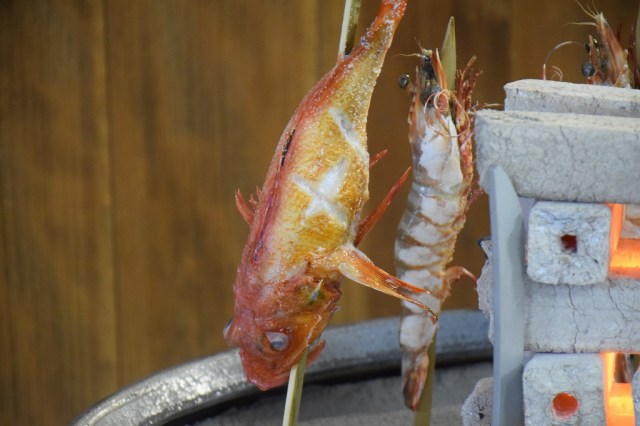
Another benefit is less smoke from oil dripping off food into the fire, and speaking of dripping oil, when grilling skewered fish head-down, the fat from its belly drips down into the leaner meat for an even better flavor.
And above all else, it just looks cool while it spins around. But more than a visual novelty, the rotating feature allows chefs to carefully monitor and serve each item more easily. To really drive home the traditional Japanese appeal of this grill, Chirori also developed an accompanying rice cooker.
▼ The gentle smoke from the hearth and steam from the rice really set the mood.
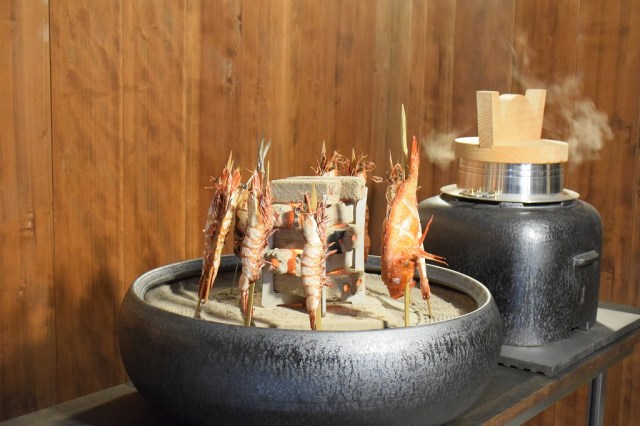
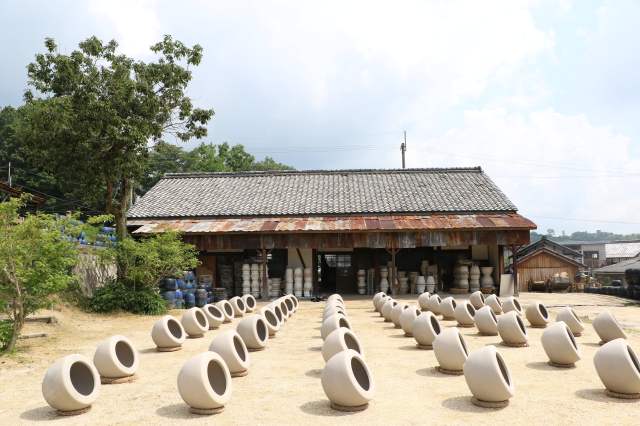
Samurai Fire is available in 90-centimeter (35-inch) and 65-centimeter (26-inch) sizes, and although it might be hard to tell by its metallic finish, it’s made of Shigaraki ware from Shiga Prefecture. Each one is handcrafted by Bunjiro V, the fifth-generation master of the historic Bunjiro Kiln, dating back to 1893 in the town of Shigaraki, one of Japan’s six ancient kiln towns. Because they are handmade by a single person and because of the difficulty in firing such a large piece of earthenware without cracking or warping, the number of pieces sold is very limited.
▼ Bunjiro Kiln
This hearth was developed largely with the purpose of being an attractive Japanese style of cooking for restaurants to use when enticing tourists visiting from abroad. That’s why they went with the more easily understood name of “Samurai Fire,” as opposed to the esoteric mouthful of “Shigaraki Ware Genshiyaki Irori.”
However, that’s not to say that you can’t purchase one. You’d just need to be willing to pay the 256,000 yen (US$1,600) for a small one or 491,000 yen ($3,060) for a large one, and probably wait a while for it to be made. They’re currently sold through Chirori’s online store.
It’s not easy to buy, but if you happen to see one while dining out in Japan, it’s definitely worth a try for a different kind of grilling experience.
Source: Chirori, PR Times
Images: PR Times
● Want to hear about SoraNews24’s latest articles as soon as they’re published? Follow us on Facebook and Twitter!