Rock out as you dance your way to handmade sanuki udon.
Having a meal out is a great experience now and again, but cooking for yourself not only allows you to customize your meal to your liking, it also provides you with a warming sense of accomplishment. However, having a professional by your side to gently guide you along the steps to making a famous local food is on a level of its own—particularly when it involves dancing on top of your dough.
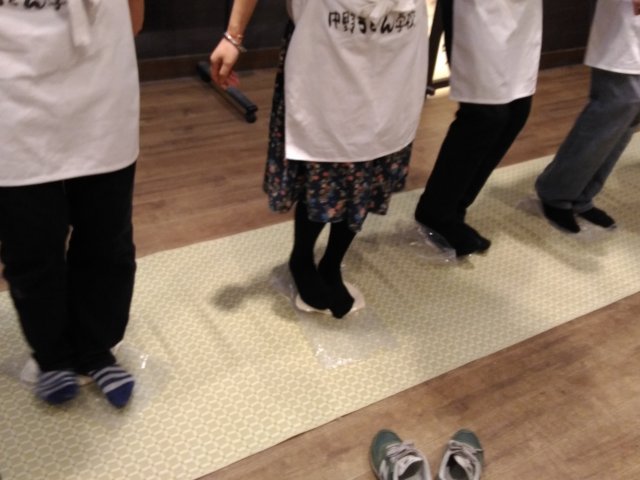
▼ Don’t worry, it doesn’t smell like feet.
Kagawa, located on Shikoku, the smallest of Japan’s four main islands, is not one of the nation’s main tourist hubs, and even our Japanese-language reporter Kouhey has only been there a scant two times in the past. It is a well-known home to sanuki udon noodles, which are thick, chewy, and have been proven to calm crying babies, and yet Kouhey has hardly ever eaten the food in this land of noodles, so for his most recent trip there, he sought to remedy this travesty.
The town of Kotohira is a popular tourist destination within Kagawa, famous for Kotohira Shrine (affectionately known as Kompirasan) and its climb with over 700 steps. At the foot of the shrine is Nakano Udon School, a company that is over a century old and has been offering sanuki udon experiences for tourists for over 40 years. It also featured in the post credits scene of Episode 452 of Detective Conan, “The Phantom of Konpira.” Surely such a well-established company would be able to show Kouhey the way to the most delicious noodles.
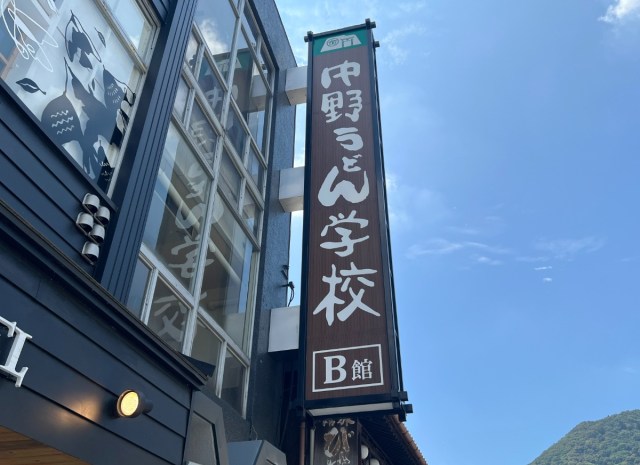
Of course, being a person with strong impulsive tendencies, Kouhey hadn’t actually planned on delving into the kitchen himself, but he figured “why not?” and waltzed up to the door where the class schedule for the day was posted. There were three columns for the three different classrooms in Building A, Building B, and the West Building. On the day that he was there, only the column for Building B had time plates hung up for 9:30 a.m. and 1:00 p.m., indicating available classes on that day.
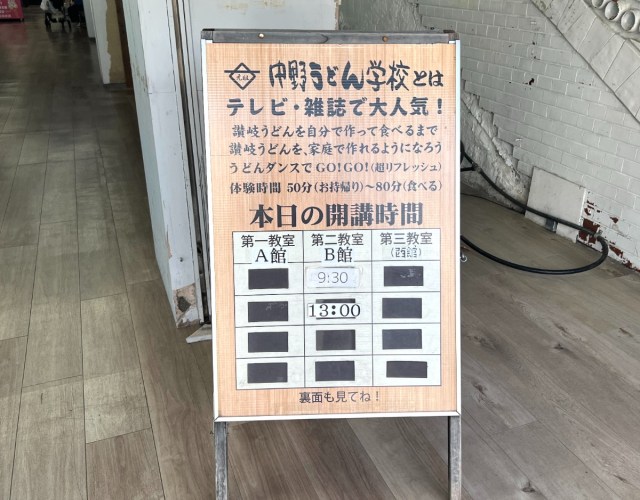
Going up to the reception to ask, Kouhey was told the class would take about 50 minutes, and he was in luck as there happened to still be space available to participate. The staff also mentioned that on some days the classes get completely booked, so if you want to make sure you get to experience it, booking in advance on the website is the way to go.
If you participate alone and take the noodles home, like Kouhey, it costs 1,980 yen (US$13), but if you eat them on-site, it’s 2,530 yen. For groups of up to 14 people, it’s 1,760 yen per person, and for 15 or more, it’s 1,650 yen, so be sure to drag all of your friends along for an experience you’re unlikely to forget. Note that for groups, the price doesn’t change whether you take them home or eat them on the spot, so it’s pretty reasonable.
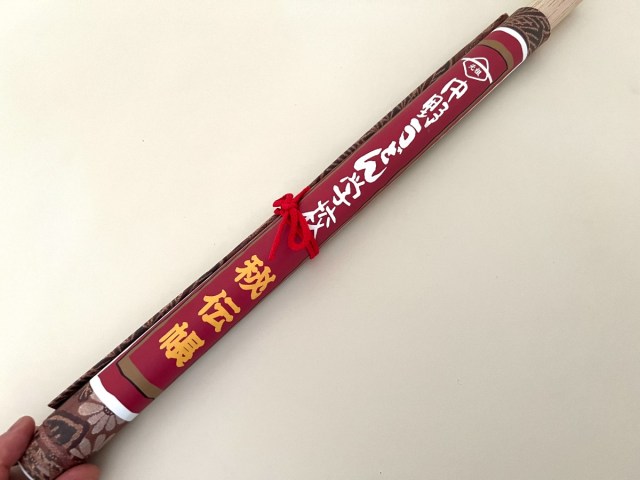
After registering, Kouhey was given the option of what souvenir to take home: a Secret Recipe Scroll that doubles as a rolling pin, or two servings of udon. Without much hesitation, he opted for the scroll.
▼ We’d show you the inside, but… it’s a secret.
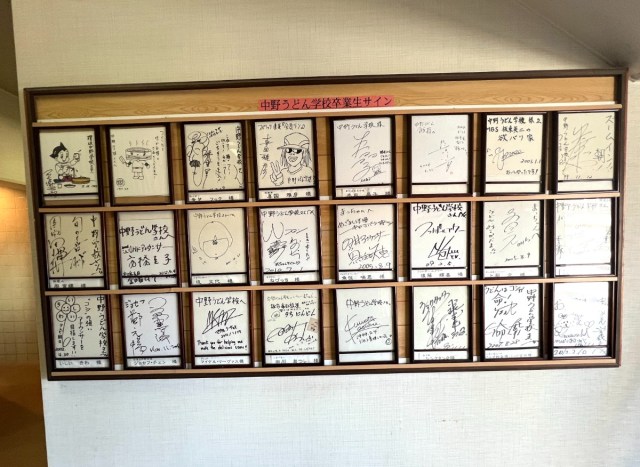
As he turned around to wait for the time of the class to start, Kouhey spotted the Nakano Udon School Graduate Signatures from celebrities hanging on the wall, remarking how school-like it felt to have them be called “graduates”.
When he finally entered the venue, Kouhey came to find that the class would be held in a school classroom-esque setting.
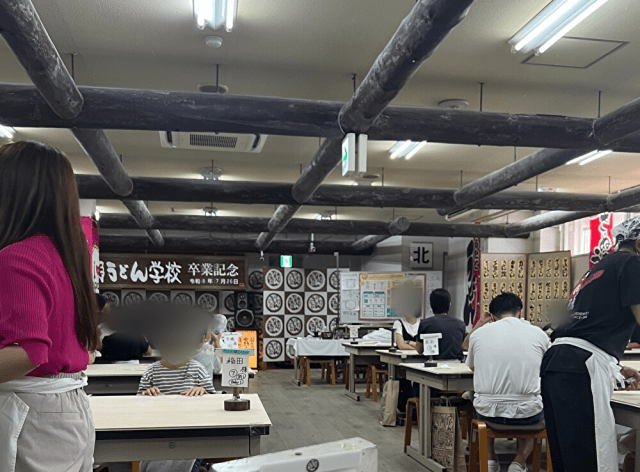
Looking around, there were over 20 people, including families with children, with almost all of the seats filled. A male instructor with a dark blue hand towel wrapped around his head stood in front holding a microphone when…
♪~Ding Dong Dang Dong~♪
…Japan’s iconic school chime rang out, and the class began.
First up, Kouhey was handed a lump of dough shaped like a rectangle with rounded corners, which he needed to roll out.
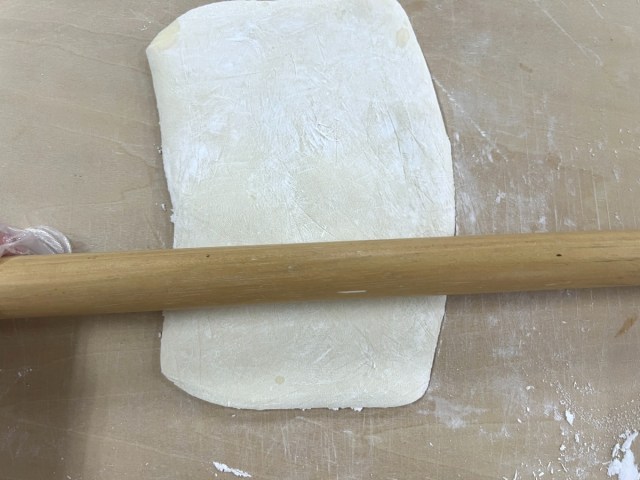
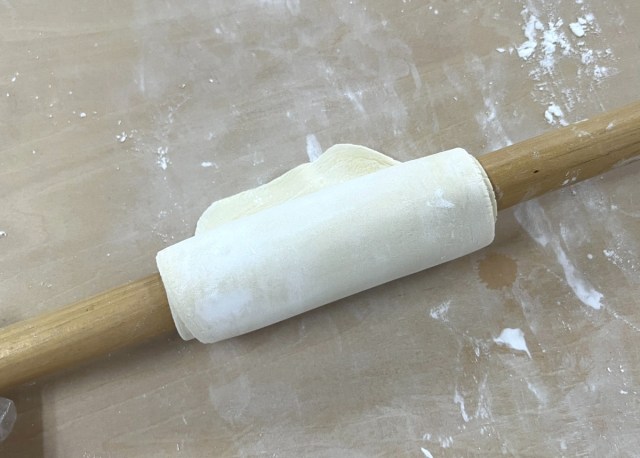
Roll it out, wind it around the rolling pin, and roll it out again.
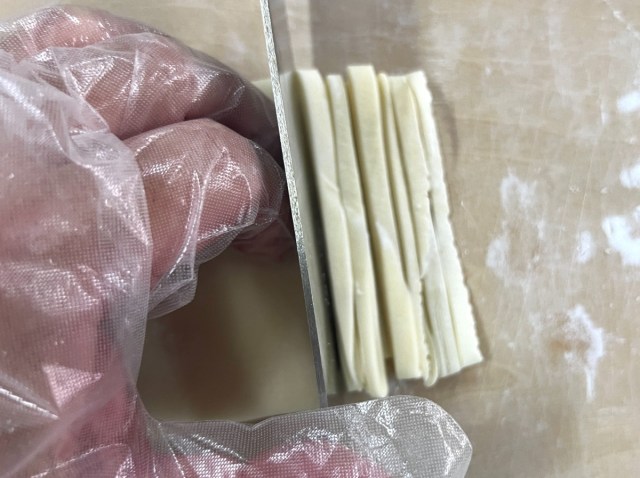
After that, Kouhey just had to cut it with a knife.
Looking at his completed work closer, Kouhey spotted thick and thin cuts of different sizes, but overall he was pretty pleased with how his first-ever noodles came out.
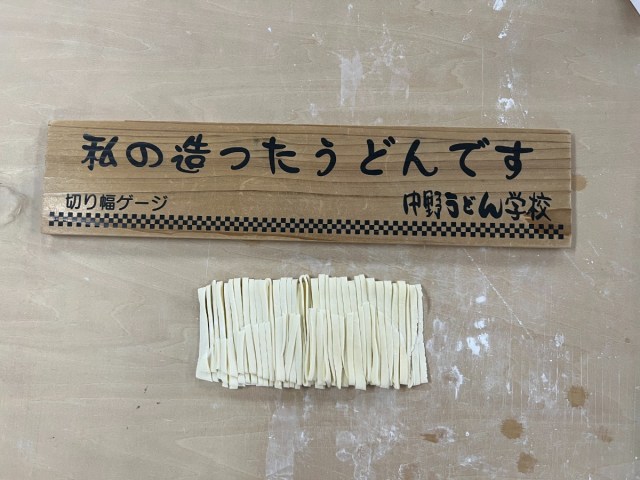
These noodles could either be boiled and eaten in the cafeteria on the floor below after the class ended, or taken home to cook, which was what Kouhey had chosen to do.
Now, it was time for the main event: making the dough from scratch. First was the process of mixing flour with salted water. The flour goes into the kneading bowl (called a “konebachi”) and the salted water is added from the red cup.
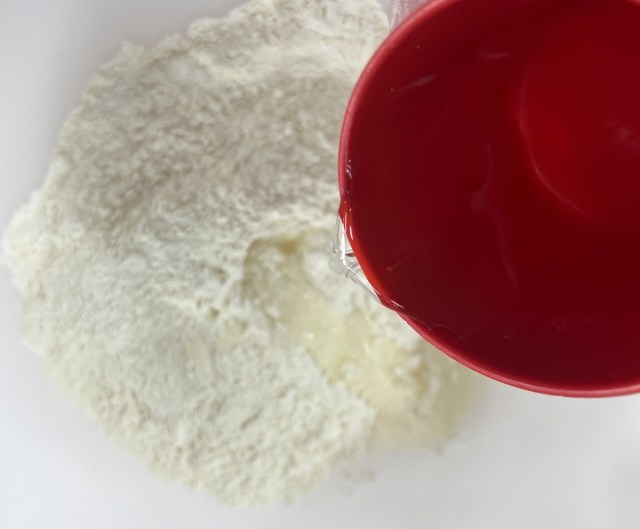
Stirring with fingers held upright, the flour gradually turns into a crumbly texture.
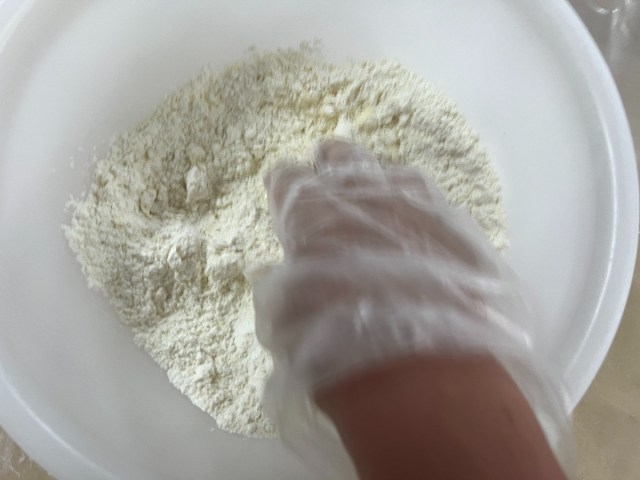
Put this into a plastic bag and flatten it out. Next up was “foot-kneading”.
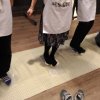
Place the dough inside a bag on top of a tatami mat, and step on it with just your socks on. While a novel experience, it’s made countless times more fun thanks to the upbeat background music played in the classroom for this part of the lesson, causing you to dance on top of your dough.
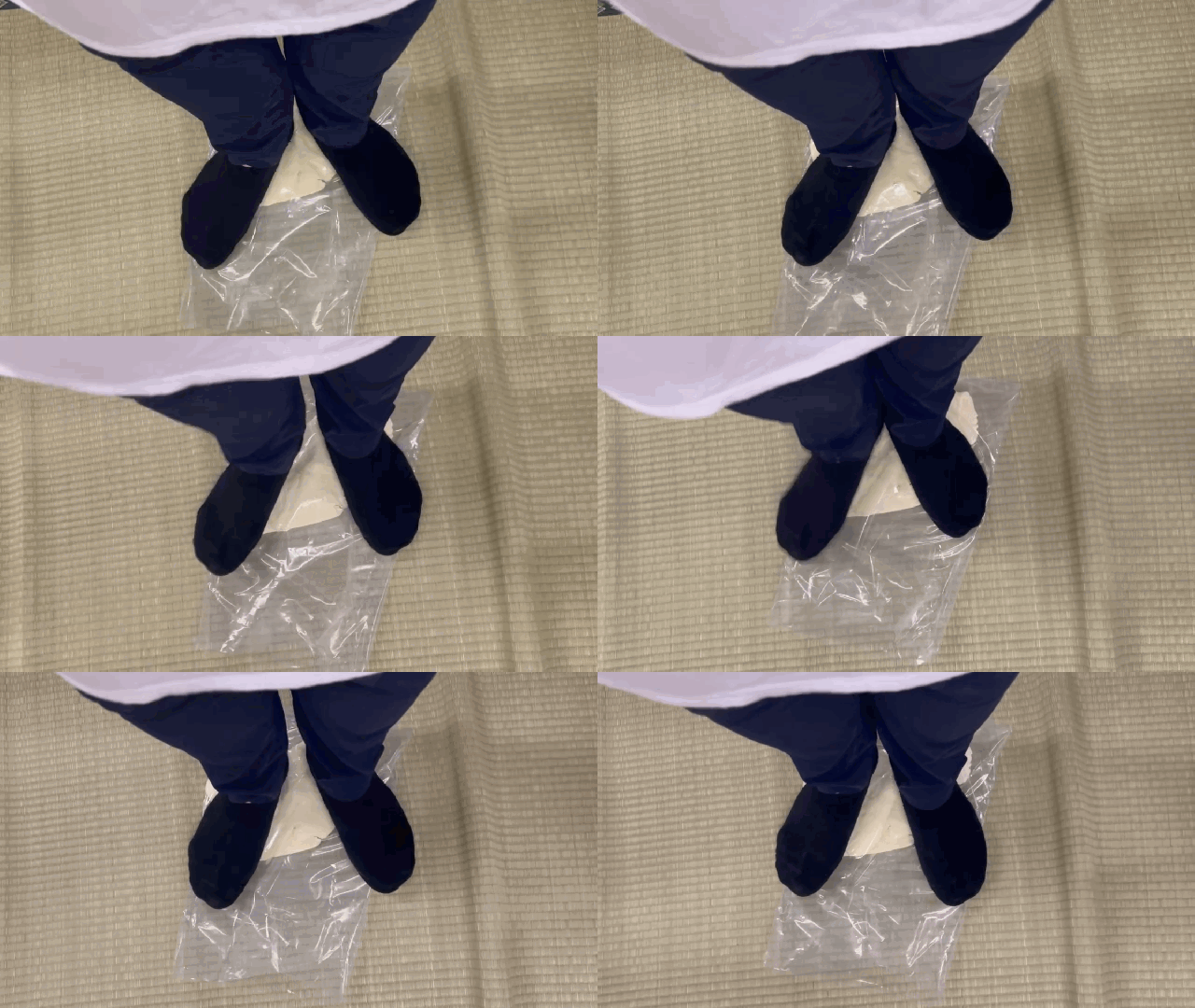
It’s hard to tell only by looking at Kouhey’s feet, but dough was being stomped on everywhere around him while the other students also danced along to exciting tracks, bringing out the inner kids in all of the adults. Back in 2016, when I visited the school myself, I rocked out to Gangnam Style and PPAP, with my fellow “classmates” playing the tambourines—ten out of ten, the most fun cooking experience I’ve had to date.
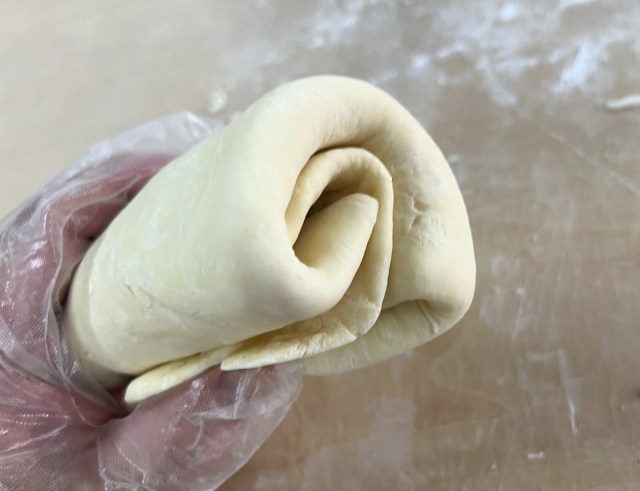
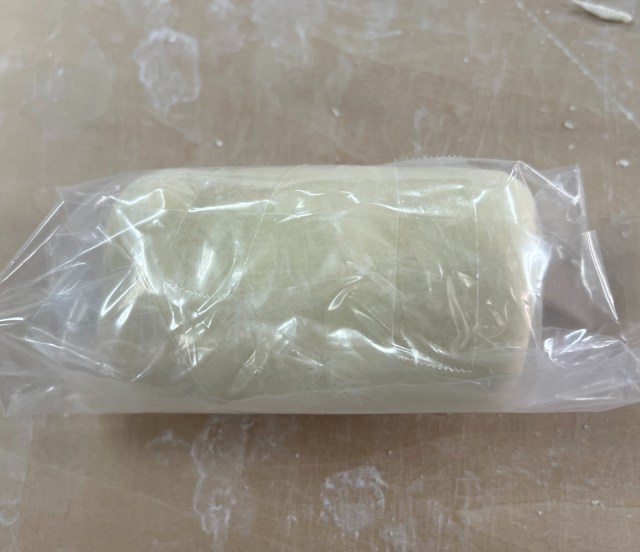
Fold the flattened dough into layers, form it into a rough baumkuchen/roll cake shape, where it will then enter the aging process, which can vary depending on the season. This brings the class to a close.
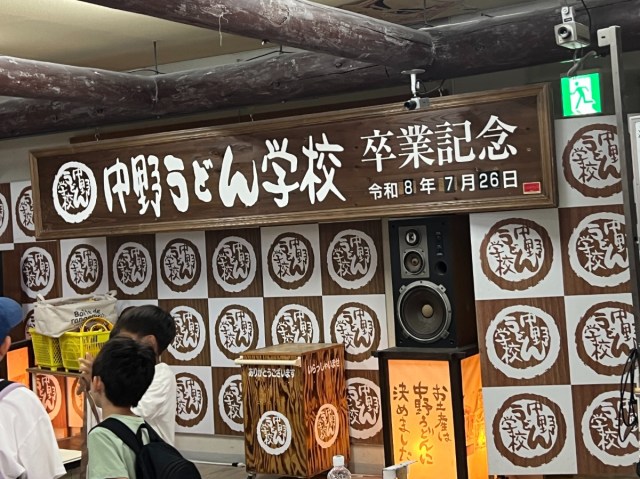
Under the graduation commemoration sign at the back of the classroom, families and groups of friends lined up to take their photos.
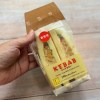
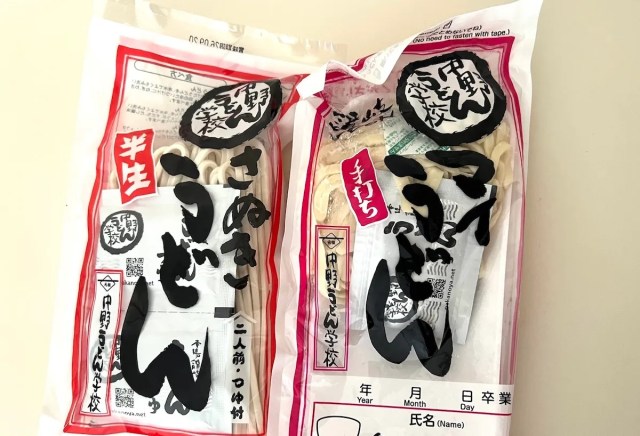
After returning home, Kouhey finally had a chance to compare and eat the udon he had bought at the Nakano Udon School gift shop against the noodles he had rolled and cut himself.
▼ Kouhey’s noodles are on the right.
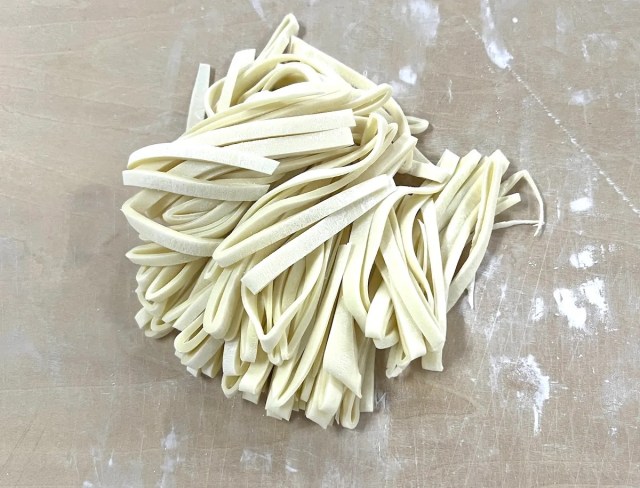
The moment Kouhey boiled them and arranged them on a plate, they were already clearly different. The noodles from the gift shop had a round cross-section and were neatly uniform in thickness. On the other hand, his noodles were flat, wide, and uneven in thickness.
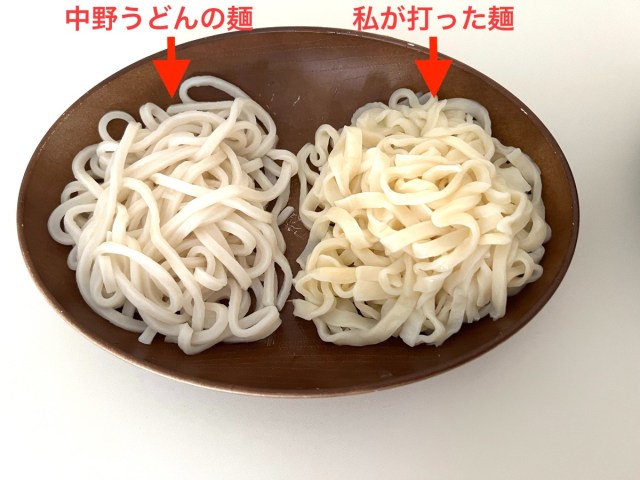
He had lost in terms of appearance, but it being his first time trying to cut noodles, he had kind of been expecting it.
As for the taste, the gift shop noodles were naturally chewy and delicious.
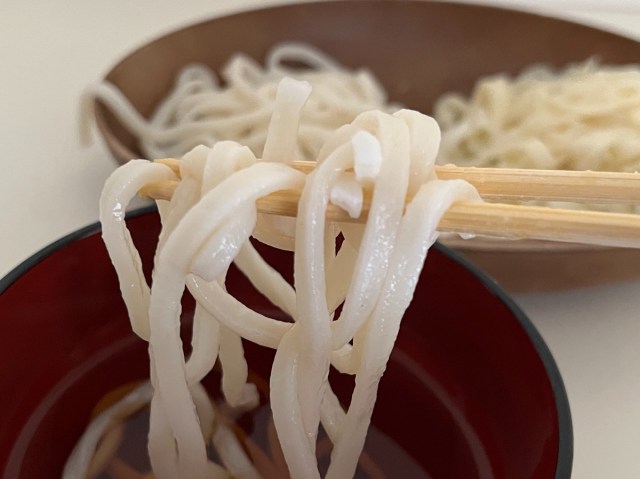
In contrast, Kouhey’s noodles were missing that ideal firm-on-the-outside, chewy-on-the-inside texture, perhaps because he boiled them too long.
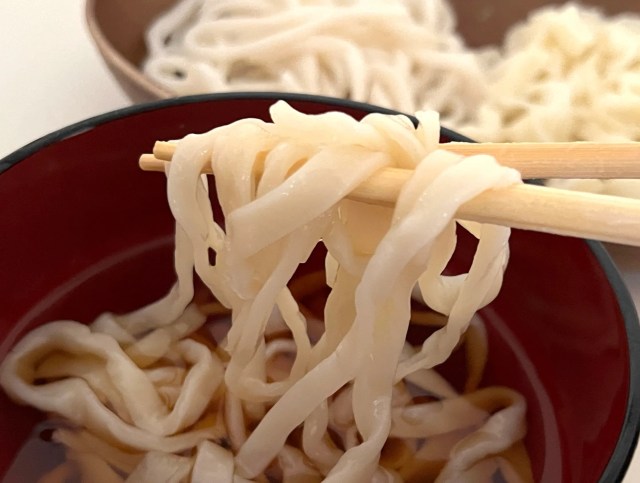
Even so, the emotional impact of eating his own noodles was exceptional. Kouhey may eat oodles of noodles in the future, but he has a newfound respect for the time and effort used to make such delicious food from nothing more than flour, salt, and water, all thanks to this single class he attended. If ever you are in the area, making your own noodles is an experience that you shouldn’t pass on by.
Location information
Nakano Udon Gakko Kotohira-ko / 中野うどん学校 琴平校
Address: Kagawa-ken, Nakatada-gun, Kotohira-cho 796
香川県仲多度郡琴平町796番地
Open 9:00 a.m.–5:30 p.m. (Building A), 9:30 a.m.–4:30 p.m. (Building B)
Udon school operating hours are 9:00 a.m.–3:00 p.m.
Website
Photos ©SoraNews24
● Want to hear about SoraNews24’s latest articles as soon as they’re published? Follow us on Facebook and Twitter!
[ Read in Japanese ]