transportation (Page 4)
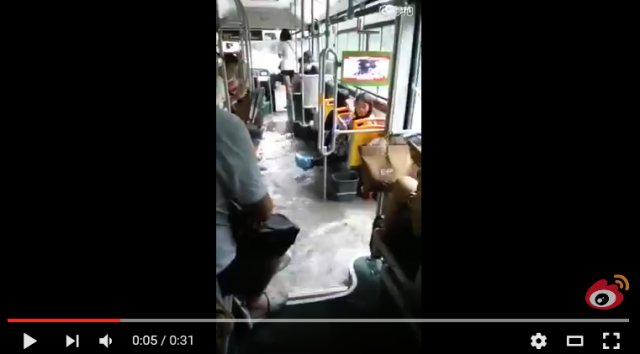
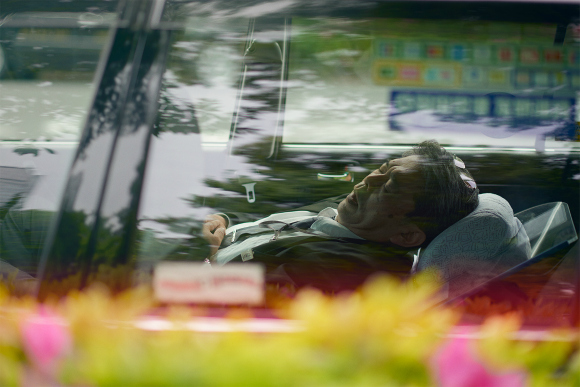
Check out these drowsy drivers catching 40 winks during a typical day in Japan’s busiest city.
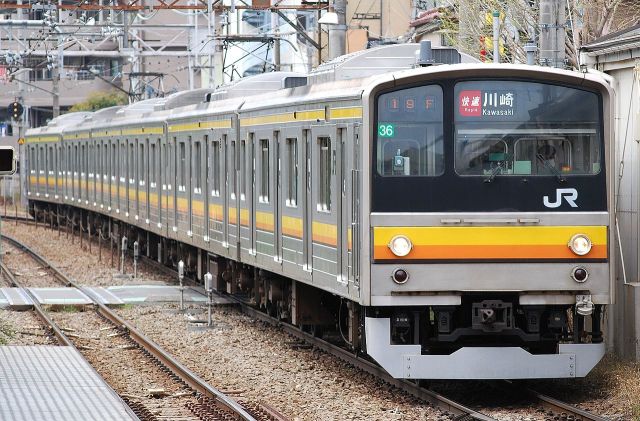
A Japanese train conductor’s final announcement aboard a train about to be transferred to Jakarta, Indonesia hit some passengers right in the feels.
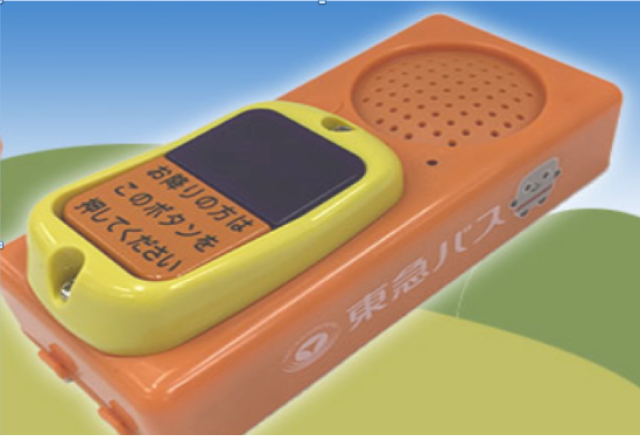
Japanese people take their public transportation very seriously. Millions commute to work either by train, subway or bus on a daily basis. When spending so much time on buses and trains, one tries to find joy in the small things in life, like the sound and satisfaction from pressing the alight button on a bus to indicate you want to get off at the next bus stop.
That thrill can soon be yours to hold and enjoy to your heart’s content. Tokyu Bus Corporation, which operates multiple lines in and around Tokyo, will be releasing a Tokyu Bus alight button kit, which allows transportation nerds to press away all day long.
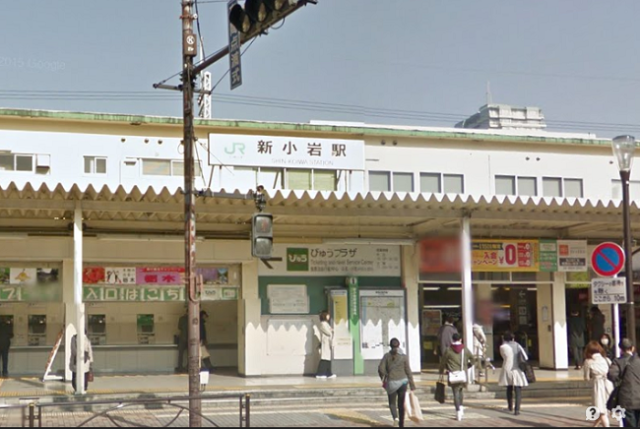
Delays on a train are annoying but inevitable, since with such a massive transit system in Japan, not everything is going to work 100 percent of the time. No one wants to see the words “train delay” on the information screen at the station, but even more so, no one wants to see the reason for the delays attributed to “human accidents,” the catch-all term Japan uses when people are found on the tracks while the trains are running.
An unfortunately common station for such accidents is implementing a number of changes in order to curb the rise of these incidents. It’s not just barriers and fences, prevention can start with you! So join us after the jump to see what sort of changes are being made to Shin-Koiwa Station.
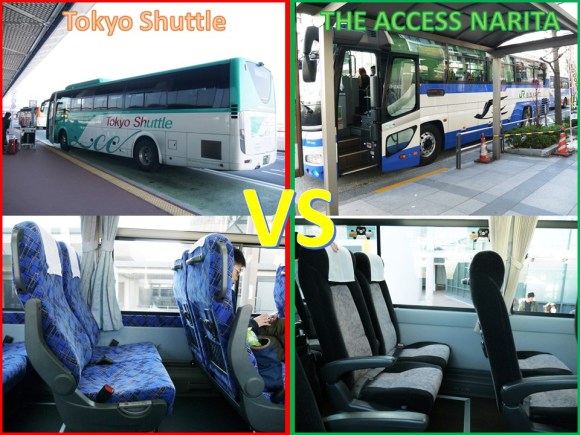
Most tourists to Japan will come in and out through Tokyo’s Narita Airport. But like many international airports, Narita is not exactly on the doorstep of a major destination city, and travellers headed for Tokyo will usually make the 60-kilometer (36-mile) journey to the metropolis via the Narita Express, a high-speed rail service with a single-trip fare of 3020 yen (US $25.34).
What’s perhaps less well-known is there are two budget bus services that take you from Narita Airport to Tokyo Station for as little as 900 yen. Tokyo Shuttle and The Access Narita seem to offer similar airport shuttle services, but which is the better option? And can they match the Narita Express in comfort and convenience? We sent one of our Japanese reporters to test out both services and find out!

While Japan can boast the most anime girl mascots, both in total and on a per capita basis, the country doesn’t have a monopoly on cute 2-D spokeswomen. Among other neighbors in Asia, Taiwan has shown it’s willing to take a page from Japanese otaku imagery now and again.
Last winter, for instance, McDonald’s workers at one branch in Taiwan dressed up in maid outfits. And if you’re choosing fast food because there’s someplace you’ve got to be, your anime preferences will still be catered to if you choose to get there with the Kaohsiung City subway and its new, doe-eyed, miniskirted mascot.
China has become one of the world’s fastest growing car markets. On a macroeconomic scale, this is due largely to demand rising as Chinese consumers enjoy greater prosperity, coupled with more and more automakers putting an effort into building and selling their products in China.
On a microeconomic scale, though, we think at least a few car sales in the city of Foshan are from people who lost their nerve about using public transportation after spending too long waiting at a bus stop that has a demolished building going down around, and even on top of, it.
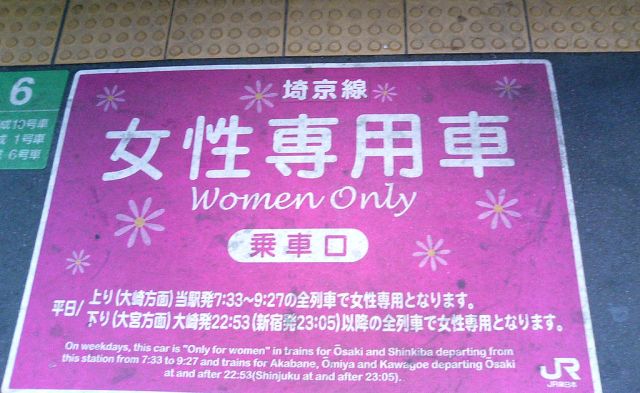
File this one under things we hope don’t fall into the wrong hands: Those Women Only train cars in Japan aren’t actually enforceable under the law.
All foreign men in Japan can recount their first harrowing experience of obliviously stepping onto a train, only to find that literally every single other passenger was a woman. There’s a moment of confusion and, if you’re lucky, a good Samaritan politely explaining that wieners don’t belong here, followed by the terrible realization that you’ve broken not only an official rule set forth by the train company but also an unwritten social rule, which is kind of almost worse. But, from here on out, you can rest assured that even though you’re committing a social taboo, you’re not breaking any laws!
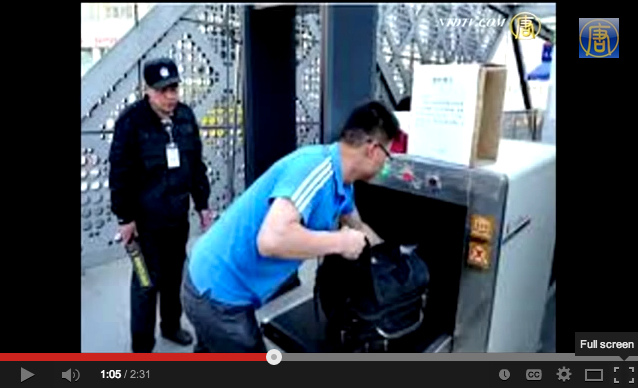
With an ever-expanding list of banned items and never-ending security lines filled with personnel and machines bent on examining every inch of your body, air travel seems destined to eventually become one giant cavity search. And while you think you are safe from this kind of annoyance when you are on ground-based transportation systems, the Chinese city of Urumqi recently proved that they can make traveling by bus just as terrible when they banned liquids onboard. To enforce this already hated ban, local authorities have assigned at least two security guards at every bus stations along the more than 100 bus routes in the city.
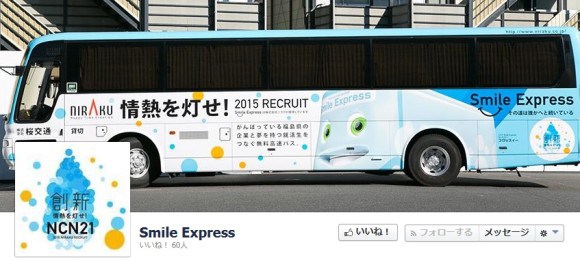
In Japan, the job hunting season is under way. From late December to April or May, students who will graduate in the coming year search for jobs en masse. Companies are busy trying to recruit the best and the brightest to apply to their firms, while stressed students rush here and there attending loads of job fairs, company briefing sessions and employment seminars.
For companies in Fukushima Prefecture, still recovering from the 2011 disaster and subsequent nuclear meltdown, recruiting new applicants is doubly hard. They have to contend with the usual tides of urban migration as well as the negative associations now attached to the area, but one local company, Niraku Corporation, has hit upon an idea to help bring young job seekers in: bus them in for free.
Last Friday the biggest snowstorm of the last decade hit the Tokyo area. While neighborhood kids had fun building snowmen and couples who managed to meet up could enjoy snuggling up to each other for warmth on a white Valentine’s Day (not to be confused with White Day, which is a totally separate thing in Japan), actually trying to get from one part of the region to another was a major gamble.
Some of the worst off were drivers along the Chuo Expressway that runs through mountainous Yamanashi Prefecture into Tokyo. With the storm dropping over 100 centimeters (39.4 inches) of snow in Yamanashi, over 60 sections of the road were closed due to the unsafe driving conditions. Since most people don’t carry a bottle of snow cone syrup in their glove box, as time went by, the motorists became hungrier and hungrier, until some philanthropic baked goods deliverymen came to their rescue.
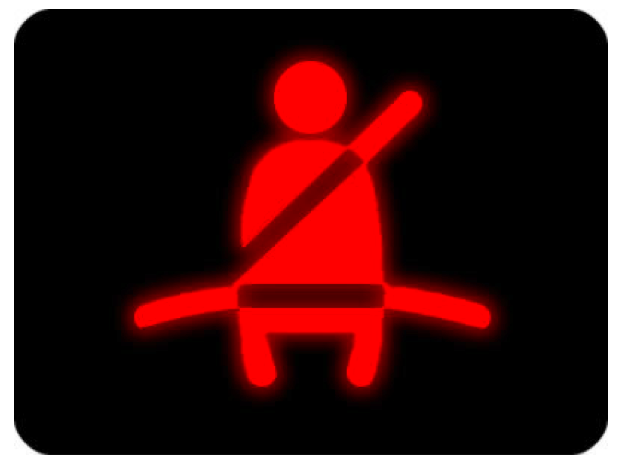
If you’ve ever lived in Japan, chances are you’ve seen a little three-year-old climbing around the inside of their parent’s car…while the vehicle was in motion. To those in other countries where seatbelt and child safety harness laws are strictly enforced, this might be shocking to hear, but this situation happens more often than you might think. In fact, Japan didn’t have a mandatory seat belt law for rear passengers until 2008.
But even an official law doesn’t seems to deter Japanese drivers from not buckling up when it comes to the backseat. That’s why the Japan Automotive Federation along with the National Police Agency published the results of a 2013 survey detailing exactly how many people use their car’s most important safety device.
You would think any transportation business would realize that in the event of a massive delay, a steady flow of information to the passengers is crucial.
Still, places like Kunming Changshui International Airport in China and more recently Keihan Electric Railway in Japan continue to leave their customers stranded without a clue about what’s happening with disastrous results.
On 24 March, Keihan Electric Railway experienced a massive loss of power along the entire Main Line running between Osaka and Kyoto. The hour-and-a-half delay ruined many people’s days and resulted in a tongue lashing for one blind lady.
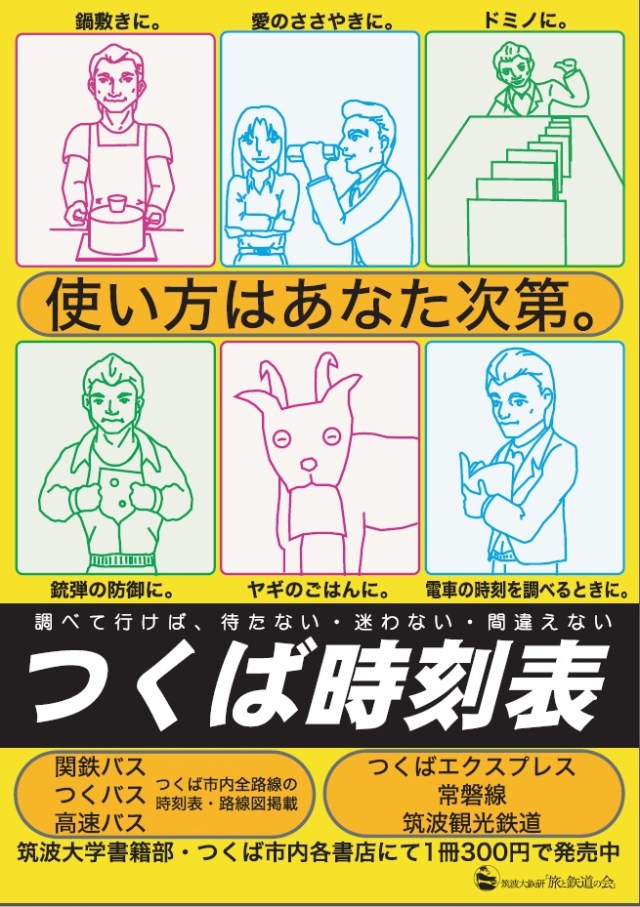
Think back to the last time you saw an advertisement for a bus schedule. Difficult isn’t it? Even on the off chance you have seen one before, it probably wasn’t so attention-grabbing as to stick in your memory.
It’s not like bus schedules need advertising anyway. Either you use one or you don’t, no amount of persuading will likely change that.
Nevertheless, Tsukuba Tekken, a travel and rail association affiliated with Tsukuba University in Japan, has for years been designing quirky advertisements for their on-campus bus schedules.
Displayed in limited locations around the university, these posters have become a local legend both for their mystery and unorthodox content. So sit back and enjoy these advertisements translated into English.
MOST POPULAR
Now
 Ramen restaurant in top Tokyo tourist neighborhood skips price gouging, but how does it taste?
 7-Eleven Japan releases a crazy new viral sandwich: Chocolate Sprinkles and Whipped Cream
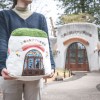 Ghibli Museum building becomes a cuddly cushion
 Starbucks Japan releases new My Fruit³ Frappuccino at only 34 stores around the country
 A secluded British mansion in Chiba is a hidden holy land for afternoon tea lovers
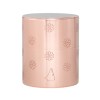 Studio Ghibli releases the My Neighbour Totoro tea caddy, with a magical self-closing lid
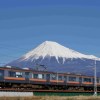 Japan now has a “for foreign tourists only” Mt. Fuji sightseeing train[Video]
 Fake police phone scam also highlights dumb stereotype about how foreigners speak Japanese[Video]
 Create a tiny Ghibli anime world on your bookshelf with new miniature papercraft art kits
 Godzilla-shaped ice cream on sale in Tokyo near the sight his most adorable rampage
Weekly
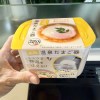 Japanese onsen egg maker from 100-yen store Daiso needs to be on your shopping list
- Starbucks Japan releases new My Fruit³ Frappuccino at only 34 stores around the country
 Tokyo government organizes food truck event to clear out delinquent/homeless teen gathering area
 Cherry blossoms begin blooming in Japan with record-early starts for sakura season
 Nine amazing off-the-beaten-path cherry blossom spots in Japan for yaezakura and shidarezakura
 Stunning central Japan wisteria festival is like a purple fantasy straight out of a Ghibli movie
- Create a tiny Ghibli anime world on your bookshelf with new miniature papercraft art kits
- Studio Ghibli releases the My Neighbour Totoro tea caddy, with a magical self-closing lid
- Japan now has a “for foreign tourists only” Mt. Fuji sightseeing train[Video]
 When will the cherry blossoms reach full bloom in Japan this year?[Forecast]
Monthly
 Starbucks Japan unveils new sakura cherry blossom collection for hanami season 2026
 Train station platform ramen store closes its doors on half a century of history in Tokyo
 Studio Ghibli releases Catbus pullback keychain that runs like the anime character
- Starbucks Japan releases new My Fruit³ Frappuccino at only 34 stores around the country
- Japanese onsen egg maker from 100-yen store Daiso needs to be on your shopping list
 Nine great places to see spring flowers in Japan, as chosen by travelers (with almost no sakura)
 Starbucks Japan releases first-ever Hinamatsuri Girls’ Day Frappuccino
- Cherry blossoms begin blooming in Japan with record-early starts for sakura season
 Studio Ghibli adds new Mother’s Day gift sets to its anime collection in Japan
 Virtual idol Hatsune Miku redesigned with look that adds new elements and brings back old ones
Yearly
 Survey asks foreign tourists what bothered them in Japan, more than half gave same answer
 Japan’s human washing machines will go on sale to general public, demos to be held in Tokyo
 Starbucks Japan releases new drinkware and goods for Valentine’s Day
 We deeply regret going into this tunnel on our walk in the mountains of Japan
 Studio Ghibli releases Kodama forest spirits from Princess Mononoke to light up your home
 Starbucks Japan releases new sakura goods and drinkware for cherry blossom season 2026
 Japan’s newest Shinkansen has no seats…or passengers [Video]
 Major Japanese hotel chain says reservations via overseas booking sites may not be valid
 Put sesame oil in your coffee? Japanese maker says it’s the best way to start your day【Taste test】
 No more using real katana for tourism activities, Japan’s National Police Agency says
RECOMMENDED STORIES
 Studio Ghibli releases the My Neighbour Totoro tea caddy, with a magical self-closing lid
 Japan now has a “for foreign tourists only” Mt. Fuji sightseeing train[Video]
 Fake police phone scam also highlights dumb stereotype about how foreigners speak Japanese[Video]
 Create a tiny Ghibli anime world on your bookshelf with new miniature papercraft art kits
 Godzilla-shaped ice cream on sale in Tokyo near the sight his most adorable rampage
 KFC launches collaboration with soccer star Ronaldo, ensures next generation will be too fat to play
 Studio Ghibli director Hayao Miyazaki releases new artworks, still wants to make movies
 Want some great ramen in Akihabara? Then head to this…karaoke joint?!?
 Bras and panties for men – Online retailer in Japan offers men the chance to feel pretty
 Is China’s don’t-go-to-Japan warning affecting tourist crowd sizes in Nara?
 Nine amazing off-the-beaten-path cherry blossom spots in Japan for yaezakura and shidarezakura
 Fish and chips shop in Japan is highly rated by foreigners, but will it impress a Japanese local?
 Secret staff cafeteria in Tokyo Metropolitan Government Building serves up an exclusive ramen
-
