What exactly is romance? It’s a seemingly simple term, and one undeniably connected to a set of strong feelings, but does one have to act on them, or can romance exist entirely in the heart of an individual, without any sort of necessary manifestation in words or deeds? Is the word applicable only exclusively to happy relationships, or does that sort of stability preclude the sudden rush of emotion needed for something to be called romantic?
People have been struggling with these questions for years, and today we take a look at three less than poetic attempts at defining the word romance in publisher Sanseido’s Japanese dictionary.
Among Sanseido’s longest sellers is its dictionary, titled Shinmeikaikokujiten, literally the New and Clear Japanese Language Dictionary. Due to the length of the book’s moniker, Shinmeikaikokujiten fans instead call it by the affectionate nickname Shinkai-san.
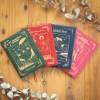
Wait a minute, the dictionary has its own fans? Indeed it does, as Shinkai-san is well known for its unique, colorful definitions and example sentences. Just take a look at how the book’s fourth edition defines renai, the Japanese word which translates as “romance.”
“A situation in which one receives love from a specific member of the opposite sex, wherein the two want to spend time together, without anyone else around, and if possible, to couple physically, and while these desires are usually not fulfilled and causes a great deal of heartache, in the rare times when they are fulfilled, causes great joy.”
While there’s no denying the thoroughness of the definition, that’s not exactly a haiku-like display of economy of language there. Maybe things are more succinct in the fifth edition of Shinkai-san.
“A situation one enters into of receiving love from a specific member of the opposite sex, causing a heightened emotions, wherein the two want to spend time together, without anyone else around, share the same emotional state, and, if possible, wish to achieve a mutual feeling regarding physical matters, all of which drives the individual to despair by being ordinarily unfulfilled, yet in the rare times in which these desires are fulfilled, causes great joy.”
Again, an in-depth treatise on the matter, but not exactly the sort of thing you can easily fit into the message space of a Valentine’s Day card.
▼ “Before we met, I had never known a true situation one enters into of receiving….ah the hell with it. XOXO Happy Valentine’s!”
Let’s give Shinkai-san one more chance, though, and take a peek at the seventh and newest edition.
“A situation one enters into of receiving love from a specific member of the opposite sex, deeply believing that he or she would have no regrets sacrificing everything else for the sake of it, and in which one always thinks of their counterpart, wants to spend time together, without anyone else around, and to share a world just for the two of them, and while these desires cause happiness if they can be said to have been fulfilled, makes the individual feel uneasy with the presence of even a little doubt.”
Surprisingly, tracking the changes in the Shinkai-san’s definitions for the term grant a few insights into the evolution of mankind’s concept of romance. Most apparent is that as society continues to expand and become increasingly complex, it makes sense that the definition of romance should, too.
We can also see that as time goes by, romance seems to be becoming a more positive force, as its potential to “cause a great deal of heartache” and “drive the individual to despair” have been softened to the possibility of merely making one feel “uneasy.”
On the other hand, the newest edition’s definition makes no mention at all of physical matters, a sad development for those whose ideal is to experience stirrings of the heart with the same person that gives them a stirring in the loins.
There is one rock-solid constant to the dictionary’s meaning of romance, in that it specifies that the feeling has to come from one specific person. So remember, guys, if your girlfriend gets upset about your frequent visits to hostess bars or other girls you’re dating on the side, and you’re tempted to try to talk your way out of it by claiming it’s all a part of “romance,” Sanseido doesn’t have your back.
▼ If you’re still hoping for linguistics to bail you out, we recommend going with “philogyny.”
Source: Alfalfa Mosai