Not so long ago, a friend of mine from the UK came to visit me here in Japan. After showing him around town and making sure to take him to all of the most popular tourist spots, he remarked that quite a few of the subtle behaviours Japanese people exhibit seemed, while in no way offensive, remarkably different to those of our own countrymen. As we worked through a couple of the more unusual customs and behaviours that my friend had noticed, it struck me that at some point during my eight years of living here I had come to accept the everyday quirks of the people around me as entirely normal and not in the slightest bit odd.
Last year, we discussed the 10 things that we love and the 10 things we just can’t stomach about Japan, but today we at RocketNews24 felt it was time to present you with a list of random but genuine observations, from the peculiar to the downright endearing, about the Japanese people themselves. Enjoy!
1. “Polite sharking”
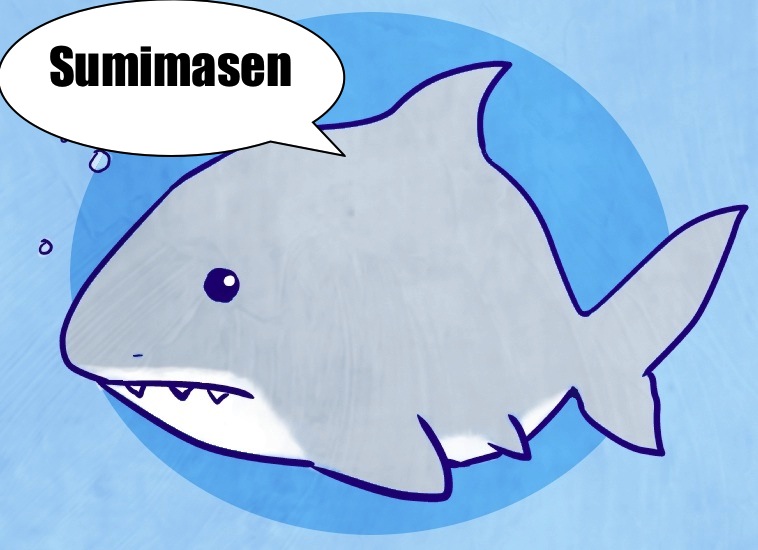
Yet more proof if it were needed of Japan’s status as the world’s most polite country comes in the form of a gesture people here make when passing in front of someone or between two people who are conversing. An open hand held before one’s own face almost as if chopping through the air or miming a shark’s dorsal fin, often accompanied by a whispered “sumimasen” (“excuse me”) or a tiny bow/nod to further acknowledge their rudeness, the “polite shark” as we’re christening it is one of the most endearingly Japanese things you’ll see while out and about or in the office.
Someone needs to get by while you’re chatting with a co-worker in the hallway? You can expect a sharking. Browsing a rack of DVDs or magazines in a store when a fellow customer wants to slip past? Get your feet out of the water and make some room, boys and girls; there’s a polite shark coming through!
2. Gesturing “go away” to communicate “come here”

Depending on your geographical location, the selfsame gesture can mean a variety of very different things, and not being aware of local customs can land you in trouble if you’re not careful. But one gesture that can be both problematic and confusing for foreigners in Japan is the “come here” hand movement that looks almost identical to the one many of us would use to say “shoo!” or “go away”.
In Japan, it is considered rude to beckon to someone with an upturned palm or by using the “come hither” index finger movement. Instead, one puts out their hand, palm-down, and “pulls” the fingers towards them. The problem is, unless paid extremely close attention to (the Japanese “come here” uses mainly the fingers, whereas the reverse, a Western “shoo!”, requires full and vigorous wrist movement), this gesture looks just like the person is trying to say “Away from me, peasant!” and can lead to all kinds of confusion.
If you’re ever confused just remember: the Japanese are notoriously polite, so even if they do want you to go away, they probably won’t communicate it with a hand movement. Well, unless they’re really angry. Or drunk…
3. Turning bright red when drinking alcohol
The first time I went drinking with my Japanese bosses, I was concerned that at least a couple of them had overdone it, despite the fact that we’d only been drinking for about half an hour. Even within that short space of time, my supervisor and his own boss’ faces had turned not just red but crimson, the whites of their eyes not much better, yet they were still conversing perfectly normally and able to stand without any trouble.
“Alcohol flush reaction”, sometimes known as “Asian flush syndrome”, is a condition in which acetaldehyde – a chemical compound that is produced when the body breaks down alcohol – causes blotches on the skin or a person’s face to flush bright red, and is particularly common in Asian people.
Although mostly harmless, it’s nothing to laugh at, especially when one’s very genetic code dictates that they’ll turn as red as Rudolph’s nose after a few sips of beer, but for those who have never seen or encountered it, drinking with Japanese people – and the Japanese do love a drink – is sure to be an eye-opener regarding the effects of alcohol on the human body!
4. Epic souvenir buying
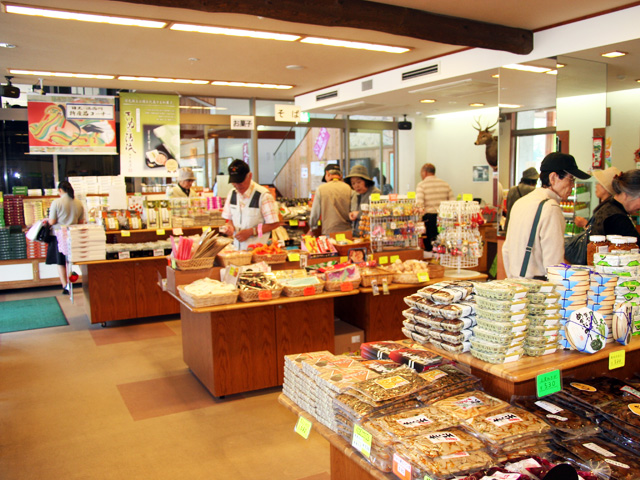
At most Japanese companies, taking time off work is kind of a big deal, and few take more than a couple of days’ holiday at any one time. As a result, people try to squeeze in as much fun and activity as possible into public holidays and long weekends, with the price of accommodation and airfares going through the roof during the “Golden Week” holiday period in particular. So when people do take a trip or some time off, they usually feel obliged to bring something back for their coworkers as a way of thanking them for picking up the slack during their absence, or to share a little of the fun they had while away, depending on the situation.
From a Western perspective, buying souvenirs (or “omiyage“) for everyone in your department at work – while admittedly a nice gesture, and something that we could no doubt learn something from – is a little odd, but even some native Japanese will admit that the practice can be tremendously “mendoukusai“, or tiresome, at times and they make the purchases purely because they feel they ought to. Regardless of people’s true feelings on the practice, however, owing to the wide-held belief that purchasing omiyage is an essential part of taking a trip, places such as airports, train stations, popular sightseeing spots and even hotel lobbies in Japan almost always offer a huge variety of souvenirs, and you’d be amazed at the amount some people spend on boxes of cookies, cakes, chocolates, or even fresh seafood shipped in cold packs to people back home.
If you’re looking to get rich quick, you could do a lot worse than opening up a souvenir shop in an area that gets a lot of Japanese tourists. Just be sure to stock plenty of products that can be easily shared between office workers!
5. Downplaying gifts
And when those souvenirs are dutifully purchased, carried home and taken into work, what do Japanese people more often than not do? Immediately tell the people they’re giving them to that the souvenirs are “nothing special” and completely downplay the entire thing.
This doesn’t apply solely to omiyage, however. During my time in Japan, I’ve received numerous, entirely heartfelt gifts from people who on presenting them to me did their best to lower my expectations by saying “tsumaranai mono desu kedo,” which literally translates to “this is a boring thing, but…”
Of course, like many phrases in the Japanese language, this is said more out of formality than anything else (after all, saying “it was a feast!” after drinking just a single cup of coffee at a cafe, or “excuse me for intruding” after being openly invited into someone’s home doesn’t make much sense when taken literally either!), but every once in a while, we’d really love a Japanese person who is excited to give us a present to hand it over with a big smile on their face and say, “Dude, you’re gonna f#@king love this.”
6. Watching movies right until the end – the VERY end – at the cinema
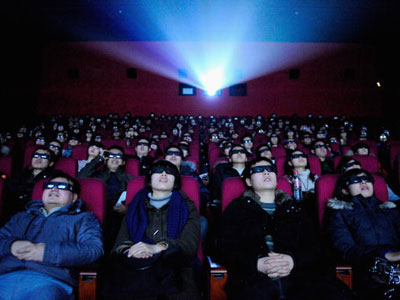
While it no doubt irks those who were involved in the production and whose names appears at the end, most moviegoers tend to pack up and leave the moment the screen goes black and a movie’s credits start rolling. Sure, there are a few films that put some outtakes or something for hardcore fans to enjoy in their credits, but more often than not it’s just a list of names (sorry, filmmakers!) that mean nothing to us. Regardless of that fact, and often that all of the names and job titles that appear are written in a foreign language, the vast majority of Japanese people will sit in complete silence in the movie theatre and watch the entire credit roll, right until the projector flicks off and the lights are turned up.
Some Japanese maintain that watching until the very end is intended as a mark of respect for the makers of the film, or to give themselves time to process what they just watched. Some say that they do kind of want to leave but don’t want to be the first person to do so. Others, meanwhile, suggest that they’d walk out right away if they could, but the auditorium is usually too dark and they don’t want to embarrass themselves by falling over. Whatever the reason, and as admirable as it is to show respect to the people behind the film, the sight of a few hundred Japanese people sitting in silence watching a list of foreign names scroll up the screen is a genuinely odd sight. And yet, after eight years of living here, I have to admit that I’m starting to do it myself. Well, you know, I don’t want to be the only guy who leaves early…
7. Phantom bowing
Although also common in China, Korea and Taiwan, bowing – a symbol of humility and respect – is arguably used more in Japan than anywhere else in the world. Not just reserved for polite greetings and formal occasions, bows (or rather very deep nods as is often the case) are employed everywhere from supermarkets to schools to corporate offices. And they’re so common that people will often, usually quite unintentionally, bow while talking on the phone, despite the fact that the other person is completely unable to see it.
Yep, phantom bowing can be seen in busy offices, school staff rooms, even on train station platforms as businessmen and women take calls from clients while on the go, bowing their heads furiously and thanking the person on the other end of the line for their time. It’s kind of like how many Europeans and Americans unconsciously gesticulate while telling a story or trying to make a point, except far cuter and, if we’re being honest, infinitely more entertaining.
8. Gargling like it’s going out of fashion
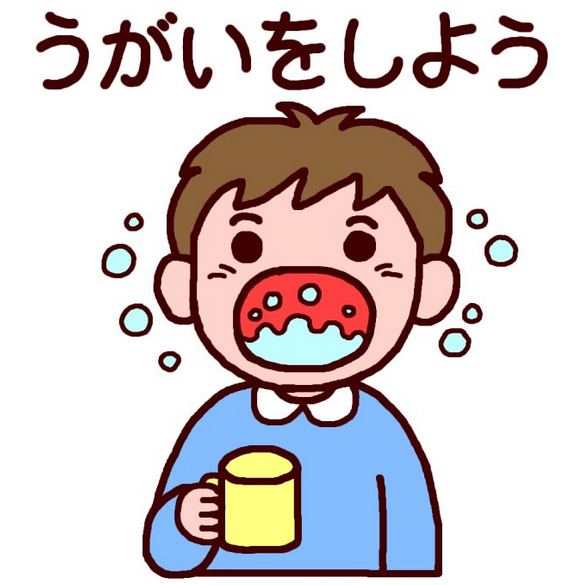
Regardless of numerous studies and medical experts stating that gargling with water, or “ugai” in Japanese, does little to nothing to prevent the contraction of colds and flu viruses, kids in Japan are routinely taught to head straight to the sink when they come indoors, wash their hands (nothing wrong with that bit!) and gargle. Naturally, those who grew up believing that this practice is a vital part of staying healthy during the colder months also teach it to their kids in turn and practice what they preach, so in workplace restrooms around the country you’ll discover adults with their heads thrown back bubbling liquid at the backs of their mouths during break times or having just come indoors. Whatever makes you feel fit and healthy, we suppose…
9. The X of denial
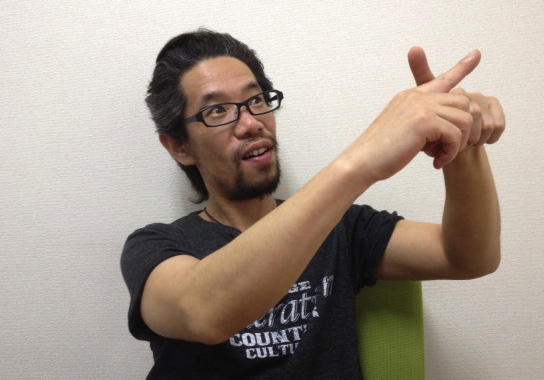
Sure, the humble “X” is recognised and used outside of Japan in everything from denoting incorrect answers on a pop quiz to the icon used to close a window on your computer, but Japan’s fondness of maru (circle) and especially batsu (cross/X) is unmatched. The two symbols are firmly ingrained in society and everyday life, with people making an X with their fingers or hands to tell someone that something is just NG (no good) with surprising frequency. In fact, the lofty status of the Japanese X is so that, if you pick up a PlayStation controller in Japan, you’ll even find that the “X” and “O” buttons perform the exact opposite functions in the same games in the US and Europe, with “O” being used to “confirm”, and “X” denoting “back” or “undo”, much to the chagrin of gamers who import software and have to keep a mental note of what the buttons do when navigating in-game menus.
You’ll most often see people breaking out “the X of denial” in places like trade shows and company events to wordlessly inform attendees that a particular action or conduct – usually photography – is not permitted. At Tokyo Game Show 2013, for example, despite clearly displaying my press badge, due to the wishes of some doubly shy game developers, I was met with a barrage of Xs from the hands of the Xbox One booth staff when I tried to grab a photo of visitors enjoying Titanfall. More so than mere words, the X of denial sends a clear message home, while also looking a bit like a subtle ninja or kung-fu move, and we think it’s kind of awesome.
10. Unflinching politeness, even in a fight to the death
In our last point today we’d like to pay homage to the ladies and gentlemen of Japan who, when boarding trains or navigating busy stations or public areas, manage to simultaneously appear civilised and polite while actively jostling, shoving and rushing to grab a seat or get through the crowds.
Take any train from the station it departs from in the morning, and you’ll be amazed at how politely people line up. Even if the train is already at the platform and its doors wide open, smartly dressed commuters will stand – often in total silence, reading newspapers or playing with their mobile phones – and wait until the signal is given to board (usually the doors being closed and then immediately opened again). It is then that this bizarre dichotomy of behaviours can be routinely observed. Without uttering a word, and of course remaining in line until stepping over the threshold onto the train, commuters rush forward – almost running, and yet somehow still appearing to walking all at once – in order to board and grab a seat. Though their countenance rarely changes, their eyes dart around for the nearest available seat, and decisions are made in a fraction of a second. Ageing businessmen half your size will barge in front of you – never making direct contact with you but still barging nonetheless – and cut you off to get the seat that you had assumed would be yours.
The scramble continues as the seats are filled, and people fly across the car floor, all without raising even the softest shuffle, plonking themselves down with enough force to dislodge the fillings in their own head, and yet never once cracking a smile or allowing a glint of satisfaction to flash across their face. “Rush? What rush? I just got on the train and sat down, yo.”
Japan, your ability to maintain a calm exterior, even in the heat of intense commuter battle, is commendable. Keep it up. Keep it right up!
Let us know if there’s anything we’ve missed on our list, Rocketeers. We’d love to hear your own subtle observations of life in Japan!
Featured image: WordPress
Inset images: Curtis9Histor, Michinoeki, Cinema Today, Deviantart, Hinotori (edited by RocketNews24)