With Vermont becoming the first state in the US to require labels for genetically modified organisms, more and more people are turning towards natural, organically grown food. People want to know where their food comes from and they want to have the choice to choose foods that don’t use pesticides. But genetically modified food has been paramount to feeding every mouth on this planet. What if there was a way to combine the benefits that science provides but still ensure a natural growing environment with no pesticides used? Fujitsu is taking great strides towards that goal and their first product has been making its way to consumers.
And yes, we really are taking about food by Fujitsu.
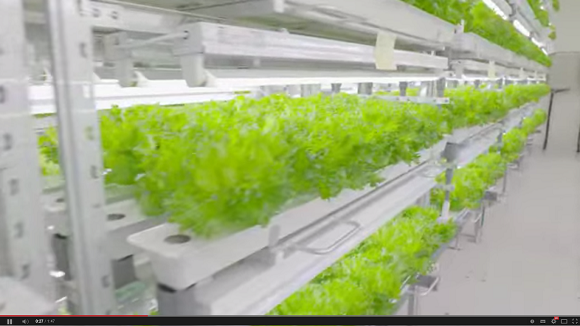
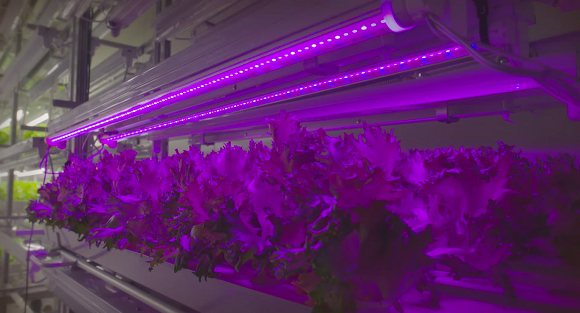
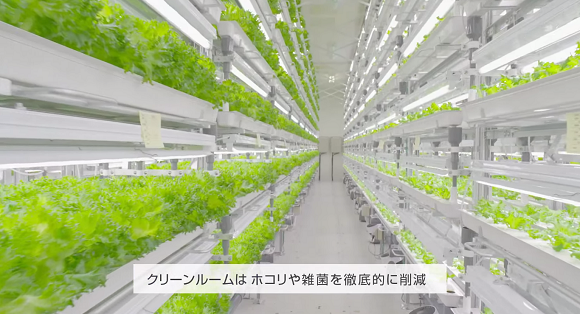
Fujitsu is better known for its electronics and appliances, but when the unique opportunity of an empty 2,000 square meter clean room presented itself, Fujitsu decided to produce something new that they had been researching…produce! With the unique environment of a clean room, Fujitsu installed growing lights and irrigation to create a one of a kind high-tech agriculture facility.
Fujitsu teamed up with Aizufujikako and the Fukushima Medical University to grow low-potassium, pesticide free, low bacteria and low-nitrate nitrogen vegetables. Low-potassium vegetables that can be eaten raw are incredibly useful for the dietary needs of people with kidney disease, which affects over 15 million people in Japan. Nitrate-Nitrogen (what causes the bitter taste) is also considerably reduced and the natural sweet flavor of the lettuce is brought to the surface. This makes the lettuce extremely easy to eat.
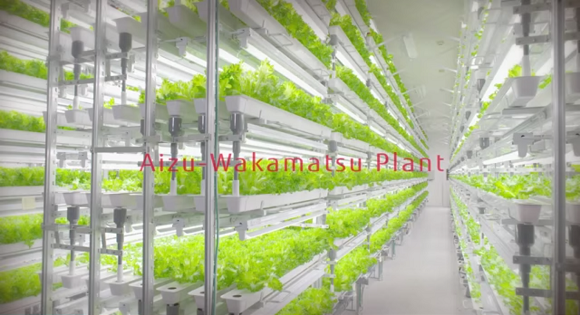
Daily output is expected to be 3,500 heads of lettuce when in full production. Cultivated in a clean room, the vegetables carry few bacteria and therefore have a longer shelf life (up to two weeks). Although the price is expected to be three to four times higher than a normal head of lettuce, main customers will include hospitals and department stores in and outside of Fukushima.
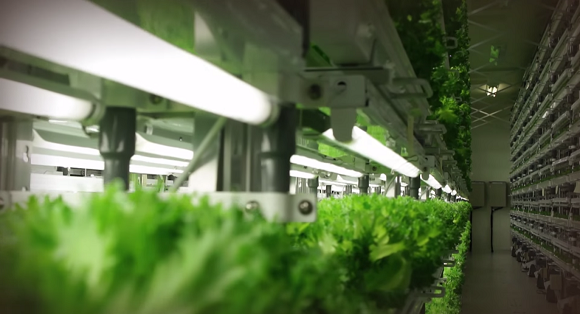
This lettuce is the first of its kind produced by Fujitsu working under the Akisai Cloud Service. A program started in July 2012, it applies IT technology to food production. Fujitsu hopes to continue producing these superior vegetables with the help of Aizufujikako and Akita Prefectural University. The 2013 advanced agricultural production system is one of many initiatives supporting the recovery of the Tohoku region after the Great East Japan Earthquake of 2011. As production continues to rise and new crops are produced, Fujitsu will require the technical and agricultural know-how of those who might not have a farm themselves anymore.
Annual sales are targeted at 150 million yen (about $1.5 million) in 2014, and rising to 400 million yen (about $4 million) in 2016. Here’s to hoping Fujitsu can successfully produce different types of low-potassium vegetables for the people suffering from kidney disease, and for the people of Fukushima.
▼”The clean room drastically reduces bacteria and dust.”
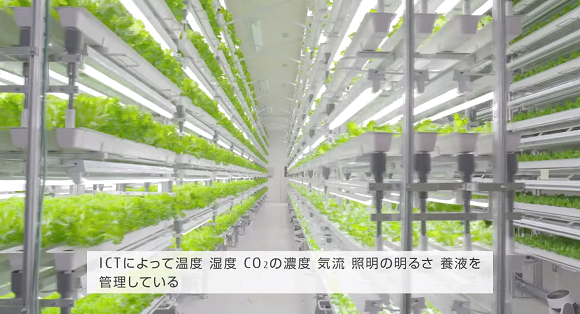
▼”The temperature, level of humidity, concentration of CO2, air flow, light levels, and nutrients are all directly managed.”
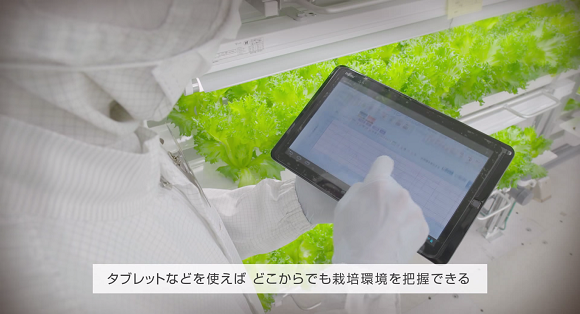
▼”The cultivation environment can be controlled from anywhere using a tablet.”
Source: NariNari
Additional Information: METI Aizufujikako, Fukushima Minpo News, semiconportal
Images: YouTube (FUJITSU Japan)