
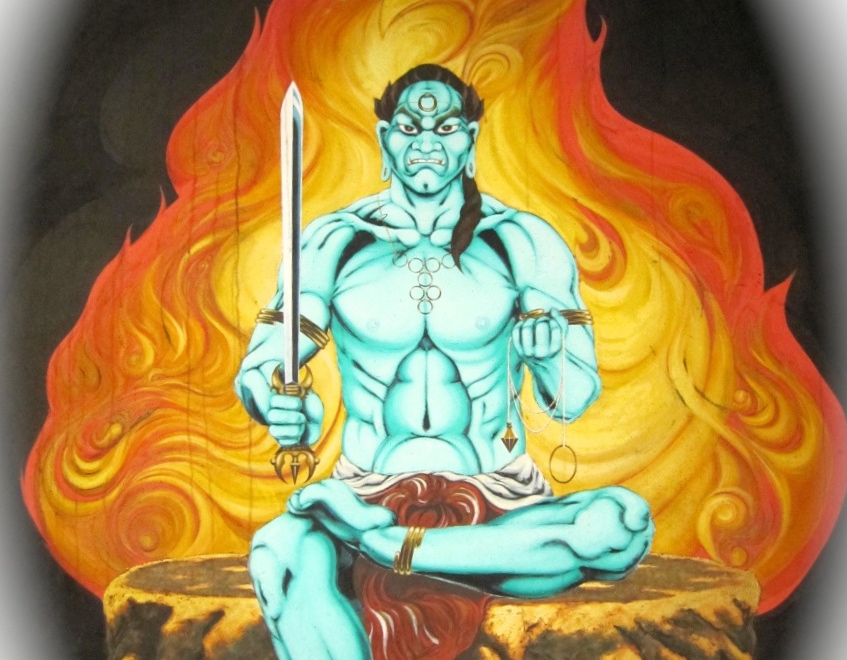
Mt. Hiei, which straddles Kyoto and Shiga prefectures, is home to a huge temple complex called Enryakuji. The foothills of Mt. Hiei border Kyoto City’s northeast. This group of Buddhist temples is home to an eclectic group of Tendai-shu monks, dubbed the “marathon monks” for their amazing physical feats. Not all Enryakuji monks take part, mind you, as one must get special permission to engage in what is called one of the most rigorous athletic and spiritual challenges on the planet.
During the sennichi kaihogyo, or Thousand Day Challenge, the monks venerate Fudo-myo-o, the god at the center of worship in the Tendai sect. Over a seven-year training period, the monk, called a gyoja, makes a pilgrimage to over 250 sites on Mt. Hiei, one of the top three sacred spots in Japan. At the end of the challenge, he will have walked far enough to have circled the globe once. As if this were not enough to please their god, he also takes part in a fast for nine days in which he can not eat, drink or sleep. So arduous is the sennichi kaihogyo that just over 5o monks have accomplished the challenge since records started being kept back in 1585. Indeed, many monks have died en route to this ultimate quest for enlightenment.
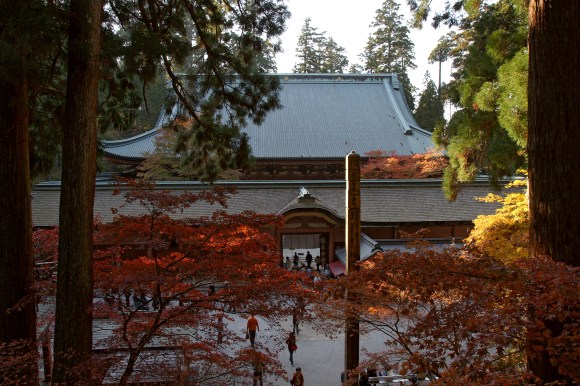
The Enryaku-ji temple complex, which is over 1,200 years old, is the headquarters of the Tendai-shu sect. It is a World Cultural Heritage Site and contains over 100 buildings.
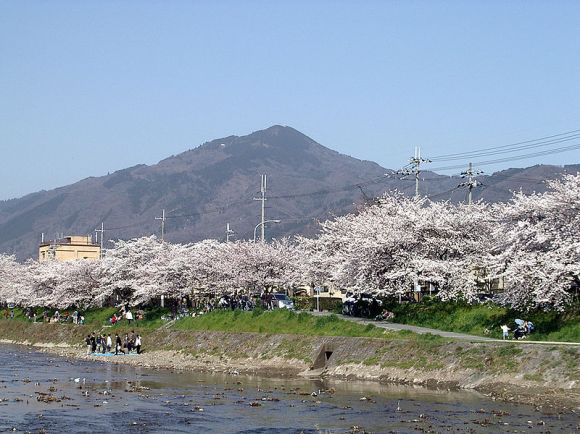
▼Mt. Hiei as seen from Kyoto
▼Konpon chudo is a national treasure
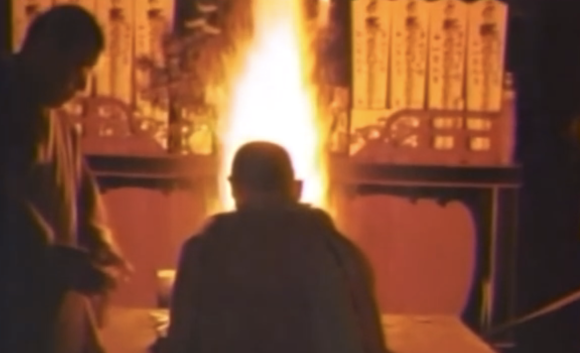
While Enryakuji brings in tens of thousands of tourists every year, most are oblivious as to some of the things that take place behind the scenes, especially at night. In an isolated part of the complex, just after midnight, the marathon monks will embark on a nightly pilgrimage.
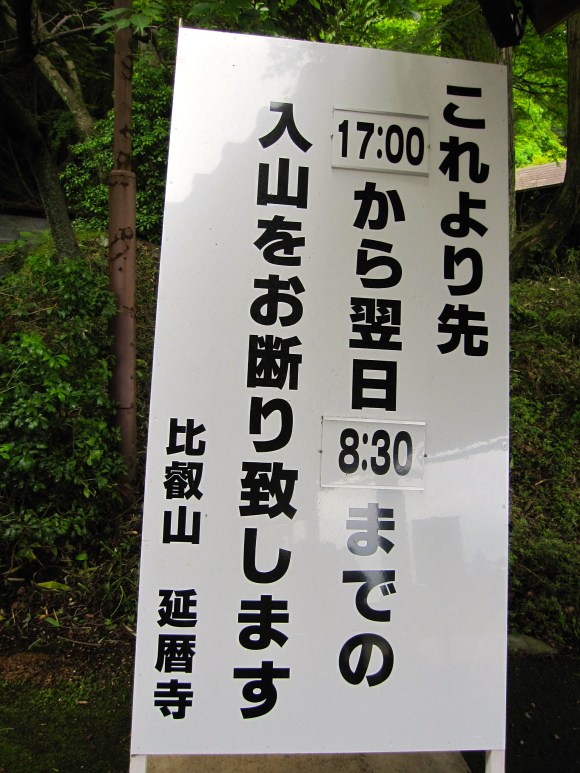
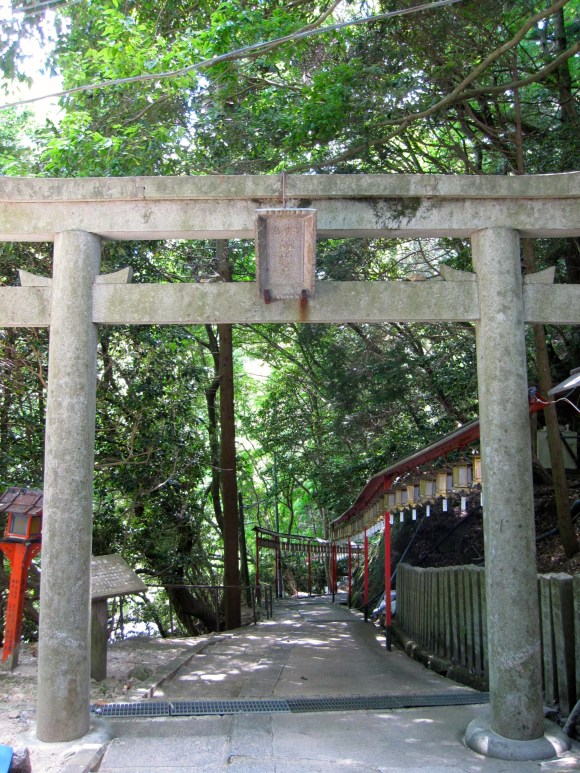
▼This sign reads: No entrance to the mountain between 5 p.m. and 8:30 a.m.
▼Benten-do, one of the three sanctuaries in Mudo-ji where the gyoja live
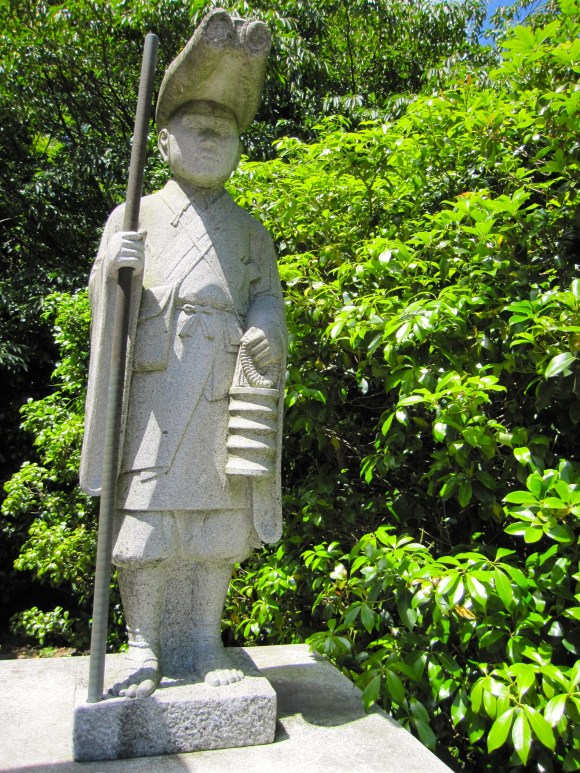
When the gyoja completes the challenge, he will become dai ajari, a living Buddha. The first three years of the kaihogyo, the gyoja walks 30 to 40km per day (depending on which route–there are three different routes). He traverses this pilgrimage route every day, rain or shine, typhoon or heat wave, and in snow or mud for 100 consecutive days. He must wear proper garb: a white robe, a renge-gasa hat, a staff, and a lantern to light the way at night.
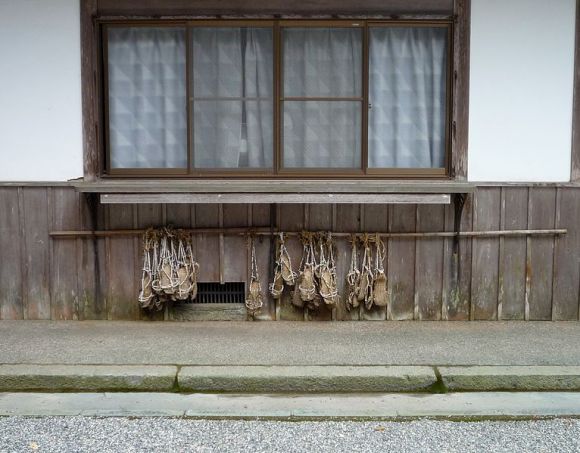
He wears waraji straw sandals and Japanese split-toe socks. When it rains, he may go through several pairs of sandals a day, as the natural materials deteriorate quickly when wet.
▼Waraji sandals hang outside a window
The Myo-o-do, located in Mudo-ji, is where some of the ascetic practices take place. Outside is a statue of a kaihogyo monk in proper garb:
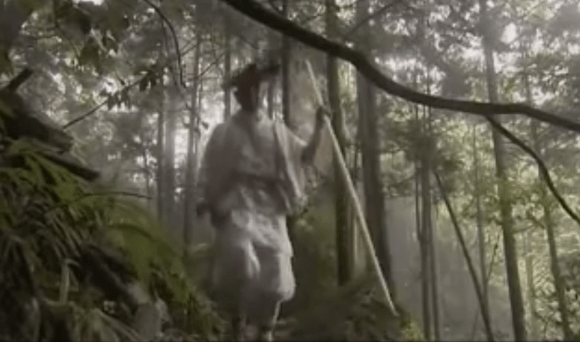
And then there’s the real thing…
▼ Genshin Fujinami, now a dai ajari, on the pilgrimage route as a gyoja
The monks face many hardships, and often develop festering wounds, sore feet and injuries that could incapacitate them. But they are not allowed to rest, so they keep going, despite the pain.
For the fourth and fifth years of the kaihogyo, the number of pilgrimage days is increased to 200.
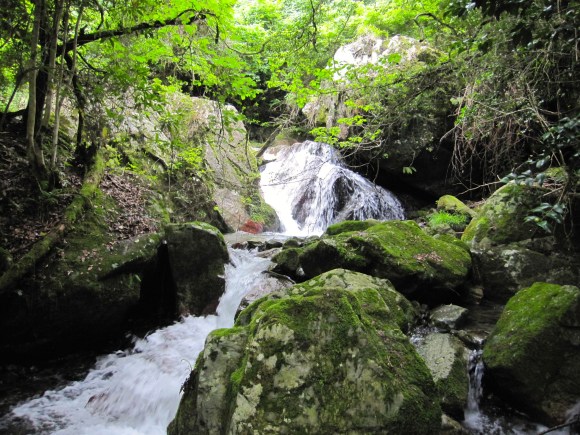
What exactly are the ambulate monks doing as make their way through the forest? They are visiting sacred places and stopping briefly to chant a mantra and pray. These revered spots, over 250 of them, can be characteristics of nature such as waterfalls and streams,
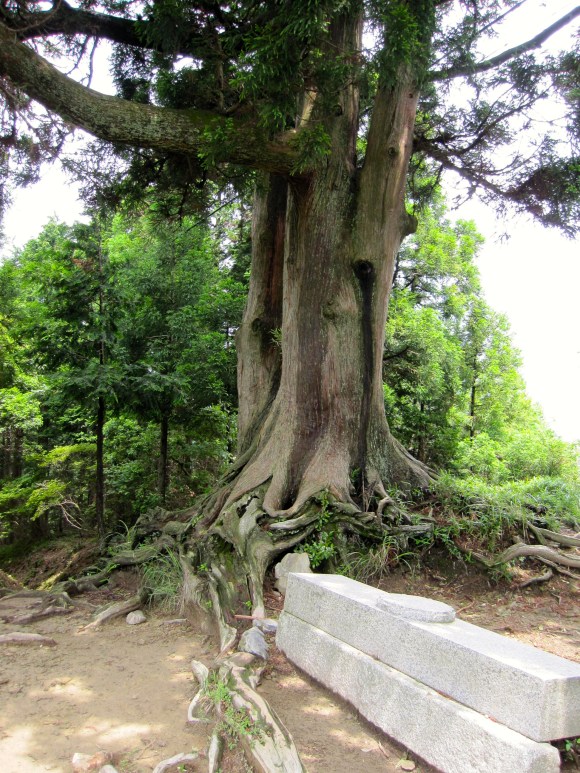
they can be sacred trees,
or springs and wells.

They can also be stone images.
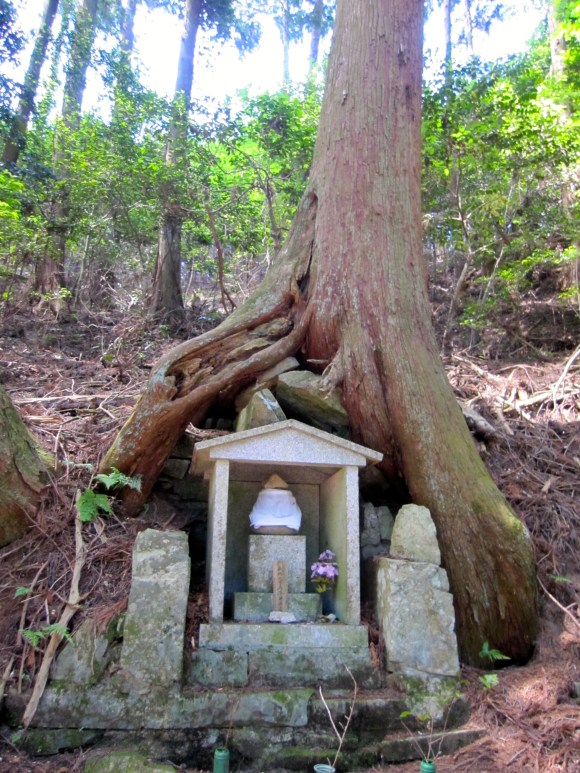
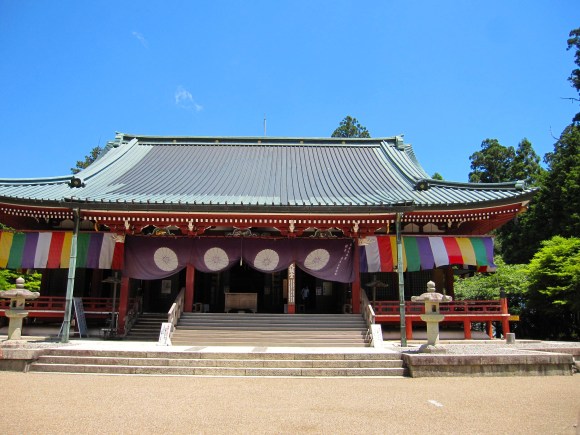
And some sites they stop at are religious buildings such as temples or shrines. The monks pray at many isolated locales on the mountain as well as some right on the well-beaten tourist track.
▼The shaka-do is a well-known tourist site.
In the fifth year, the monk engages in fasting, called do-iri, in which he sits in the Myo-o-do and chants the mantra of Fudo-myo-o incessantly. He is not permitted to eat or sleep, or even lie down, for nine days (although sometimes it is seven).
During this do-iri period, every night at 2 a.m. the gyoja can take a short walk to a well to get water as an offering to Fudo-myo-o. The monk is allowed one drink of water per day, but even this he may not swallow–he is allowed to only swish it around in his mouth and spit it back out. Attendants watch to make sure the amount spat back into the bowl is no less than the amount that came from it.
▼This well, located in the area where the monks live, is where the gyoja goes to draw water.
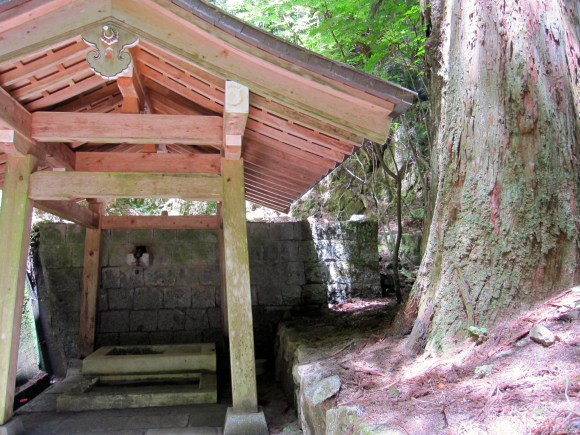
By the last day of the fast, on the last trip to the well, the gyoja is so weak he must be supported by men on each side in order to make it to the well. It takes him over an hour to do the same walk that took him just 12-15 minutes on the first day.
The ascetic comes very close to death during this fast. He loses sense of what day it is and some have reported that they no longer able to think at all. He only gets through it by putting his complete faith in Fudo-myo-o. The ordeal is referred to as a living funeral. When he finally finishes the fast, it takes a week for his body to adjust to eating regularly again.
In the sixth year, the gyoja treads 60 km per day for 100 days, and in the seventh and final year 84 km per day for 100 days, followed by 30-40 km per day for another 100 days. The itinerant monk carries a dagger and rope with him throughout the journey and is supposed to take his own life should he give up at any point during the kaihogyo challenge.
One of the most famous dai ajari is Yusai Sakai (1926–2013), who completed the kaihogyo twice. Sakai was motivated to join the Tendai sect and become a gyoja after his experience in WWII as a kamikaze pilot. He only survived the war because it ended just before his mission was scheduled. He also lost his wife soon after marriage. These events impressed upon him the meaning of living a full life and led him to join the Tendai monks and become a gyoja so he could dedicate himself to doing something good in life. Many books have been written about him.
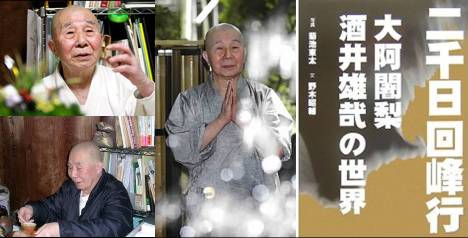
Sakai says, “The message I wish to convey is, please, live each day as if it is your entire life. If you start something today, finish it today. Tomorrow is another world. Life live positively.”
You may have heard that the Tendai monks actually run the kaihogyo route. This is a rumor with its origins in a book published in the ’80s by John Stevens called The Marathon Monks of Mt. Hiei. Stevens, who is responsible for the moniker “marathon monks,” made the claim in his book that the gyoja run the kaihogyo route. And people believed it, including me–until I started doing my own research.
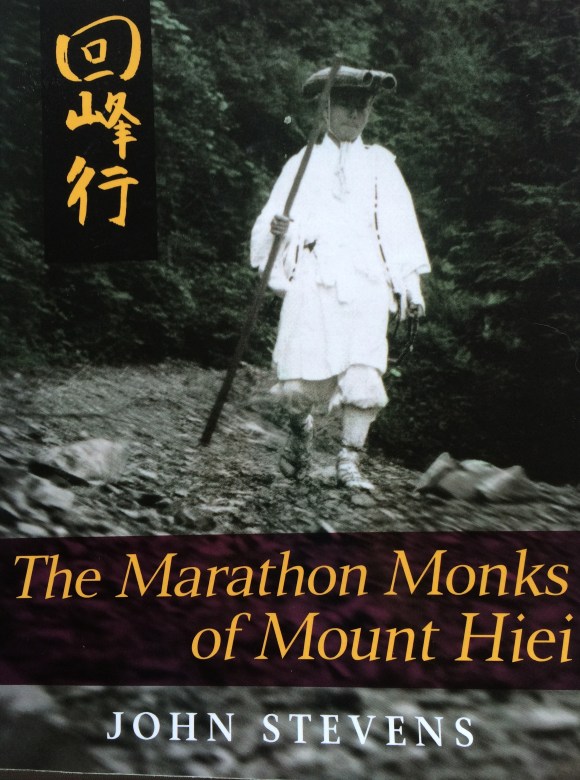
When Stevens wrote his book (Shambhala, 1988), I imagine he was one of the few English speakers who knew enough to convey the activities of the peregrine ascetics. In the first sentence of the preface, he states that, “It may well be that the greatest athletes today are not the stars of professional sports, nor the Olympic champions, nor the top triathlon competitors, but the marathon monks of Japan’s Mount Hiei.” Even English broadcasters have been seduced into thinking the monks are “Running Buddhas,” as Stevens calls them. Yet the sennichi kaihogyo has nothing to do with running and to suggest it does is hyperbole.
After several trips to Enryakuji and speaking with some Tendai monks, I came to the conclusion that while the monks certainly cover marathon-type distances, they do not run the route (wearing robes, carrying or wearing a large hat, holding a staff and toting a lantern?!). The Tendai monks all used the word aruku (walk) or ayumi (to walk, progress forward) to describe the action. Equally, when the Japanese media interviewed gyoja and dai ajari no one used the word “run.” Curious about the discrepancy, I emailed the author about the matter.
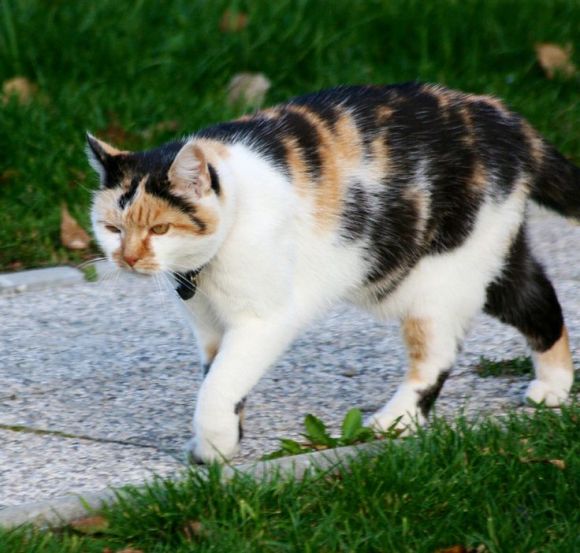
In Stevens’s response, he admitted that some people wouldn’t consider what the monks do as running. Stevens, obviously not a runner himself, felt they were moving along at a pace somewhere between walking and running, and he said he had to jog to keep up with their fast walking. It is hard to believe that in a medium as rich as the English language, Stevens couldn’t find a word to describe what the monks do that wasn’t quite so misleading as the word “run.” Running means one thing to most people:
▼Running
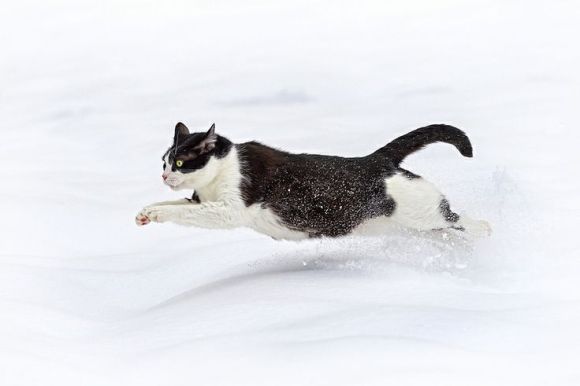
▼Not running
It seems a disservice to the gyoja to say they run the kaihogyo route. The ascetics accomplish amazing feats of distance and stamina amidst unwavering faith. They demonstrate unparallelled spiritual acumen. They grasp the profundity of death by embracing it. Shouldn’t that be enough?
And is it fair to Olympic athletes, or any top athletes, who have spent their whole lives training, and cross-training, to have someone extenuate their accomplishments by comparing them to an eclectic group of enlightenment-seekers on top of a sacred mountain in Japan? These are two completely different worlds.
So lets appreciate Olympic athletes for who they are.

And Mt. Hiei’s Tendai ascetics for who they are.
One thing is for sure: these monks are inspirational. And I’ve had a hankering to get out and do a pilgrimage myself. Spring is the season when many people go on pilgrimage in Japan, on designated routes all over the country. It’s just a matter of choosing which one to do.
Hey, I know! Why don’t I do the same route the gyoja do on Mt. Hiei?
In Marathon Monks of Mt. Hiei: Better than Olympic Athletes? Part II, join me as I introduce the 30 km gyoja michi, the same course the monks take. Except that I’ll be doing it in daylight hours, sans robes, hat, staff, lantern and straw sandals, thank you very much!
Photos: Amy Chavez/RocketNews24
 The Marathon Monks of Mt. Hiei: Better than Olympic athletes?【Part II】
 New 7-Eleven sandwich goes viral in Japan, but is it everything it’s cracked up to be?
 Family Mart unveils new Japanese bread that elevates convenience store food to mocchiri levels
 McDonald’s and Gundam team up for customized anime mecha and fried chicken sandwiches[Video]
 New Travelling Bento pouches turn your luggage into a Japanese lunch box
 How far away from Tokyo can you get with 5,000 yen? Let’s find out!
 Tokyo big walk – Walking from Tokyo Station to the Big Sight convention center on Tokyo Bay【Pics】
 Almost arrested in Tokyo: Hentai Kamen cosplay leads to a brush with police in Shinjuku Ni-chome
 JR Hokkaido train driver in trouble for reading book about trains on stopped train
 These apartments are crazy-small even by Tokyo standards, and super-popular with young people
 Godzilla-shaped ice cream on sale in Tokyo near the sight his most adorable rampage
 Japan reportedly adding Japanese language skill requirement to most common foreigner work visa
 Pokémon and Ikea Japan cross over into each other’s worlds with collaboration events
 Starbucks Japan closing only Shinkansen platform branch for popularity-triggered renovations
 Two food hacks take Japan’s convenience store fried chicken to amazing new sandwich heights
 You can assemble a well-balanced team of Pokémon, them eat them, thanks to Japanese cake chain
 Tokyo turns its phone booths into free Wi-Fi hotspots, and here’s how to use them
 Fading Tokyo – Searching for signs of the Showa era as local neighborhoods evolve[Photos]
 Tokyo teahouse serves up a sakura matcha dessert you won’t find anywhere else
 7-Eleven Japan’s new baked-in-store sweet treat is only available in three parts of the country
 Man bites woman at cherry blossom park in Japan, dies shortly after
 Japan now has a special desk for people who work at home with a pet cat[Photos]
 Famous Tokyo cherry blossom spot installs view-blocking screens to fight overcrowding[Video]
 Uniqlo announces new T-shirts for One Piece, Naruto and more for manga publisher’s 100th birthday
 Train station platform ramen store closes its doors on half a century of history in Tokyo
 Starbucks Japan releases new My Fruit³ Frappuccino at only 34 stores around the country
 Studio Ghibli releases Catbus pullback keychain that runs like the anime character
 Krispy Kreme releases Super Mario doughnuts in Japan for a limited time
 Japanese onsen egg maker from 100-yen store Daiso needs to be on your shopping list
 Survey asks foreign tourists what bothered them in Japan, more than half gave same answer
 Japan’s human washing machines will go on sale to general public, demos to be held in Tokyo
 Starbucks Japan releases new drinkware and goods for Valentine’s Day
 We deeply regret going into this tunnel on our walk in the mountains of Japan
 Starbucks Japan releases new sakura goods and drinkware for cherry blossom season 2026
 Studio Ghibli releases Kodama forest spirits from Princess Mononoke to light up your home
 Japan’s newest Shinkansen has no seats…or passengers [Video]
 Major Japanese hotel chain says reservations via overseas booking sites may not be valid
 Put sesame oil in your coffee? Japanese maker says it’s the best way to start your day【Taste test】
 No more using real katana for tourism activities, Japan’s National Police Agency says