

If asked which traditional Japanese arts are female-only, the first thing that comes to mind for most foreigners is probably geisha. Following that, most people might guess tea ceremony, ikebana (flower arrangement) or calligraphy. But tea ceremony and ikebana had connections to Buddhism and were started in Japan by Buddhist priests. Still today many masters in these two disciplines are men. Calligraphy was brought over from China and both men and women practiced by copying Chinese letters. Only later did Japan develop its own form of calligraphy which is still practiced today by both sexes.
In this article, we introduce five strictly female Japanese arts, a couple of which you may have never heard of before. In addition to everyone’s favorite, the geisha, we introduce the world’s only all-female revue, naginata swords for women, itako female fortune-tellers and the mysterious naked sea nymphs: the ama pearl divers.
1. Geisha 芸者
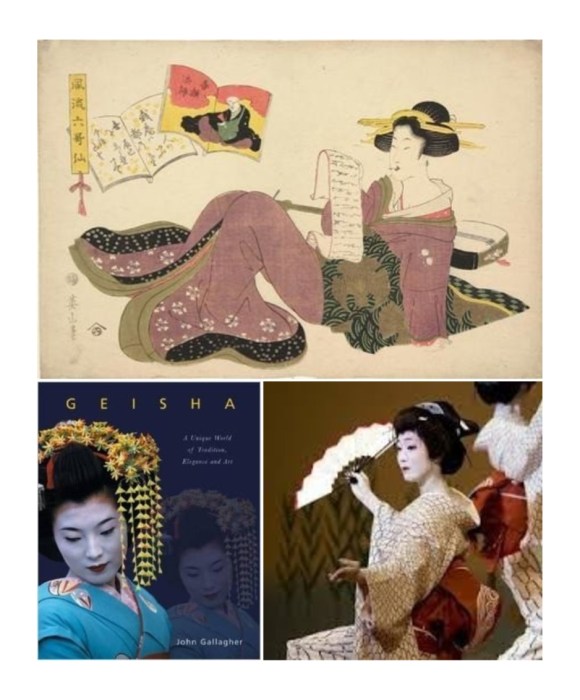 Amazon, University of Wisconsin Chazen Museum of Art
Japan’s geisha hardly need an introduction, as they are plastered on book covers, postcards and souvenirs everywhere. These skilled entertainers which can still be found in Kyoto’s Gion district and outside of Tokyo in Atami, are educated and refined in the Japanese arts of dance, music, games and conversation. Unfortunately, the chance to see these performing artists is rare these days as they command a high price and most people cannot afford to be in their company. There are, however, special deals for tourists that make the geisha more accessible since the exclusive world of these entertainers requires an introduction and other stipulations.
“Geishas are not submissive and subservient,”according to Iwasaki Mineko, in her book Geisha, A Life, “but in fact they are some of the most financially and emotionally successful and strongest women in Japan, and traditionally have been so.”
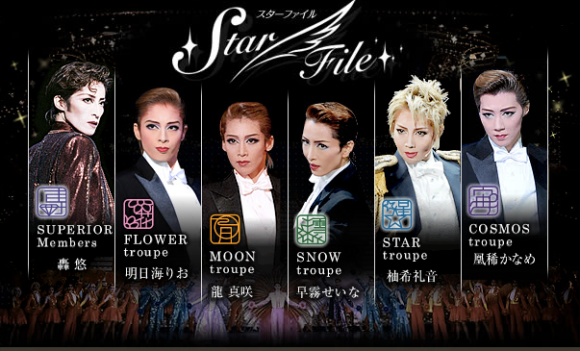
This all-female musical performance and theater was created in 1913 in the form of the Takarazuka Music School, its aim of which was to offer an alternative to kabuki theater. The president of Hankyu Railways, Ichizo Kobayashi, was trying to bring in more business to Takarazuka, the city at the end of the train line.
The Takarazuka Revue Company is the only performance troupe in the world where all the performers are women. Women playing men’s parts, called itokoyaku, is the very appeal of Takarazuka. The Takarazuka Revue website explains it thus:
“The male roles are able to be portrayed so well and with so much affection specifically because they are portrayed by women, fascinating and charming the female audience. This is because they are played by those who know a woman’s feelings best. It can be said that this is what holds women captive to the beautiful and graceful world born in the Takarazuka.”
Lesbian overtones and feminine eroticism are said to be elements that attract the mostly female audience to Takarazuka.
3. Naginatajutsu 長刀術
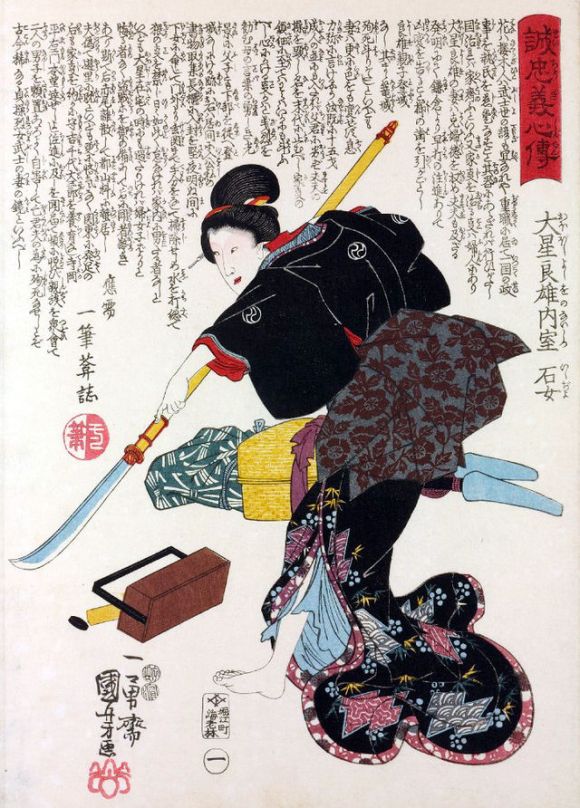
Naginata is a type of sword that is slightly hooked on the end and has a long handle. It was originally used by male warriors and proved popular in the era of cavalry, as the shape and length of the naginata made it convenient for unseating opponents on horseback. But during the Edo period, the naginata fell out of favor as more modern weapons came along and this unique sword became a self-defense weapon for samurai wives who needed to be able protect themselves when their husbands were away. The naginata became a status symbol for women and was even included in dowries of samurai daughters. The long-handled weapon allowed women to keep an attacker at a distance so he could not overpower her. Although the martial art of naginatajutsu is taught to girls in public schools in Japan, and is performed as a sport by women in university, overseas it is performed by both men and women. In addition to competition, it is practiced in the form of kata, prearranged choreographed forms that focus on the preciseness, speed and strength of the art.
4. Itako Fortune-Tellers 巫子
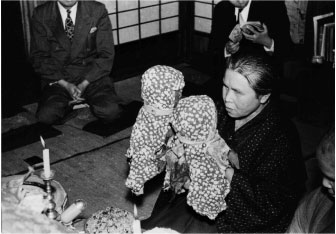 Tokyo National Research Institute of Cultural Properties
The traditionally blind, female folk shamans of Aomori Prefecture’s Tsugaru and Nanbu districts, itako are able to talk to the dead by acting as a medium between the living, the gods, and the deceased. These mystics employ a technique called kuchiyose which means to call down the spirits of the dead, and they perform at funerals or on the anniversary of someone’s death. Itako are also sought out at other times as well, such as when families want to communicate information to loved ones who have passed away. Likewise, the living may receive advice from the dead who may wish to warn of specific events or misfortune that can be avoided. These diviners (also sometimes called gomiso) use chanting, songs, and bells to help them convene with the spirits.
In addition to Aomori Prefecture, the itako also populated the central and the northern part of Iwate Prefecture. However, these days, the fortune tellers are most famous for their presence on Mount Osore, a mountain in Aomori Prefecture that is shrouded in mystery and ghosts. There is an annual festival held on Mount Osore every July which attracts itako from all over the region.
5. Ama Pearl Divers 海人
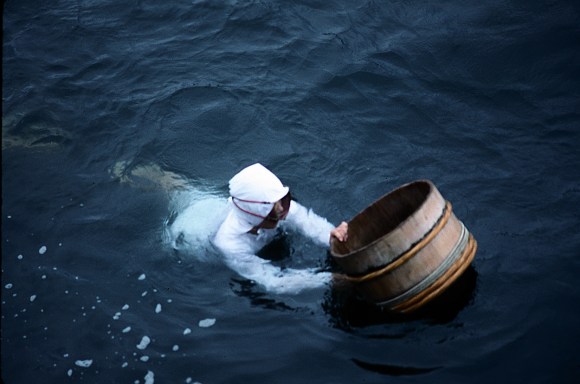
Most people have heard of Japan’s iconic pearl divers. They experienced a recent wave of popularity as the subject of an NHK TV drama called Ama-chan in 2013 and more recently, we told you about a town in Mie Prefecture asking for help naming their pearl diver mascot.
Mikimoto Pearls, famous worldwide for their pearl jewelry, has historically used ama divers to cultivate pearls. Their website explains:
“Thought to have been around for over 2000 years, Ama – meaning ‘sea women’ – were traditional free divers who made their living diving to depths of up to 25 meters without using any breathing apparatus – instead relying on solely their skills and special breathing techniques.
The role of the Mikimoto ama was to collect the oysters from the seabed so that the pearl-producing nucleus may be inserted. Once this critical process was completed, the ama then carefully returned the oysters to the seabed – In order to successfully complete this process, each diver would have to hold her breath for up to two minutes at a time in often freezing cold waters.”
While such divers were taken out to deeper water via boats from which they were tethered to a long rope before jumping in, another form of diving was by using a wooden barrel and entering the waters close to shore.
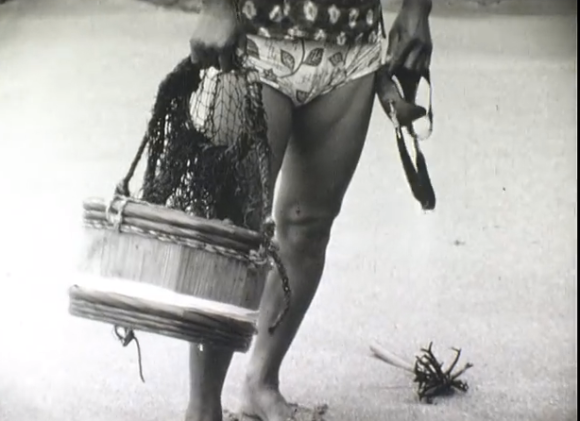
Women entered shallower waters from the beach. The floating barrels had two purposes: to grab onto for a rest between dives, and to put shells into.
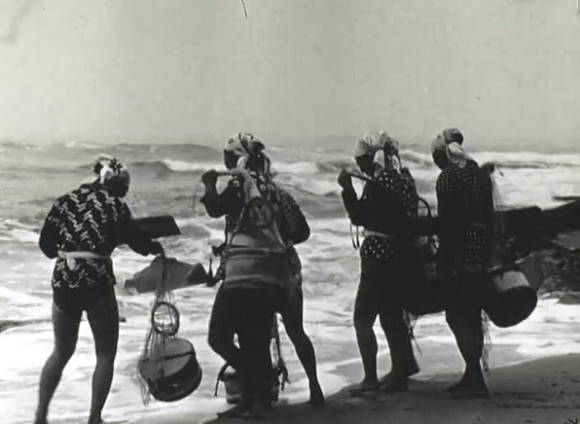
Because this was often performed in very cold temperatures, after coming out of the water, the ama divers would change into dry clothes and make a fire on the beach to warm up. These days, however, modern technology has replaced Japan’s iconic divers, although they still perform for tourists.
On that note, we leave you with this intriguing video of ama pearl divers of yore, diving bare-breasted because they move through the water so much more easily. They’re the closest things to real mermaids you’re likely to ever see.
Feature image via Wikipedia
 Japan’s all-female Takarazuka theater has enlightened 31.5:1 female to male bathroom stall ratio
 5 Japanese women who can kick your ass (in martial arts)【Women in Japan Series】
 10 things that make Japan female-friendly【Women in Japan Series】
 Four things women are banned from doing in Japan【Women in Japan Series】
 Ramen for 99 yen?!? Best value-for-money noodles found at unlikely chain in Japan
 The best Hobonichi diaries, covers and stationery for 2026
 Lawson adds doughnuts to its convenience store sweets range, but are they good enough to go viral?
 Viral Japanese cheesecake from Osaka has a lesser known rival called Aunt Wanda
 Japan’s craziest burger chain takes menchi katsu to new extreme levels
 Eevee returns to Japan’s famous Tokyo Banana, bundled with a cute tote bag
 Minecraft User Decides to Make Kinkakuji, Eventually Creates the Entire City of Kyoto
 Beautiful blue apple jam is taking the Japanese internet’s breath away!
 Japan’s new Mister Donut matcha donuts have so much green tea flavor one has to use the hole
 Japan’s 10 best Ferris wheels for beautiful views, as chosen by travelers【Survey】
 Starbucks Japan releases first-ever Hinamatsuri Girls’ Day Frappuccino
 Japanese restaurant chain serves Dragon Ball donuts and Senzu Beans this spring
 Highest Starbucks in Japan set to open this spring in the Tokyo sky
 Japan Extreme Budget Travel! A trip from Tokyo to Izumo for just 30,000 yen [Part 1]
 Japan has only one airport named after a samurai, so let’s check out Kochi Ryoma【Photos】
 Japan Extreme Budget Travel! A trip from Tokyo to Izumo for just 30,000 yen [Part 2]
 Japanese drugstore sells onigiri at pre-stupid era prices, but how do they compare to 7-Eleven?
 Yakuzen ramen restaurant in Tokyo is very different to a yakuza ramen restaurant
 Tokyo Skytree turns pink for the cherry blossom season
 Japan’s newest Shinkansen has no seats…or passengers [Video]
 Starbucks Japan releases new sakura goods and drinkware for cherry blossom season 2026
 Foreigners accounting for over 80 percent of off-course skiers needing rescue in Japan’s Hokkaido
 Super-salty pizza sends six kids to the hospital in Japan, linguistics blamed
 Starbucks Japan unveils new sakura Frappuccino for cherry blossom season 2026
 Foreign tourists in Japan will get free Shinkansen tickets to promote regional tourism
 The 10 most annoying things foreign tourists do on Japanese trains, according to locals
 Take a trip to Japan’s Dododo Land, the most irritating place on Earth
 Naruto and Converse team up for new line of shinobi sneakers[Photos]
 Is China’s don’t-go-to-Japan warning affecting the lines at a popular Tokyo gyukatsu restaurant?
 Survey asks foreign tourists what bothered them in Japan, more than half gave same answer
 Japan’s human washing machines will go on sale to general public, demos to be held in Tokyo
 Starbucks Japan releases new drinkware and goods for Valentine’s Day
 We deeply regret going into this tunnel on our walk in the mountains of Japan
 Studio Ghibli releases Kodama forest spirits from Princess Mononoke to light up your home
 Major Japanese hotel chain says reservations via overseas booking sites may not be valid
 Put sesame oil in your coffee? Japanese maker says it’s the best way to start your day【Taste test】
 No more using real katana for tourism activities, Japan’s National Police Agency says
 Why aren’t there more female entrepreneurs in Japan? Pull up a chair… 【Women in Japan Series】
 Japanese business women who’ve beaten the system 【Women in Japan Series】
 5 powerful reasons to be a woman in Japan 【Women in Japan Series】
 Is Japanese language becoming less discriminatory towards women?【Women in Japan Series】