

According to the Global Entrepreneur Development Index (GEDI) that measures favorable conditions for women entrepreneurs, the US and Australia are ranked first and second respectively, while Japan places fifteenth, just behind Peru. Yet Japan fulfills many of the requirements to create a successful female entrepreneurial environment such as education, skills and access to capital.
In addition, women in Japan can overcome obstacles such as low salaries, long work hours and scant child-rearing options by owning their own businesses and calling the shots. So, what’s holding Japanese women back? It turns out that a large part of it may be Japanese women themselves.
The GEDI measures high-profile women entrepreneurs who “own and operate businesses that are innovative, market expanding and export-oriented.” This is in contrast to small business owners who are running the corner store or supporting only their family on their income. While Japan is nowhere near competitive in the area of high-profile women entrepreneurs, what the country needs is a grass-roots level entrepreneur-driven change, led by women. More small business entrepreneurs will naturally lead to higher profile entrepreneurs as women succeed and build upon these foundations. In addition to big start-ups, a society needs many small entrepreneurs to create a fresh business environment that will move the country forward. Japanese women are the best candidates to lead the drive because they are innovative, talented and–presuming they’re not already in companies slaving away like salarymen–have time to develop their businesses. Besides, I’ve met few Japanese women who don’t enjoy a challenge.
In a previous article in our Women in Japan Series we met three Japanese business women who’ve beaten the system and successfully forged ahead in the business world by defining their own terms through entrepreneurship. With their ability to support themselves financially, live more freely, have time for their children and families, and work fewer hours than they’d have to in the corporate world, it’s a wonder why more Japanese women don’t choose this path.
So first, let’s take a look at some reasons there aren’t more female entrepreneurs in Japan:
1. Japan not an entrepreneurial country
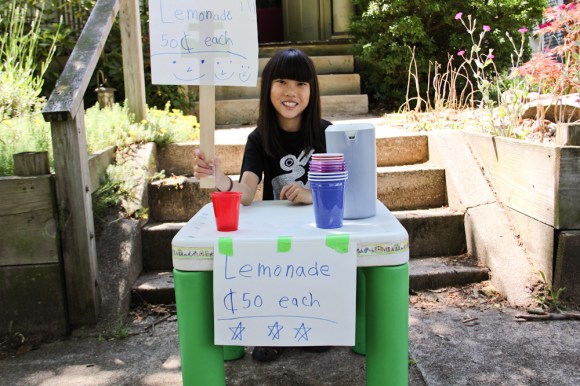
Historically, Japan has not been a country of start-ups, venture capitalists or innovators. Although we can all think of exceptions, the fact remains that Japan is best known for its ability to adapt and improve upon what has already been developed. The automotive, electronics, and technology industries are examples of Japan’s ability to refine concepts. The truth is that Japan has a dismal record when it comes to entrepreneurship. Japan needs more people like Fusajiro Yamauchi (Nintendo) Takafumi Horie (Livedoor), Joi Ito (Digital Garage, and Infoseek Japan), Yoshikazu Tanaka (Gree Inc) and Tomoko Namba (DeNA Co) whether they be men or women.
2. Entrepreneurship isn’t actively encouraged

The ideal for university graduates, male or female, has historically been to get hired by a major company where they will have a secure job and a regular salary for their entire working life. This recruiting process starts while students are in their final year of university and continues throughout Japan’s “hiring season” in April. Even a few years ago when jobs were hard to come by, few graduates turned to entrepreneurship. Instead, they chose part-time jobs while continuing to look for that big break at a Japanese company. While this may be changing with Abenomics, most young Japanese never consider starting up something on their own even if they have access to resources.
3. Aversion to risk

Security and stability are the goals in Japan, promoted in most all aspects of Japanese life. A full-time job, marriage and children are all seen as the sure way happiness. Alternatives, such as reaching for the stars and possibly failing, or compromising the stability of your family (real or perceived) so that you can fulfill your dreams, is avoided as much as possible. But risk is necessary for entrepreneurship to thrive, and with few people challenging the status quo, Japan lacks the initiative to innovate and change.
4. Propensity to Protect

Japan is all about protecting its business owners rather than encouraging them to change and stay competitive. Local government is the worst offender of this mentality. Potentially progressive small communities are stifled because no one is allowed to challenge previous ways of doing things. While new growth in the form of cafes, restaurants, stores, and entertainment could provide growth and even job opportunities to a local area, and providing perfect entry-level businesses for budding entrepreneurs, these ventures are often discouraged by local government because of the threat to other shops that have been there longer and may be put out of business. Other times it is deemed that new growth will threaten a certain lifestyle of the locals (usually elders).
5. Few resources for entrepreneurs

Instead of pouring resources into individual start-ups, venture capital, and promising individual talent, Japan encourages development from non-profit and organizations. But these NPOs are often ineffective because those involved don’t have to take financial responsibility for their endeavors. Whereas entrepreneurs create business where they see an opportunity, or an unmet demand, governmental organizations provide only a framework for people to work within. Such structures are rigid and often don’t take into consideration the true needs of each community and it’s unique problems.
Women living in such targeted communities should be offered incentives for opening their own businesses and promoting their local areas. Women could be offered tax breaks, incentives, or seed money. This is exactly what South American countries such as Brazil, Chile and Columbia are doing right now. Chile, for example, doles out US$40,000 of equity-free funding to those who qualify and are selected to take part in their “Start-Up Chile” program aimed at encouraging high-potential startups, especially among women. Japan could encourage women entrepreneurs through such programs rather than letting their education and talent go to waste.
There is hope, however, in Japan-specific crowd-funding sites such as Green Funding Lab, READYFOR? and Shooting Star.
6. Cultural barriers and living stereotypes
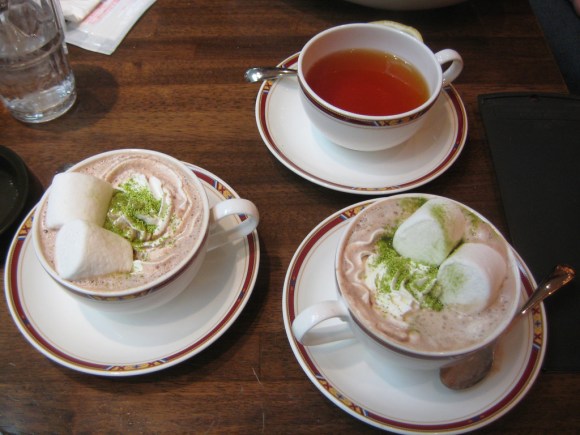
▼Fancy-schmancy hot chocolate sprinkled with macha may be next best thing, but I’m happy with plain old tea.
The GEDI report also recognizes that attitudes play a heavy role in forming a culture of entrepreneurship. In an environment hampered by cultural barriers or stereotypes, people will not see entrepreneurship as an opportunity. This appears to be the biggest barrier to women entrepreneurship in Japan.
Gender-based and non-gender-based entrepreneurship is also measured by the GEDI report. And guess what? While the U.S. and Australia saw little difference between these two figures as regards to overall ranking, the lack of women entrepreneurs in Japan caused their nation’s ranking to plummet a whopping six places.
As we noted in 5 Powerful Reasons to be a Woman in Japan, many women are quite happy in stereotypical roles. A surprising number voice their satisfaction with being housewives and rearing children and feel this in itself is a position of power. It’s possible that Japanese women may simply feel no advantage to becoming entrepreneurs. They’re pretty much running their own show anyway: the household.
Jana Charles, a consultant and social business entrepreneur living in Fukuoka who gives speeches on women entrepreneurs, confirms this. “I lost almost all my business contacts and clients just because I was pregnant. Most of them were women who said I needed to rest and focus on my baby, even though I was totally able to do my job.”
So there you have it. If Prime Minister Abe thinks he’s going to get women into the workforce, he’s going to have to make it more pleasant for women to join it. And they’re going to have to be able to join on their own terms. Convincing corporations to hire more female managers is like trying to fit a square peg into a round hole. In other words, until basic changes in work ethic, hours and child-care needs are met, women will never be able to join the full-time workforce. After all, someone has to take care of the family (aging parents as well as children).
The point isn’t to discourage women from being housewives, nor is it to encourage women to seek non-traditional female roles. It’s to encourage women to be the best they can be in whatever they choose to do. So if change is needed, it has to be passionate change from women themselves, because they want it.
Feature image: The Next Women
 Japanese business women who’ve beaten the system 【Women in Japan Series】
 10 things that make Japan female-friendly【Women in Japan Series】
 Four more things women are banned from doing in Japan【Women in Japan Series】
 Is Japanese language becoming less discriminatory towards women?【Women in Japan Series】
 Four things women are banned from doing in Japan【Women in Japan Series】
 Japanese trains in Sapporo might be better than those in Tokyo, thanks to one special feature
 Lawson convenience store at popular tourist site is one of the most unusual in Japan
 Downtown Tokyo’s meaty monster Kaibutsu ramen will challenge your stomach, thrill your taste buds
 Mr. Sato discovers his inner beaver with a 16-inch chocolate “twig” at Tokyo Station
 Which Pokémon are you? Official quiz reveals your Poké-personality, and how to take it in English
 Nephew receives SD card after his uncle passes away, finds treasure trove of gems from the past
 Mt. Fuji climbing reservation website is now open, and here’s how to reserve your spot
 7-Eleven Japan’s latest spicy curry promises to take our voice away, but does it deliver?
 Drink vending machines disappearing in Japan as number drops to lowest in 30 years
 Japanese politician arrested on charges of accepting bribes to reduce number of monkeys in park
 Japan reportedly adding Japanese language skill requirement to most common foreigner work visa
 Mt. Fuji decorated with a 500,000-flower pink carpet is Japan’s ultimate spring view
 Pokémon and Ikea Japan cross over into each other’s worlds with collaboration events
 Starbucks Japan closing only Shinkansen platform branch for popularity-triggered renovations
 You can assemble a well-balanced team of Pokémon, them eat them, thanks to Japanese cake chain
 30 Pikachus want to share a Tokyo hotel room with you that has separate Grass, Water, Fire spaces
 Man bites woman at cherry blossom park in Japan, dies shortly after
 7-Eleven Japan’s new baked-in-store sweet treat is only available in three parts of the country
 Peanuts and Coke becomes a viral hit in Japan, but is it a trend worth joining?
 Japan now has a special desk for people who work at home with a pet cat[Photos]
 Famous Tokyo cherry blossom spot installs view-blocking screens to fight overcrowding[Video]
 Uniqlo announces new T-shirts for One Piece, Naruto and more for manga publisher’s 100th birthday
 Train station platform ramen store closes its doors on half a century of history in Tokyo
 Starbucks Japan releases new My Fruit³ Frappuccino at only 34 stores around the country
 Krispy Kreme releases Super Mario doughnuts in Japan for a limited time
 Japanese onsen egg maker from 100-yen store Daiso needs to be on your shopping list
 Survey asks foreign tourists what bothered them in Japan, more than half gave same answer
 Japan’s human washing machines will go on sale to general public, demos to be held in Tokyo
 Starbucks Japan releases new drinkware and goods for Valentine’s Day
 We deeply regret going into this tunnel on our walk in the mountains of Japan
 Starbucks Japan releases new sakura goods and drinkware for cherry blossom season 2026
 Studio Ghibli releases Kodama forest spirits from Princess Mononoke to light up your home
 Japan’s newest Shinkansen has no seats…or passengers [Video]
 Major Japanese hotel chain says reservations via overseas booking sites may not be valid
 Put sesame oil in your coffee? Japanese maker says it’s the best way to start your day【Taste test】
 No more using real katana for tourism activities, Japan’s National Police Agency says
 5 powerful reasons to be a woman in Japan 【Women in Japan Series】
 5 Japanese women who can kick your ass (in martial arts)【Women in Japan Series】
 Can you name 5 traditional Japanese arts that are distinctly female? 【Women in Japan Series】
 Japanese woman surprised to learn foreigners don’t openly tell women they have big breasts
 Four frustrating attitudes women in Japan run into when interviewing for jobs, grouped by age
 20 signs that a woman should think about quitting the Japanese company she works for
 Daiso to change Japanese closing-time music because foreign tourists aren’t taking the hint
 5 reasons why Japanese expats say “sayonara” to their homeland for good
 Big win for tattoo artists: Japan’s Supreme Court rules medical licenses aren’t necessary
 Bloomberg’s video makes Japanese business etiquette seem way more complicated than it really is
 What’s the best way to close the gender gap in Japan? Japanese women weigh in
 Top 11 tweets to make you feel glad you don’t work in Japan
 “The one and only way to make people in Japan take more vacation time”
 W.T.F. Japan: Top 5 strange Japanese office occurrences【Weird Top Five】
 Japan Misunderstood: 3 stereotypes that live on