China has a complicated relationship with golf.
The sport was banned under Mao in the 1940s through the ‘80s for being a millionaires’ hobby. It wasn’t until 1984 that the first golf course in China was even constructed, and then 20 years later in 2004, building new golf courses was banned.
Of course, that hasn’t stopped developers from doing it anyway. In 2004 there were 176 courses, and now 10 years and one moratorium later, there are over 1,000.
One of the first and certainly the largest is the Mission Hills Golf Club. Comprising two resorts in Shenzhen and Gongguan, it is the largest golf club in the world with 12 courses, all designed by famous golfers.
Mission Hills also built Mission Hills Haiku, another luxury golf club located on the resort island of Hainan — one of the only places in China exempt from the ban on building new golf courses.
Between these three wellness resorts, Mission Hills has hosted 100 international tournaments and sprawls across 15.5 square miles. Mission Hills Golf Club is the “World’s Largest Golf Club” and Mission Hills Haiku has the “World’s Largest Spa and Mineral Springs,” according to the Guinness Book of World Records.
Though it’s located in a country with a hot-and-cold relationship with golf, Mission Hills Group has designed some incredible courses.
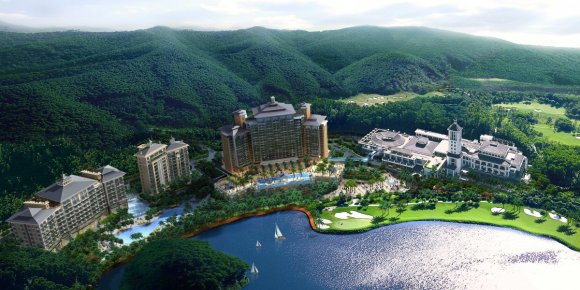
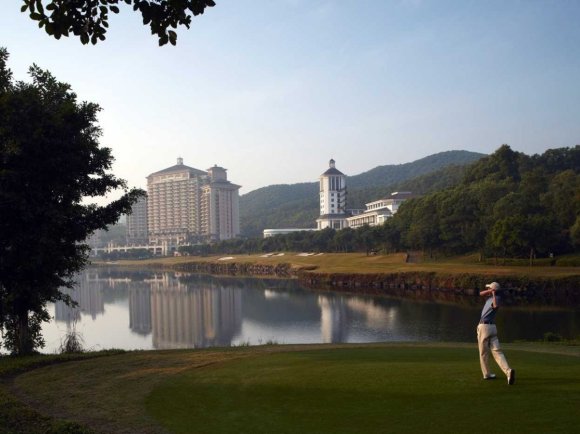
Welcome to Mission Hills Dongguan club, the first of the Mission Hills golf courses and one of the largest in the world.
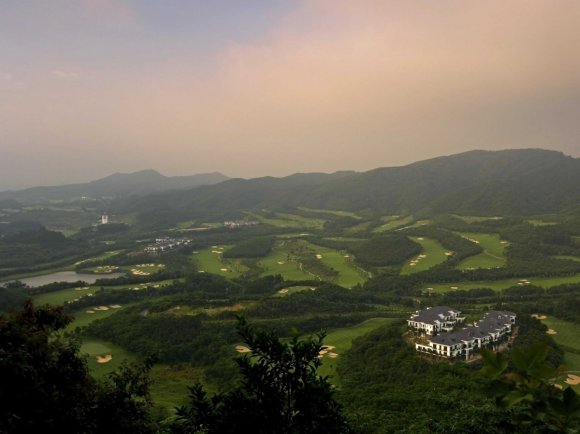 Courtesy of Mission Hills Group
Needless to say, it’s pretty impressive. This is a view of the clubhouse.
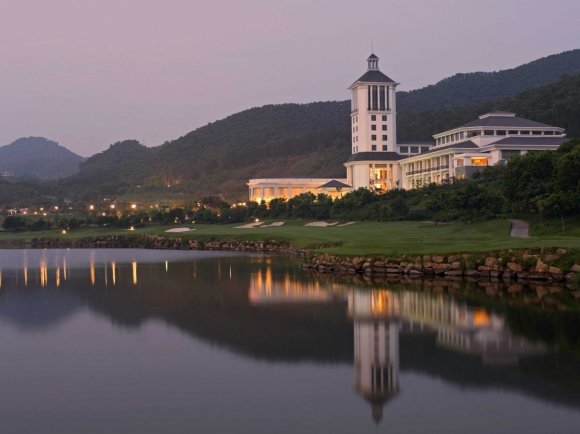 Courtesy of Mission Hills Group
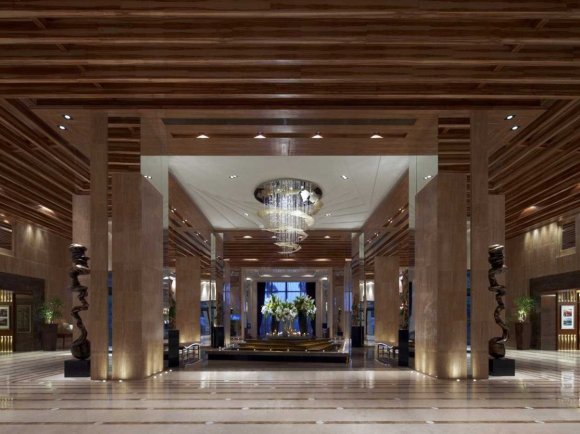
In addition to golf, Dongguan has 51 tennis courts and a professional academy — the largest in Asia.
 Courtesy of Mission Hills Group
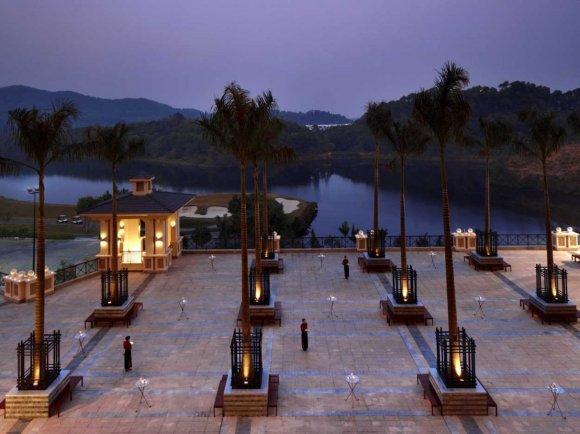
It also has a spa center and gorgeous views from its suites of the surrounding course.
 Courtesy of Mission Hills Group
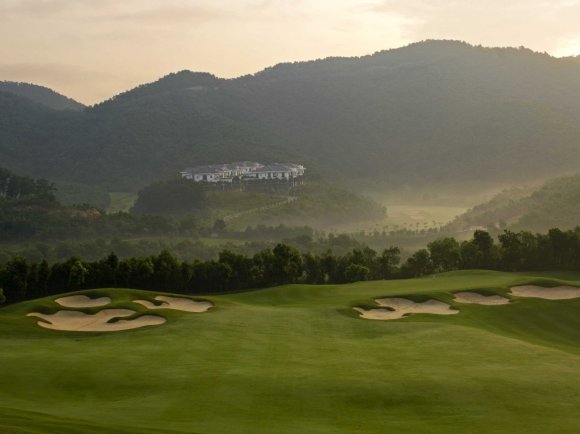
he first Dongguan course was designed by the best female golfer in history, Annika Sorest. It has lots of natural terrain, dramatic elevation changes, and mountains in the background.
 Courtesy of Mission Hills Group
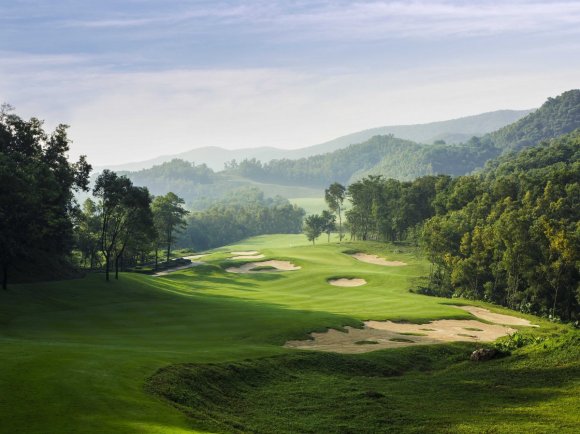
Rose-Poulter was a Dongguan course designed by golf legends Justin Rose and Ian Poulter. The course has more birdie and hole-in-one opportunities than most greens.
 Courtesy of Mission Hills Group
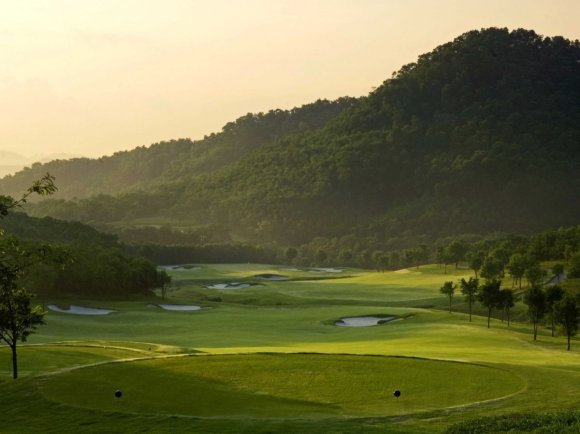
The David Leadbetter course has larger sand bunkers and wide fairways that seem easy to land on, but are frustratingly not level. It also requires the player to use every club in the bag.
 Courtesy of Mission Hills Group
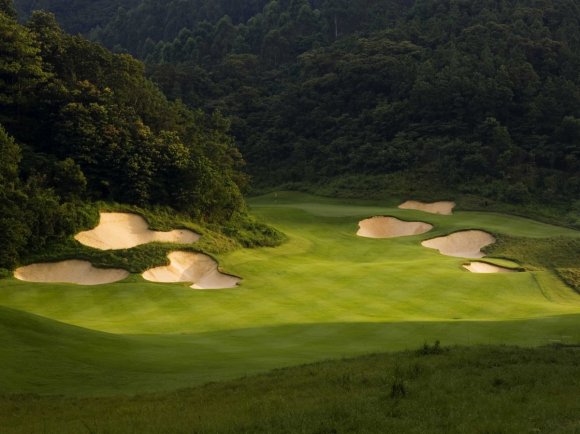
Greg Norman — the world’s top player for a decade — designed this course. The narrow fairways and dense forestation make it one of the hardest courses in Asia.
 Courtesy of Mission Hills Group
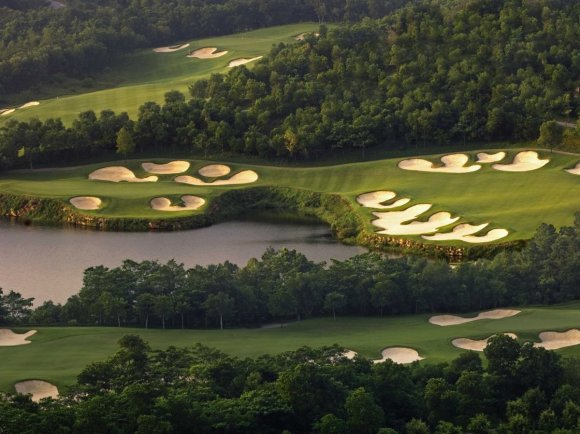
This signature course has over 151 bunkers and was designed by Jose Maria Olzabal, who has two Masters titles. The undulating fairways also makes this course particularly difficult.
 Courtesy of Mission Hills Group
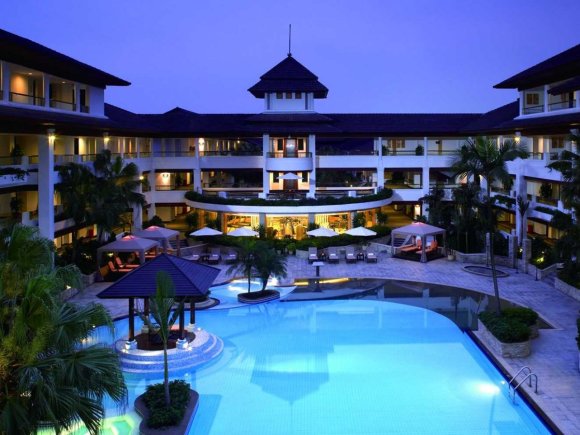
25 minutes away from the Dongguan Clubhouse is the Shenzhen Golf Resort. It has seven golf courses, a huge swimming pool, and a spa center.
 Courtesy of Mission Hills Group
The Els course at Shenzhen was named after South African golfer Ernie Els and has huge swaths of turf. The best is the fourth hole which is the highest point on the course and has panoramic views of the club.
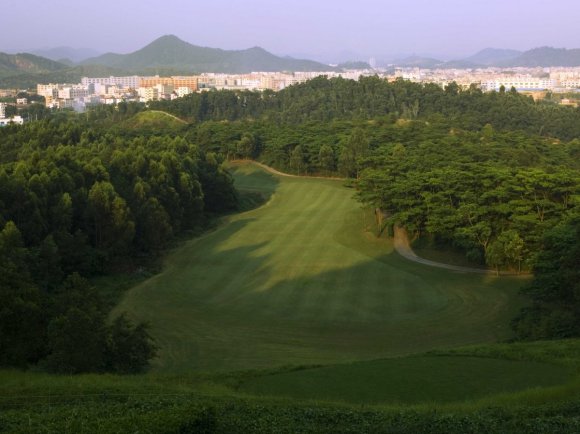 Courtesy of Mission Hills Group
China’s first “stadium course” was designed by famous golfer Nick Faldo. It has some of the most exciting holes with plenty of picturesque views.
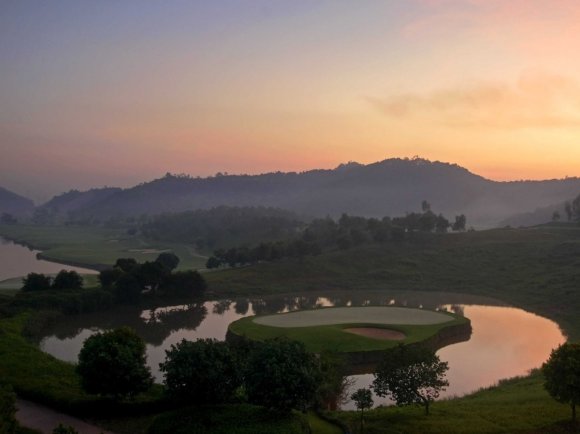 Courtesy of Mission Hills Group
Masashi “Jumbo” Ozaki designed this dramatic course for Shenzhen with lots of slopes and tall trees. It also includes a lovely lake and wide fairways for an interesting round of golf.
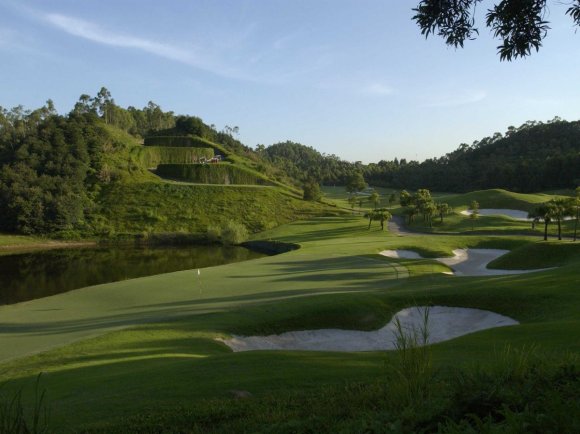 Courtesy of Mission Hills Group
Pete Dye was one of the most widely-regarded golf course architects for 50 years and this is one of his most creative golf courses. Though it’s short by today’s standards, the greens are pretty hard to play.
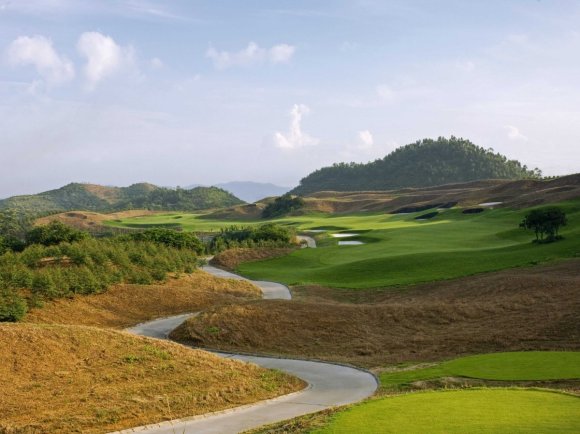 Courtesy of Mission Hills Group
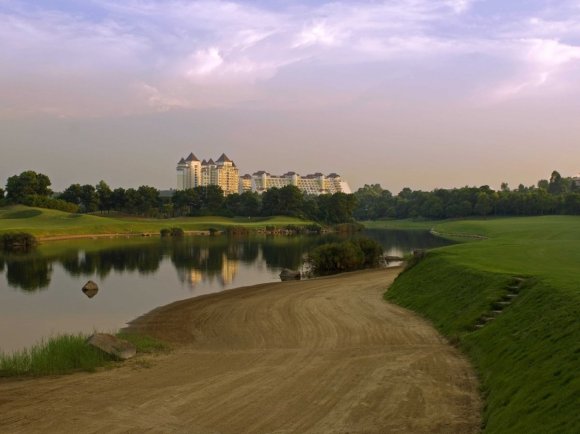
Three-time major winner Vijay Singh created this innovative course with a 150-yard beach bunker at Shenzhen. It also has steep bunkers and water hazards on 14 holes.
 Courtesy of Mission Hills Group
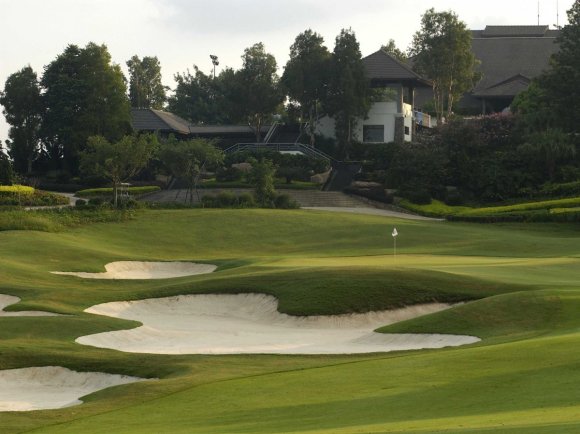
This critically-acclaimed course was named in honor of the 41st World Cup, which it hosted in 1995. Players can expect lots of flat bottomed bunkers, water hazards, and grass mounds (for spectators).
 Courtesy of Mission Hills Group
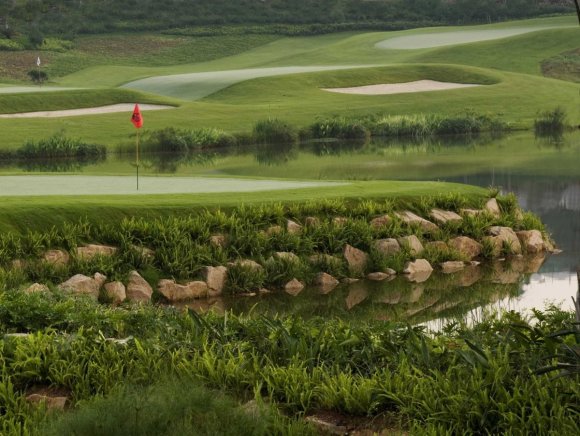
Zhang Lian Wei is the most decorated Chinese golfer in history. He designed this par-3 course at Shenzhen, which copies design features from some of the world’s most famous golf courses.
 Courtesy of Mission Hills Group
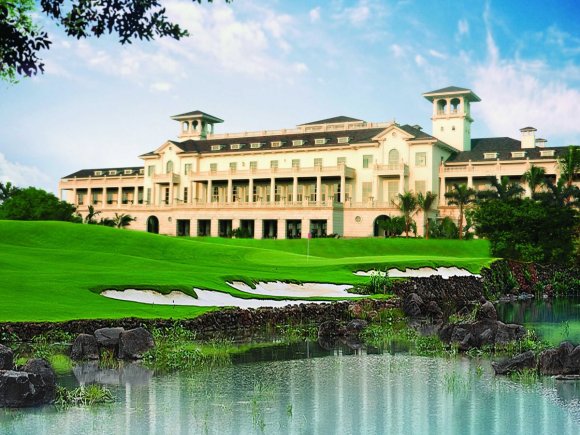
The Mission Hills Group also built another course in Haiku, Hainan in China.
 Courtesy of Mission Hills Group
It is a massive golf resort with 10 golf courses.
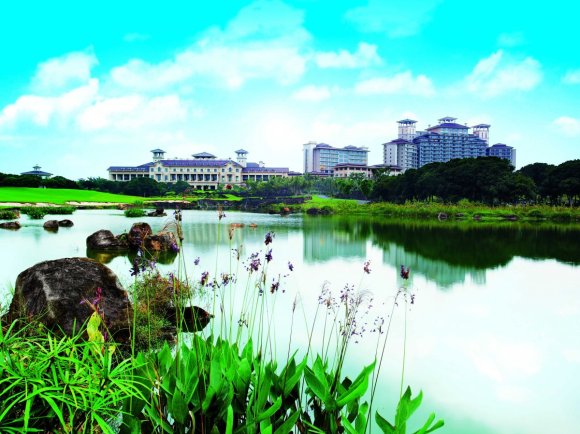 Courtesy of Mission Hills Group
Plus, if you’re not into playing a round, there’s also a spa, volcanic hot springs, or aquatic theme park. The Guinness World Records says that Mission Hills Haikou is the “World’s Largest Spa and Mineral Springs”.
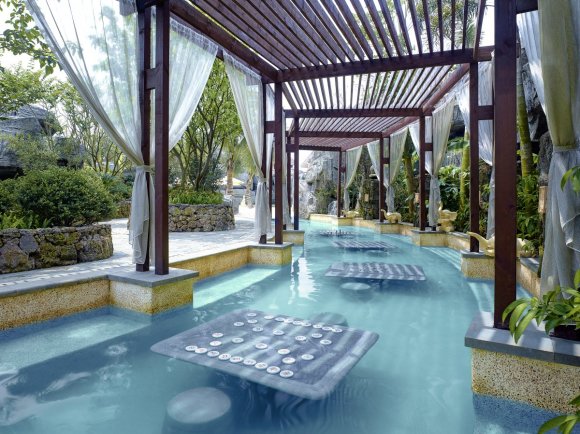 Courtesy of Mission Hills Group
The golf courses are spectacular. This is the Blackstone Course, which is a 350 acre golf course with rolling terrain and lots of irregular turf and rock.
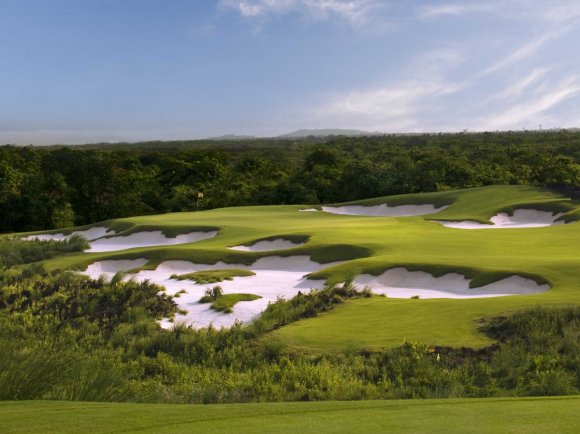 Courtesy of Mission Hills Group
There’s also the Sandbelt Trails, which is patterned off of Australian Sandbelt courses and is easily walkable.
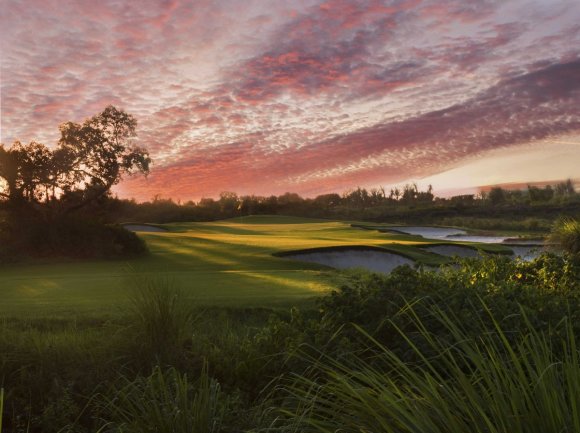 Courtesy of Mission Hills Group
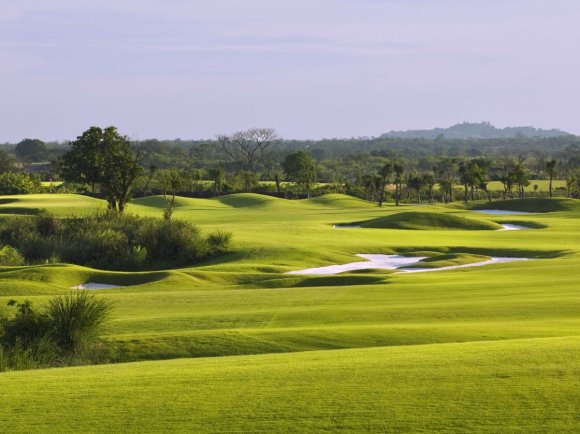
The Vintage course looks like an old, turn-of-the-century golf course with heavy vegetation.
 Courtesy of Mission Hills Group
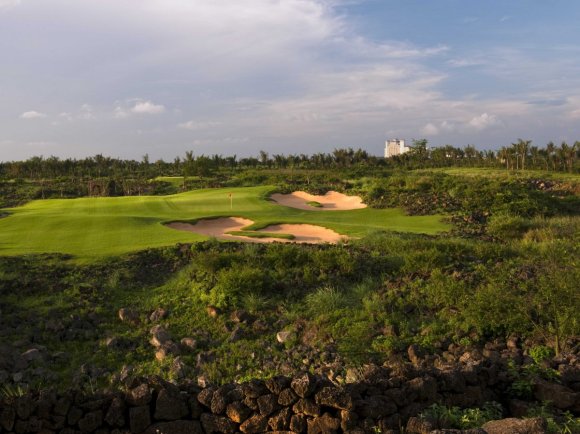
Then there’s the Stepping Stone course with lots of lava rock and sand.
 Courtesy of Mission Hills Group
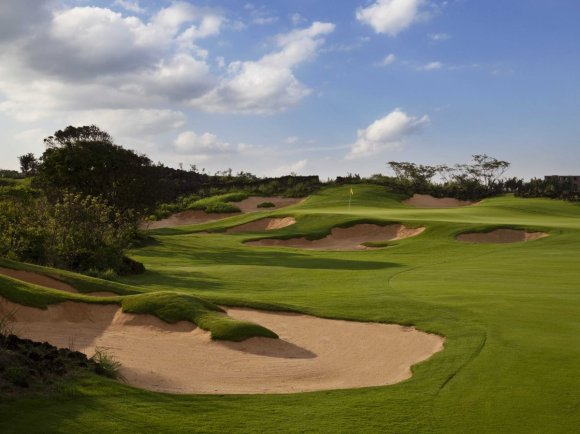
The 7,400-yard Lava Field course has lots of tough turf and bunkers.
 Courtesy of Mission Hills Group
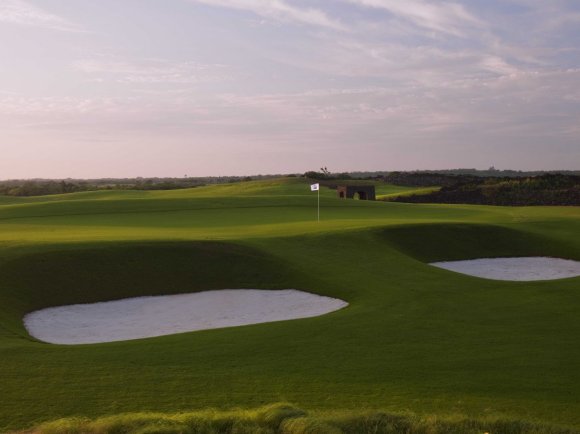
The Meadow Links course was based on traditional US courses with “Church Pew” bunkers and native grasses.
 Courtesy of Mission Hills Group
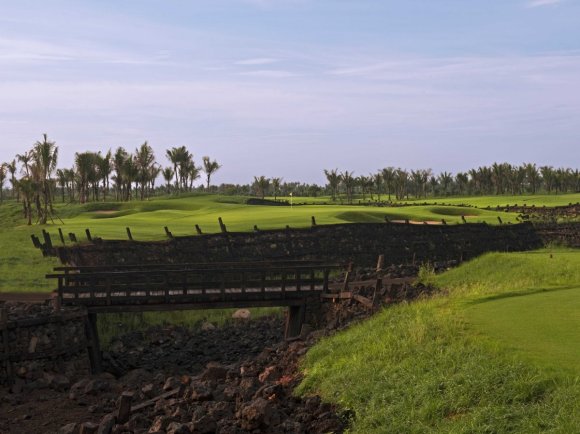
The quirky Stone Quarry course has dramatic landscape details like coal cars, abandoned mining equipment, and railroad tracks.
 Courtesy of Mission Hills Group
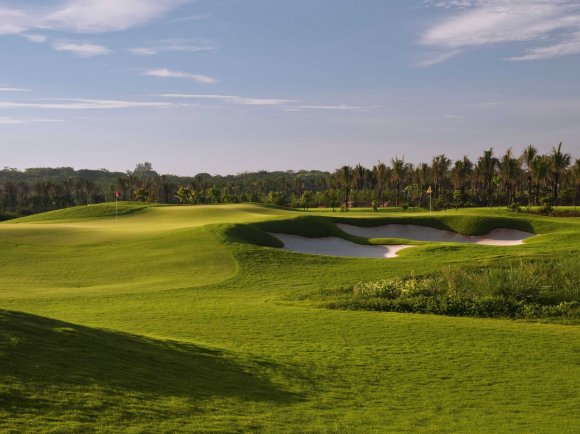
With two pins at each green, the Double Pin course was designed to offer options. One is easy and one is difficult making this course good for players of all levels.
 Courtesy of Mission Hills Group
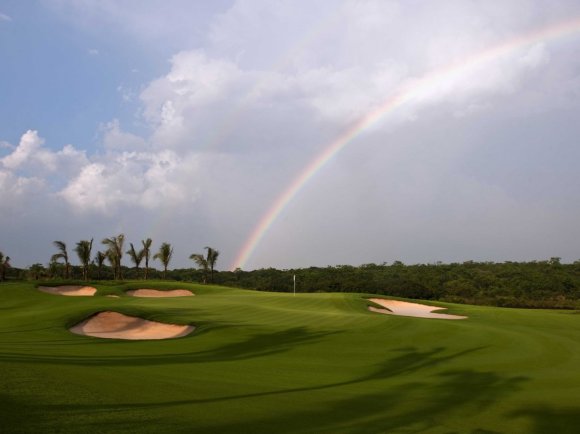
The gorgeous Preserve course has palm trees and rolling hills.
 Courtesy of Mission Hills Group
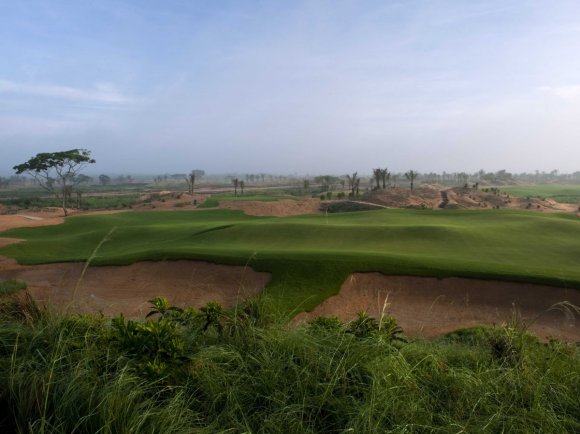
And lastly, the Shadow Dunes course lives up to its name with lots of sand dunes and undulating ground.
 Courtesy of Mission Hills Group
The Mission Hills Group proves not only that golf in China is booming, but that it’s a Western luxury that isn’t going anywhere.
 Courtesy of Mission Hills Group