
NEC’s creative collaboration with digital artist Atsuki Segawa shows us what it might have looked like if computers existed in Japan during the Edo Period!
We’ve previously introduced on our site the unique art produced by Segawa, who also works under the name Sanjushichi Segawa. Once again, he’s brought some ukiyo-e drawings to life, this time in a promotional campaign by information technology company NEC for their line of LAVI computers.
Segawa’s GIF animations, which can be seen on NEC’s special campaign site, feature LAVI products in scenes from Edo Period Japan (1603–1868) and are based on ukiyo-e works by masters such as Katsushika Hokusai and Utagawa Hiroshige.
And now, without further ado, let’s take a look at the moving art that incorporates computers into life during the Edo Period:
1. Christmas Shopping
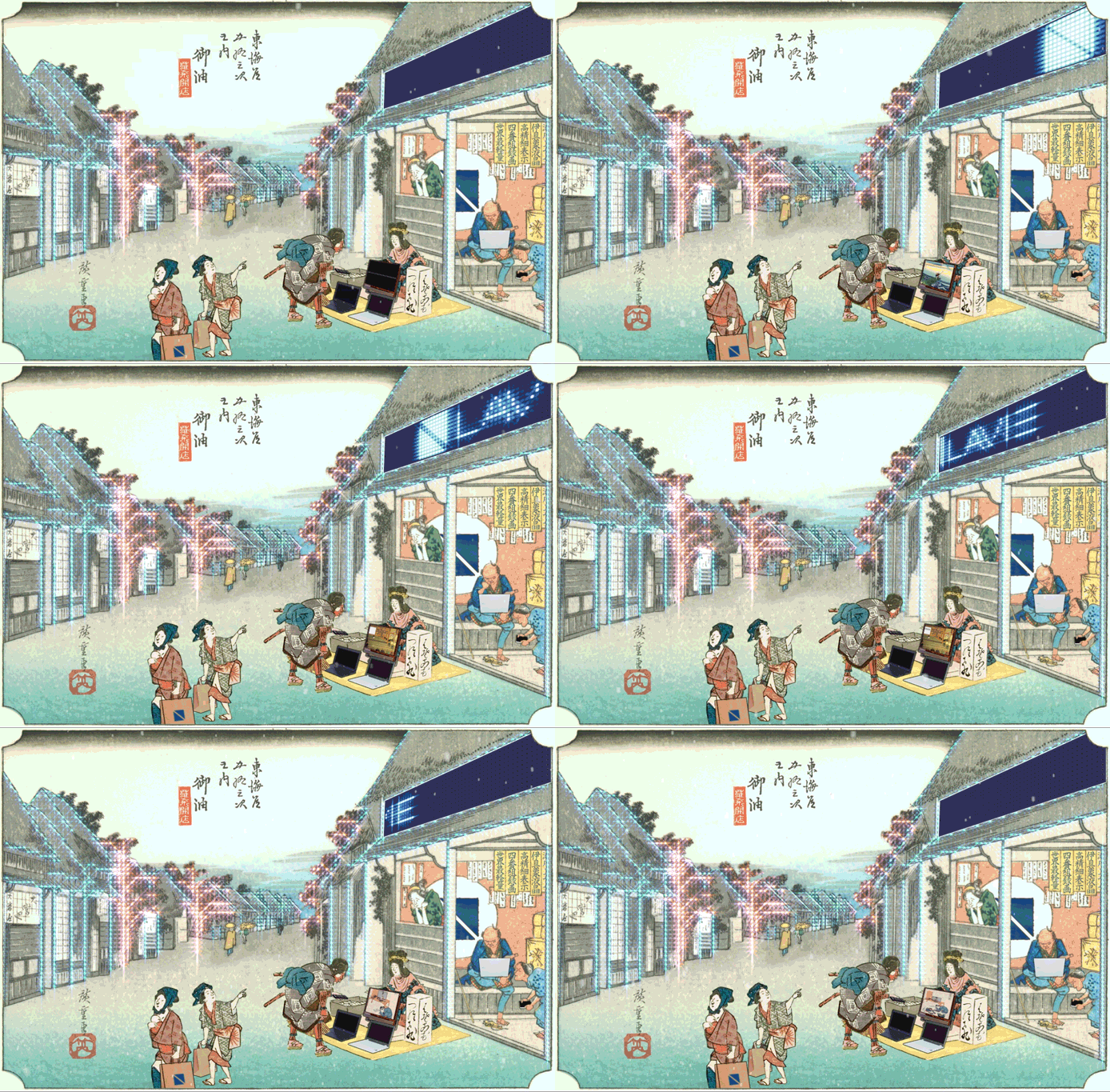
This piece is based on Utagawa Hiroshige’s depiction of the Goyu-shuku post station among the 53 Stations of the Tōkaidō Route (Tōkaidō Gojusantsugi Goyu). It shows the town decorated in Christmas lights with LAVI products being promoted as holiday presents at the storefront. The narrow wooden signs hanging in the shop have advertising written on them in small letters, such as “Most lightweight in the world”, “Records up to four programs” and “High definition display”.
2. The Digital Terakoya (School)
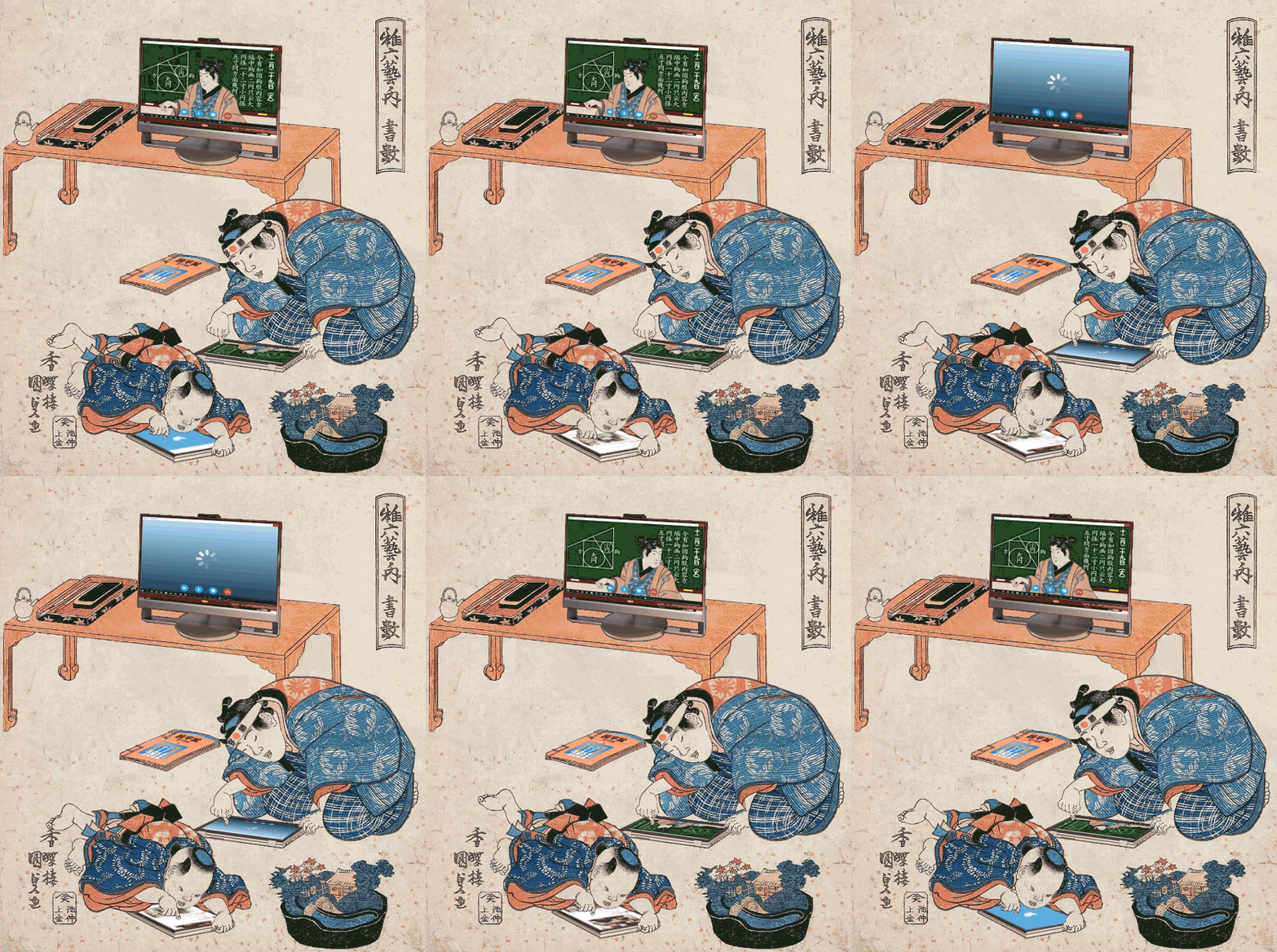
This picture which shows children studying in what appears to be a classroom setting is based on Utagawa Kunisada’s work Osanarikugei no Uchi, Sho Sū, a title which indicates that in the original painting, children are studying calligraphy (sho) and math (sū) among the six basic necessary children’s educational subjects (osanarikugei). The scene is what you might expect to see in a typical terakoya, private institutions that offered education to the public during the Edo period. Interestingly, the problem shown on the large monitor on the desk is an actual geometry question (yes, it can actually be solved!) that was submitted as a mathematical offering in 1811 to the Haruna Shrine in Gunma Prefecture about 100 kilometers northwest of Tokyo.
3, New Product Launch
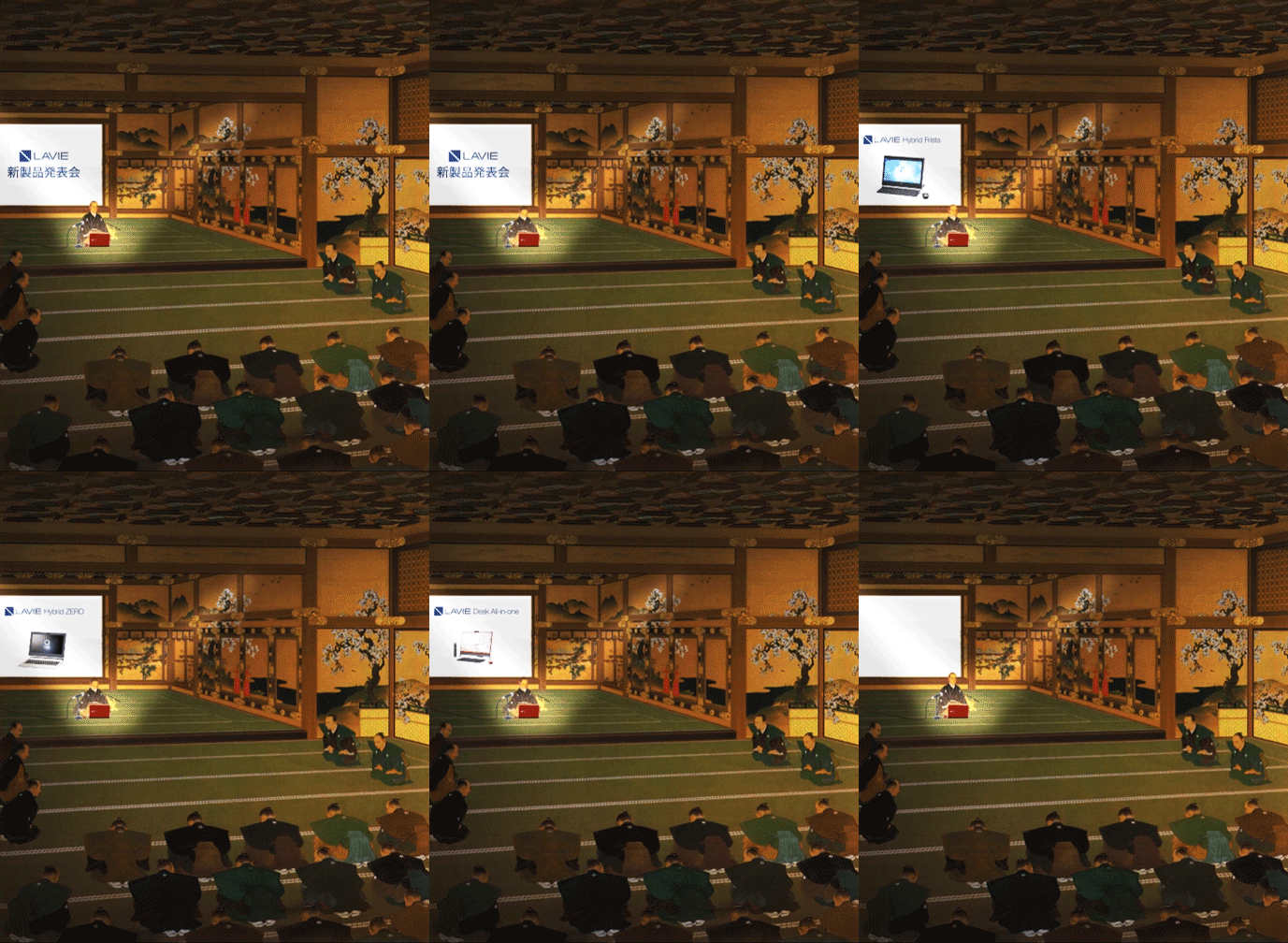
This piece is based on a painting that is instantly recognizable to most people in Japan, the Taisen hokan-zu, which captures an immensely important moment in Japanese history. The original paining by Tanryo Murata depicts the event that occurred in 1867 known as Taisei Hokan, in which political power was formally restored to the Emperor from the Tokugawa Shogunate that ruled Japan during the Edo Period, signifying the end of the age of the shoguns. (To be precise, the painting apparently shows the Shogun on the day before the actual Taisei Hokan, but this is the picture that Japanese people think of when we talk about the event.) But here, Segawa has turned the historic occasion into a presentation for new product launch — quite amusing and very 21st century!
4. Made in Japan
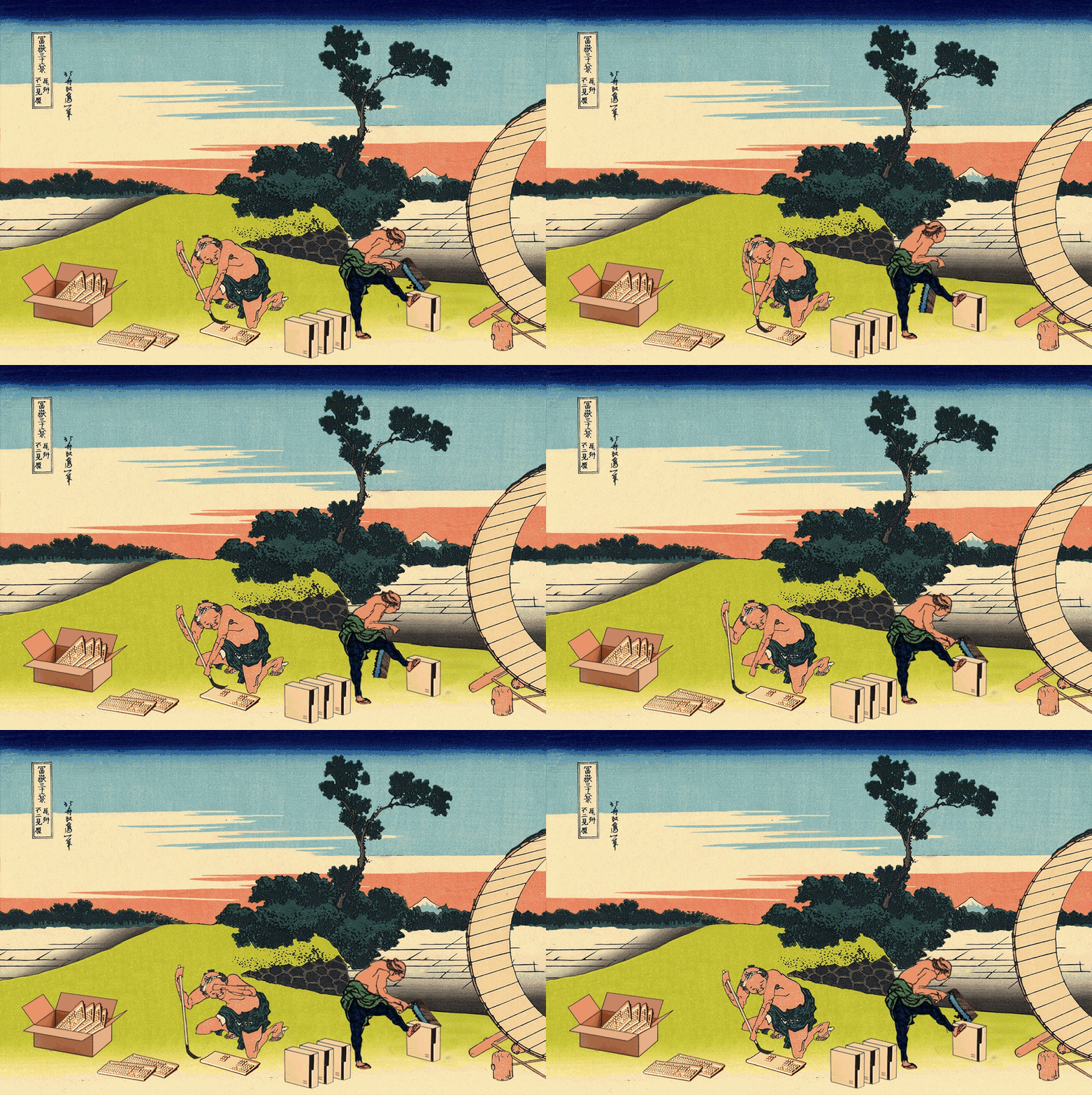
In this picture, Segawa whimsically shows workers cutting out keyboards and computers from wood, possibly symbolizing the high regard in which craftsmanship is held in Japan. This piece is based on one of the Thirty-six Views of Mount Fuji (Fugaku Sanjūrokkei) prints created by Katsushika Hokusai, specifically the one titled Fuji View Field in Owari Province (Bishū Fujimigahara). Additionally, Segawa has included elements from another of Hokusai’s Mount Fuji prints, Honjo Tatekawa, which also depicts men hard at work.
5. Valentine’s Day
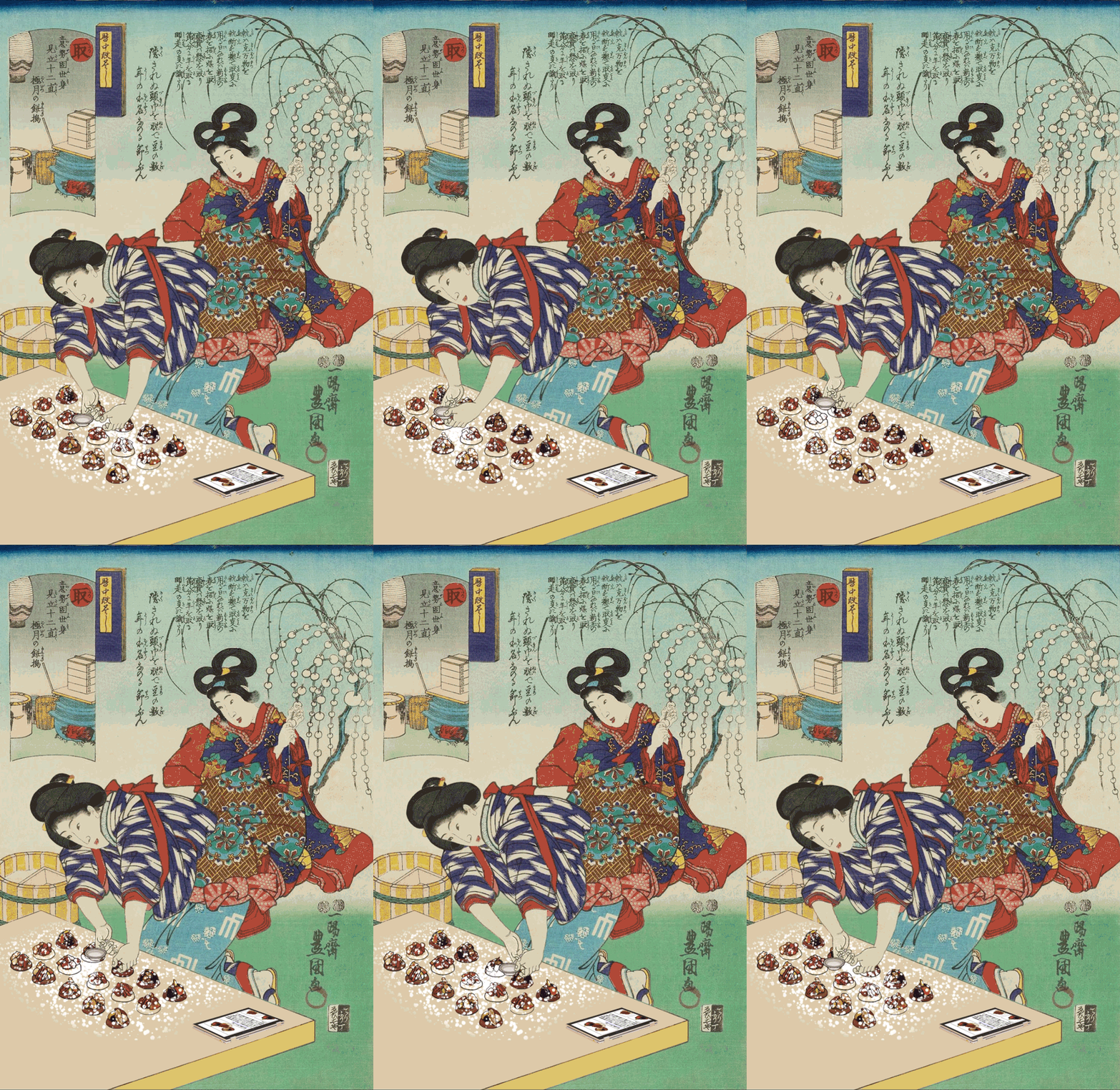
This picture based on one of the works by Utagawa Kunisada from his Isegoyomi Mitate Jûnichoku series of prints, in which he associates the Twelve Correspondences (jûnichoku) relating to calculations of lucky and unlucky days in Edo astronomy with the twelve months of the year. The full title of Kunisada’s original work is quite a mouthful — Ise Goyomi Mitate Jûnichoku Toru Gokugetsu no Mochitsuki Reki Chûdan Tsukushi (Making Rice Dumplings in the Twelfth Month from the series Scenes for the Twelve Correspondences According to the Ise Almanac, Middle Section), but it seems like Segawa had a bit of fun researching for this piece, as he says he went to multiple stores to buy chocolates and sweets, which he has drawn in here instead of the mochi rice dumplings in the original. And, naturally, the ladies in the picture are referring to a recipe for the sweet treats on their tablet device!
So, how did you like the playful moving works of art showcasing computers in the Edo Period? If Segawa’s animations are to your liking, there will be a few more of them released on NEC’s LAVI campaign site in the near future, so you might want to follow the site for updates. We hope you enjoy the artistic virtual trip back in time!
Source: LAVIE in EDO website via ARTIST DATABASE
All images: LAVIE in EDO website
 Macabre Japanese ukiyo-e reveal gothic side to art of the floating world【Pics】
 Asics Ukiyo-e x Manga sneakers combine modern and traditional Japan for Tokyo Marathon 2021
 Uniqlo Ukiyo-e Blue T-shirts: A cool-hued reinterpretation of some of Japan’s greatest paintings
 Stunning ukiyo-e art experience floats over to Tokyo for its latest exhibition
 Immersive ukiyoe exhibition in Osaka adds some scented flair
 7-Eleven Japan releases a crazy new viral sandwich: Chocolate Sprinkles and Whipped Cream
 Can you make butter by running with a pouch filled with cream? Let’s find out[Taste test]
 Japan now has a “for foreign tourists only” Mt. Fuji sightseeing train[Video]
 Fake police phone scam also highlights dumb stereotype about how foreigners speak Japanese[Video]
 Drinkable pixels: 7-Eleven Japan creates new convenience store juice with “pixels” inside
 Create a tiny Ghibli anime world on your bookshelf with new miniature papercraft art kits
 Daiso DIY dessert! 100 yen store’s super-easy mochi sweets kit is our new hero
 Legendary pie shop Anna Miller’s is returning to Tokyo, bringing iconic waitress uniforms with it
 Japan’s budget chain restaurant Saizeriya might just be the perfect first date location
 Public restrooms in Osaka to get in-stall video screens with ads
 Starbucks Japan releases new My Fruit³ Frappuccino at only 34 stores around the country
 Japanese onsen egg maker from 100-yen store Daiso needs to be on your shopping list
 Cherry blossoms begin blooming in Japan with record-early starts for sakura season
 Tokyo government organizes food truck event to clear out delinquent/homeless teen gathering area
 Nine amazing off-the-beaten-path cherry blossom spots in Japan for yaezakura and shidarezakura
 Stunning central Japan wisteria festival is like a purple fantasy straight out of a Ghibli movie
 When will the cherry blossoms reach full bloom in Japan this year?[Forecast]
 Studio Ghibli unveils new Rollbahn notebook in honour of Howl’s Moving Castle
 Studio Ghibli adds new anime tumblers to its cool streetwear brand in Japan
 Universal Studios’ Sailor Moon theme park attraction is finally coming to America
 Starbucks Japan unveils new sakura cherry blossom collection for hanami season 2026
 Train station platform ramen store closes its doors on half a century of history in Tokyo
 Studio Ghibli releases Catbus pullback keychain that runs like the anime character
 Nine great places to see spring flowers in Japan, as chosen by travelers (with almost no sakura)
 Starbucks Japan releases first-ever Hinamatsuri Girls’ Day Frappuccino
 Studio Ghibli adds new Mother’s Day gift sets to its anime collection in Japan
 Virtual idol Hatsune Miku redesigned with look that adds new elements and brings back old ones
 Survey asks foreign tourists what bothered them in Japan, more than half gave same answer
 Japan’s human washing machines will go on sale to general public, demos to be held in Tokyo
 Starbucks Japan releases new drinkware and goods for Valentine’s Day
 We deeply regret going into this tunnel on our walk in the mountains of Japan
 Studio Ghibli releases Kodama forest spirits from Princess Mononoke to light up your home
 Starbucks Japan releases new sakura goods and drinkware for cherry blossom season 2026
 Japan’s newest Shinkansen has no seats…or passengers [Video]
 Major Japanese hotel chain says reservations via overseas booking sites may not be valid
 Put sesame oil in your coffee? Japanese maker says it’s the best way to start your day【Taste test】
 No more using real katana for tourism activities, Japan’s National Police Agency says