Bear sacrifice, female tattooing and fish-skin boots are all hallmarks of Ainu culture. Join us as we learn about Japan’s indigenous people and watch an intriguing video about their way of life.
The Ainu are the indigenous inhabitants of Japan’s northern-most island of Hokkaido. The Ainu also populated the Kuril and Sakhalin islands. Hokkaido, called Ezo until 1869, was acquired by Japan during the Tokugawa Shogunate (1603–1868) purposing to be a buffer for protection from Russia. But it wasn’t until 1947 that Hokkaido was awarded the status of “prefecture” and only in 2008 were the Ainu formally recognized as indigenous people of Japan.
The Ainu had a particular culture and way of life that would be banished under the Edo government when they imposed strict orders for the Ainu to adopt mainstream Japanese life and customs. Although there are still an estimated 24,000 Ainu living in Japan, they remain a marginalized people who suffer from the effects of subjugation, deracination and compromised identity.
At the end of this article is a video of this indigenous people’s life of 100 years ago, giving us insight into the ways of the Ainu, their artifacts, customs and fascinating traditions. But before we watch it, we’ll give some background information you’ll need to understand many of the images that may not be so evident otherwise.
Ainu Relationship with Bears
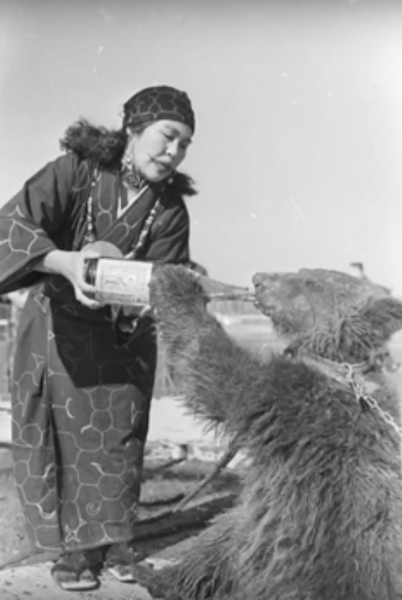
The Ainu revered nature and believed that gods descended upon earth disguised as animals, plants or other objects in order to provide for humans.
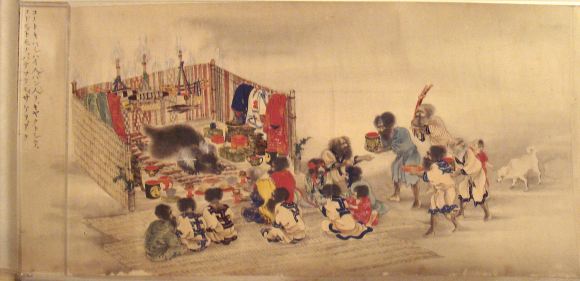
Ceremonies were held to send back the spirits of animals to heaven. One of these ceremonies, called iyomante, was held between January and February, when the Ainu sacrificed bears (or sometimes owls). Bears were hunted at the end of their hibernation period and cubs were captured from the dens. The people then raised the cubs themselves. When the cub-come-pet turned about two years old he’d be sent back to heaven in a bear sacrifice where he would relay the messages of the people to “the great father bear in the sky.” The bear’s meat and pelt was then used for food and clothing and his skull was attached to a pole for worship as a bear god.
▼ A Japanese scroll painting of an Ainu bear sacrifice (c. 1870).
Music and Dance
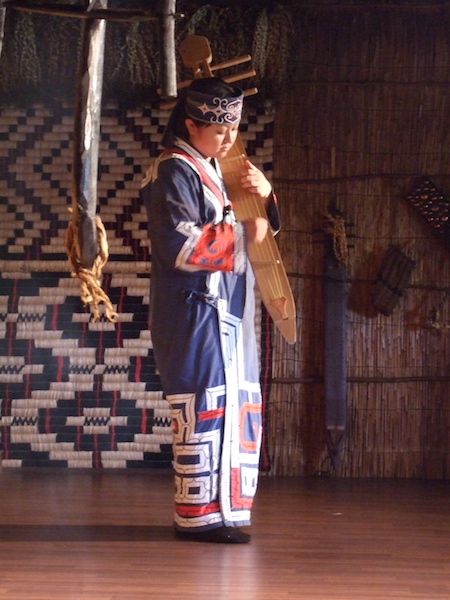
Music was performed on the mukkuri and tonkori stringed instruments.
▼ Tonkori
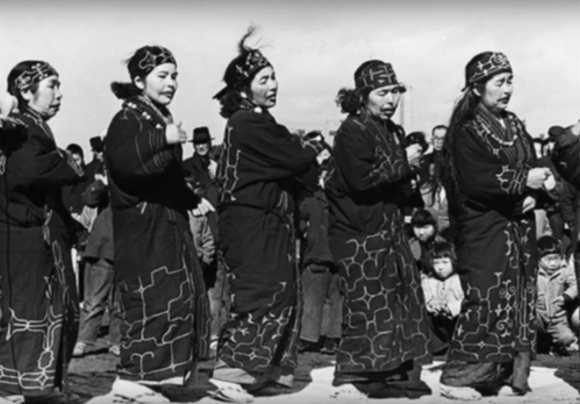
Some festival songs are performed by women while sitting in a circle drumming the lid of a container and singing words in a round or a chorus.
▼ Ainu women perform a dance in a group.
Marriage
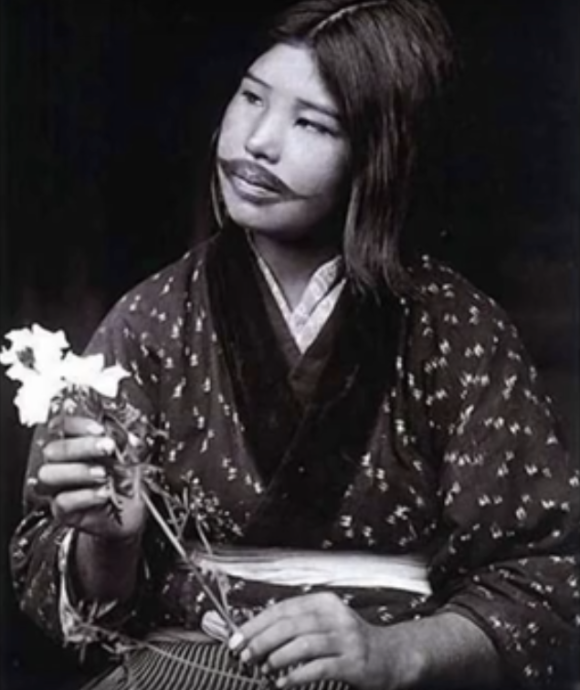
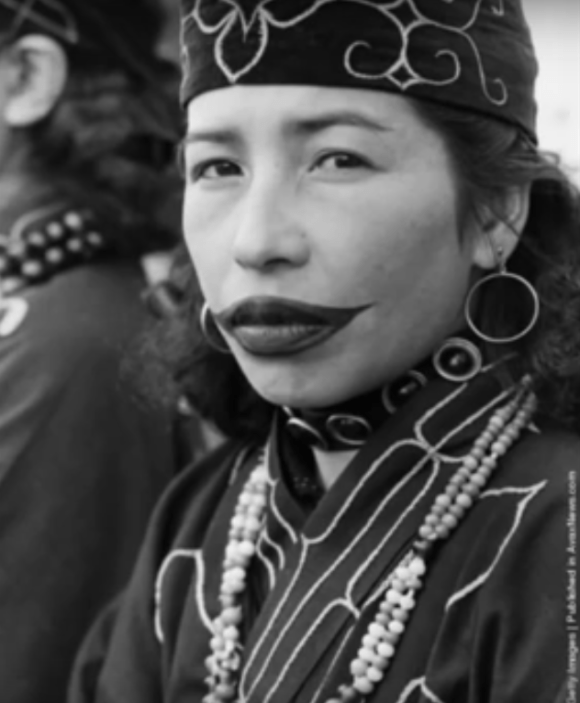
From the age of 12, women started a long process of tattooing, marking the lips, hands and arms over a three-year period. When the process was complete, usually around age 15 or 16, she was eligible for marriage. Tattooing was a woman’s domain and only women tattooed each other. The Japanese government banned tattooing in the Edo period for being “cruel” and, presumably, because tattooing was associated with felonious activity in Japan.
▼ An Ainu woman with tattooed lips
▼ Tattooed designs on hands.
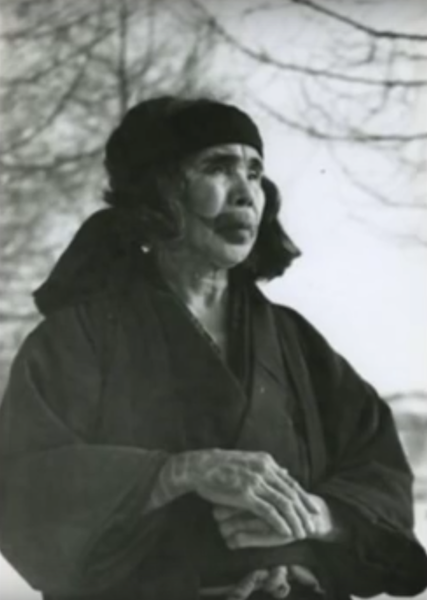
Some marriages were arranged by parents whereas others were mutual consent. When a man wanted to propose to a woman, he went to her house where a simple procedure was conducted to decide whether they’d be betrothed. The girl would serve her suitor a bowl of rice, and he would eat half the rice and hand the bowl back to her. If she took kindly to this gesture and finished the other half, that was taken as a sign of acceptance of the proposal. However, if she put the rice down next to her, ignoring it, that was a rejection.
▼ To finish the bowl of rice, or not to…
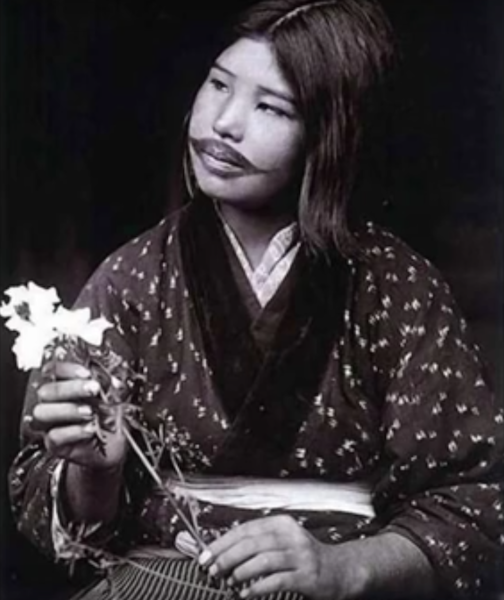
At the wedding ceremony, the couple would repeat the rice bowl ritual with both parties finishing their half.
When children came along, babies were given nicknames until around age two or three, after which they were bestowed a permanent name.
Traditional Dress
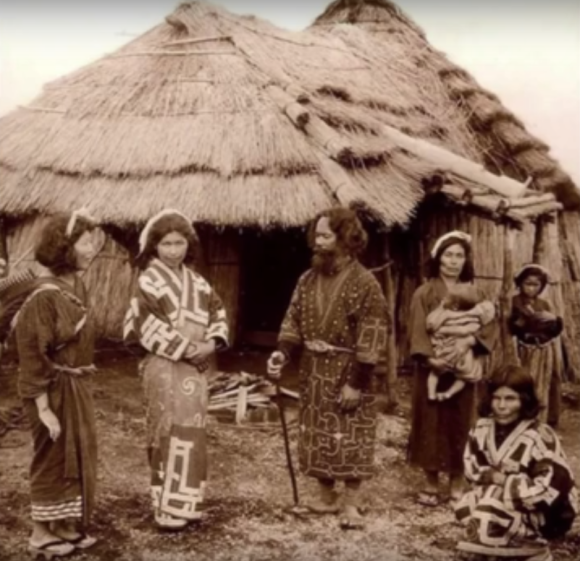
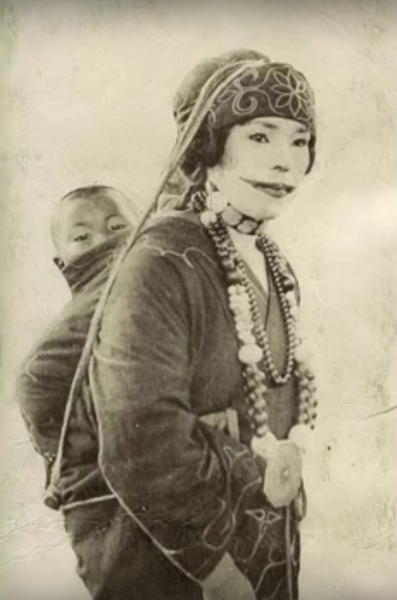
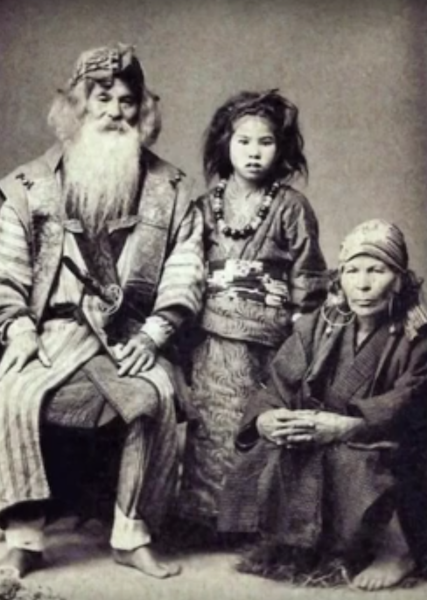
The original Ainu clothing was made from “birdskin” and feathers, as well as the hides of bear, deer, fox, seal, dog, and others. Some clothing was even fashioned from “fishskin” of salmon and trout. Other attire was crafted from plant material, such as wild rye and bark from Elm trees (called “attush.”) The Sakhalin Ainu wore white clothes made from the fiber of the Staff tree, for example. For formal occasions these plain clothes were adorned with applique and embroidery. As time went on and cotton was traded from mainland Japan, the applique and embroidery became more elaborate.
▼ Ainu women donned embroidered headbands, earrings and long necklaces of glass beads.
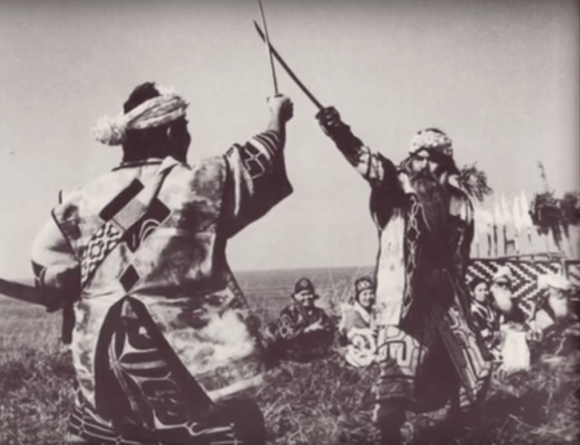
▼ Men often had beards and carried short swords which they draped over one shoulder.
Food
In the summers the Ainu fished for salmon and sea urchins and used wooden canoes. Salmon and trout were killed individually with spears, through basket traps or by damning rivers. In the ocean they hunted swordfish, tuna, sunfish, seals, dolphins and whales.
When the harsh winters came upon them, they turned to hunting bear, deer, and other animals which they boiled, dried and smoked. Smoking was done indoors over a fire, after which the meat was wrapped in birch bark and stored.
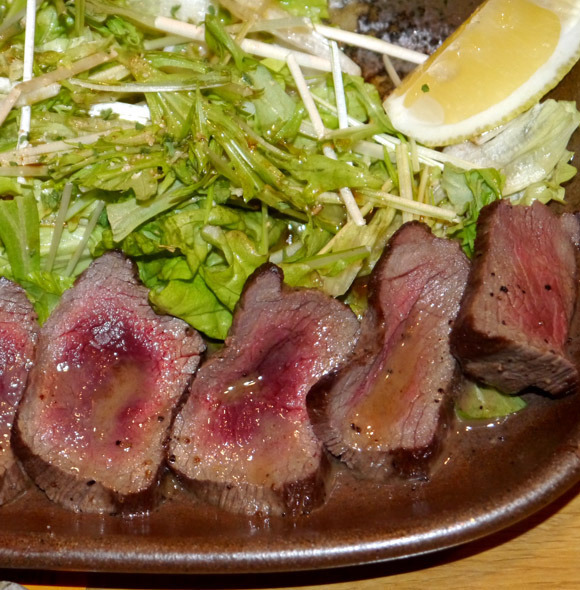
You can try Ainu food such as rataskep (a stewed dish with sauces), ohaw (soup), and mefun (salted fish entrails) at “HaruKor,” a restaurant in Tokyo.
▼ Venison steak at HaruKor.
Language
The Ainu have their own language, but not a writing system, resulting in a strong oral tradition of passing down stories and rules over generations. Many of Hokkaido’s place names are derived from Ainu language, such as Sapporo (dry, large river), Muroran (small slope), and Lake Toya (pond shore).
We’ll leave you now with this short video, which takes a nostalgic look at some of the Ainu’s cultural traditions through 100-year-old photos plus video footage. Enjoy!
Source: Ainu Museum, Poroto Kotan Ainu Museum (Shiraoi)
Images YouTube (jicken5) unless otherwise noted.
You may also enjoy:
Vanishing Japan: Five things to see before they disappear completely