Be careful when breaking out this one; sometimes the person you’re pitying doesn’t want your pity.
Many people interested in Japanese culture, whether they have much background in the language or not, will instantly recognize the Japanese word kawaii, which means “cute”. What you may not know is that this word originally evolved from an older word, kaohayushi, used to express an unbearable feeling of pity.
This expression, however, shifted in meaning and became one used to describe a feeling towards young children, who were considered helpless, yet adorable. Later, in the Edo Period, when female roles became more restricted, girls were also included in this description. In the later half of the 20th century, the word began to include animals and anyone else considered helpless. Following this, in the 70s and 80s, this “helpless”, or naïve and innocent, period became admired in girls, and Japan’s kawaii (cute) boom was born.
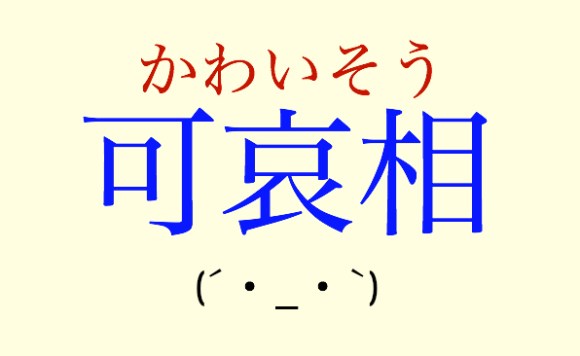
At some point, however, kaohayushi transformed into kawaii, and then kawaisou became the standard phrase spoken to express pity. It is important to note, though, that this pity has always been something felt by someone of a higher standing toward someone/something of a lower standing and is still, even if not consciously implied, a part of the word’s etymology today.
This is why, spurred by one Twitter user’s comments and a snapshot of a certain newspaper article written by a Japanese mom, netizens have been hotly debating the use of the word kawaisou.
The column in question was written by a mother who was hurt from some of the “kawaisou” remarks other women had made in passing about her son as he was walking home from school by himself and then again as he helped her carry a large pack of diapers. Although the son had volunteered for both tasks on his own, these women had hastily commented about how pitiable (kawaisou) his situation was, automatically assuming the mother had forced her son to do these things.
By misreading the situation, this common sympathetic remark quickly turned into one of judgment, implying a negative opinion of her parenting skills. She also worried that it could discourage her son from asserting his own independence out of fear of his helpful behavior being labeled “abnormal”.
▼ “I can really relate to this. Please give this a read.”
これは本当によく分かる。
— うたさん (@joker_budou) August 24, 2016
みんなに読んで欲しい。 pic.twitter.com/Pg9DCV8ezL
Many netizens rushed to the mother’s support, with comments like:
“This! When I was in the second grade and on a shopping trip with my mom, someone took a look at my brother in his stroller and said this. It felt like they were bad-mouthing my mom, and it made me feel sad.”
“Sometimes I wonder if, whatever someone is saying ‘kawaisou’ to, really warrants any pity or not…”
“This is true. When you say ‘kawaisou’, it’s from a position above that person.”
“I’ll try my best to not use this phrase from now on.”
Even a few English speakers, possibly learning Japanese, took the time to respond in agreement. Others, however, don’t see an issue with the phrase, saying that the real problem is more or less the way people say kawaisou, or citing the lack of an alternative phrase to use when trying to sound sympathetic.
For Japanese language beginners, it’s often enough of a problem to remember that kawaii (cute) is an exception to the ~sou (“It looks~”) adjective form. Many non-native speakers make the faux pas of saying “Kawaisou” (“How pitable!”) at least once, instead of “It looks cute!” as intended. Now they may need to also consider whether or not it’s socially acceptable to use the phrase at all, even in situations, that until, now were considered appropriate.
Source: Twitter/@joker_budou via Naver Matome, Tokyo Girls’ Update
Featured image by RocketNews24