
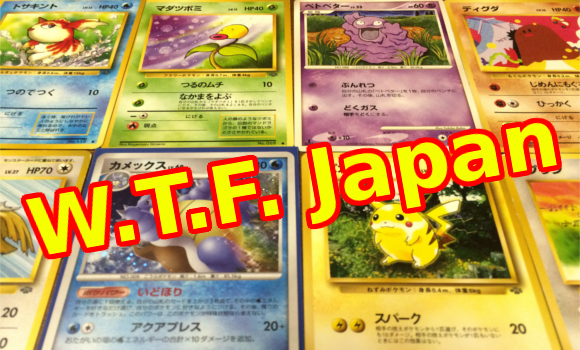
Which of the original 151 had their names translated best from Japanese to English?
The English translators of the original Pokémon games had a daunting task. They had to transform the 151 Japanese Pokémon names into new English ones that would get kids in the West just as excited to catch ’em all as they were in Japan.
Sure, a lot of Pokémon retain the same name in English as Japanese (like Pikachu), but there are many others that would be lost on an English audience (like Bulbasaur – Fushigidane in Japanese, a pun meaning “strange seed” and “mysterious isn’t it?”), or ones that would sound too alien (like Onix, which sounds weird in Japanese as Iwaaku).
For some English names, the translators created something completely new (like Ditto, originally Metamon), but for others they did what every translator aspires to: they found an English equivalent.
Some of the Pokémon name translations manage to convey the same feelings and nuances of the original Japanese, which is always an accomplishment. And today we’re going to finally recognize those hardworking translators and spotlight some of their best work with the top 5 most perfectly translated original 151 Pokémon names.
So let’s get to it! Starting off with…
Honorable Mention: Ekans (アーボ Aabo)

Ekans being “snake” backwards (and Arbok being “cobra” backwards) has been old news since elementary school. But here’s a fun tidbit that you might not have known: Ekans in the original Japanese is Aabo, which when you spell it backwards in the Japanese alphabet katakana, turns into Booa, as in “boa constrictor.”
Hats off to the translators for carrying over the same “backward spelling” in English. And extra credit too for not being lazy and naming Ekans as “Aob” – that would’ve been terrible. “Ekans” has a more menacing, hissing snake-like ring to it that fits the Pokémon itself, and its original Japanese name, perfectly.
#5. Blastoise (カメックス Kamekkusu ) and Charizard (リザードン Rizaadon)
Compro la caja de Charizard EX y me toca también Blastoise EX 😂😂😂 pic.twitter.com/Z8k9NQuoXX
— Lex 🇪🇬 | pokelexgnzlz en IG y BSky (@PokeLexgnzlz) July 20, 2016
Number five on the list is both Blastoise (Kamekkusu in Japanese) and Charizard (Rizaadon in Japanese). “Blastoise” delivers the same one-two punch in English that it does in Japanese: turtle word (kame in Japanese and “toise” from “tortoise” in English) plus “technology word” (mekkusu in Japanese being “mech” or “max,” and “blast” in English). The evocation in English is the same as in Japanese: a technology-enhanced turtle that sounds badass.
And the same goes for Charizard. The translators brought over the “lizard” part from Rizaadon, but made the ingenious choice to only use the “zard” half of “lizard” – the cooler sounding half. Combined with the “char” from the rest of the Charmander family, it makes for one of the most memorable names of all Generation One Pokémon.
Again, props to the translators for their efforts here. It would’ve been easy to just call Blastoise “Turtlemech” or “Tortimpact,” or call Charizard “Lizardon” or “Charlizar,” but they went the extra mile and found cool-sounding names that were still faithful to the original.
Also, did you know Blastoise is what keeps happy couples together? Huh. The more you know.
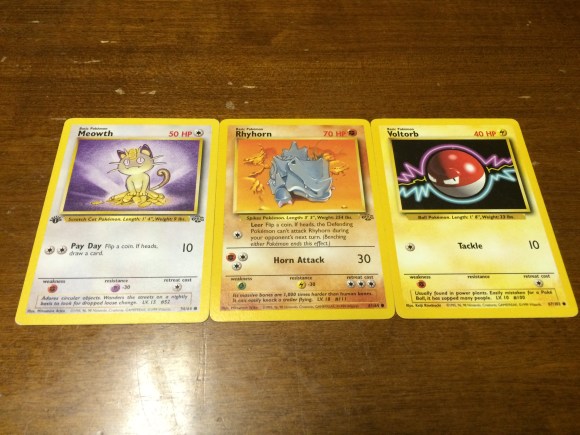
#4. Meowth (ニャース Nyaasu), Rhyhorn (サイホーン Saihoon), and Voltorb (ビリリダマ Biriridama)
 ©RocketNews24
Next up is a three-for-one, since all of them follow the same pattern: combining two halves describing the Pokémon together into one fabulous name.
For Meowth, (Nyaasu in Japanese) it’s as perfect a translation as you can get. Nyaa translates to “meow” and su is usually used to replace the “th” sound in English, making “Meowth” an English mirror image of Nyaasu. The other two are similar: Rhyhorn comes from Saihoon (sai meaning “rhino” and hoon meaning “horn”), and Voltorb comes from Biriridama (biriri meaning “electric sound” and dama meaning “round”).
These may not sound like the most impressive translations ever, but when translating, it’s really hard to find that perfect balance. Staying too close to the original gets you “Meows” or “Saihorn” or “Voltama,” whereas straying too far from the original gets you “Whiskerth” or “Horno” or “Circlectric.” These three managed to get it down perfectly with memorable names that just feel right.
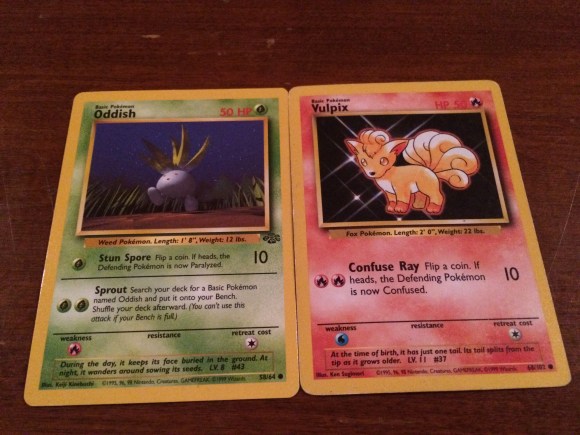
#3. Oddish (ナゾノクサ Nazonokusa) and Vulpix (ロコン Rokon)
 ©RocketNews24
Number three is two Pokémon names that really blow me away with just how subtly faithful they are to the original ones.
Oddish has a great name in Japanese (Nazonokusa, meaning “puzzling grass”), but it is utterly useless in English. Something like “Mysterigrass” or “Grazzle” (“grass” + “puzzle”) doesn’t really have any sort of ring to it. Instead the translators found a nice synonym for “strange/puzzling” in “odd” and the perfect vegetable to go along with it: “radish.” What we get is Oddish, an “odd radish” that sounds great and evokes the same feeling as the original.
Vulpix is Rokon in Japanese, combining roku (“six”) and kon (“the sound a fox makes”). Rather than trying to figure out what sound the fox makes in English, the translators chose to combine the cool word “vulpine” (“relating to foxes”) and put the “six” at the end, creating the nice little name “Vulpix.” I can only imagine the disaster that would have happened if they tried to remain too faithful here, ending up with something like “Sixgrowl” or “Foxsix.”
Blech. That’s almost as on-those-nose as “Ninetales.” Aaand I’m gonna need some Burn Heal.
#2. Hitmonchan (エビワラー Ebiwaraa) and Hitmonlee (サワムラー Sawamuraa)
รู้หรือไม่? ว่า Pokemon 2 ตัวนี้ Hitmonlee และ Hitmonchan ใช้นามสกุลของ Jackie Chan และ Bruce Lee มาอยู่ในชื่อด้วย pic.twitter.com/2Mn6VrvNQz
— ฟิ๊ฟฟี่ #HobBITCH® (@Fiffykung) July 30, 2016
Number two on the list is a great example of how translators not only transform one language into another, but one culture into another as well.
In Japanese, Hitmonchan is Ebiwaraa, named after the famous Japanese boxer Hiroyuki Ebihara. Sure, that’s great and all, but to the average Western kid the name is meaningless. The translators could’ve just ignored that cultural tidbit and named it “Hitmonpunch” or something, but instead they decided to remain faithful to the original and use the name of a martial artist that English-speakers might know: Jackie Chan.
The same thing goes for Hitmonlee: Sawamuraa in Japanese after Tadashi Sawamura the famous Japanese kickboxer. Rather than go with the bland “Hitmonkick,” they used a different, more familiar fighter’s name: Bruce Lee.
Keeping these moments of realization that are present in the original alive in the translation is something that goes a long way to making the final product more memorable and less generic. But for me, the best ah-ha moment lies with the #1 best translation.
And the #1 most perfectly translated Pokémon name is…
.
.
.
.
.
.
.
.
.
.
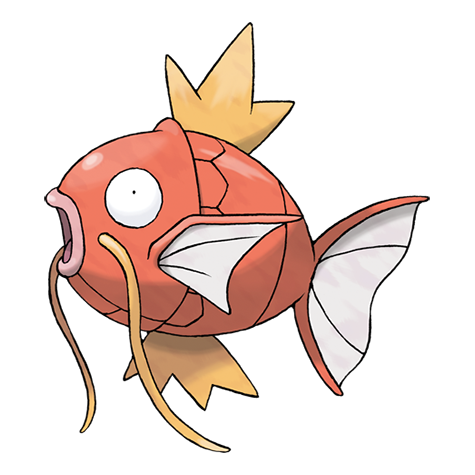
1. Magikarp (コイキング Koikingu)
Wait! Don’t go to flame me in the comments just yet. Please hear me out first.
Magikarp has a great name in Japanese: Koikingu (meaning “carp king”). What makes it so good is that it gets across what the Pokémon is (a carp-like creature) and that there is something special about it (it’s a “king” after all). Back when the Pokémon games were first released, the internet wasn’t as widespread and most people’s parents didn’t want to splurge $20 on the player’s guide, so you had no idea what kind of Pokémon this worthless fish would evolve into. But since it had “king” in its name, implying there was something great about it, Japanese kids plugged away at leveling it up until they were finally rewarded with a Gyarados.
For the same thing to happen in the English version, the translators had to come up with a name that would give kids the same hint that there was something special about this guy. A name like “Carpking” or “Carprise” (“carp” + “surprise”) wouldn’t have accomplished that… but “Magikarp,” implying that there is something “magic” about this Pokémon, definitely does.
I’ll never forget when I first evolved my Magikarp into a Gyarados, not having any idea what it would turn into, motivated by its “magic” name alone. If the translators had chosen any other name, then I wouldn’t have that memory, or a sweet Gyarados on my team for that matter.
So there you have it, the top five most perfectly translated original 151 Pokémon names. If you’ve played the Pokémon games in other languages, what are some of your favorite translated names? Let us know in the comments so that we can all speak the universal language of Pokémon even more fluently.
References:ポケモン Wiki, Pokémon Database
Featured/top image: ©RocketNews24
In the meantime, give me a follow on Twitter and let me know if there’s any topics you’d like to see covered on W.T.F. Japan. See you next week!
 W.T.F. Japan: Top 5 most insane kanji place names in Japan【Weird Top Five】
 W.T.F. Japan: Top 5 most hilarious Japanese euphemisms 【Weird Top Five】
 W.T.F. Japan: Top 5 best Tamagotchi releases 【Weird Top Five】
 W.T.F. Japan: Top 5 most confusing Japanese compound words【Weird Top Five】
 W.T.F. Japan: Top 5 most difficult Japanese tongue twisters (with videos!) 【Weird Top Five】
 Japan’s best conveyor belt sushi restaurant of seven years ago has now, finally, come to Tokyo
 Japanese trains in Sapporo might be better than those in Tokyo, thanks to one special feature
 Lawson convenience store at popular tourist site is one of the most unusual in Japan
 Drink vending machines disappearing in Japan as number drops to lowest in 30 years
 Wisteria season starts early with blooming of Japan’s Great Wisteria in its beautiful garden
 Why is Yoshinoya called Yoshinoya?
 The world’s biggest Muji store opened in Hiroshima, and we went to check it out!
 Pringles Chocolate, but with a Japanese twist, is the snack hack you should be trying right now
 New Travelling Bento pouches turn your luggage into a Japanese lunch box
 Yakuzen ramen restaurant in Tokyo is very different to a yakuza ramen restaurant
 Japan reportedly adding Japanese language skill requirement to most common foreigner work visa
 Mt. Fuji decorated with a 500,000-flower pink carpet is Japan’s ultimate spring view
 Pokémon and Ikea Japan cross over into each other’s worlds with collaboration events
 Starbucks Japan closing only Shinkansen platform branch for popularity-triggered renovations
 You can assemble a well-balanced team of Pokémon, them eat them, thanks to Japanese cake chain
 30 Pikachus want to share a Tokyo hotel room with you that has separate Grass, Water, Fire spaces
 Man bites woman at cherry blossom park in Japan, dies shortly after
 7-Eleven Japan’s new baked-in-store sweet treat is only available in three parts of the country
 Peanuts and Coke becomes a viral hit in Japan, but is it a trend worth joining?
 Japan now has a special desk for people who work at home with a pet cat[Photos]
 Famous Tokyo cherry blossom spot installs view-blocking screens to fight overcrowding[Video]
 Uniqlo announces new T-shirts for One Piece, Naruto and more for manga publisher’s 100th birthday
 Train station platform ramen store closes its doors on half a century of history in Tokyo
 Starbucks Japan releases new My Fruit³ Frappuccino at only 34 stores around the country
 Krispy Kreme releases Super Mario doughnuts in Japan for a limited time
 Japanese onsen egg maker from 100-yen store Daiso needs to be on your shopping list
 Survey asks foreign tourists what bothered them in Japan, more than half gave same answer
 Japan’s human washing machines will go on sale to general public, demos to be held in Tokyo
 Starbucks Japan releases new drinkware and goods for Valentine’s Day
 We deeply regret going into this tunnel on our walk in the mountains of Japan
 Starbucks Japan releases new sakura goods and drinkware for cherry blossom season 2026
 Studio Ghibli releases Kodama forest spirits from Princess Mononoke to light up your home
 Japan’s newest Shinkansen has no seats…or passengers [Video]
 Major Japanese hotel chain says reservations via overseas booking sites may not be valid
 Put sesame oil in your coffee? Japanese maker says it’s the best way to start your day【Taste test】
 No more using real katana for tourism activities, Japan’s National Police Agency says
 W.T.F. Japan: Top 5 most confusing Japanese counter words【Weird Top Five】
 W.T.F. Japan: Top 5 confusing Japanese hand gestures【Weird Top Five】
 W.T.F. Japan: Top 5 hand gestures that Japanese people don’t understand【Weird Top Five】
 W.T.F. Japan: Top 5 confusing Japanese Internet slang words 【Weird Top Five】
 W.T.F. Japan: Top 5 offensive Japanese insults【Weird Top Five】
 W.T.F. Japan: Top 5 most ridiculous kanji handwriting shortcuts【Weird Top Five】
 W.T.F. Japan: Top 5 Japanese words with cool ancient origin stories【Weird Top Five】
 W.T.F. Japan: Top 5 most famous pet dogs in Japan【Weird Top Five】
 W.T.F. Japan: Top 5 kanji with the longest readings 【Weird Top Five】
 W.T.F. Japan: Top 5 myths about learning Japanese【Weird Top Five】
 W.T.F. Japan: Top 5 most annoying sounds in Japan 【Weird Top Five】
 W.T.F. Japan: Top 5 nicest sounds in Japan【Weird Top Five】
 W.T.F. Japan: Top 5 hardest Japanese habits to break 【Weird Top Five】
 W.T.F. Japan: The top five “sora” references of all time! 【Weird Top Five】
 W.T.F. Japan: One year anniversary special! Top 5 W.T.F. Japan articles 【Weird Top Five】
 W.T.F. Japan: Top 5 creepiest Japanese insects 【Weird Top Five】