

English has “heads” of lettuce and “loaves” of bread, but Japanese is even worse.
Last week on W.T.F. Japan we looked at the top five budget Japanese Halloween costumes. But this week the spooky holidays are over and we’re back doing what we do best: pointing out the craziness that is the Japanese language.
Japanese may have a lot of insanity to it, but one thing that often flies under the radar are the counter words. In English we have some counter words too (like an “ear” of corn or a “pair” of pants), but Japanese has counter words for everything: small animals, big animals, flat objects, machinery, and so, so much more.
That’s why today we’re counting down the top five most confusing Japanese counter words. Maybe reading this will make them clearer, or maybe it will just make everything worse. Either way, one thing’s for sure: you’ll never count the same way again.
So let’s get to it! Starting off with…
Honorable Mention: The deceptively difficult counter “tsu” (つ)
 GAHAG (Edited by RocketNews24)
When most students first learn about Japanese counter words, their eyes widen in terror. The sheer number of them can be intimidating: one for counting little things, one for counting electrical equipment, one for counting people, and so on.
But then they breathe a sigh of relief after learning that there’s a generic counter word that can be used for pretty much everything: tsu. Counting houses? Use a tsu! Counting tissue boxes? Use a tsu! And there was much rejoicing.
However… that convenience comes at a price. In order to use the tsu counter, you have to learn an entirely new number system. You can’t just put the word for “one” (ichi) and tsu together to get ichi-tsu and call it a day.
Oh no, instead you have to use the other word for “one” (hito) with tsu to make hito-tsu. And forget using ni for “two,” that’s futa now to make futa-tsu. And using san for “three?” Haha, you’re funny; that’s mi now for mittsu.
Since the different numbers aren’t really part of the counter word itself, tsu is only an honorable mention. Compared to the other items on this list, having to learn a whole new number system actually makes some sense.
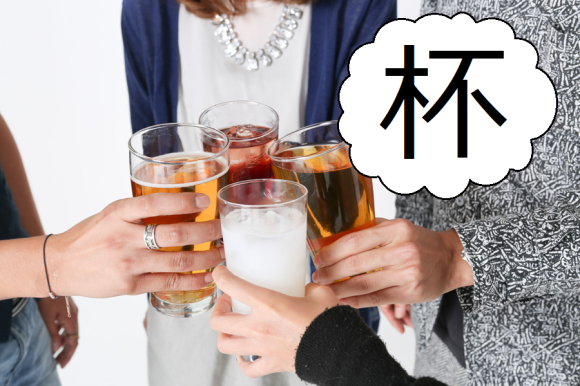
#5. Why are these the same? “Hai”(杯)
 GAHAG (Edited by RocketNews24)
One of the first counter words that I learned was hai. It’s used to count glasses of drinks and can be very useful for when you want to scream “another round of drinks!” (mō ippai!).
But then later I went on to find out that hai is also used to count… cephalopods. Yup, if you’re counting octopus, squids, or anything else that’s slimy, lives in the ocean, and has a bunch of tentacles, chances are it’s counted the same way as you would count glasses of drinks.
▼ Yes… I can, uh, totally see the resemblance there.
 Wikimedia Commons/Citron, Wikimedia Commons/Carl Fredrik
(Edited by RocketNews24)
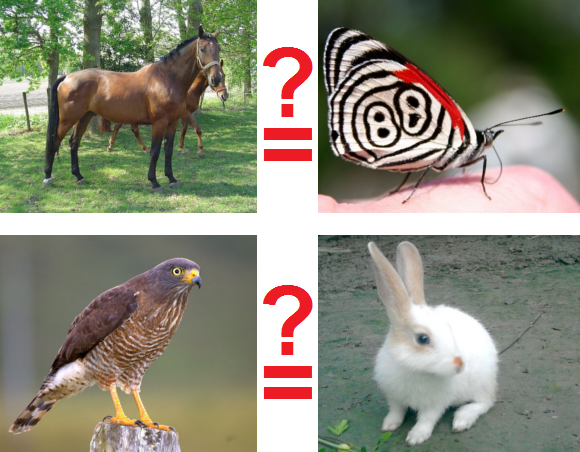
But hai isn’t the only counter that seems normal at first then bites you in the butt later. Take tō for example. It’s used to count big animals like cows, horses and whatnot.
“Great,” you think, “that makes sense.” Until you find out that it’s also used to count… butterflies. No other insects or small/medium-sized animals. Just… butterflies.
Oh and the counter wa, used to count birds, hey guess what… also used to count rabbits.
▼ Japanese. Come here for a minute.
We need to talk, buddy.
Wikimedia Commons/Flickr upload bot, Wikimedia Commons/charlesjsharp,
Wikimedia Commons/Engr Read Hossain, Wikimedia Commons/Liuthalas
(Edited by RocketNews24)
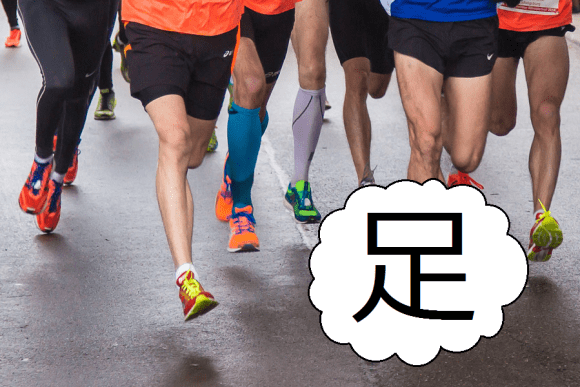
#4. The one-legged weirdo “soku” (足)
 GAHAG (Edited by RocketNews24)
Maybe this one is just me, but when I first learned the counter soku (“a pair of socks/shoes”), I just couldn’t make it click. It’s mostly because the kanji used for soku (足) means “leg/foot.” So when you put ichi (“one”) and soku (“foot”) together as issoku, it feels like it should mean “a sock/shoe for one foot,” not two.
In English we also have the awkward saying “a pair of pants,” even though no one in their right mind would ever wear a single “pant.” But if we changed it to “a leg of pants/socks” like in Japanese, then I think a lot of English-learners would imagine it only referred to a single pant/sock.
▼ Which is only acceptable when referring to an
adorable cat wearing a sweater made out of a single sock.
Kitten Rescued From Hurricane Matthew Gets a Sweater Made From a Tiny Sock! https://t.co/UC7UiF3VXB pic.twitter.com/LiTSYUMzaL
— One Green Planet (@OneGreenPlanet) October 12, 2016
So which language is worse? Japanese that makes it feel like you only have half as many shoes as necessary, or English that makes it feel like you have twice as many pants?
Personally, I have no idea. I’m confused right now as it is.
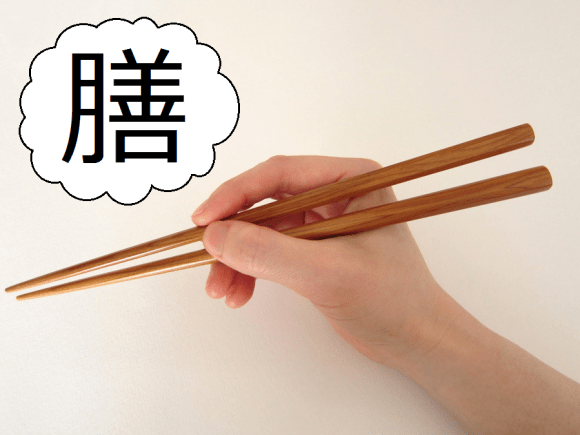
#3. Oddly specific “zen” (膳)
 GAHAG (Edited by RocketNews24)
So far we’ve seen counters for drinks (and cephalopods), big animals (and butterflies), birds (and bunnies), and even pairs of footwear. How much more specific could these counter words get?
A lot more specific, as it turns out. I have a non-Japanese friend who used to work at a Japanese grocery store, and when she sold sushi to customers she had to ask how many pairs of chopsticks they wanted. She used the generic counter when asking “how many” they wanted, until she was informed by her boss one day that chopsticks have their own special counter word: zen.
▼ “I’ll have one zen of chopsticks, please.”
“Alas, just one. What is the sound of one chopstick being used?”
“Uh, I can show you if you just stop meditating and hand me the chopsticks.”

And the specific counter words don’t end there. There’s kin (斤)to count loaves of bread, kan (貫)to count nigiri sushi, kon (献)to count shots of a drink, and if you want to dig real deep, there’s fude (筆)which is used to count the number of times you write/draw something on a piece of paper without removing your brush/pencil.
▼ “Bleh! I’m ze Count and zis is too much even for me!”
all jacob's avi reminds me of is the count from sesame street 👀 pic.twitter.com/Fc1Zdm55f8
— lo (@digitalg1rl) October 7, 2016
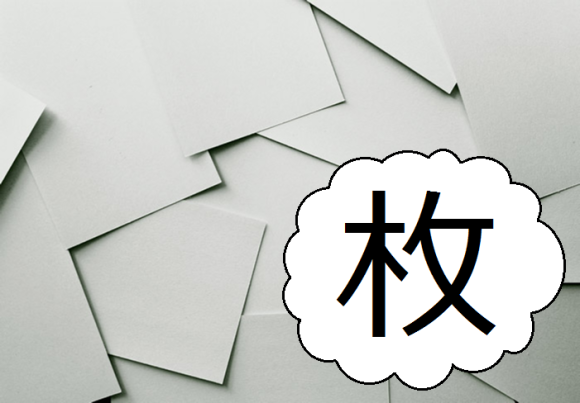
#2. Flat and way too broad “mai” (枚)
 GAHAG (Edited by RocketNews24)
Mai is another counter word that students learn early on that can be surprisingly confusing. It’s usually used to count flat, thin objects like pieces of paper and photographs.
Okay, that’s no problem… but then it’s also used to count plates. I mean I guess that makes sense… but wait, it’s also used to count shirts.
▼ Pretty sure there’s no way that shirt
is still countable with a mai.
I mean there’s different counters for chopsticks, bread, and octopuses/drinks… but they couldn’t have a different counter for plates or clothes?
“But wait!” you might say. “Having so many things fall under the one mai umbrella makes it easier. You can count paper, shirts, mirrors and boards all with the same word.”
If only that were so. Don’t forget, you count mirrors, board games, screens, masks, walls, tennis courts and more with men (面) instead.
▼ So is a Macbook thin enough to be a mai? Or is it a men because of the screen?
Or it is a dai because it’s a machine? Eh screw it, just break out the generic tsu!
Oh. And then there’s chō (丁 and its alternative 挺), which basically just counts everything:
▼ Tofu, sumo matches, guns, candles, ink, shamisen, tools, servings,
rickshaws, barrels of sake and soy sauce… oh and scissors and violins too.
https://twitter.com/byefelilah/status/788894129488957440
And the #1 most confusing Japanese counter word is…
.
.
.
.
.
.
.
.
.
.
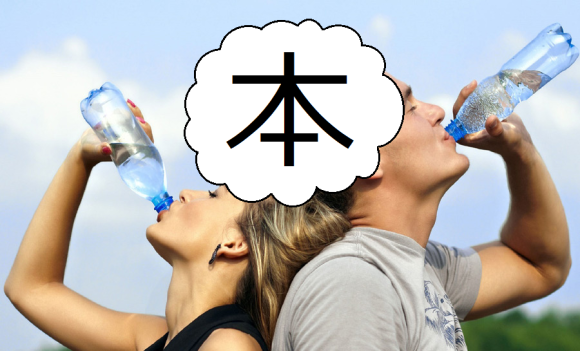
1. Cylindrical insanity “hon” (本)
 GAHAG (Edited by RocketNews24)
Okay, so you tell me if this makes any sense:
Hon is the counter for long cylindrical things, but it uses the kanji for book/origin (本) for some reason.
The counter for books is satsu (冊)which is completely different and has nothing to do with hon.
Anyway, so hon is used to count long cylindrical things, you know, like pencils, bottles, guitars (?) rivers (??), roads (???), and train tracks (EXCUSE ME!).
It’s also used to count other cylindrical things like home runs (!), articles on websites (!!), phone calls (!!!), and games in a match – but not the rounds themselves, those are counted with kai (回) of course.
Oh and ties, like the ones you wear around your neck? Yup, those aren’t counted with the flat-counter mai used for shirts and stuff. Nope, they use hon instead.
And that’s not even getting into the mess that happens when hon is actually paired with numbers and starts changing sounds all over the place. One hon is ippon, three hon is sanbon, six and eight hon are roppon and happon, and a thousand hon is senbon. Of course, hon isn’t alone in these phonetic changes, but it really does feel like the icing on the confusing cake.
▼ There’s a penguin… and bacon… and orange snowflakes…
I don’t understand this cake, nor its counter word at all!
So there you have it, the top five most confusing counter words in Japanese. Have you ever struggled with counter words before? Let us know in the comments so that we can commiserate together on how bad we all are at using numbers.
References: Wikipedia
Top image: GAHAG (Edited by RocketNews24)
We’ll be back next Thursday with some uniquely Japanese pets. In the meantime, give me a follow on Twitter and let me know if there’s any topics you’d like to see covered on W.T.F. Japan. See you next week!
 W.T.F. Japan: Top 5 most confusing Japanese compound words【Weird Top Five】
 W.T.F. Japan: Top 5 confusing Japanese Internet slang words 【Weird Top Five】
 W.T.F. Japan: Top 5 Japanese words with cool ancient origin stories【Weird Top Five】
 W.T.F. Japan: One year anniversary special! Top 5 W.T.F. Japan articles 【Weird Top Five】
 W.T.F. Japan: Top 5 most difficult Japanese tongue twisters (with videos!) 【Weird Top Five】
 Can a downtown Tokyo super sento bathhouse beat a hotel for a one-night stay?
 Pokémon and Ikea Japan cross over into each other’s worlds with collaboration events
 Two food hacks take Japan’s convenience store fried chicken to amazing new sandwich heights
 Starbucks Japan unveils epic Frappuccino hunt with five to find in new Star birthday campaign
 Beautiful Ghibli earrings allow you to finally reunite two of the studio’s star-crossed lovers
 Nephew receives SD card after his uncle passes away, finds treasure trove of gems from the past
 Which Gundam is the favorite for fans in different countries? Gundam election announces results
 Tokyo turns its phone booths into free Wi-Fi hotspots, and here’s how to use them
 Which convenience store onigiri rice balls are the most popular? Survey reveals surprising results
 Is this the most relaxing Starbucks in Japan?
 Tokyo’s best museum for foreign travelers finally reopens after being closed for four years
 Pokémon lacquerware series expands for Year of the Horse with new handcrafted design[Video]
 Famous Tokyo cherry blossom spot installs view-blocking screens to fight overcrowding[Video]
 Tokyo subway and almost all Tokyo train lines now accepting credit card tap payments
 Fading Tokyo – Searching for signs of the Showa era as local neighborhoods evolve[Photos]
 Totoro Fund line of beautiful artwork and apparel lets you help the real-world Totoro Forest
 Studio Ghibli adds new My Neighbour Totoro 2026 Corn Gift to its anime store for Mother’s Day
 Japan now has a special desk for people who work at home with a pet cat[Photos]
 Uniqlo announces new T-shirts for One Piece, Naruto and more for manga publisher’s 100th birthday
 Train station platform ramen store closes its doors on half a century of history in Tokyo
 Starbucks Japan releases new My Fruit³ Frappuccino at only 34 stores around the country
 Studio Ghibli releases Catbus pullback keychain that runs like the anime character
 Krispy Kreme releases Super Mario doughnuts in Japan for a limited time
 Japanese onsen egg maker from 100-yen store Daiso needs to be on your shopping list
 Nine great places to see spring flowers in Japan, as chosen by travelers (with almost no sakura)
 Survey asks foreign tourists what bothered them in Japan, more than half gave same answer
 Japan’s human washing machines will go on sale to general public, demos to be held in Tokyo
 Starbucks Japan releases new drinkware and goods for Valentine’s Day
 We deeply regret going into this tunnel on our walk in the mountains of Japan
 Studio Ghibli releases Kodama forest spirits from Princess Mononoke to light up your home
 Starbucks Japan releases new sakura goods and drinkware for cherry blossom season 2026
 Japan’s newest Shinkansen has no seats…or passengers [Video]
 Major Japanese hotel chain says reservations via overseas booking sites may not be valid
 Put sesame oil in your coffee? Japanese maker says it’s the best way to start your day【Taste test】
 No more using real katana for tourism activities, Japan’s National Police Agency says
 W.T.F. Japan: Top 5 kanji with the longest readings 【Weird Top Five】
 W.T.F. Japan: Top 5 offensive Japanese insults【Weird Top Five】
 W.T.F. Japan: Top 5 most hilarious Japanese euphemisms 【Weird Top Five】
 W.T.F. Japan: Top 5 most annoying sounds in Japan 【Weird Top Five】
 W.T.F. Japan: Top 5 myths about learning Japanese【Weird Top Five】
 W.T.F. Japan: Top 5 confusing Japanese hand gestures【Weird Top Five】
 W.T.F. Japan: Top 5 kanji with ironic meanings【Weird Top Five】
 W.T.F. Japan: Top 5 most insane kanji place names in Japan【Weird Top Five】
 W.T.F. Japan: Top 5 hardest Japanese habits to break 【Weird Top Five】
 W.T.F. Japan: Top 5 nicest sounds in Japan【Weird Top Five】
 W.T.F. Japan: Top 5 most ridiculous kanji handwriting shortcuts【Weird Top Five】
 W.T.F. Japan: The top five “sora” references of all time! 【Weird Top Five】
 W.T.F. Japan: Top 5 most difficult kanji ever【Weird Top Five】
 W.T.F. Japan: Top 5 most perfectly translated Pokémon names【Weird Top Five】
 W.T.F. Japan: Top 5 Japanese spring foods【Well-Fed Top Five】
 W.T.F. Japan: Top 5 most famous pet dogs in Japan【Weird Top Five】
 W.T.F. Japan: Top 5 creepiest Japanese animals 【Weird Top Five】


.JPG)

