
What happens when you put the kanji for “skin” and “meat” together? Uh, not what you think.
Human languages make no sense. Sure, academics and grammarians have striven for centuries to try and force a sense of logic into the sounds that erupt out of our mouths, but even then you always get asterisks and disclaimers and entire sections of “exceptions.”
Grammar aside, even individual words seem to defy logic. Why do we drive on parkways but park on driveways? Why do we bake cookies but cook bacon?
And the same kind of confusing words exist in Japan too. Japanese might seem like it makes sense on the surface, to make a compound word you just put two kanji together and add their meanings to each other. But when you take a second look at some of them, you might start scratching your head.
That’s why today we’re counting down the top five most confusing Japanese compound words. They’re not words that are hard to use or that sound funny, they’re words that, when you break them down, suddenly don’t make a whole lot of sense.
So let’s get to it! Starting off with…
#5. Fudōsan – “Real estate”
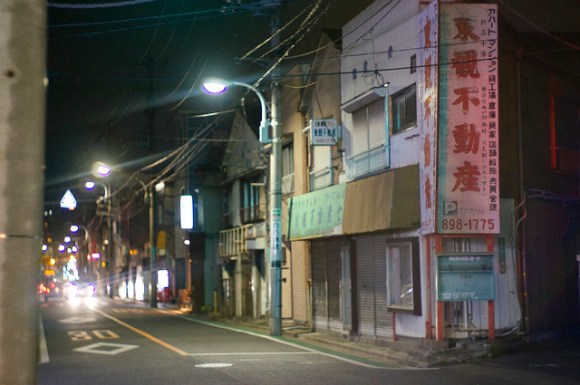
We’ll start off with one word that might not be so much confusing as it is just… oddly broad.
The word for real estate in Japanese is fudōsan, written with these three kanji: 不動産 (“not,” “moving,” and “product” respectively). Put together it means something like “immovable property” in English, which makes sense considering you don’t usually just pick up and plop down plots of land or buildings.
▼ Unless you’re Confucius and you
move mountains one pebble at a time.
Move your mountain today. #WednesdayWisdom #SpurSpot pic.twitter.com/YEJxqZHvED
— SpurSpot (@SpurSpot) April 26, 2017
But wait a minute… “immovable property” or “product that doesn’t move?” Isn’t that a little… general? Couldn’t that be applied to basically anything that is supposed to just stay where you put it and never move? I sure hope this toilet doesn’t move while I’m using it, is it a fudōsan? What about this whiteboard on the wall? Or this fish I just bought?
▼ I really hope this thing has a lot of
“immovable properties” before I eat it!
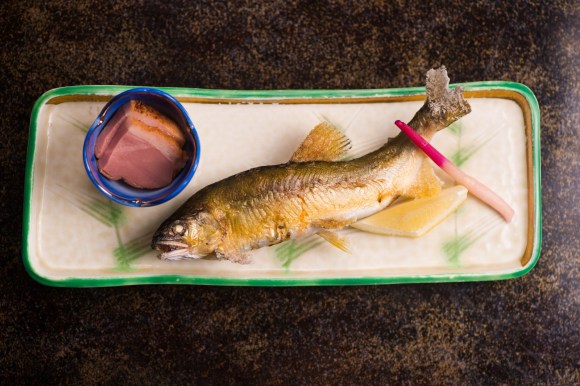
Of course that’s taking the definition a little too literally, and fudōsan does make a decent amount of sense, hence its low ranking on this list. As someone learning Japanese though, you’d probably expect the word for “real estate” to have a kanji for “land” or “building” or something in there, not “product that doesn’t move.”
But then again, what does “real estate” even mean in English…? Moving on!
#4. Hiniku – “Irony/Sarcasm”
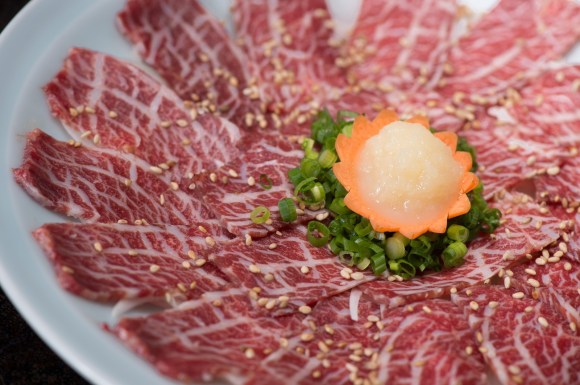
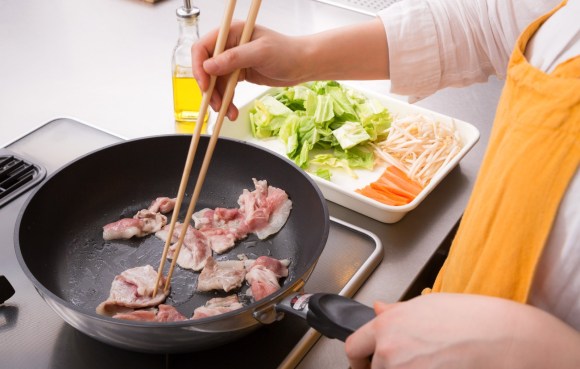
One of the first words many people learn when studying Japanese is niku. It’s a very important word meaning “meat,” used whether you want to avoid meat because you’re a vegetarian, or you want to indulge in as much delicious Japanese meat as possible.
Another kanji that students may learn down the road is hi, meaning “skin/hide.” It’s a good one to know if you’re ever telling a doctor about a disgusting rash that appeared on your hifu, your “skin.”
So what happens when we put those two words together and get hiniku? “Meat with the skin on?” No. “Prime meat?” Nope.
▼ It means “irony/sarcasm.”
Wow, that really makes a ton of sense.
Well, A legit Reason. 😅😂😂#zoofegi #sarcasm #eat #food #foodie #meal #summer #hot pic.twitter.com/OkvK8kgSot
— zoofegi (@zoofegicare) April 26, 2017
Similar to many entries in the top five Japanese words with cool ancient origin stories, hiniku has an old etymology to it. The story goes that the Buddha had a four-tier ranking system for his pupils based on how well they understood him: down to his skin (hi), down to his meat (niku), down to his bone (kotsu), and down to his marrow (zui).
The deeper the pupil understood, the better, so the first two — skin (hi) and meat (niku) — were seen as the “failing” grades. And presumably because there were a lot more people who failed to understand the Buddha than those who succeeded, only hi and niku survived the centuries together. Over time they lost their Buddhist meaning and turned into something like “covering your meat” or “not saying what is actually true,” thus the meaning of “sarcastic/ironic.”
▼ Maybe that’s why some say Japanese people are bad at sarcasm.
I’d be bad at it too if I thought about meat every time I was sarcastic… totally.
#3. Genkan – “Entranceway”
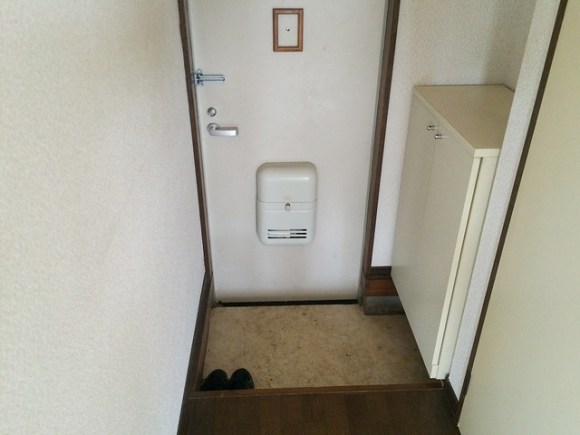
Ah, a word that at least makes sense in English: “entranceway.” It’s the “way” that you “enter” something, by going through it… perfect! Now what’s that word in Japanese?
Well, it’s genkan (玄関). The good news is that kan (関) makes sense, since it means “gate” or “barrier.” But what about gen (玄), the first part? Well that kanji means… “dark/deep” and thereby also “profound.”
▼ I mean, the only thing that’s really profound here is how
Japanese homes keep their shoes so organized by the entranceway.

This is another compound where you’d expect the kanji for “building” or “home” or even “hole” or something before you’d expect “dark/deep/profound.” And, yet again, we have the ancients to blame for this one.
The word genkan first appeared in the writings of Chinese philosopher Laozi where he used it to mean “a doorway to the dark/deep/profound.” It started to be used by Japanese Buddhists around the Kamakura Era (1185-1333) to mean “the entrance to profound understanding.” From there it was used to refer to the “entrance” to the chief priest’s chambers inside a temple, then the “entrance” to the temple itself, and then finally around the Edo Period (1603-1868), the “entrance” to normal homes and buildings.
▼ Listen, we can try and make it sound fancy by calling it a “gate to
the profound,” but it’s not going to change that fact that it’s just a door.
新居の玄関めちゃくちゃ綺麗 pic.twitter.com/t9PYEgNGuX
— 弟子1号 (@4869Koga) March 20, 2017
#2. Yūki – “Organic”
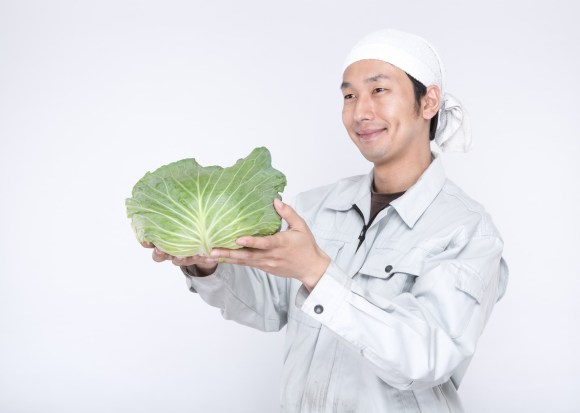
For me personally, this word is the biggest offender on the list because it actually confused me for a very long time.
To understand why it’s confusing, first we have to take a look at the Japanese word kikai (機械), meaning “machine.” The first kanji there (ki) can be found in a bunch of other machine-words such as “laundry machine” (sentakuki 洗濯機), “airplane” (hikōki 飛行機), and more.
Because of that, for a long time I assumed that ki simply meant “machine.” So when I was grocery shopping in Japan and saw the word yūki, comprised of the kanji for “having” (yū 有) and what I thought meant “machine” (ki 機), I thought it meant “produced by machine” or “non-organic.”
A dictionary-check later though, I found out it meant the opposite: “organic.”
▼ 100-percent, literally my face after discovering that.

It took me a long time to come to grips with yūki meaning “organic,” despite looking like it means the complete opposite. But looking at it from a native Japanese speaker’s point of view can help.
To most natives, ki doesn’t mean “machine,” it means something closer to “to make something happen.” So instead of translating sentakuki as “washing machine,” it might be more accurate as “(something that) makes washing happen.”
And since organic/living things are alive and able to “make things happen,” it makes sense that the word for “organic” to be made up of the compounds “having” and “making things happen.”
▼ And by “makes sense,” I mean that it’s something that
I tell myself makes sense so I can sleep at night.

And the #1 most confusing Japanese compound word is…
.
.
.
.
.
.
.
.
.
.
1. Suteki – “Wonderful”

Ah, suteki. Right up there with kawaii and sugoi as Japanese words that even people who have never studied Japanese often know. But if only they knew that, broken down, this compound word makes seemingly zero sense.
While there are some other unofficial ways of writing suteki in kanji, the standard way is like this: 素敵. Let’s take a guess at what those kanji mean. “Nice” and “good?” Nope. How about “wonder” and “full?” All right, now you’re just getting cheeky.
The first kanji (su 素) means “natural/plain,” and the second one (teki 敵) means — wait for it — “enemy.” So yes, that means a literal translation of these two kanji put together could be “natural enemy.”
▼ I love the cat. Shes “wonderful.”
Are cats and dogs really natural enemies? #Cats #Dogs #Humor #Memes #Pets https://t.co/bsdGbAaRTD pic.twitter.com/nHWDm6EG6Q
— Scott Reed DVM (@ScottReedDVM) December 1, 2016
And the reason it’s written this way is because… nobody really knows! For most of Japanese history, suteki was written with the same su (“natural/plain”) and then a different teki, one that just turns nouns into adjectives (的). Now that kind of makes sense, considering the “au naturel” look is usually quite wonderful for everything from people to cheese.
Somehow though things got changed up during the Taisho Era (1912-1926), and then by the Showa Era (1926-1989) the new way of writing it with “enemy” became the standard.
One theory behind this is that an alternative reading for the “enemy” kanji is kanau (敵う), which means “to be a match (for someone),” as in, you can compete with them. You usually see it more in the negative as kanawanai meaning “not a match/can’t compete (with someone),” so for suteki it may be used to mean something is so wonderful that “nothing else can compete with it.”
▼ But the fact that we have to negatively-conjugate alternative readings
of kanji here makes it just a tad non-intuitive, wouldn’t you say?
 PAKUTASO (edited by SoraNews24)
So there you have it, the top five most confusing Japanese compound words. Are there any other Japanese compound words that trip you up? Let us know in the comments because being bewildered by confusing Japanese words is one of our top five hardest Japanese habits to break.
References: Gogen Yurai Jiten (1, 2, 3)
Top image: PAKUTASO (edited by SoraNews24)
W.T.F. Japan will be back next Thursday. In the meantime, give me a follow on Twitter and let me know if there’s any topics you’d like to see covered. See you next week!
 W.T.F. Japan: Top 5 most confusing Japanese counter words【Weird Top Five】
 W.T.F. Japan: Top 5 kanji with ironic meanings【Weird Top Five】
 W.T.F. Japan: Top 5 kanji with the longest readings 【Weird Top Five】
 W.T.F. Japan: Top 5 confusing Japanese hand gestures【Weird Top Five】
 W.T.F. Japan: Top 5 most difficult kanji ever【Weird Top Five】
 Japan reportedly adding Japanese language skill requirement to most common foreigner work visa
 Peanuts and Coke becomes a viral hit in Japan, but is it a trend worth joining?
 You can assemble a well-balanced team of Pokémon, them eat them, thanks to Japanese cake chain
 New Japanese KitKats come in sakura flavour, with poetic symbolism for success
 Famous koi ponds overwhelmed with tourists throwing thousands of coins in them
 Animal Crossing plushie pouch towels and cozy socks show up at Family Mart convenience stores
 Virtual idol Hatsune Miku redesigned with look that adds new elements and brings back old ones
 Starbucks Japan closing only Shinkansen platform branch for popularity-triggered renovations
 Japanese breakfast ramen for US$3.50 in Shinjuku is the morning meal you didn’t know you needed
 New unstaffed gyoza store in Tokyo sells pot stickers 24 hours a day
 Pokémon and Ikea Japan cross over into each other’s worlds with collaboration events
 Pokémon lacquerware series expands for Year of the Horse with new handcrafted design[Video]
 Two food hacks take Japan’s convenience store fried chicken to amazing new sandwich heights
 Tokyo’s best museum for foreign travelers finally reopens after being closed for four years
 Totoro Fund line of beautiful artwork and apparel lets you help the real-world Totoro Forest
 Fading Tokyo – Searching for signs of the Showa era as local neighborhoods evolve[Photos]
 Tokyo turns its phone booths into free Wi-Fi hotspots, and here’s how to use them
 Japan now has a special desk for people who work at home with a pet cat[Photos]
 Famous Tokyo cherry blossom spot installs view-blocking screens to fight overcrowding[Video]
 Uniqlo announces new T-shirts for One Piece, Naruto and more for manga publisher’s 100th birthday
 Train station platform ramen store closes its doors on half a century of history in Tokyo
 Starbucks Japan releases new My Fruit³ Frappuccino at only 34 stores around the country
 Studio Ghibli releases Catbus pullback keychain that runs like the anime character
 Krispy Kreme releases Super Mario doughnuts in Japan for a limited time
 Japanese onsen egg maker from 100-yen store Daiso needs to be on your shopping list
 Nine great places to see spring flowers in Japan, as chosen by travelers (with almost no sakura)
 Survey asks foreign tourists what bothered them in Japan, more than half gave same answer
 Japan’s human washing machines will go on sale to general public, demos to be held in Tokyo
 Starbucks Japan releases new drinkware and goods for Valentine’s Day
 We deeply regret going into this tunnel on our walk in the mountains of Japan
 Studio Ghibli releases Kodama forest spirits from Princess Mononoke to light up your home
 Starbucks Japan releases new sakura goods and drinkware for cherry blossom season 2026
 Japan’s newest Shinkansen has no seats…or passengers [Video]
 Major Japanese hotel chain says reservations via overseas booking sites may not be valid
 Put sesame oil in your coffee? Japanese maker says it’s the best way to start your day【Taste test】
 No more using real katana for tourism activities, Japan’s National Police Agency says
 W.T.F. Japan: One year anniversary special! Top 5 W.T.F. Japan articles 【Weird Top Five】
 W.T.F. Japan: Top 5 most ridiculous kanji handwriting shortcuts【Weird Top Five】
 W.T.F. Japan: Top 5 most insane kanji place names in Japan【Weird Top Five】
 W.T.F. Japan: Top 5 confusing Japanese Internet slang words 【Weird Top Five】
 W.T.F. Japan: Top 5 myths about learning Japanese【Weird Top Five】
 W.T.F. Japan: Top 5 Japanese words with cool ancient origin stories【Weird Top Five】
 W.T.F. Japan: Top 5 strangest kanji ever 【Weird Top Five】
 W.T.F. Japan: Top 5 most hilarious Japanese euphemisms 【Weird Top Five】
 W.T.F. Japan: Top 5 nicest sounds in Japan【Weird Top Five】
 W.T.F. Japan: The top five “sora” references of all time! 【Weird Top Five】
 W.T.F. Japan: Top 5 most perfectly translated Pokémon names【Weird Top Five】
 W.T.F. Japan: Top 5 most difficult Japanese tongue twisters (with videos!) 【Weird Top Five】
 W.T.F. Japan: Top 5 hand gestures that Japanese people don’t understand【Weird Top Five】
 W.T.F. Japan: Top 5 offensive Japanese insults【Weird Top Five】
 W.T.F. Japan: Top 5 biggest Japanese food challenges【Weird Top Five】
 W.T.F. Japan: Top 5 craziest Japanese certification exams 【Weird Top Five】