

Japanese fans sound off on things that used to be a normal part of the otaku life, but aren’t anymore.
With its casts of youthful characters, fresh-faced attitude, and unabashed love of new trends, it’s easy to think of anime as a constantly modern medium. But the history of Japanese animation stretches back decades, and like any part of culture, fan culture also changes with time.
Japanese Internet portal Goo Ranking recently polled 500 men and women between the ages of 20 and 39 about aspects of the otaku lifestyle that were indicative of being an otaku during the Showa era of Japanese history. While that period technically ran from 1926 to 1989, otakuism wasn’t really a social phenomenon until the 1980s, so you can think of this list as a look back on anime fandom in the ‘80s and very early ‘90s.
10. There weren’t nearly as many cosplayers as there are now (38 responses)

Cosplay is now so big that there’s even a professional talent agency that specialize in it, but back in the day, it was really a minor side attraction. Before the rise of the Internet, not only were you pretty much on your own as far as tips for putting together your outfit (unless you were a classically trained tailor/seamstress), without social media and blogs there was no easy way to share the visual results of your work with anyone other than the limited audience that showed up to the same event you wore your costume to.
9. You watched your favorite anime recorded on cassette, over and over, until the tape itself wore out (39 responses)
Yep. Not only was anime something that fans primarily enjoyed on physical media, if you recorded something on VHS off of TV broadcast, that physical media featured several moving parts. It was a sad day when you started being able to hear the creaks and squeaks when you played your favorite cassette, and a sadder one still when the tape warped or snapped.
8. You had to rush home, because anime was shown in prime time (40 responses)
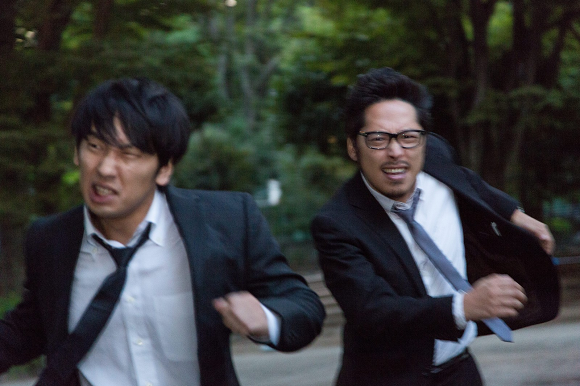
TV anime used to be shown during prime time, so if you didn’t want to miss the new episode of your favorite show, you had to give it priority over any other social engagements after work. Otaku now have the opposite problem: trying to stay up late enough to catch anime in the late-night blocks where it airs now (though they digital recording and on-demand streaming means they can bypass that inconvenience too).
7. Idol singers didn’t make it publicly known that they were otaku (43 responses)
This is a bit of a multi-layered response. While the idol and anime industries have a very cozy relation these days, that wasn’t always the case, as their marketing and talent pools used to be largely separate. The otaku culture boom has coincided with the second golden age of idol singers, though, and now there’s plenty of crossover with a number of idols loudly proclaiming how much they love anime (how much of that is playing up to their target market is another topic, though).
6. On the back cover of dojinshi, you’d see the real name of the person who drew it and their actual address (44 responses)
This kind of sensitive personal information used to be slapped on the back of dojinshi, independently produced comics often featuring copyrighted characters from existing series engaged in myriad sexual acts. So why was this the case? Because…
4 (tie), You’d purchase dojinshi by postal money order (46 responses)
If you’re selling dojinshi now, and you’re not doing it in-person at an event like Comiket, you can handle the transaction digitally. Before the rise of online banking and e-commerce, though, the easiest way for an individual creator to process those economic transfers was by postal money order.
4 (tie). When you told people you liked anime, they’d give you a strange look (46 responses)

Granted, even today if you mention to someone that you can tell the difference between each and every Gundam model, or launch into a detailed dissertation as to why Sailor Jupiter is vastly superior to Sailor Moon during lunch with your coworkers, you’re probably going to raise a few eyebrows. But anime has never been a more prevalent part of mainstream entertainment in Japan than it is today, and even people who don’t watch any animation at all often enjoy anime franchises indirectly through the numerous live-action movie and TV drama adaptations of hit series.
3. People didn’t call themselves “otaku” (47 responses)
“Otaku” often gets translated into English as “geek” or “nerd,” and much like those words, it’s undergone a major change in tone over the last 10 to 20 years. Originally, otaku was a pure pejorative, and so not something that people usually called themselves, especially when speaking to people outside the fandom (animation studio Gainax’s 1991 anime Otaku no Video notwithstanding). Nowadays, though, passionate anime fans will casually refer to themselves as otaku the same way as someone in the U.S. who’s really knowledgeable about computers might good-naturally call himself a “tech geek.”
2. It wasn’t “BL,” it was “yaoi,” and they weren’t “fujoshi,” they were “dojin onna” (52 responses)

Stories of male homosexual love in anime and manga are now collectively called “boys’ love,” abbreviated to “BL,” whereas their core fanbase are “fujoshi,” literally “rotten girls.” But in the past, the more common terms were “yaoi” and “dojin onna” (while “yaoi” still gets used overseas, it’s pretty much been supplanted entirely by “BL” in Japan).
So why the change? As mentioned above, independently produced manga are called dojinshi, and before boys’ love was something that professional anime studios would produce, the genre was primarily present in dojinshi, and dojin onna (dojinshi women) meant a woman who enjoyed reading dojinshi featuring male-and-male couplings.
As for yaoi, the word’s roots lie in an abbreviation of Yamete oshiri ga itai, literally “Stop, my butt hurts.” As boys’ love has grown in narrative complexity beyond simply “One dude does another dude from behind,” it’s only natural that a less explicit term gains favor as well
1. If you liked anime, people assumed you were gloomy (68 responses)
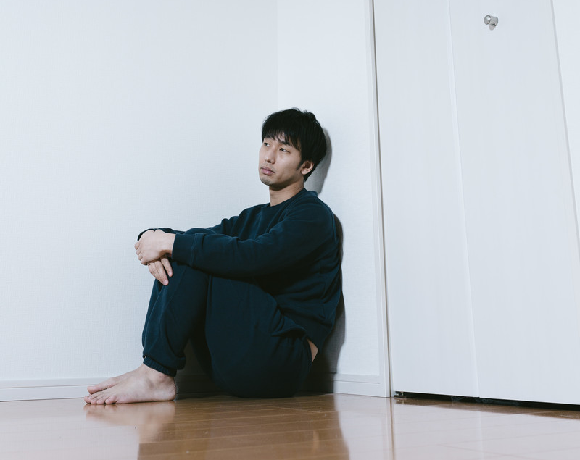
This is sort of a surprise to find at the top of the list, since in the ‘80s hot-blooded anime heroes were the order of the day. Conversely, modern anime seems to be always ready to place a character who’s introverted, emotionally conflicted, or otherwise psychologically “weak,” by traditional masculine standards, front and center.
So odds are the respondents who chose this didn’t do so as a reflection of anime’s themes, but of anime’s fans themselves. 30 years ago, even in Japan it wasn’t easy for fans to find one another. If no one in your met-in-person social group was into anime, let alone the same specific series you liked, your experience with a show pretty much began and ended with watching it alone.
With the rise of the Internet and social media, though, finding someone else to discuss whatever series you’re following only takes a few keystrokes, clicks, or taps. Not that all online fan interaction has a positive effect, but it’s definitely done more good than bad in helping otaku become part of a vibrant community.
That in turn has caused a ripple effect where even the places otaku like to go have become more energetic. It wasn’t that long ago that Akihabara was a drab part of Tokyo where otaku shuffled into shops to buy whatever merch they wanted, then shuffled back out and went home to consume their media in solitude. Now, though? It’s one of the most energetic places in the city, and otaku gathering places are showing up in other neighborhoods and towns as well, which is why anime-themed dining is now a legitimate part of the Japanese restaurant scene.
Put it all together, and even if not non-otaku don’t share their enthusiasm for anime, they know that plenty of other people do, and that being an otaku means having a common interest with a very big group of people, and probably more than a few good friends within that community.
Source: Goo Ranking via Otakomu
Top image: Pakutaso
Insert images: Pakutaso (1, 2, 3, 4, 5, 6)
Follow Casey on Twitter, where he’s always ready to launch into a detailed dissertation as to why Sailor Jupiter is vastly superior to Sailor Moon.
 Female anime fans swarm Tokyo convention site in massive numbers 【Photos】
 Why right now is one of the best times of the year to shop for dojinshi manga and merch in Japan
 Language of the otaku has infiltrated our Internet forums
 10 signs you might not be an otaku anymore
 7-Eleven Japan releases a crazy new viral sandwich: Chocolate Sprinkles and Whipped Cream
 Can you make butter by running with a pouch filled with cream? Let’s find out[Taste test]
 Japan now has a “for foreign tourists only” Mt. Fuji sightseeing train[Video]
 Fake police phone scam also highlights dumb stereotype about how foreigners speak Japanese[Video]
 Drinkable pixels: 7-Eleven Japan creates new convenience store juice with “pixels” inside
 Create a tiny Ghibli anime world on your bookshelf with new miniature papercraft art kits
 Daiso DIY dessert! 100 yen store’s super-easy mochi sweets kit is our new hero
 Legendary pie shop Anna Miller’s is returning to Tokyo, bringing iconic waitress uniforms with it
 Japan’s budget chain restaurant Saizeriya might just be the perfect first date location
 Public restrooms in Osaka to get in-stall video screens with ads
 Starbucks Japan releases new My Fruit³ Frappuccino at only 34 stores around the country
 Japanese onsen egg maker from 100-yen store Daiso needs to be on your shopping list
 Cherry blossoms begin blooming in Japan with record-early starts for sakura season
 Tokyo government organizes food truck event to clear out delinquent/homeless teen gathering area
 Nine amazing off-the-beaten-path cherry blossom spots in Japan for yaezakura and shidarezakura
 Stunning central Japan wisteria festival is like a purple fantasy straight out of a Ghibli movie
 When will the cherry blossoms reach full bloom in Japan this year?[Forecast]
 Studio Ghibli unveils new Rollbahn notebook in honour of Howl’s Moving Castle
 Studio Ghibli adds new anime tumblers to its cool streetwear brand in Japan
 Universal Studios’ Sailor Moon theme park attraction is finally coming to America
 Starbucks Japan unveils new sakura cherry blossom collection for hanami season 2026
 Train station platform ramen store closes its doors on half a century of history in Tokyo
 Studio Ghibli releases Catbus pullback keychain that runs like the anime character
 Nine great places to see spring flowers in Japan, as chosen by travelers (with almost no sakura)
 Starbucks Japan releases first-ever Hinamatsuri Girls’ Day Frappuccino
 Studio Ghibli adds new Mother’s Day gift sets to its anime collection in Japan
 Virtual idol Hatsune Miku redesigned with look that adds new elements and brings back old ones
 Survey asks foreign tourists what bothered them in Japan, more than half gave same answer
 Japan’s human washing machines will go on sale to general public, demos to be held in Tokyo
 Starbucks Japan releases new drinkware and goods for Valentine’s Day
 We deeply regret going into this tunnel on our walk in the mountains of Japan
 Studio Ghibli releases Kodama forest spirits from Princess Mononoke to light up your home
 Starbucks Japan releases new sakura goods and drinkware for cherry blossom season 2026
 Japan’s newest Shinkansen has no seats…or passengers [Video]
 Major Japanese hotel chain says reservations via overseas booking sites may not be valid
 Put sesame oil in your coffee? Japanese maker says it’s the best way to start your day【Taste test】
 No more using real katana for tourism activities, Japan’s National Police Agency says
 Virtual dojinshi convention Comic Vket recreates the community joy of canceled otaku gatherings
 Dojinshi manga artist makes fan’s day with special promise for the next two years【Manga】
 Otaku gather in the Akihabara night as Toranoana dojinshi shop permanently closes【Photos】
 We joined the 10,000 otaku who recently congregated in Madrid for Japan Weekend
 Comiket returns! Japan’s largest otaku convention announced for 2021 with new admission policies
 How much do fans of boys’ love spend every year on homoerotic comics? The amount may surprise you
 Anime vs. idols? Latest annual otaku survey shows where fans are spending their money
 Comiket cancelled as coronavirus knocks off Tokyo’s biggest otaku celebration
 “You’re an otaku!” Defining Japan’s nerdiest word
 Lack of otaku blood from cancelled Comiket contributing to donation shortage in Japan
 Large majority of otaku in Japan want to keep being otaku after having kids, survey says
 Anime fan’s boyfriend asks her to throw out her 2-D crush, she gets rid of something else instead
 Otaku dating service advises singles to have interests other than anime