Seriously, no shit.
Going by crime standards for large cities in most other countries, the whole of Tokyo is exceedingly safe. However, if you ask native Tokyoites, more than a few will argue that Adachi Ward is kind of a seedy part of town.
Located on the other side of the Arakawa River from the gleaming city center, Adachi has long had a reputation as a place where blue-collar workers and bored youths like to get drunk and or/into mischief. So when Japanese Twitter user @curetencho walked into a Lawson convenience store in Adachi, he noticed a sign above the self-service oden (stewed vegetables and meats) station that he wouldn’t have expected in any other part of Tokyo.
足立区ともなるとコンビニの注意書きもハイレベルですよ pic.twitter.com/GKWUXmA4IQ
— 店長@(「・ω・)「 (@curetencho) August 28, 2018
The sign reads “Please do not grab the oden with your bare hands. It is cooked at a high temperature, and you might get burned.” Customers are instead supposed to use the tongs and serving spoons located to the right of the tray, but this is considered common sense. “When you’re in Adachi, even the warning signs at the convenience stores are on a higher level,” mused @curetencho, perhaps remembering an incident from a couple years back where a gross prankster had filmed himself repeatedly stabbing his fingers into a convenience store oden pot.
But what @curetencho wasn’t aware of was that there’s apparently a level of Adachi warning sign beyond even this, as another Twitter user, @Kill_joys, simply responded with this photo.
— ウメサキ=サン (@kill_joys6) August 29, 2018
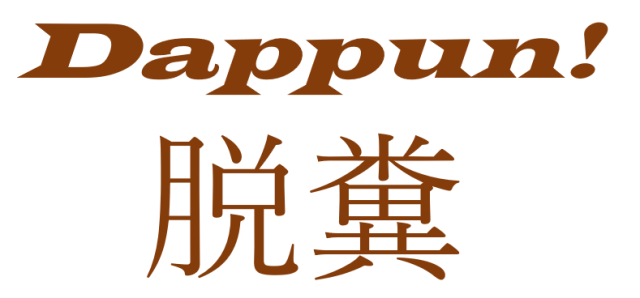
If you’ve spent much time in a Japanese class, or in Japan, you might recognize the big red kanji characters 禁止, pronouncd kinshi and meaning “prohibited.” But even if you aced all your college kanji tests, you might not be familiar with the compound 脱糞, so let’s take a look at it.
脱 shows up pretty commonly as part of the verb nugu, meaning to remove or take off. 糞, though, is something you’re more likely to hear spoken in anger than written in formal signage, because it’s the kanji for kuso, meaning “excrement” or “shit.”
When written together they’re pronounced dappun, the Japanese word for “defecation.”
▼ Knowing its meaning, the sound of the word seems quite evocative of the act it’s describing, but this actually isn’t a case of Japanese onomatopoeia.
So yes, apparently there were enough cases of public pooping along the strip of ground shown in @Kill_joys’ photo that the property owner felt the need to go out and purchase a professionally made sign to sternly proclaim “Pooping prohibited.”
There’s even a warning at the top of the sign, including an illustration, that the spot is being filmed by a security camera. Whether the intent is to dissuade deuce-droppers through shame or simply clenched muscles from being conscious that someone is looking is unknown, but either way, hopefully the warning is working.
Source: Twitter/@Kill_joys via Hachima Kiko
Top image: Pakutaso
Insert image: SoraNews24
Follow Casey on Twitter for more words they didn’t teach you in Japanese class.