
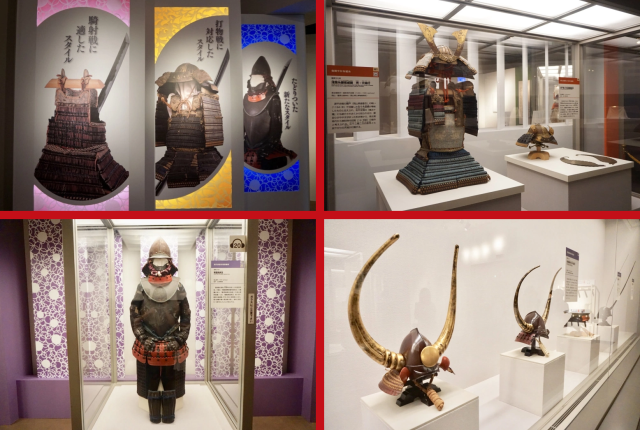
Samurai fought on the field of battle for a thousand years, and during that time their arms and armor went through a fascinating evolution.
Just about everyone can form a mental image of what a samurai looks like when he’s headed into battle. He’s got a single-edged, curved sword, lamellar armor, and probably a helmet with crests, horns, or some other kind of cool ornamentation, right?
But the era of the samurai lasted for over 1,000 years, and during that time there were changes in technology, military strategy, and even fashion. So just like the clothes you wear and the phone you use now are different from the ones your parents and grandparents did, samurai arms and armor evolved with time.

That evolution is one of the themes of Samurai: The Beauty and Pedigree of Warriors, an exhibition currently being held by the Fukuoka City Museum. 147 pieces of samurai armor and weaponry are on display, with more than half officially designated as national treasures due to their historical significance. Ordinarily photography is prohibited, but the museum granted us special permission to bring these images to you, just in case you can’t make it to Fukuoka between now and November 4, when the exhibit ends.
Let’s start by talking about armor. In the Heian period (which lasted from 794 to 1185), warfare in Japan was primarily conducted by warriors of comparatively highborn birth, who engaged each other on horseback in the open field by firing arrows at one another as they rode.
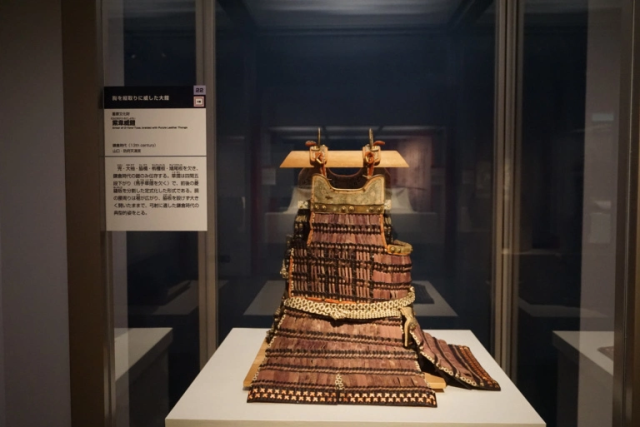
Since the horse was the one doing most of the mobility work, weight wasn’t much of a concern, and the torso section alone of a suit of Heian period armor could weigh as much as 20 kilograms (44 pounds), and separately added shoulder protectors would add about three kilograms each. The armor was loose-fitting around the wearer’s mid-section and had large openings at the armpits to allow for easy nocking of arrows and aiming of the bow.

But as the years went by, construction techniques improved, commerce started to develop, and cities started to spring up, often with a local warlord’s samurai castle in the center. These strongholds became high-priority military targets, and since cavalry are of very little use in waging or fighting off a siege, armor needed to become lighter, since the samurai were now fighting on foot and couldn’t rely on a horse’s load-carrying stamina.
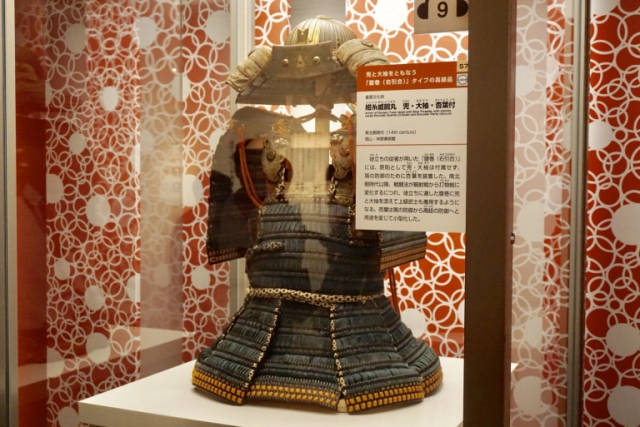
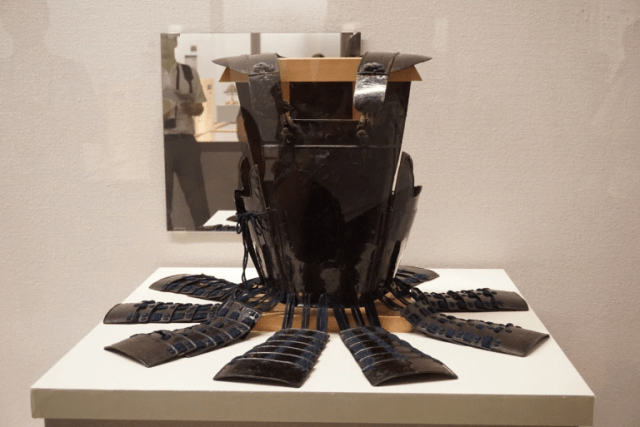
More melee combat in the Genpei and Kamakura periods (1180-1333) also meant that gaps and openings in the armor had to get smaller, since an enemy standing inches away from you can fit the point of their blade into an unprotected space more easily than someone firing an arrow from the other side of the skirmish.
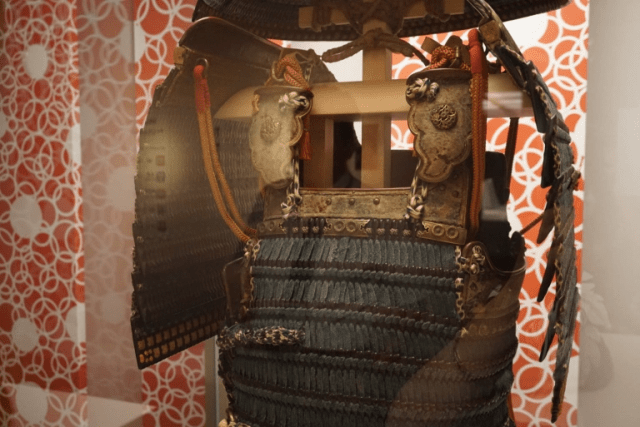
▼ As armor got more form-fitting, the waists were brought in, giving samurai on the field of battle an almost hourglass-like figure.
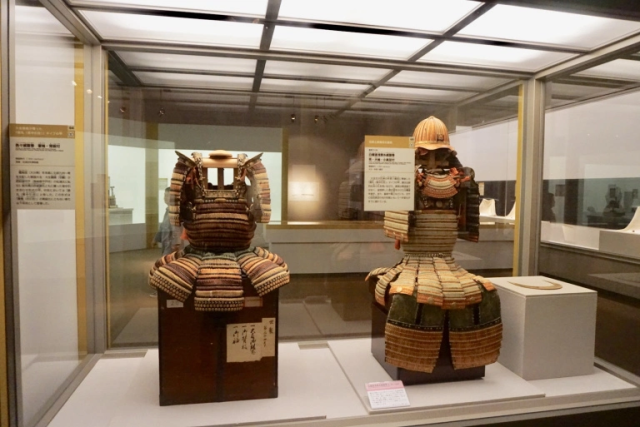
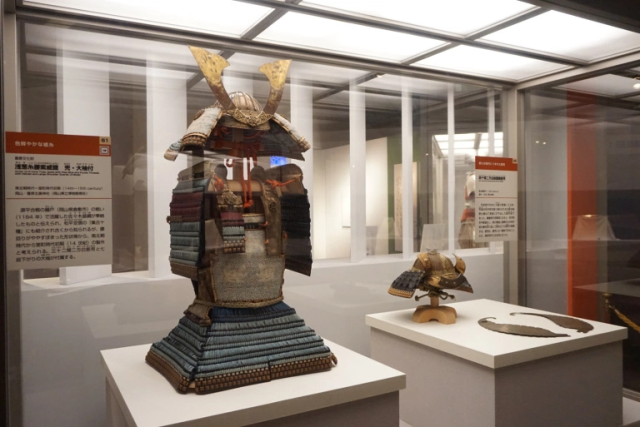
Remember how we said that in the Heian period, samurai combat was primarily a wealthy man’s profession? That started to change with the shift to on-foot combat, since there was no longer a need to supply as much of the army with costly-to-care-for horses. Once the Muromachi and Sengoku periods (1336-1600) came about, a large portion of the combatants were ashigaru, essentially farmers and other commoners converted into foot soldiers in the service of their local liege lord. In order to equip much larger armies, armor construction had to become cheaper and simpler. Armorers started combining what were previously multiple pieces of a suit into composite pieces, like the kote, a combination gauntlet and armored sleeve.

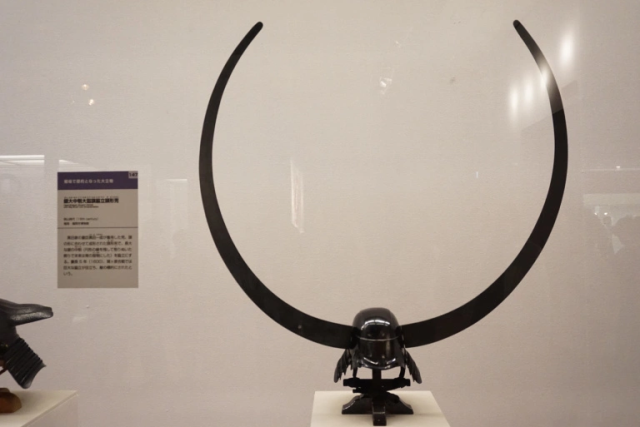
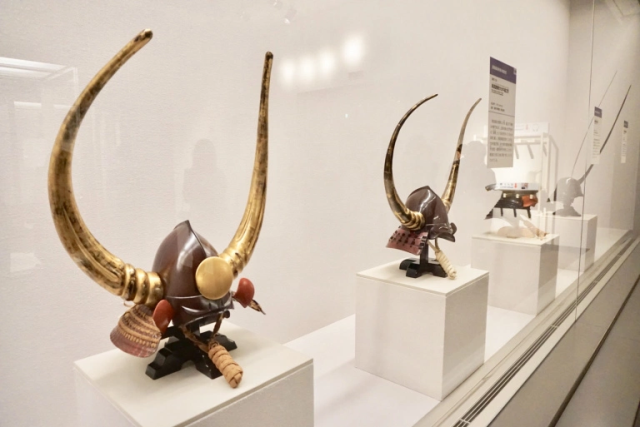
However, the shift to simpler armor design created a problem for the high-ranking samurai: it didn’t look as cool. Fewer separate parts and plates meant less need to tie components together with cords, but the coloring and design of those cords had long been a way for samurai to distinguish themselves visually on the field. So what did samurai bigwigs do instead? They started commissioning more and more elaborate helmets.

Granted, a lot of these weren’t particularly practical, since they were cumbersome and top-heavy. But remember, at this point there were ashigaru to do a lot of the gritty up-close fighting, and high-ranking samurai were primarily acting as generals making tactical decisions and giving orders, not personally crossing swords with enemy forces.
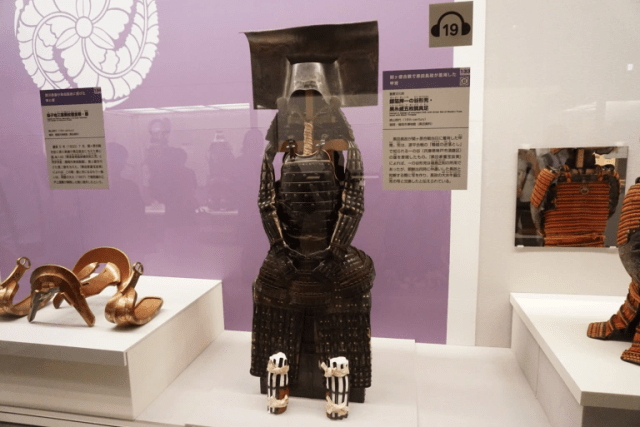
Late in the Sengoku period, Japan was engaging in an increasing level of trade with foreign merchants and missionaries, which resulted in nambando gokuso, or “southern barbarian armor” (“southern barbarians” being a term for Europeans at the time, due to their presence in the Kyushu region, at the southern end of Japan).
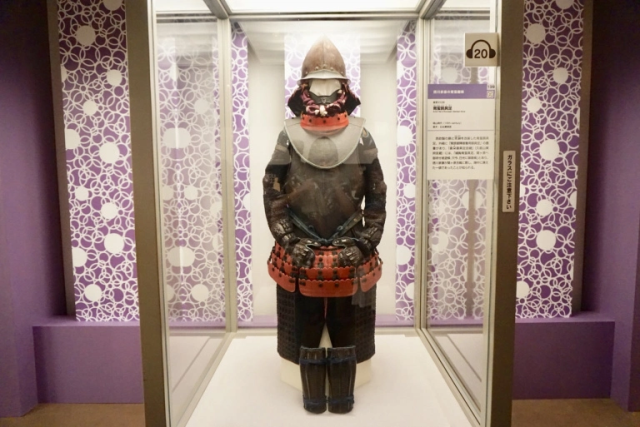
Nambando gokuso is kind of like the tempura of samurai armor, in that it’s a mix of Western and Japanese elements. This suit here, for example, has a European-style breastplate made of a large single piece of metal, as well as gorget over the collarbone and upper chest, but it also uses lamellar for the skirts and throat guard, as well as kote gauntlet sleeves and strap-on suneate shin guards.
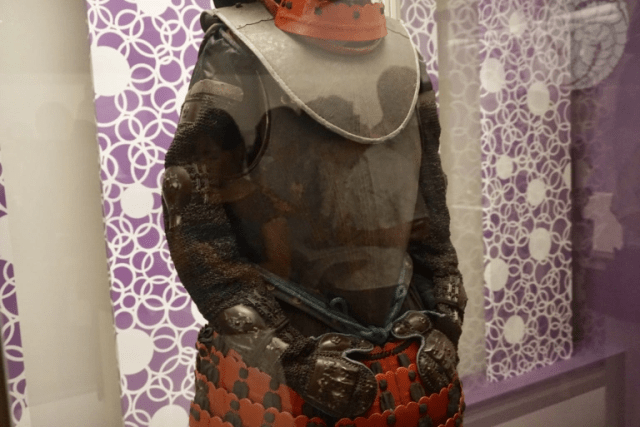
Nambando Gokuso had only a brief battlefield presence in Japan, as it wouldn’t be long until the Battle of Sekigahara, which took place in 1600, solidified the power of the Tokugawa clan enough for it to establish a shogunate that lasted nearly three centuries. During that time, Japan had relatively few military conflicts until the modern era, at which point armor itself had become a thing of history.
Of course, it wasn’t just the defensive aspect of samurai combat that evolved over time. Katana also changed significantly throughout Japanese history, and we’ll be back soon to explain how in the second part of this series.
Museum information
Fukuoka City Museum / 福岡市博物館
Address: Fukuoka-ken, Fukuoka-shi, Sawara-ku, Momochihama 3-1-1
福岡県福岡市早良区百道浜3丁目1-1
Open 9:30 a.m.-5:30 p.m.
Closed Mondays
Admission 1,500 yen (US$14)
Museum website
Exhibition website
Photos ©SoraNews24
● Want to hear about SoraNews24’s latest articles as soon as they’re published? Follow us on Facebook and Twitter!
[ Read in Japanese ]
 How did samurai swords and armor evolve over time?【Part 2】【Photos】
 Samurai fashion guide – Should you wear your sword blade-up or blade-down?
 The City of Angels is now the City of Samurai with Los Angeles museum’s awesome armor exhibition
 Samurai armor and mini katana tableware is here to keep your bottles safe and your food stabbed
 Samurai Studio: Tokyo’s new photo studio where you can get your picture taken in samurai armor
 How to take your home ramen to the next level by making your own chashu pork in a frying pan
 Peanuts and Coke becomes a viral hit in Japan, but is it a trend worth joining?
 Foreign man arrested for walking on Shinkansen tracks, claims he was on the run from yakuza
 Schoolkids learn life skills through shopping field trips at street markets in Kochi Prefecture
 Man bites woman at cherry blossom park in Japan, dies shortly after
 Japanese manhole lid raises eyebrows with fertility god symbol that looks like… well, you know
 Which Gundam is the favorite for fans in different countries? Gundam election announces results
 Akiba Dental Clinic: The Akihabara dentist where a moe maid in cosplay cleans your teeth
 Mr. Sato experiences the all-you-can-eat bread heaven…at Kamakura Pasta
 Final Fantasy’s Yoshitaka Amano illustrates exclusive Japan-only Magic: The Gathering card
 Pokémon and Ikea Japan cross over into each other’s worlds with collaboration events
 Japan reportedly adding Japanese language skill requirement to most common foreigner work visa
 Starbucks Japan closing only Shinkansen platform branch for popularity-triggered renovations
 Two food hacks take Japan’s convenience store fried chicken to amazing new sandwich heights
 You can assemble a well-balanced team of Pokémon, them eat them, thanks to Japanese cake chain
 Fading Tokyo – Searching for signs of the Showa era as local neighborhoods evolve[Photos]
 Pokémon lacquerware series expands for Year of the Horse with new handcrafted design[Video]
 Tokyo turns its phone booths into free Wi-Fi hotspots, and here’s how to use them
 Tokyo teahouse serves up a sakura matcha dessert you won’t find anywhere else
 Totoro Fund line of beautiful artwork and apparel lets you help the real-world Totoro Forest
 Japan now has a special desk for people who work at home with a pet cat[Photos]
 Famous Tokyo cherry blossom spot installs view-blocking screens to fight overcrowding[Video]
 Uniqlo announces new T-shirts for One Piece, Naruto and more for manga publisher’s 100th birthday
 Train station platform ramen store closes its doors on half a century of history in Tokyo
 Starbucks Japan releases new My Fruit³ Frappuccino at only 34 stores around the country
 Studio Ghibli releases Catbus pullback keychain that runs like the anime character
 Krispy Kreme releases Super Mario doughnuts in Japan for a limited time
 Japanese onsen egg maker from 100-yen store Daiso needs to be on your shopping list
 Survey asks foreign tourists what bothered them in Japan, more than half gave same answer
 Japan’s human washing machines will go on sale to general public, demos to be held in Tokyo
 Starbucks Japan releases new drinkware and goods for Valentine’s Day
 We deeply regret going into this tunnel on our walk in the mountains of Japan
 Studio Ghibli releases Kodama forest spirits from Princess Mononoke to light up your home
 Starbucks Japan releases new sakura goods and drinkware for cherry blossom season 2026
 Japan’s newest Shinkansen has no seats…or passengers [Video]
 Major Japanese hotel chain says reservations via overseas booking sites may not be valid
 Put sesame oil in your coffee? Japanese maker says it’s the best way to start your day【Taste test】
 No more using real katana for tourism activities, Japan’s National Police Agency says
 Samurai armor for pets turns your animal companions into adorable dogs and cats of war【Photos】
 Samurai Ninja Museum Tokyo With Experience is true to its name, lets you slice with real katana
 We visit the awesome new Samurai Museum in Shinjuku【Photos】
 A roundup of some of this year’s best “Samurai Sanders”: KFC’s mascot in samurai armor【Photos】
 This hotel has one of the coolest katana collections in Japan, and admission is totally free【Pics】
 Samurai photo studio is coming back to Tokyo this spring, just in time for cherry blossom season
 Legendary crescent moon katana, one of Japan’s Five Swords Under Heaven, now on display in Tokyo
 Dojigiri, the millennium-old katana said to have slain a demon, is now on display in Tokyo【Pics】
 An up-close look at one of Japan’s five Ryuseito swords, forged from meteorites【Photos】
 Sword of one of Japan’s last samurai discovered in house in America
 Demon-slaying Dojigiri, one of Japan’s Five Swords Under Heaven, now on display at Kasuga Shrine
 Japan’s legendary Brother Katana might not be brothers after all? Investigating the mystery【Pics】
 Amazing exhibition of Japan’s legendary “cursed katana” is going on right now【Photos】
 Lunch fit for a samurai lord: Japanese cafes offers castle bento lunches, sells boxes too【Pics】