
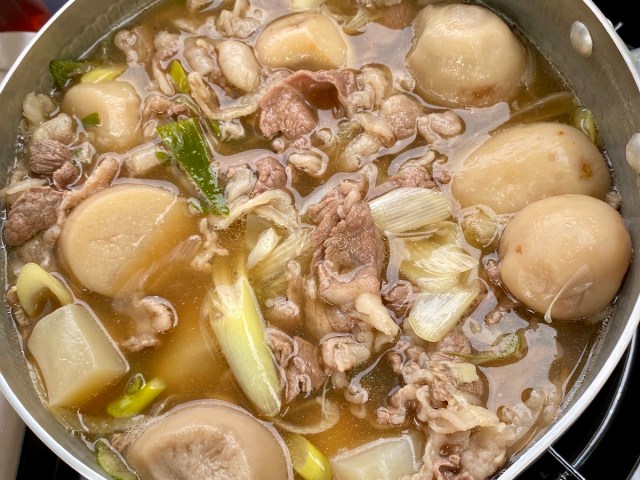
Celebrating the arrival of autumn with a piping-hot bowl of delicious stew!
If you’ve ever visited the Tohoku region in northern Japan, you may have heard of the tradition of Imoni-kai. An autumnal answer to hanami, the spring-time picnics that people enjoy under cherry blossoms, Imoni-kai is a tradition where friends and families gather together on a riverbank to cook imoni, a taro-root stew.
In fact, it’s such an important cultural event that in Yamagata Prefecture, there’s the annual Number One Imoni-kai in Japan event, in which imoni is cooked in a giant six-meter iron pot and the ingredients are added using construction vehicles (no, seriously).
Naturally, the event draws massive crowds from all over, because who doesn’t want to see a crane stirring meat and veggies in a giant pot? Sadly, this meant that due to the current climate, some alterations had to be made: this year, the organisers decided to make the event a drive-thru version. No more crowds swarming to get a piece of that taro-root action; this year, visitors had to enjoy imoni from the comfort of their car.
We sent Japanese reporter Saya to see how the event would turn out.
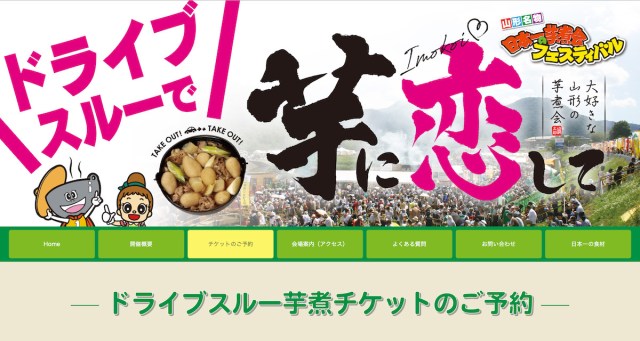
Anyone who wished to sample this year’s imoni would need to make a reservation in advance. The ticket cost 2,000 yen (US$19) and served as a voucher, good for four servings of imoni. The event was very carefully cordoned out, with only cars being allowed to enter. Visitors were required to stay in their vehicles at all times, and anyone entering on foot was not allowed.
But what about the giant iron pot and the crane? Would they be making an appearance this year as usual?
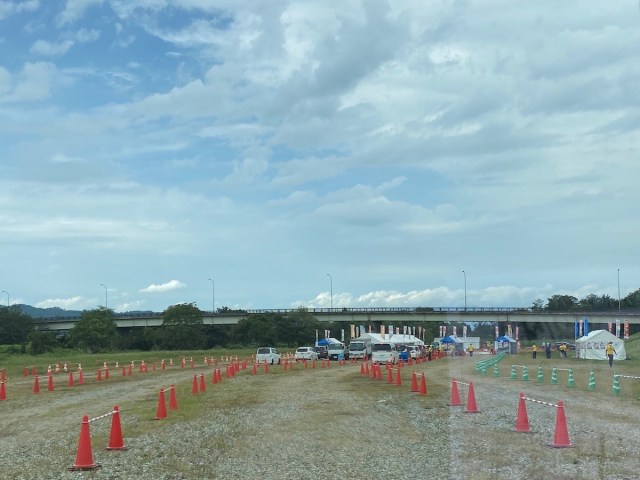
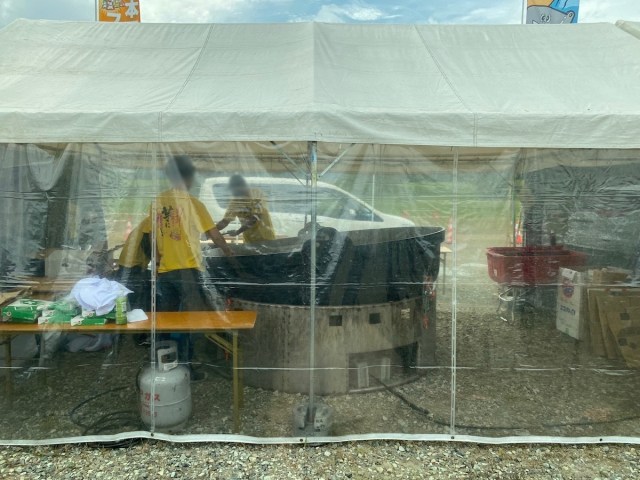
Nope. This year, the giant 6 meter pot was replaced with something a little smaller. Previous events have dished up over 30,000 helpings of imoni to visitors to enjoy, but this year’s scaled down version could offer only 4,000 helpings in 1,000 sets.
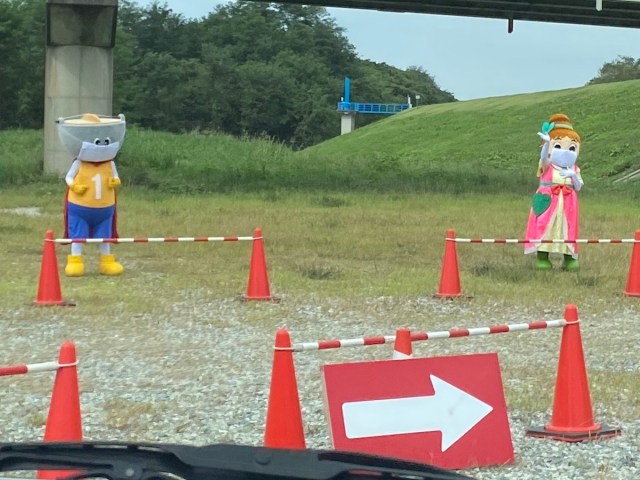
But it wasn’t all doom and gloom! Japan being Japan, no festival is complete without its own mascots, and Imoni-kai mascots Imoni-man and Satomi were there to lift everyone’s spirits. They were also there to remind them of proper etiquette as they donned their own masks and kept a reasonable distance apart.
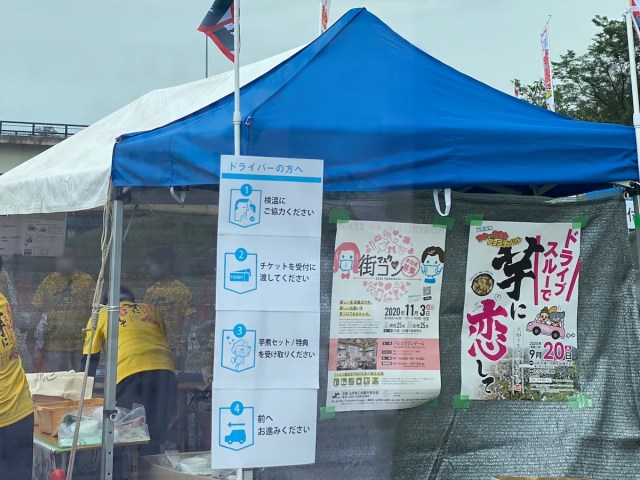
After waiting patiently in the car, it was finally Saya’s turn to receive her imoni set. The set was given to her through the window and the whole transaction took a mere number of seconds. In fact, the whole process was so smooth that even fast food restaurants should take notice!
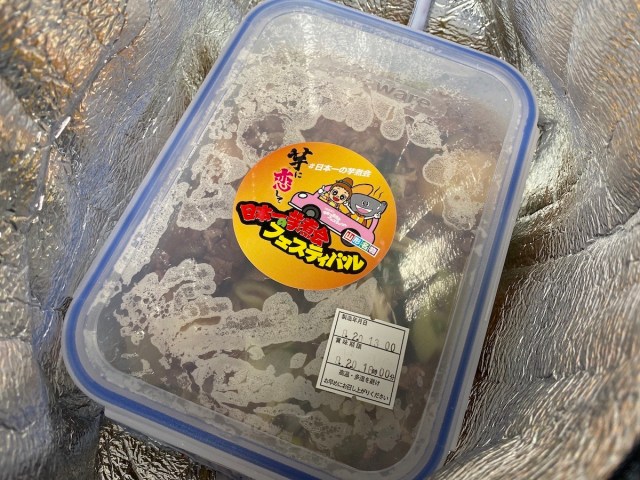
▼ The imoni came in a air-tight sealed container.
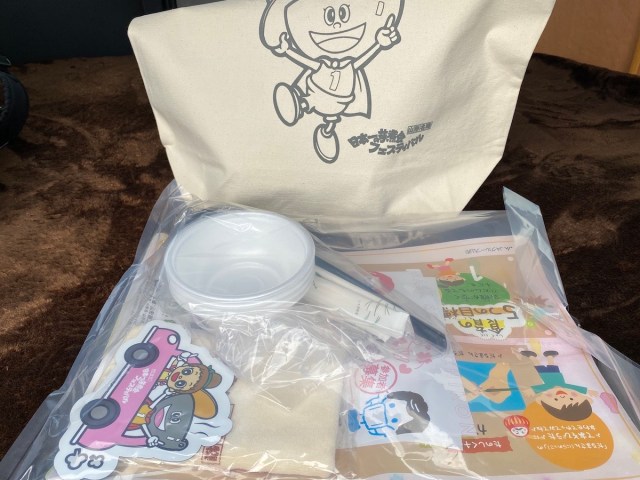
▼ The set also came with a tote bag, magnets and handkerchiefs, as well as utensils such as chopsticks and bowls.
As getting out of the car at the venue wasn’t allowed, once Saya had received her imoni all that was left to do was go and eat it. In keeping with the outdoors-y tradition of imoni-kai, Saya took her stew to a campsite and reheated it.
The seasonings and vegetables in imoni vary depending on the region. For example, Yamagata imoni has a soy sauce base to the soup, whereas neighbouring prefecture Miyagi uses miso paste. Even within Yamagata Prefecture itself there are different regional variants, and the imoni that Saya was enjoying today was the Murayama version: a beef stew with a sweet and salty broth. Yum!
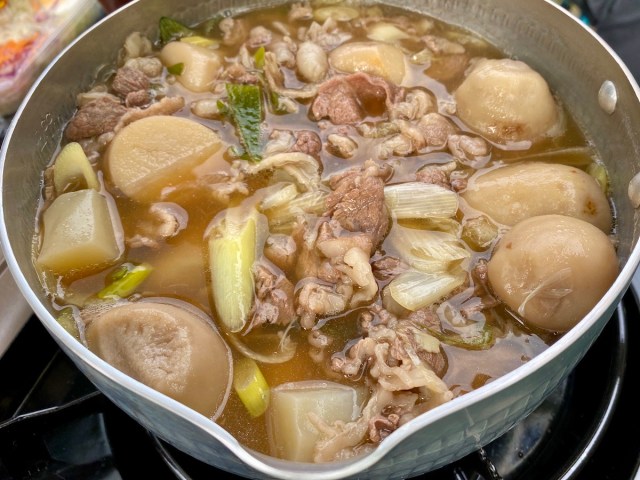
You may be questioning the use of the word “festival” at this point. After all, it’s not like Saya even got to leave her car and walk around! How is this a festival?
Well, in Saya’s opinion, imoni-kai is not just an event where people go and eat taro-root soup. Sure, that’s certainly a delicious part of it, but at the heart of it all, it’s an event where friends and families gather together to appreciate the turning of the season. As the days start to get colder, what better way to get through them with a piping hot bowl of soup?
It’s an event to celebrate the arrival of autumn. While being served soup made with a large construction vehicle is certainly awesome, you can still celebrate the changing of the seasons without it.
▼ Plus, you get to enjoy taro-root the size of a child’s fist!
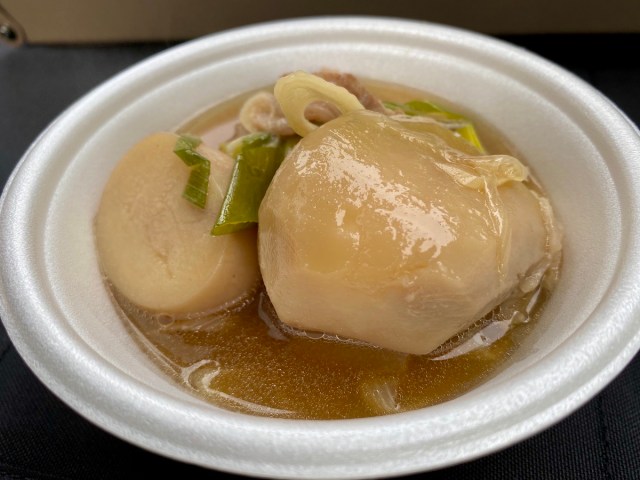
So in the end, while Saya didn’t get to see a giant crane scooping up piping hot bowls of stew this year, she appreciated the hard work and thoughtfulness from the organisers. Especially considering this year many other festivals had to be cancelled, the fact that the Imoni-kai could happen at all was much appreciated. The whole event ran very smoothly and Saya could enjoy the arrival of autumn with some imoni.
Fingers crossed that everything is back to normal for next year’s food festivals across the country, although there are some we probably wouldn’t mind skipping out on....
Photos: ©SoraNews24
● Want to hear about SoraNews24’s latest articles as soon as they’re published? Follow us on Facebook and Twitter!
[ Read in Japanese ]
 Imoni-kai: A hidden, delicious cultural gem of northern Japan
 We try making imoni, the beloved taro and beef stew of northern Japan【SoraKitchen】
 We try a traditional Tokyo dish of stewed loaches, encounter something we’ve never seen before
 Braving a Japanese national fireworks competition with 10x more people than the city population
 We try carving a Halloween pumpkin… to eat【SoraKitchen】
 Japan now has a special desk for people who work at home with a pet cat[Photos]
 Famous Tokyo cherry blossom spot installs view-blocking screens to fight overcrowding[Video]
 Uniqlo announces new T-shirts for One Piece, Naruto and more for manga publisher’s 100th birthday
 Starbucks Japan adds new Sencha Matcha Tea Frappuccino to its menu, but only at 28 locations
 Totoro and Calcifer become little light-up lanterns for Ghibli-style excursions or at-home decor
 Japanese kindness restores our faith in humanity after a highway bus accident in Tokyo
 Visiting Japan’s one-and-only, and only-for-a-limited-time, Dragon Ball noodle restaurant[Photos]
 Tokyo’s amazing 2D Cafe looks like an illustration, but it’s an actual restaurant you can eat in!
 Onigiri Bread from Japanese convenience store chain changes everything we know about rice balls
 The 5 best Japanese bento to buy at Kyoto Station
 Krispy Kreme releases Super Mario doughnuts in Japan for a limited time
 7-Eleven Japan releases a crazy new viral sandwich: Chocolate Sprinkles and Whipped Cream
 Japan now has a “for foreign tourists only” Mt. Fuji sightseeing train[Video]
 Starbucks Japan releases new My Fruit³ Frappuccino at only 34 stores around the country
 Studio Ghibli releases the My Neighbour Totoro tea caddy, with a magical self-closing lid
 Create a tiny Ghibli anime world on your bookshelf with new miniature papercraft art kits
 Stunning central Japan wisteria festival is like a purple fantasy straight out of a Ghibli movie
 Starbucks Japan unveils new sakura cherry blossom collection for hanami season 2026
 Train station platform ramen store closes its doors on half a century of history in Tokyo
 Studio Ghibli releases Catbus pullback keychain that runs like the anime character
 Japanese onsen egg maker from 100-yen store Daiso needs to be on your shopping list
 Nine great places to see spring flowers in Japan, as chosen by travelers (with almost no sakura)
 Cherry blossoms begin blooming in Japan with record-early starts for sakura season
 Survey asks foreign tourists what bothered them in Japan, more than half gave same answer
 Japan’s human washing machines will go on sale to general public, demos to be held in Tokyo
 Starbucks Japan releases new drinkware and goods for Valentine’s Day
 We deeply regret going into this tunnel on our walk in the mountains of Japan
 Studio Ghibli releases Kodama forest spirits from Princess Mononoke to light up your home
 Starbucks Japan releases new sakura goods and drinkware for cherry blossom season 2026
 Japan’s newest Shinkansen has no seats…or passengers [Video]
 Major Japanese hotel chain says reservations via overseas booking sites may not be valid
 Put sesame oil in your coffee? Japanese maker says it’s the best way to start your day【Taste test】
 No more using real katana for tourism activities, Japan’s National Police Agency says