
From the relatable to the amoo-sing, there’re idioms for Japanese language learners of all skill levels.
Based on the lunar calendar and a 12-year cycle, the Chinese zodiac plays an important role in multiple Asian countries. Rather than interpreting constellations, like the Western horoscope, the Chinese zodiac prescribes attributes to each year in its cycle that cover a wide range of topics, such as one’s personality and life events. Japan celebrates the start of the new year on January 1, when it also gets a head start on the upcoming Chinese zodiac animal. With celebrations for the Lunar New Year now underway across Asian countries and communities, it’s the Year of the Ox all over, so to celebrate we’re introducing five Japanese idiomatic expressions which feature the stubborn but dependable ox (or cow, since the Japanese language uses the same word for both of them).
1. Gyuuin bashoku — drink like an ox, eat like a horse
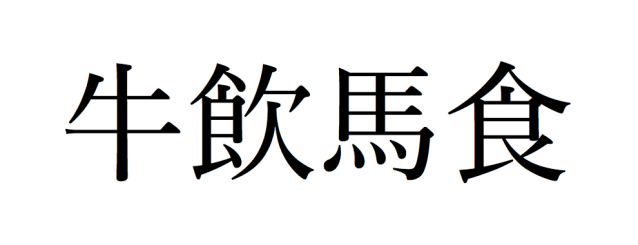
Ever ate way more than you needed to just because you can? Like how an ox drinks water and how a horse demolishes a pile of hay, this saying is the perfect way to summarize that you’re eating past your stomach’s limit. If your waistband suddenly feels a little too tight and you want to use this phrase, simply attach the verb shita (“did”) to declare “gyuuin bashoku shita” and revel in all the gluttonous glory.
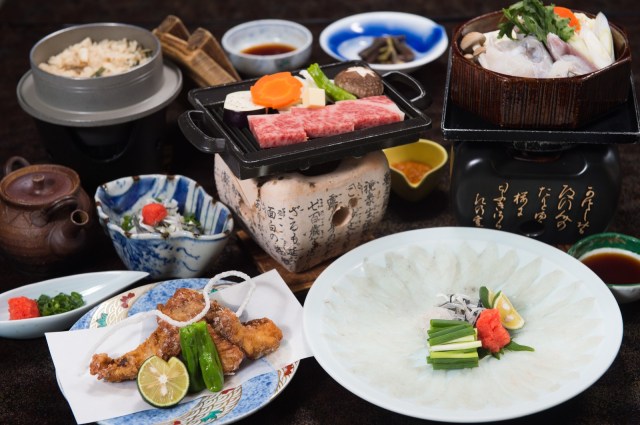
▼ Don’t mind me… itadakimasu!
2. Kyuugyuu ichimou — nine oxen, one hair
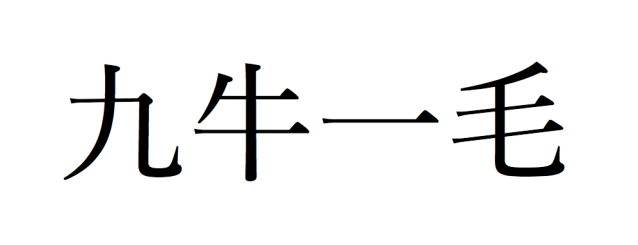
Alternately kyuugyuu no ichimou, kyuugyuu ichimou highlights something as trivial or insignificant, particularly when compared to something else larger in amount, size, or severity. However, the thing deemed trivial is not inherently lacking of value or meaning. For example, one million yen is a substantial amount of money, but it pales in comparison when juxtaposed with 40 million yen. Thus, the “nine ox” part of the idiom represents a much bigger amount, or the 40 million yen in this case, and the “one hair” part represents something that seems not-so-important in comparison a.k.a. the one million yen. The English idiom “drop in a bucket” also reflects a similar nuance, though depending on your preference, cows are definitely a lot cuter than a bucketful of liquid.
▼ Why look for one hair when you can stare at this adorable face?

3. Keikou gyuugo — rooster’s beak, ox’s behind
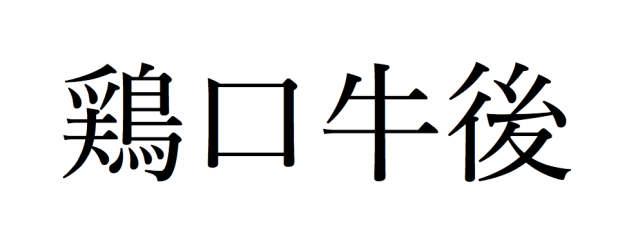
This idiomatic expression plays on the respective images of the rooster and the ox. While roosters are not the most physically powerful farm animal, they are often associated with leading positions, such as being in charge of the flock. Inverse to this is the ox. Though strong and large, the ox is subservient to the human machinations of farm work, frequently committed to the yoke and the plow. The idiom also stresses the disparity of their positions by the juxtaposition of the rooster’s small beak to the ox’s wide behind. Despite the robust farmyard imagery however, this idiom is most often used in relation to the job hunt with the following nuance: why make yourself subordinate to someone else in a large organization when you can be the leader of your own smaller company? Amusingly enough, the English compatriot to this idiom, “better to be a big fish in a small pond than a small fish in a big pond,” uses an animal motif to emphasize its point as well.
▼ On the other hand, sometimes it’s better to be an ox relaxing in a pasture!

4. Gyuuho senjutsu — tactics of an ox’s pace
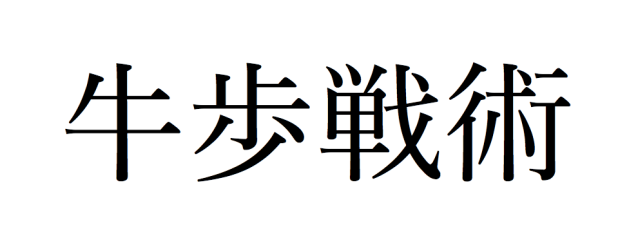
This idiom applies to situations where an individual willfully does a task slowly, especially at work, and some folks may think of the phrase “dragging one’s feet” as the closest equivalent. However, compared to its distantly related English counterpart, gyuuho senjutsu has a very special place in Japanese politics. The expression describes when members of the National Diet purposefully move slowly while turning in their vote in order to delay the passing of a bill. Gyuuho senjutsu is unlike the American filibuster in terms of process and success, but the phrase embodies the naturally languid movement of oxen and of politicians performing an expression of defiance.
▼ An example of gyuuho senjutsu happening in a 2015 Diet session (no, the video is not playing in slow motion)
5. Kangyuu jyuutou — sweating ox, filling (to the) roof
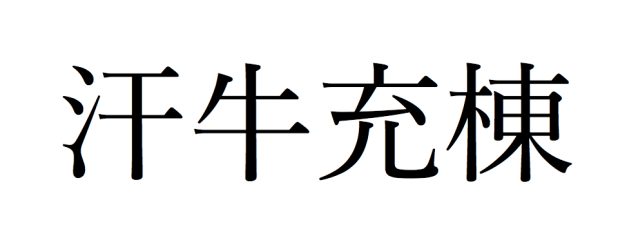
At first glance, one may think this idiom reflects a maxim about work ethic. But in reality, this idiomatic expression means… “having a great number of books.” Sweating ox? A roof? How does that relate to books? This unique saying actually employs a more extended visual metaphor for its usage. Kangyuu jyuutou isn’t necessarily describing a modest stack of books as it is describing a mountain of books—so many that the pile reaches the ceiling, and if it was to be transported by a cart, even a mighty ox pulling the cart would be sweating at the feat. And while there are more casual ways to describe the phenomenon of book hoarding that often plagues bibliophiles, such as the word tsundoku (literally “pile” and “read”), there’s something beautiful about knowing that your ever-growing book collection can be captured in a complex, scene-building idiom.
Reference: Yojijyukugo Jiten (1, 2, 3, 4, 5)
Top image: Wikipedia/柳川重宣
Insert images: SoraNews24, Pakutaso (1, 2, 3)
● Want to hear about SoraNews24’s latest articles as soon as they’re published? Follow us on Facebook and Twitter!
 Chinese zodiac Evangelion characters are here to wish you a happy, chibi Year of the Ox【Pics】
 Wisteria season starts early with blooming of Japan’s Great Wisteria in its beautiful garden
 Japan’s best conveyor belt sushi restaurant of seven years ago has now, finally, come to Tokyo
 Japanese government wants overseas anime market to roughly triple in 10 years, but are they crazy?
 Japanese bento shop sells croquettes for 13 cents, but are they any good?
 Howl’s Moving Castle’s scene-stealing dog is here to clean your home as a plushie mop
 Japan has new rules for bicycle riders, and these 14 things could get you a fine or a court date
 Japanese city abolishes 88th birthday celebratory money gift because people are living longer
 Japanese trains in Sapporo might be better than those in Tokyo, thanks to one special feature
 Akiba Dental Clinic: The Akihabara dentist where a moe maid in cosplay cleans your teeth
 We try new ‘adrift at sea’ experience and end up floating alone on the Yamaguchi coast
 Japan reportedly adding Japanese language skill requirement to most common foreigner work visa
 Mt. Fuji decorated with a 500,000-flower pink carpet is Japan’s ultimate spring view
 Lawson convenience store at popular tourist site is one of the most unusual in Japan
 30 Pikachus want to share a Tokyo hotel room with you that has separate Grass, Water, Fire spaces
 Man bites woman at cherry blossom park in Japan, dies shortly after
 Starbucks Japan releases FIVE new Frappuccinos in a day, and we try them all in 90 minutes
 Pokémon and Ikea Japan cross over into each other’s worlds with collaboration events
 Japan now has a special desk for people who work at home with a pet cat[Photos]
 Famous Tokyo cherry blossom spot installs view-blocking screens to fight overcrowding[Video]
 Uniqlo announces new T-shirts for One Piece, Naruto and more for manga publisher’s 100th birthday
 Train station platform ramen store closes its doors on half a century of history in Tokyo
 Starbucks Japan releases new My Fruit³ Frappuccino at only 34 stores around the country
 Krispy Kreme releases Super Mario doughnuts in Japan for a limited time
 Survey asks foreign tourists what bothered them in Japan, more than half gave same answer
 Japan’s human washing machines will go on sale to general public, demos to be held in Tokyo
 Starbucks Japan releases new drinkware and goods for Valentine’s Day
 We deeply regret going into this tunnel on our walk in the mountains of Japan
 Starbucks Japan releases new sakura goods and drinkware for cherry blossom season 2026
 Studio Ghibli releases Kodama forest spirits from Princess Mononoke to light up your home
 Japan’s newest Shinkansen has no seats…or passengers [Video]
 Major Japanese hotel chain says reservations via overseas booking sites may not be valid
 Put sesame oil in your coffee? Japanese maker says it’s the best way to start your day【Taste test】
 No more using real katana for tourism activities, Japan’s National Police Agency says