
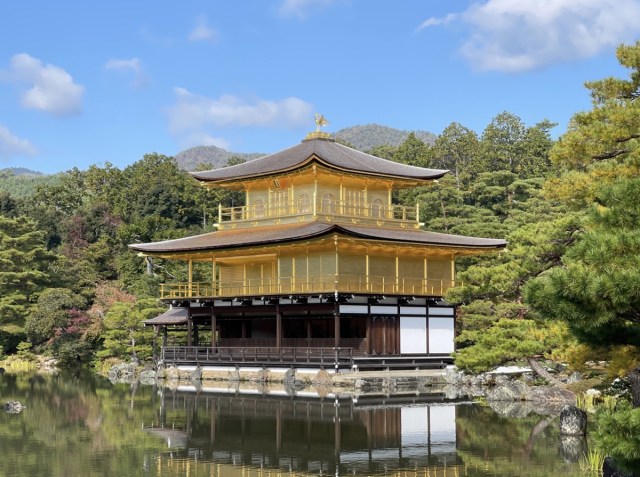
We visit the top tourist sites, and are surprised at what we discover.
In recent years, Kyoto has been buckling under the strain of overtourism, with congestion, bad behaviour, and etiquette problems becoming so widely reported in news reports that some people in Japan now totally avoid going there.
That all changed at the beginning of last year, however, when the coronavirus pandemic shut the country off to international tourism. The normally crowded tourist sites in the ancient capital became a lot quieter, and locals starting visiting again, not only to see the beautiful shrines and temples in the city, but to view them as they used to decades ago, before overtourism stole their quiet beauty.
Now, as the country begins to open up and people start travelling more freely again, there have been mixed reports about the number of tourists in Kyoto, with some reporting that the crowds are back at the city’s magnificent tourist sites.
We decided to take a look for ourselves to see what the crowds are really like right now, so sit back, relax, and join us as we take you on a virtual tour of some of the most popular spots in Kyoto, starting with:
▼ Kinkakuji
Also known as the Golden Pavilion, Kinkakuji is one of the most popular tourist destinations in Kyoto, often topping the list of must-see sites for foreign visitors to the city. The place where visitors congregate is just across the pond from the Pavilion, where people can capture the best photos of the glistening structure and its reflections in the water.
▼ The classic viewing spot is circled below.
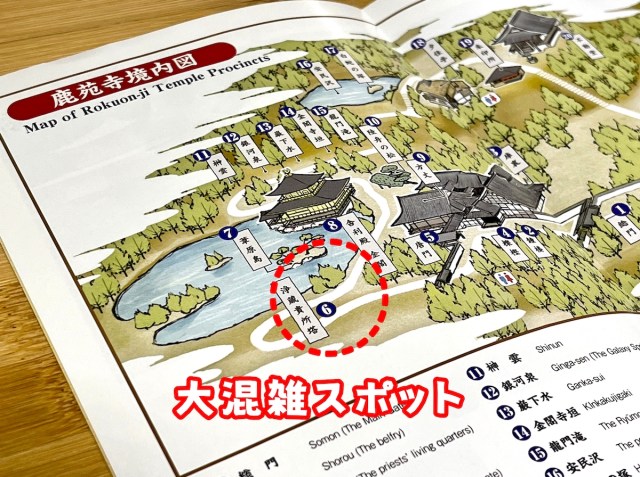
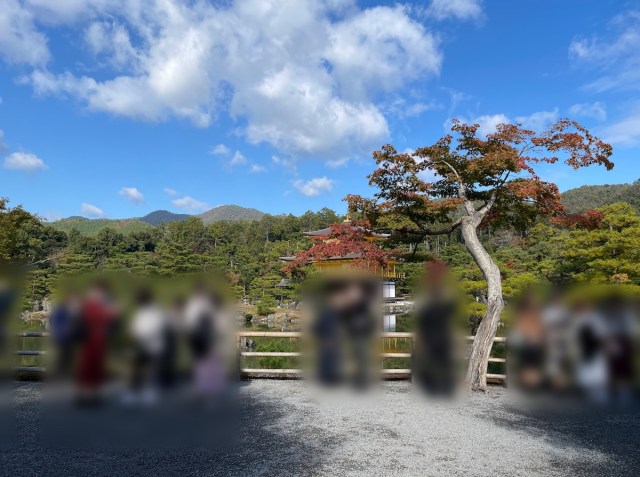
It can be shoulder-to-shoulder here at times, especially when big tour buses arrive, offloading big groups of people who all jostle for a front-row view of the building. However, when we arrived at 10 a.m. on a weekday in early November, there was plenty of room to move at the viewing spot.
▼ The people in our photos have been blurred to protect their privacy, but you can still get a good sense of the crowd levels.
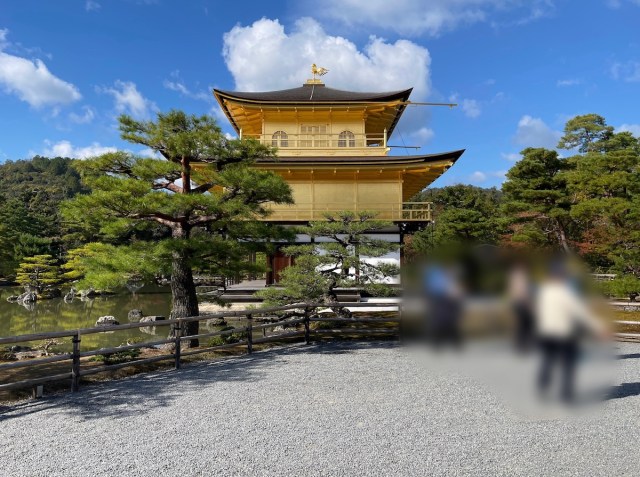
Even here, a little further into the gardens, where you can get a closer look at the Pavilion, there weren’t any crowds obscuring our view.
The garden was wonderfully quiet, and this thatched hut, which is usually surrounded by visitors looking to buy amulets and souvenirs, didn’t have one customer when we visited.
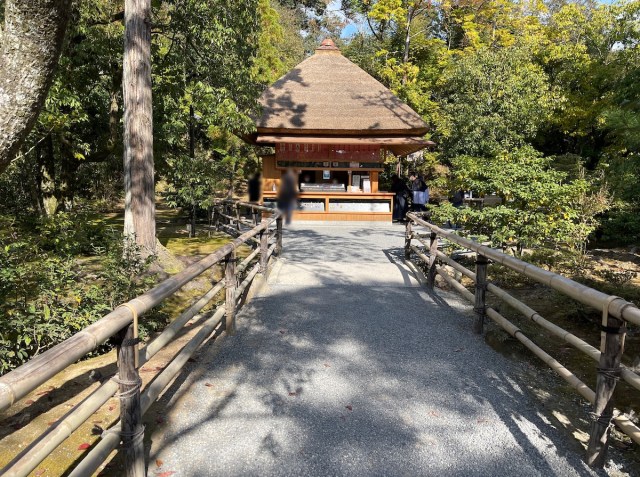
We were truly surprised by how few people there were at Kinkakuji, and it was the first time we’d been there without being surrounded by noise and throngs of tourists. It may be one of the 17 nationally protected Historic Monuments of Ancient Kyoto, which are classified as a World Heritage Site, but right now it feels more like a beautiful local park that tourists haven’t discovered yet.
After leaving the Golden Pavilion, it was time to visit the Silver Pavilion, otherwise known as:
▼ Ginkakuji
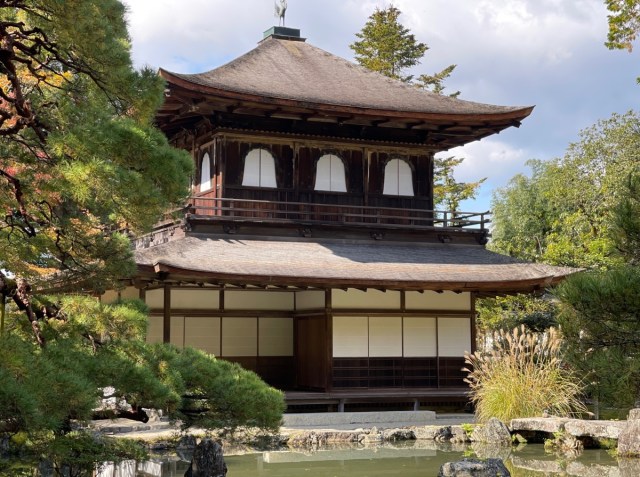
We were here at around 11:00 a.m. on a weekday, and from what we could see, there were a few more visitors around us. We figured the slight increase in people was to be expected, as crowds naturally tend to get larger as the day progresses, no matter where you are in the world.
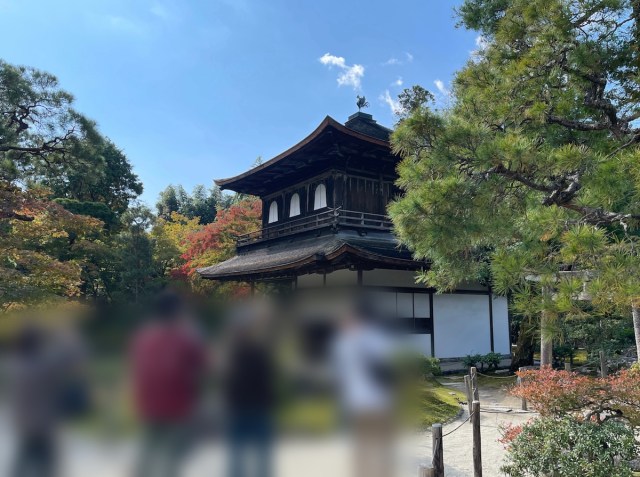
It was slightly harder to snap a photo without people obscuring our view here, but in the grand scheme of things, the numbers at Ginkakuji were nowhere near as large as usual. A short distance away from the pavilion, in the moss garden section, for example, we felt as if we had the whole place to ourselves.
▼ No need to photoshop anyone out of this photo!
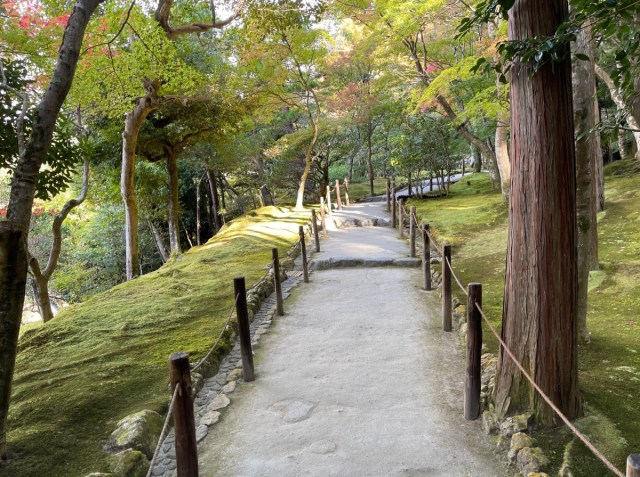
Without the maddening crowds, our senses felt strangely heightened in a way they never had been before on our previous trips to Ginkakuji. We were able to take deep breaths, quietly observe the greenery, and soak up the rays of the autumn sun, relishing the peace and quiet.
Both Kinkakuji and Ginkakuji are roughly thirty minutes away from the city centre by car, so we wondered if things might be a little more crowded at some of the more centrally located tourist sites, like:
▼ Kiyomizudera
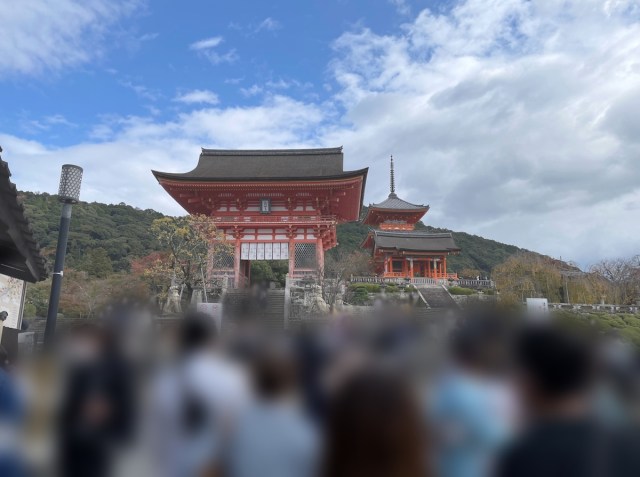
People in the travel industry often refer to this temple as the most popular tourist destination in Kyoto. By the time we got there, it was around one in the afternoon, and at this time of day, it was teeming with people.
The parking lot was filled with sightseeing buses, and while the store-lined approach to the temple wasn’t as crowded as usual, it was still bustling, and crowded to the point that if you were to suddenly stop walking, someone would almost certainly bump into you from behind.
▼ However, once we’d made it past the crowds and up to the famous wooden stage that juts off the main hall of the temple, we were surprised to see this.
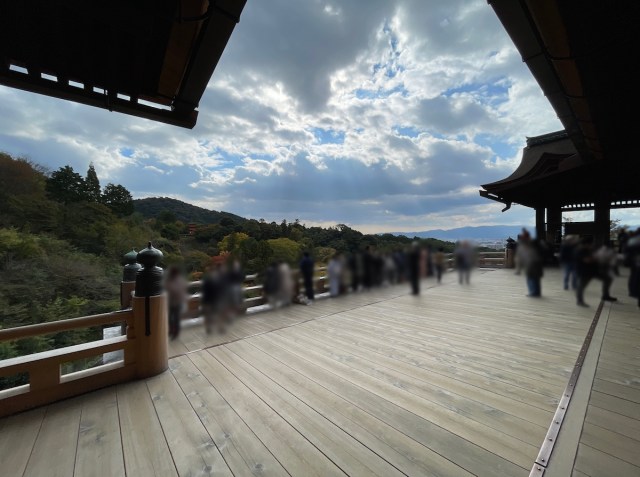
As you can see, there was plenty of room to walk around here, and if you’ve ever visited this site before, you’ll know that this spot is usually heaving with tourists. So we took a moment to stop here and savour this front-row view of the city.
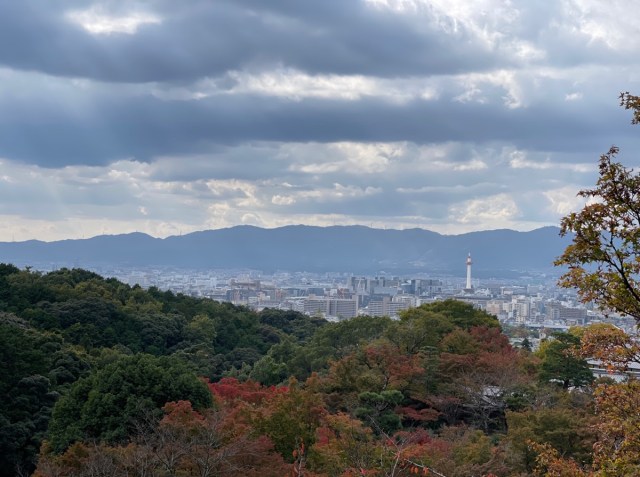
It should be noted that autumn is one of the busiest times of the year in Kyoto, when tourists flock to the city to admire the beautiful fall foliage. So it’s understandable that a lot of people were here when we visited in November, but still, like the other places we stopped at, it was noticeably less busy than usual.
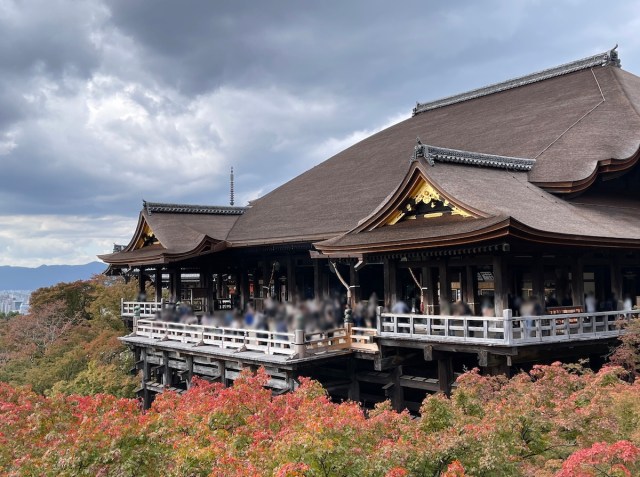
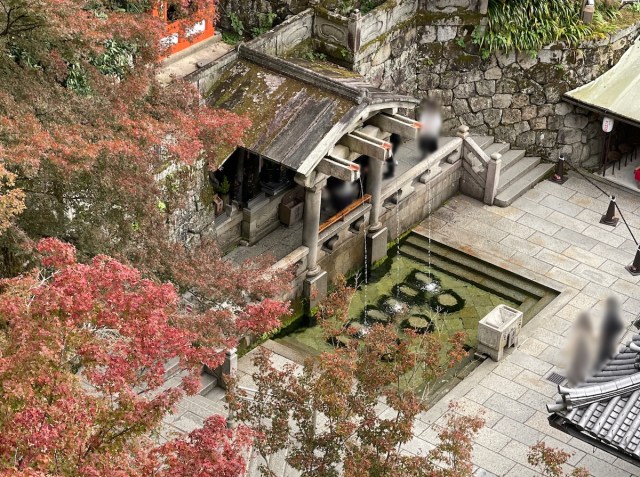
Down at Otowa-no-taki, Kiyomizudera’s famous waterfall, for instance, there was hardly any waiting time to get up close to the healing waters.
After visiting Kiyomizudera, we returned to the store-lined approach to the temple at around 1:30 p.m., and by this time, people were filling the narrow walkway.
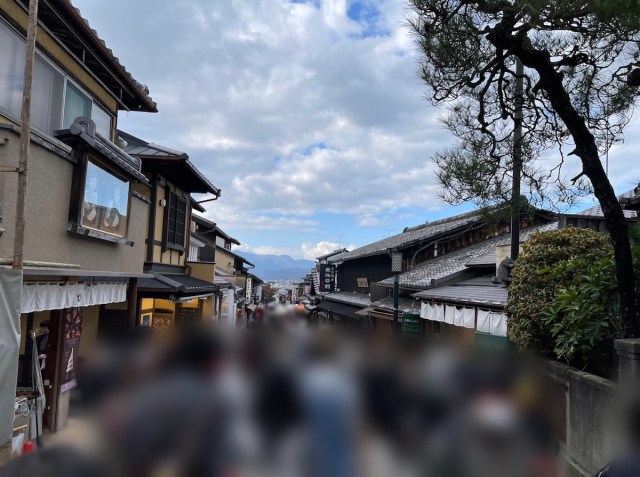
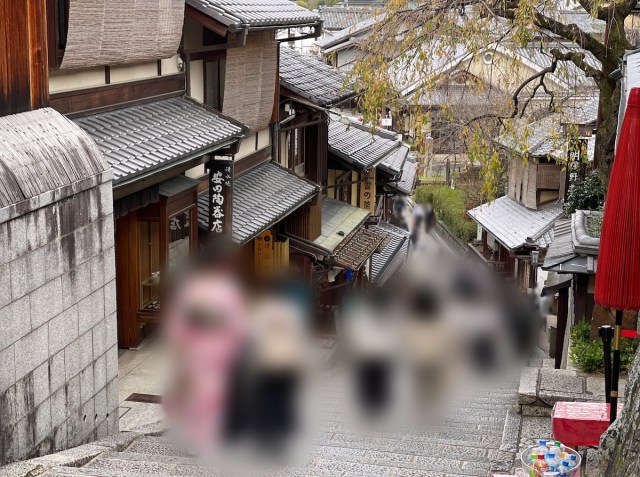
This was the busiest spot we’d visited so far, yet, when we came to the Sannenzaka part of the approach, the crowds thinned out considerably. This famous photo spot is usually filled with tour groups, but today there was just a scattering of people around us, giving us a whole new perspective on it all.
▼ Without the crowds, it’s like stepping back in time.
The quiet beauty of these sites was really beginning to crack away at the hardened perceptions we had of Kyoto as a too-hard-to-handle tourist town, so we were keen to keep things going by making our way to another magical spot:
▼ Fushimi Inari Taisha
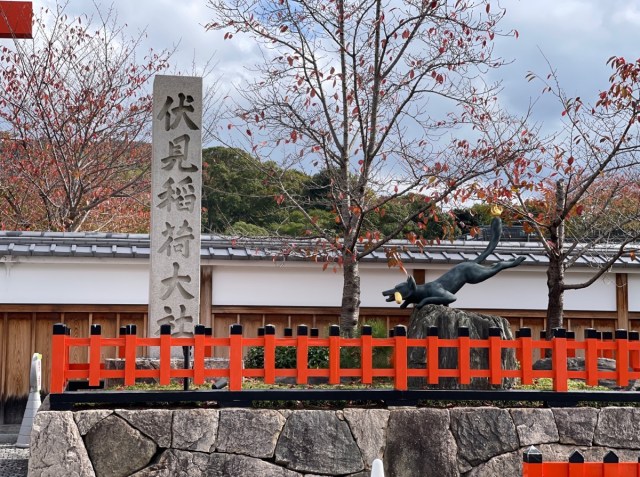
This shrine is most famous for its thousands of vermilion torii gates, which are so popular with tourists that guide books recommend people get up before dawn to see them before the crowds arrive.
The first torii is located right outside Inari Station, which is just three stops away from Kyoto Station, making it an easy spot for tourists to get to. However, at around 11 a.m. on the weekday we visited, there was hardly anybody here.
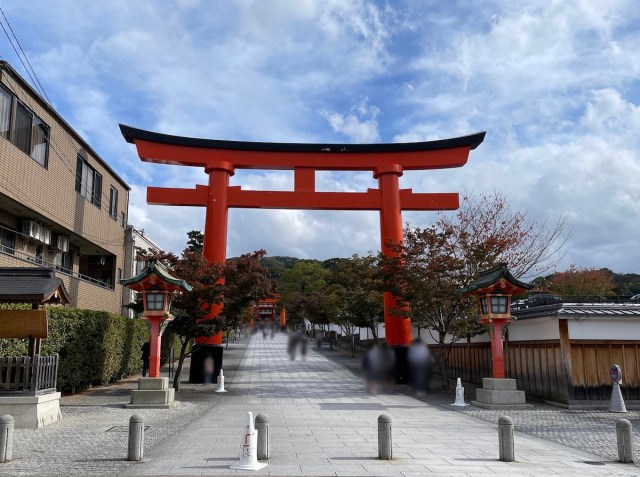
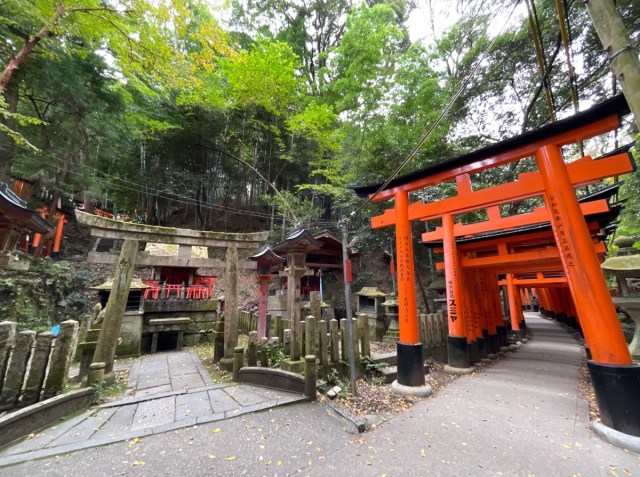
We enjoyed every moment of the peace and quiet as we made our way up the approach and into the main grounds of the shrine. And when we got to the rows of torii gates that line the mountain, it was eerily quiet, which added to the mysterious, atmospheric feel of the site.
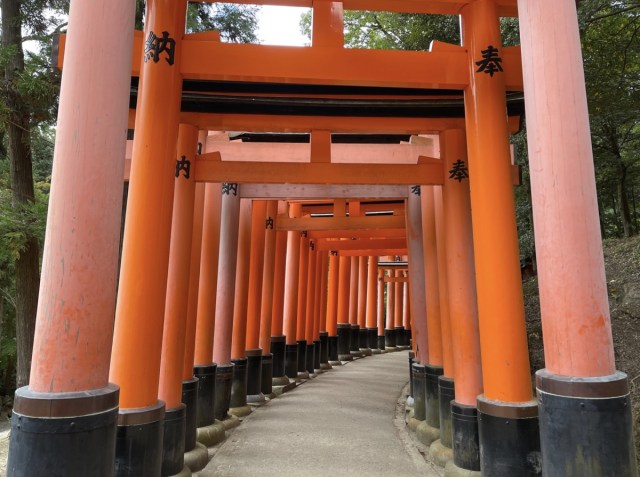
There were so many moments here when there was absolutely nobody in front or behind us. Having the place entirely to ourselves was something we’d never experienced before, and the quiet stillness made it incredibly moving, as if we were lost in a spirit world.
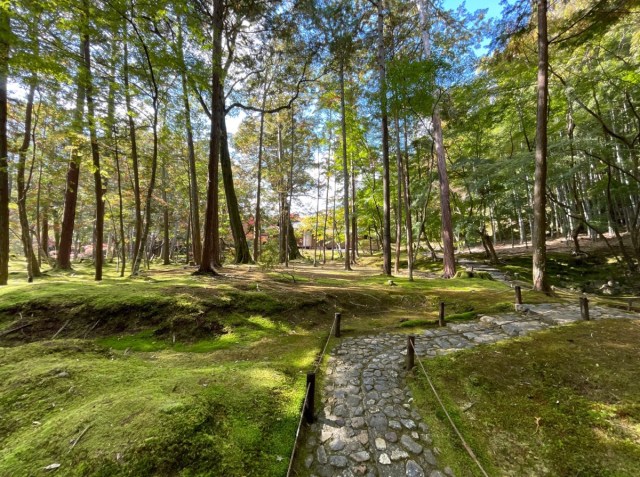
After visiting the big-name tourist spots in Kyoto, we stopped by a number of other sites to see how they were doing. Over at Saihoji, better known as “Kokedera” or “Moss Temple,” guests are required to book a visiting time via a pre-reservation system, in order to “maintain the authenticity of Saihoji as a functioning Zen temple—that is, a place of religious practice where visitors enjoy a peaceful atmosphere for prayer or meditation—rather than a commercial temple”.
Online applications opened on 1 June in Japanese, with an English version currently being prepared. The reservation system really does help to control visitor numbers, because when we visited, it looked like this:
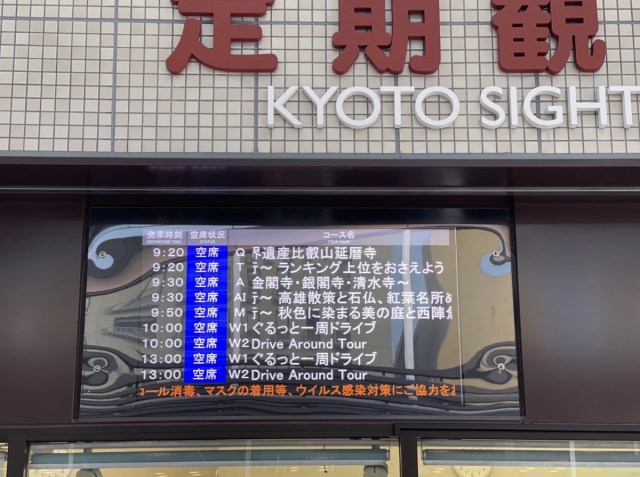
Over at the Kyoto Regular Tour Bus, there was a row of blue on the notice board, indicating vacant seats available on all departures.
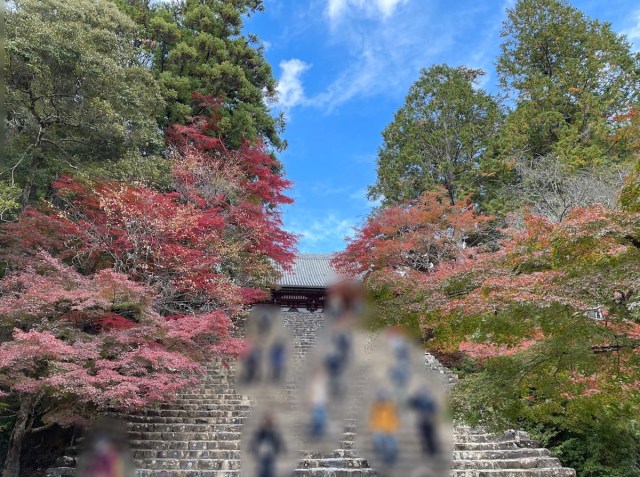
And at Saimyoji temple, during the peak autumn-leaf viewing season? Ah, the serenity.
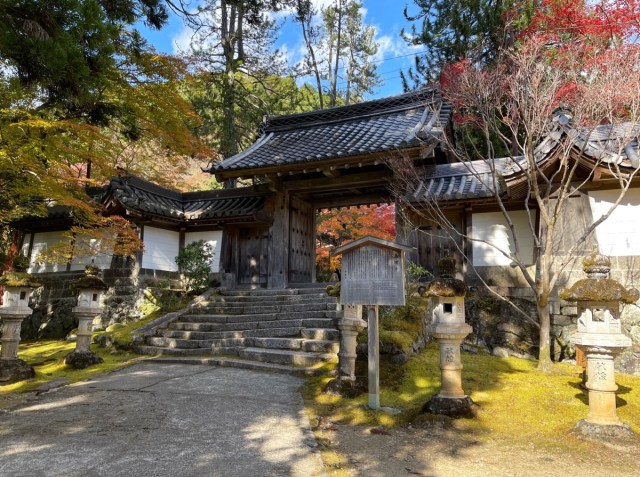
Jingoji wasn’t devoid of tourists, but the numbers were low, helping to create a relaxed atmosphere at the temple.
So what do we think about the state of Kyoto right now? Well, with scenes like this awaiting you, now is the time to explore this magnificent city.
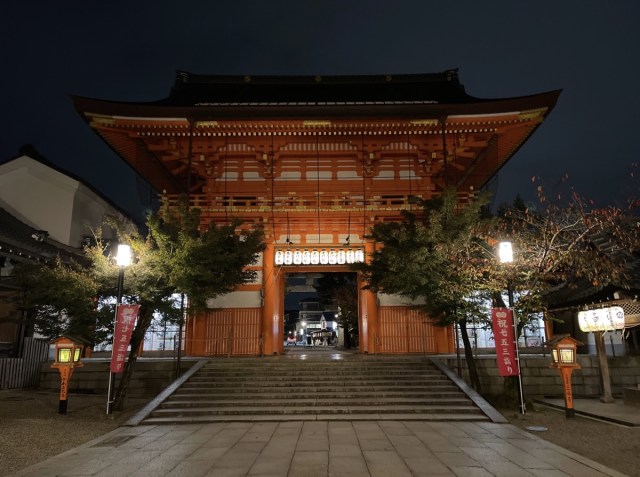
It’ll no doubt get a little busier towards the end of this month, when a lot of the autumn leaves reach their peak beauty, but even then, the city won’t be at pre-pandemic tourist levels. And of course, visiting on a weekday and travelling by public transport is going to be your best bet for enjoying the city without the usual stress of crowds and congestion.
People in Japan may be blessed with the opportunity to enjoy Kyoto’s tourist sites without the crowds at the moment, but if you think about it, it’s a bit of a double-edged sword as Kyoto relies heavily on the tourist industry to keep it alive and thriving.
So it’s good to know that until international tourists return to breathe life into the city once more, local tourists from across Japan will keep it going. Because enjoying the treasures that exist in our own backyards is something we’re all rediscovering at the moment, even if it means risking your friendship at a supernatural temple.
Photos ©SoraNews24
● Want to hear about SoraNews24’s latest articles as soon as they’re published? Follow us on Facebook and Twitter!
[ Read in Japanese ]
 Is Kyoto really as crowded with foreign tourists as they say?
 Minecraft User Decides to Make Kinkakuji, Eventually Creates the Entire City of Kyoto
 Heavy snowfall in Kyoto creates scenes of breathtaking beauty at tourist sites around the city
 Kyoto tourist crowds disappearing due to coronavirus outbreak, creating travel crisis/opportunity
 Kyoto’s Kinkakuji creates unusual photo opportunity for visitors
 Japan now has a special desk for people who work at home with a pet cat[Photos]
 Japanese masturbatory aid and insect repellent companies collab on a new product
 Why is Yoshinoya called Yoshinoya?
 This standing sushi bar inside a Tokyo train station blew us away with its speedy deliciousness
 Japan’s favorite sandwich pockets now come with sakura filling, but how do they taste?[Taste test]
 Picturesque Tokyo park plays host to millions of flowers and soap bubbles this spring
 Pick a beautiful blossom from Shinjuku Station’s limited-time flower vending machine
 What exactly is the treat known as a “kougnané” that’s sold outside Tokyo’s Yurakucho Station?
 Famous Tokyo cherry blossom spot installs view-blocking screens to fight overcrowding[Video]
 New Kirby Cafe coming to Japan’s most underappreciated foodie town with exclusive menu items
 Uniqlo announces new T-shirts for One Piece, Naruto and more for manga publisher’s 100th birthday
 Krispy Kreme releases Super Mario doughnuts in Japan for a limited time
 7-Eleven Japan releases a crazy new viral sandwich: Chocolate Sprinkles and Whipped Cream
 Japan now has a “for foreign tourists only” Mt. Fuji sightseeing train[Video]
 Totoro and Calcifer become little light-up lanterns for Ghibli-style excursions or at-home decor
 Studio Ghibli releases the My Neighbour Totoro tea caddy, with a magical self-closing lid
 Create a tiny Ghibli anime world on your bookshelf with new miniature papercraft art kits
 Starbucks Japan unveils new sakura cherry blossom collection for hanami season 2026
 Train station platform ramen store closes its doors on half a century of history in Tokyo
 Starbucks Japan releases new My Fruit³ Frappuccino at only 34 stores around the country
 Studio Ghibli releases Catbus pullback keychain that runs like the anime character
 Japanese onsen egg maker from 100-yen store Daiso needs to be on your shopping list
 Nine great places to see spring flowers in Japan, as chosen by travelers (with almost no sakura)
 Survey asks foreign tourists what bothered them in Japan, more than half gave same answer
 Japan’s human washing machines will go on sale to general public, demos to be held in Tokyo
 Starbucks Japan releases new drinkware and goods for Valentine’s Day
 We deeply regret going into this tunnel on our walk in the mountains of Japan
 Studio Ghibli releases Kodama forest spirits from Princess Mononoke to light up your home
 Starbucks Japan releases new sakura goods and drinkware for cherry blossom season 2026
 Japan’s newest Shinkansen has no seats…or passengers [Video]
 Major Japanese hotel chain says reservations via overseas booking sites may not be valid
 Put sesame oil in your coffee? Japanese maker says it’s the best way to start your day【Taste test】
 No more using real katana for tourism activities, Japan’s National Police Agency says
 Explore Kyoto tourist site Fushimi Inari Taisha shrine with Unreal Engine 4 【Video】
 Tourists in Kyoto cause chaos at railway crossing near Fushimi Inari Taisha
 Tourists warned about fake volunteer guide near Kinkakuji in Kyoto
 Foreign tourists blasted for chasing maiko and geisha on streets of Kyoto【Video】
 Magical train ride through Japan’s autumn leaves is like travelling to a different world【Video】
 Top 30 tourist sites in Japan: the most popular sightseeing spots for overseas visitors
 “Feel” and experience Kyoto’s Kiyomizu Temple from afar via Tumblr
 Kyoto’s Tofukuji temple opens secret area above Sanmon Gate to the public
 Visit top Kyoto sites and escape the crowds with new early-morning sakura sightseeing campaign
 Japanese shrine may have created the most Kyoto-like “wear a mask” reminder ever
 Kyoto creates new for-tourist buses to address overtourism with higher prices, faster rides
 Japanese photographer captures the beauty of Kyoto in the snow 【Photos】
 Japan Travel: Mysterious rockstar Jizo statue found at Kiyomizudera temple
 Kyoto temple bans photography at famous autumn foliage viewing spots
 What are the top 10 most popular shrines among international tourists? Study reveals…
 Step into a magical spirit world at the Motomiya Festival at Fushimi Inari Shrine in Kyoto