
As hit anime’s “Entertainment District Arc” kicks off, Edo-Tokyo Museum reaffirms commitment to telling the complete real-world story.
The second season of Demon Slayer: Kimetsu no Yaiba began back in October, but it spent its first seven episodes on what it called the Mugen Train Arc, covering essentially the same ground as the Mugen Train anime movie. So what fans were really waiting for was December 5, when Demon Slayer started its Entertainment District Arc, which is being adapted to anime for the first time.
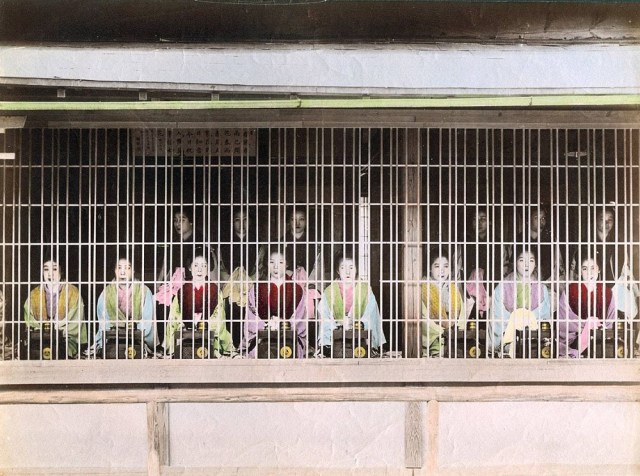
The Entertainment District Arc is set in Yoshiwara, a real-world neighborhood of Tokyo in an area that would now be part of Taito Ward, in the northeast part of the city’s downtown. Because of that historical connection, on December 6, one day after the first Entertainment District Arc aired in Japan, Tokyo’s Edo-Tokyo Museum sent out a tweet promoting its Yoshiwara-related artifacts and displays, with a #Kimetsu no Yaiba hashtag as part of the tweet.
元禄期の吉原の風物を描いた「吉原風俗図屏風」。吉原は歌舞伎やドラマ、漫画でも題材となることが多く、最近ではアニメ #鬼滅の刃 遊郭編 の舞台にもなっています。煌びやかな遊郭の世界をご覧ください。
— 江戸東京博物館 (@edohakugibochan) December 6, 2021
江戸ゾーン 芝居と遊里コーナーにて12月19日(日)まで展示#江戸東京博物館 pic.twitter.com/X7qKSLUopE
This particular piece, which the tweet says will be on display until December 19, is described with:
“This Yoshiwara Fuzoku Painted Scroll was made in the Genroku-period (1688-1704). There are many TV dramas and manga set in Yoshiwara, and it is also the setting of the recently started Entertainment District Arc of the anime #Kimetsu no Yaiba.
Please take a look at this glamorous, glittering world.”
While that might at first seem like an innocuous attempt to attract attention from anime fans by connecting the museum to the most popular anime in Japan, the tweet also attracted a number of angry replies. As we discussed several months ago, “Entertainment District Arc” is the official English translation Demon Slayer is going with for this section of the story, but “entertainment district” is a pretty loose translation of yukaku, the word used in the arc’s Japanese-language title. Yukaku evokes a more old-time and lascivious image, and a more fitting translation would be “pleasure quarter,” or “red-light district.” The latter would be especially appropriate for Demon Slayer, since Yoshiwara was packed with brothels.
Though Yoshiwara was a legal, licensed brothel district during its heyday, present-day sensibilities towards prostitution, and the living conditions of the women employed in it, are considerably different than they were in the Genroku Period, and even the Taisho Period (1912-1926) in which Demon Slayer takes place. As such, a number of Twitter users replied to the museum’s tweets to voice their opinion that “glamorous” and “glittering” aren’t the appropriate adjectives to describe Yoshiwara, with reactions including:
“Shouldn’t you mention that Yoshiwara only felt ‘glamorous and glittering’ from the perspective of the customers?”
“I’m thinking it was only the people who didn’t live and work in Yoshiwara who found it ‘glamorous and glittering.’ All those pretty clothes and colorful decoration probably felt ash-gray to the people who worked there.”
“By the values of those of us alive today, the women depicted in that scroll were treated like slaves, or even livestock. As a museum, shouldn’t you be mentioning that too?”
“A ‘glamorous and glittering’ picture of enslaved women.”
There were also a few comments in defense of the museum’s choice of words, or at least not particularly offended by them, such as “I don’t think it makes sense to judge past events by standards outside their historical context” and “At the time, prostitution wasn’t thought of by society in such a negative way.” The overall-negative reaction, though, prompted the museum to send out an apology tweet, and also to clarify how the institution presents Yoshiwara and its history in its exhibits.
当館の展示では吉原が江戸文化の形成に大きな役割を果たした「表」の面と経済的な理由から身を売らざるを得なかった遊女たちの苦しい実像という「裏」の面、両面を紹介しています。12月6日の「吉原風俗図屏風」を紹介したツイートで「煌びやかな遊郭の世界」の表現は不適切でした。お詫び申し上げます pic.twitter.com/WdJTBlwYe7
— 江戸東京博物館 (@edohakugibochan) December 8, 2021
“In our museum’s exhibits, we present both the outward-facing aspects of Yoshiwara, such as the major role it played in the development of aspects of Edo [Tokyo] culture, as well as the harsh inner realities of the economic conditions under which women felt forced to sell their bodies.
In our December 6 tweet about the Yoshiwara Fuzoku Painted Scroll, our use of ‘a glamorous, glittering world” was inappropriate. We deeply apologize.”
The tweet is accompanied with infographics from the museum’s Yoshiwara display, with statements such as “It was a mercilessly cruel working environment in which the women were allowed hardly any time to sleep or food to eat,” and they’re not kidding about that. Also shown is a photo of Jokanji, a temple on the outskirts of Yoshiwara where prostitutes without the financial means or familial connections for a personal or family grave, had their ashes interred in a collective grave for women of their trade.
▼ The collective grave still exists today, and some visitors leave hair ornaments and lipstick behind as offerings for the deceased.
三ノ輪浄閑寺。俗に投げ込み寺。吉原遊廓で横死した遊女、岡場所で没した身寄りない娼婦が葬られている。遊女が堕胎した水子、遣手など含めれば推定2万5千人が眠る。住職によれば、ここ十年ほど髪飾りや口紅が供えられるようになったというが、奇しくもセックスワーカーへの理解とリンクしている。 pic.twitter.com/xWqxKGBI0a
— 渡辺豪 (@yuukakubu) November 15, 2020
It’s worth noting that, for all its negative factors, particularly from the vantage point of today, Yoshiwara did have an undeniable influence on the arts and culture in Japan. During the feudal period in which the district was established, the ruling Shogunate discouraged the common people from displays of extravagance, sternly extolling the virtues of an austere lifestyle. Attitudes were much more relaxed inside Yoshiwara, though, and as a result the district is cited as the starting point of numerous trends in fashion, from kimono design to what are now considered classical Japanese hairstyling and makeup. While sex was the main thing crowds came for, Yoshiwara also provided clothes-on entertainment, such as music and dance, and brothels’ attempts to outdo one another, as well as customers’ desire to stand out in the eyes of a courtesan with lavish gifts, also made the district a gathering place for painters, craftsmen, and other artisans. Additionally, cultural values at the time generally frowned on open displays of amour or attraction. Once again, though, Yoshiwara was an exception, resulting in the district becoming a popular setting for tales of passionate period romance in stage drama and literature.
All of that gives Yoshiwara a complex position in Japanese history, and the Edo-Tokyo Museum is far from the only historical facility or scholar to acknowledge the cultural contributions of Japan’s largest provider of prostitution. At the same time, even the museum itself acknowledges that its initial tweet was too small a frame to fit the whole picture in.
Source: Twitter/@edohakugibochan via J-Cast News via Jin
Top image: Wikipedia/Gryffindor
● Want to hear about SoraNews24’s latest articles as soon as they’re published? Follow us on Facebook and Twitter!
 Demon Slayer Season 2 won’t be toning down its red-light-district setting, TV exec says
 Demon Slayer anime’s Season 2 announced, and it’s coming soon!【Video】
 Demon Slayer anime is heading to Swordsmith Village as new season is immediately greenlit
 First preview for Demon Slayer’s new Swordsmith Village Arc is here!【Video】
 Tokyo Demon Slayer store’s edible “bamboo tubes” are surprisingly phallic-looking, fans find
 Japan reportedly adding Japanese language skill requirement to most common foreigner work visa
 Japanese manhole lid raises eyebrows with fertility god symbol that looks like… well, you know
 New Japanese KitKats come in sakura flavour, with poetic symbolism for success
 New 7-Eleven sandwich goes viral in Japan, but is it everything it’s cracked up to be?
 Ultra-realistic cat latte art blows us away, puts us off our coffee
 Haku is…Chihiro’s dead brother? Studio Ghibli fans blown away by Spirited Away theory
 Tokyo Station staff share their top 10 favorite ekiben
 How to put together a senbero drinking/snack session at Japan’s 100-yen convenience store【Photos】
 Foreign man arrested for walking on Shinkansen tracks, claims he was on the run from yakuza
 Schoolkids learn life skills through shopping field trips at street markets in Kochi Prefecture
 Pokémon and Ikea Japan cross over into each other’s worlds with collaboration events
 Starbucks Japan closing only Shinkansen platform branch for popularity-triggered renovations
 Two food hacks take Japan’s convenience store fried chicken to amazing new sandwich heights
 You can assemble a well-balanced team of Pokémon, them eat them, thanks to Japanese cake chain
 Fading Tokyo – Searching for signs of the Showa era as local neighborhoods evolve[Photos]
 Pokémon lacquerware series expands for Year of the Horse with new handcrafted design[Video]
 Tokyo turns its phone booths into free Wi-Fi hotspots, and here’s how to use them
 Tokyo teahouse serves up a sakura matcha dessert you won’t find anywhere else
 Totoro Fund line of beautiful artwork and apparel lets you help the real-world Totoro Forest
 Japan now has a special desk for people who work at home with a pet cat[Photos]
 Famous Tokyo cherry blossom spot installs view-blocking screens to fight overcrowding[Video]
 Uniqlo announces new T-shirts for One Piece, Naruto and more for manga publisher’s 100th birthday
 Train station platform ramen store closes its doors on half a century of history in Tokyo
 Starbucks Japan releases new My Fruit³ Frappuccino at only 34 stores around the country
 Studio Ghibli releases Catbus pullback keychain that runs like the anime character
 Krispy Kreme releases Super Mario doughnuts in Japan for a limited time
 Japanese onsen egg maker from 100-yen store Daiso needs to be on your shopping list
 Survey asks foreign tourists what bothered them in Japan, more than half gave same answer
 Japan’s human washing machines will go on sale to general public, demos to be held in Tokyo
 Starbucks Japan releases new drinkware and goods for Valentine’s Day
 We deeply regret going into this tunnel on our walk in the mountains of Japan
 Studio Ghibli releases Kodama forest spirits from Princess Mononoke to light up your home
 Starbucks Japan releases new sakura goods and drinkware for cherry blossom season 2026
 Japan’s newest Shinkansen has no seats…or passengers [Video]
 Major Japanese hotel chain says reservations via overseas booking sites may not be valid
 Put sesame oil in your coffee? Japanese maker says it’s the best way to start your day【Taste test】
 No more using real katana for tourism activities, Japan’s National Police Agency says
 Japanese politician piggybacks on Demon Slayer’s popularity by exploiting copyright loophole
 Demon Slayers in the sky with new Kimetsu no Yaiba anime-themed airliner from ANA
 Demon Slayer teams up with beef bowl chain to excite fans, test their dexterity with Tanjiro bowl
