
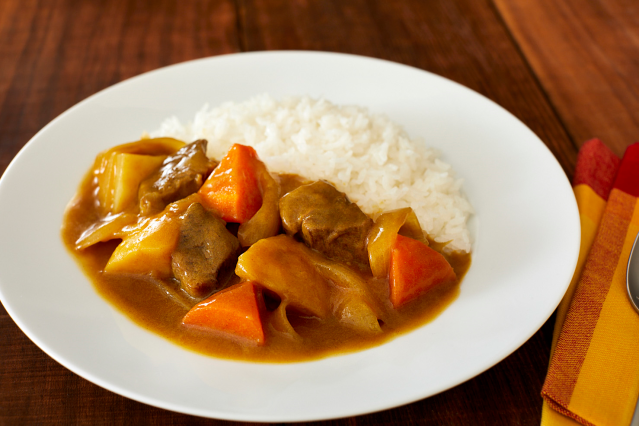
A curry a week helps keep the brain at its peak.
It’s been known for a while now that the blend of spices found in curry can lead to a wide range of health benefits from improved digestion to lower blood pressure. But the question remained whether this was all true for Japanese curry as well.
Although more or less the same food, the differences between Indian and Japanese curry can be quite stark, casting doubt on the latter’s nutritional benefits. A fair comparison might be the difference between Italian and American pizzas, wherein they’re the same basic idea but completely different dining experiences.
▼ You’d probably have a hard time finding instant Resident Evil curry in the food’s home of India
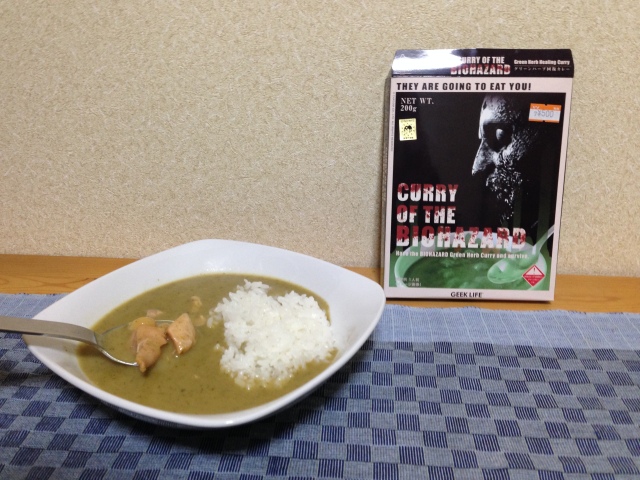 Photo ©SoraNews24
This question was of particular interest to House Foods, a leading maker of Japanese curry. If it was found to have similar benefits, then it would be a nice feather in their cap, so they launched a study with the aid of professors at the University of Tokyo and Nishogakusha University, also in Tokyo. Previous studies by House found that Japanese curry can help suppress adverse reactions to air pollution and also prevent hardened arteries, but this latest find might prove the most helpful yet.
It builds on a study conducted Singapore that found a connection between eating curry and healthy cognitive functions. However, because of the differences in curry between the two countries, a similar separate trial would have to be conducted to see if it was true with Japanese curry as well.
The study gathered over 2,000 people aged 50 and up, divided into groups based on the frequency they eat curry and whether they’d eaten it that way over a long period (over one year) or short period (under one year). For example, the highest frequency group eats curry four times a month for over a year until the time of the study.
Each subject was then given a DASC-21 dementia risk assessment and their relative scores were compared. Interestingly, there was a firm correlation between their test scores and frequency of long term curry consumption. Those who ate curry less than once a month were given an average base value of 1 for dementia risk, those who ate it once a month dropped to 0.834, then down to 0.754 for those who ate it two or three times a month, and even further down to 0.718 for anyone who ate curry four times a month or more.
▼ A chart showing the decrease of dementia risk with the frequency of long-term curry eating
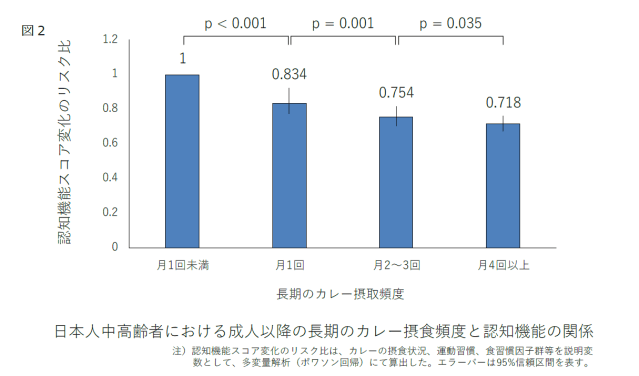
Such a correlation couldn’t be found in people who ate curry at these same frequencies on a short-term basis (under one year). However, those who ate curry more than twice a month on a short-terms basis were said to have fared better than those who ate it once a month or less on a long-term basis (over one year).
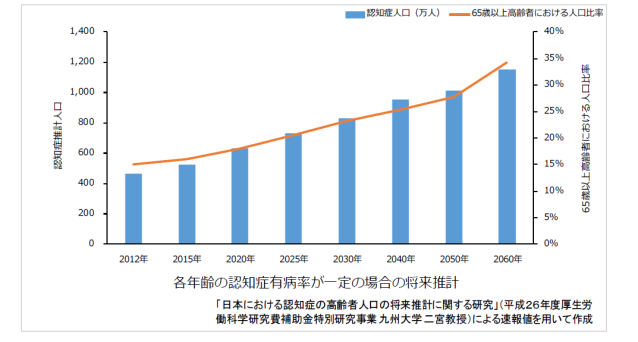
While there does appear to be a link between curry and a reduced chance of dementia, the next stage of research will require finding an actual chemical process to confirm their link. If so, this could be an important discovery since an increasingly large segment of Japan’s population are entering old age, and a simple dietary solution for keeping them as sharp as possible would be ideal.
▼ A chart showing the elderly population in Japan rising to 35% in 2060, meaning about one in three people will be at some risk of dementia
That would be great if turns out to be true, but in the meantime, I’d be more than happy just to become a test subject in this particular field of research. Eating curry and having my cognitive functioning called into question is what I do most days anyway.
Source: PR Times
Images: PR Times (Unless otherwise noted)
● Want to hear about SoraNews24’s latest articles as soon as they’re published? Follow us on Facebook and Twitter!