
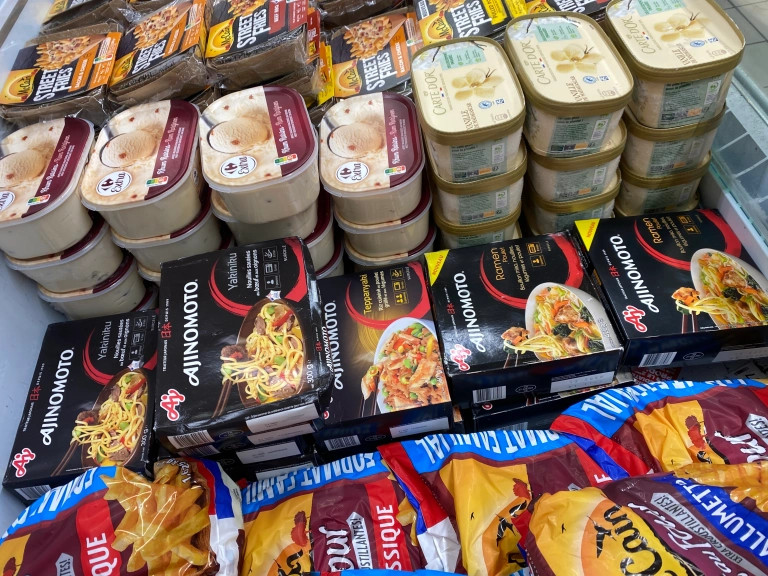
Expectations were not met–in many ways.
Ajinomoto is a top brand of frozen food in Japan, and it’s also sold in various countries across Europe. Our Japanese-language reporter and world traveler Ikuna Kamezawa has frequently seen their gyoza while traveling, but she’s also found a selection of Ajinomoto foods that came in stylish black boxes, including “Yakiniku” and “Teppanyaki.” Ikuna says these weren’t very hard to find; if you check in a large supermarket or an Asian market, you’d probably be able to find them throughout Europe. She found hers in France.
But there was something funny about these frozen meals. Though they had Japanese names of real Japanese foods, the pictures didn’t match the names at all. The “Yakiniku” box–which should have shown slices of flame-grilled meat, with maybe some rice on the side–clearly had a picture of yakisoba, or stir-fried noodles, and the “Teppanyaki” box–which should have looked like flat-grilled meat and vegetables, looked like fried rice.
What was that about? Ikuna couldn’t help but wonder, so she bought a box each of three different varieties to see what they actually looked like and tasted like on the inside.
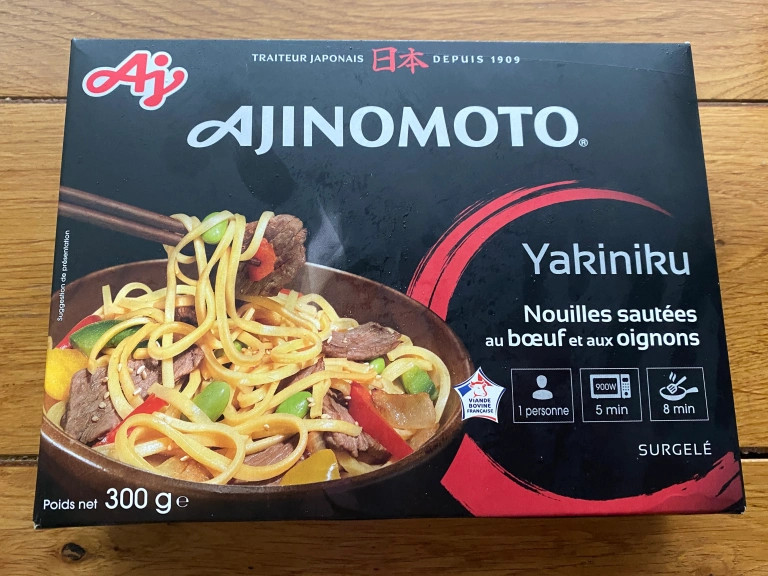
She started with “Yakiniku”, which cost 4.25 euros (613 yen/US$4.47). Inside was a billowing plastic bag filled with what looked like noodles and vegetables.
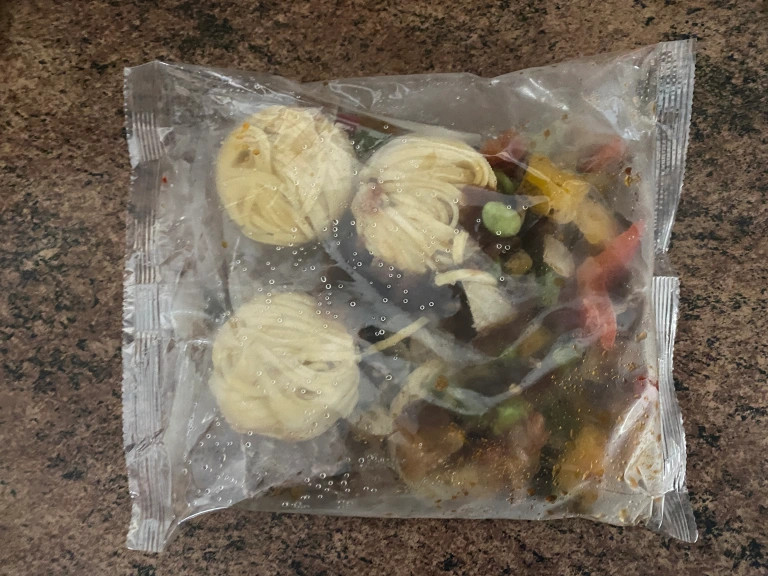
Ikuna poured the contents into a bowl…
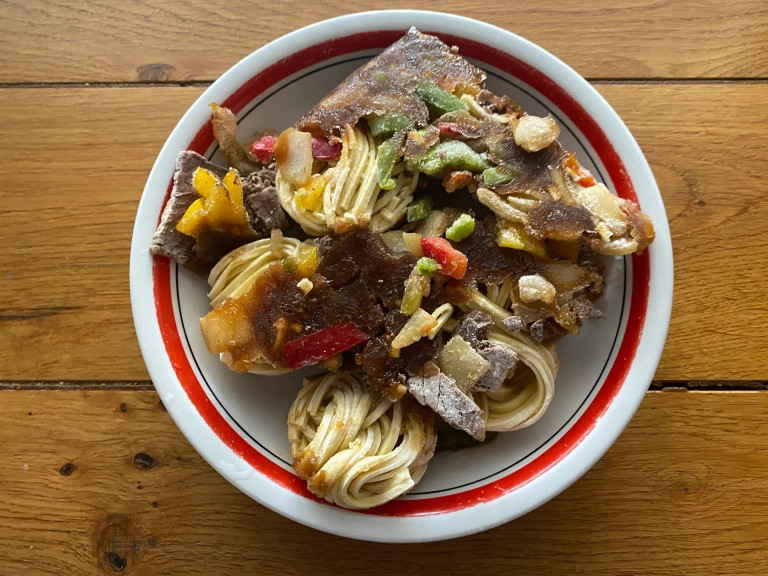
Then put it in the microwave for five minutes.
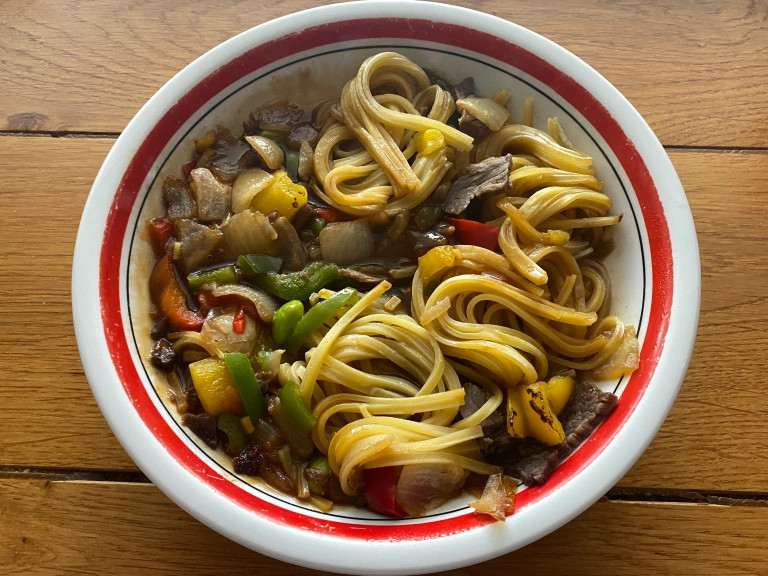
The finished product looked nothing like yakiniku, despite the slices of beef it contained. Any way you looked at it, it was a noodle dish, and perhaps not even a Japanese-style noodle dish, based on the ingredients.
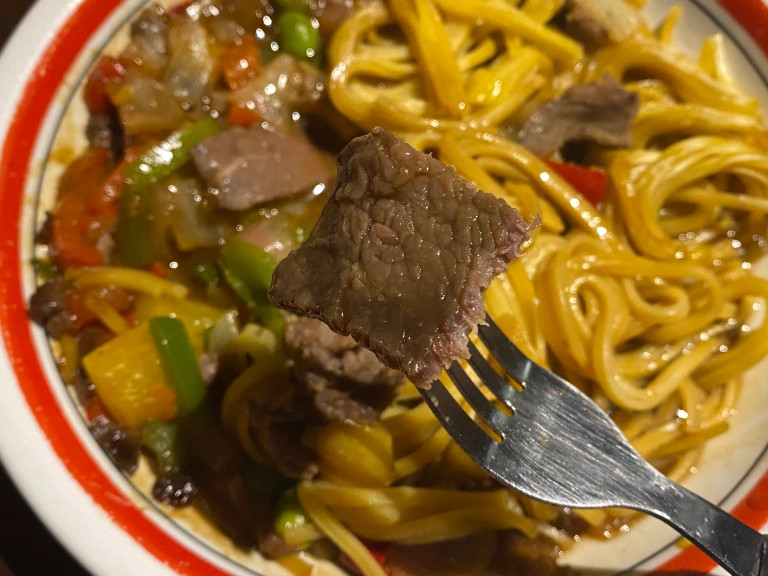
Maybe they chose to call it yakiniku because of the beef slices? The beef wasn’t as tender or delicious as yakiniku and felt more like cheap cuts grilled over low heat for far too long (they were dry as bone). Besides that, the dish included slices of three kinds of bell peppers and onions.
If it had been labeled something less specific like “Chinese-style saucy noodles”, Ikuna probably wouldn’t have minded it so much. But since it was calling itself “Yakiniku”, Ikuna couldn’t help but feel it was just all wrong. Why did Ajinomoto decide to give it that name? Instead of answering her questions, this frozen meal only deepened the mystery.
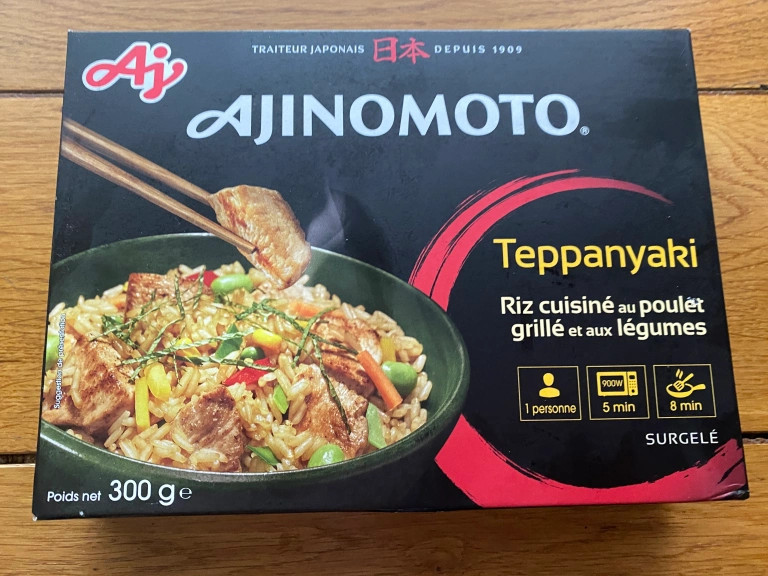
The “Teppanyaki” dish was the same price of 4.35 euros, and like the “Yakiniku”, the picture on the package did not match the name. It was clearly fried rice.
The dish contained plenty of ingredients, including chicken, two kinds of bell peppers, edamame, green peas, carrots, onions, and corn. The rice looked like the kind of rice popular in Southeast Asian countries like Thailand: long and thin, as opposed to the short-grain rice common in Japan.
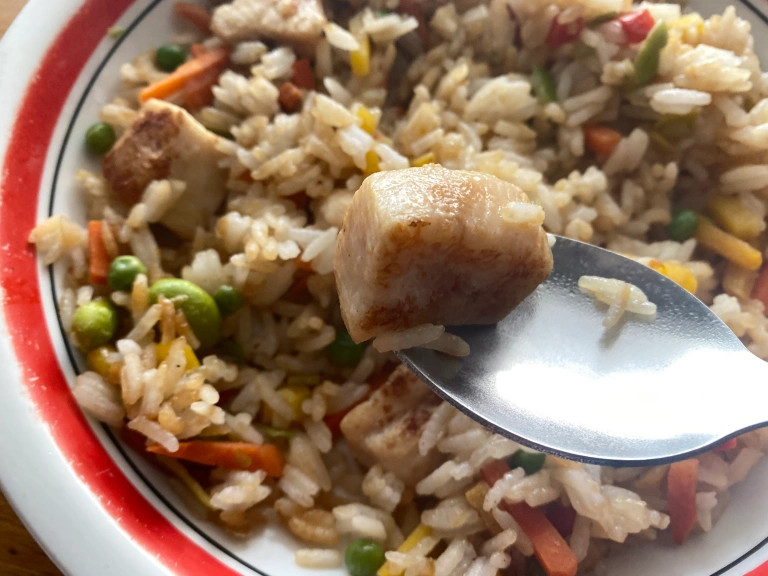
While it looked pretty good, the flavor was so weak, almost as if they had entirely forgotten to salt it. The chunky chicken was tasty, but Ikuna couldn’t help but think that basing the name of “teppanyaki” on this chicken alone was a bit of a stretch.
On the other hand, it is possible to cook fried rice on a teppan, or a Japanese griddle, and perhaps this is a common image of Japanese cooking based on the types of Japanese restaurants that are popular overseas. However, to Japan-native Ikuna, the foods that most come to mind with the word “teppanyaki” are meat and fish. She couldn’t help but feel sad that this is what Europeans might believe is Japanese teppanyaki.
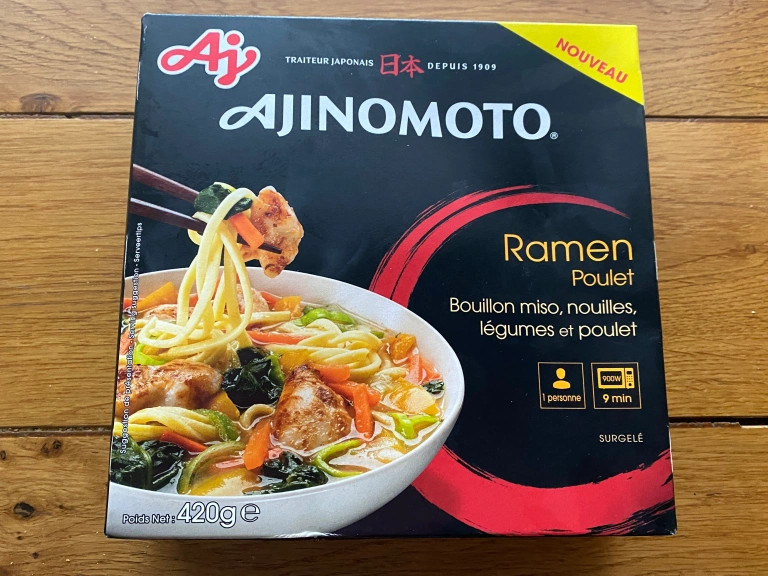
The last one that Ikuna tried was “Ramen Poulet” (chicken ramen), which was 3.5 euros (or 505 yen.) In this case, the packaging did actually look like ramen, which was a relief.
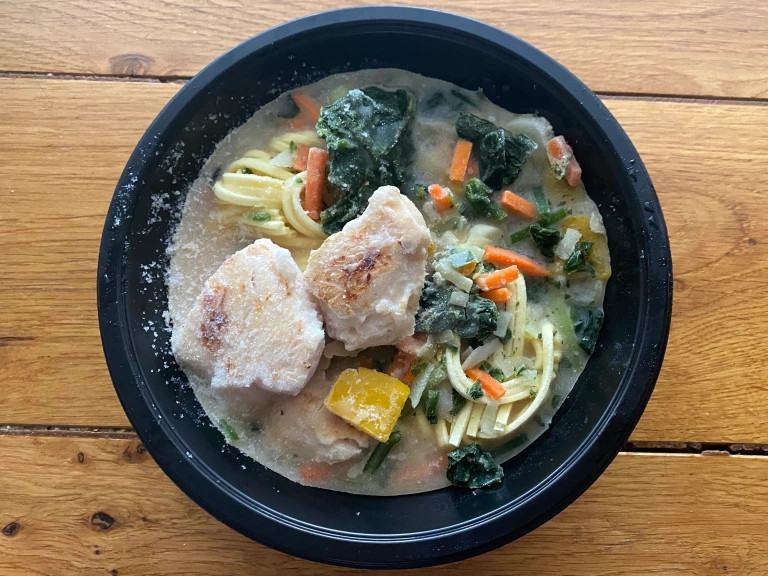
This one also had bell peppers in it. Ikuna had to wonder, do Europeans really like bell peppers that much? Japanese cuisine, for reference, rarely uses bell peppers, though you might sometimes find them in western-style dishes served in Japan.
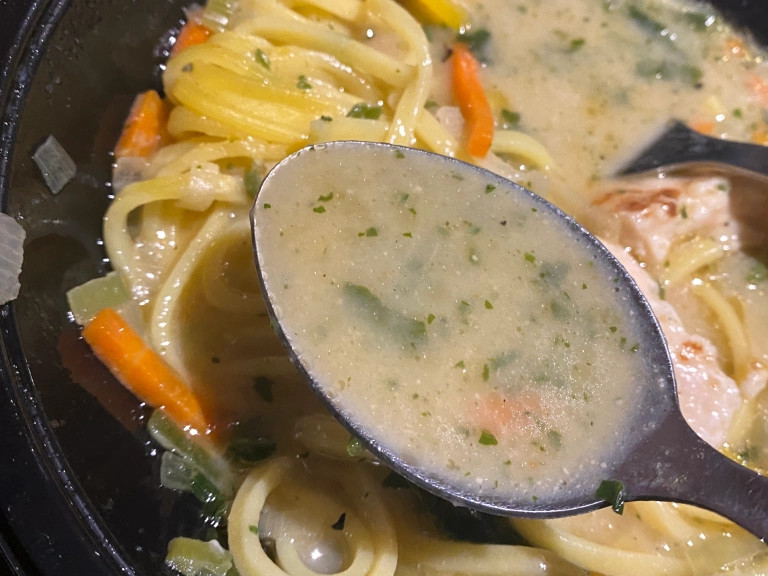
The broth was…unique. It tasted a bit like Japanese tonkotsu, or pork bone broth, but it also felt a bit like a thick and creamy soup, or a miso soup with potatoes. Ikuna is used to ramen tasting differently in other countries, but in most cases, the ramen she tried tasted good, just in an unexpected way. The flavor of this soup, sadly, was too weak for her; if she hadn’t been really hungry, she probably would never want to eat this.
This further served to perplex Ikuna, who had to assume that Ajinomoto, originally a Japanese company, should have the know-how to make a really good frozen ramen, and instead they produced this.
Ikuna could only assume that these dishes were made more to suit European tastes, which was perfectly fine, as she was in Europe. Despite the mysterious nature of the packaging not matching the name of the product, and the flavors not quite meeting her expectations, Ikuna had to say she had an interesting time taste-testing them. She’ll always continue to try Japanese food overseas because it’s fun, and sometimes even educational.
Images © SoraNews24
● Want to hear about SoraNews24’s latest articles as soon as they’re published? Follow us on Facebook and Twitter!
 Three remarkable ramen shops in Spain, according our traveling Japanese reporter
 Egyptian restaurant Sumo Sushi offers our Japanese reporter a delightful yet quirky lunch
 How do European Cup Noodles taste to a Japanese palate?
 We try chain restaurant miso ramen in Paris and find a slice of home overseas【Pics】
 We visit a restaurant called ‘Otaku’ in France, eat some otaku sushi
 Live-action Spirited Away stage play announces world tour with first-ever U.S. and Canadian dates
 Sanrio Character Poll announces winners, Hello Kitty absent from top 10 in many countries
 Tokyo has only two barley tea makers, and we visited one to see how mugicha is made
 Studio Ghibli combines anime and craftsmanship in new Totoro and Jiji Gobelin tapestry bags
 Sleep at Hoshinoya Nara Prison, one of the most unique hotels in Japan
 We try out the joys of Japan’s kakuuchi wine vending machine
 Speed trap camera stolen from Saitama Police while in use
 Why you shouldn’t feel guilty about using manga for studying and the top series for learning
 Pikachu brings electric style to brand-new Pokémon G-Shock watch featuring every stater trio
 Blind Tokyo commuter explains the easiest place for him to stand while riding the train
 Japan announces sudden 400-percent increase in visa fees for foreigners entering the country
 Japan launches first overnight Shinkansen bullet train between Tokyo and Osaka this summer
 Family Mart Japan installs red-eyed “Monster Wolf” to keep bears away from convenience store
 Starbucks Japan creates special drink bottle bags, adorable stickers for all 47 prefectures[Pics]
 Starbucks Japan reopens Shinkansen platform store after redesigning it for speed
 Japanese sweets brand creates new drinkable Cigare and we’re totally here for it
 Japanese man’s gross conveyor belt sushi social media prank video gets him a 500,000-yen fine
 Japanese ninja certification exam attracts 131 candidates from Japan and abroad
 Studio Ghibli store Donguri Republic announces opening of first-ever store in America
 New Japanese overnight train coming to connect Tokyo with Tohoku in sleep-travel style
 Uniqlo reveals third round of massive 100-year-anniversary manga T-shirts for Jump’s Shueisha
 Even at twice regular Daiso price, this handy item is still great for summer travel in Japan
 Japanese sweets shop sells an ohagi so exquisite it sells out by noon
 New official Ghibli anime food cookbook will teach you how to make Ponyo’s ramen and more
 Forget Tokyo go-karts – there’s a new way to sightsee on four wheels in Japan
 Japan’s human washing machines will go on sale to general public, demos to be held in Tokyo
 Starbucks Japan releases new drinkware and goods for Valentine’s Day
 We deeply regret going into this tunnel on our walk in the mountains of Japan
 Starbucks Japan releases new sakura goods and drinkware for cherry blossom season 2026
 Japan’s newest Shinkansen has no seats…or passengers [Video]
 Put sesame oil in your coffee? Japanese maker says it’s the best way to start your day【Taste test】
 Japan reportedly adding Japanese language skill requirement to most common foreigner work visa
 Japan’s 5.3 million beautiful Hitachi Nemophila flowers are now in full bloom[Photos]
 We try Ajinomoto’s European Chicken Katsu Curry Style frozen gyoza that has no katsu in it
 We visit a ramen bar in Croatia, meet a whole new version of ramen we can’t wait to make at home
 Have you tried Tokushima ramen? No? You should (says our obsessed Japanese-language reporter)
 Is this London branch of Marugame Udon as good as the ones in Japan?
 Japanese confectionery store Toraya serves up a surprising meal in Paris
 We try European Cup Noodle Soba flavors to see which ones come out on top 【Taste test】
 We visit the Paris branch of Japanese ramen chain Ippudo and eat the most unusual ramen
 Our reporters try a yakiniku sauce called “Even Women Garlic” to figure out what that means
 How do McDonald’s fries taste in the frite nation of Belgium? We find out【Taste test】
 Onigiri in Paris – Crazy expensive with crazy fillings, but are they also crazy good?【Taste test】
 “Hey, Japanese taxi driver! Take us to the best restaurant in Sendai!”
 Hey, Croatian taxi driver! Take us to the restaurant with the best štrukli in Zagreb
 Our reporter orders food from Uber Eats, falls in love, learns that fate works in mysterious ways
 “More Japanese than Japan” – Kodawari Ramen Tsukiji in Paris lives up to every part of its name
 Discount super market’s super cheap bento wows us with its looks, confuses us with its taste